

Building a balanced diet is not about following restrictive food rules or eliminating entire food groups. It means choosing a variety of foods that provide the nutrients your body needs to function well. For readers exploring practical nutrition advice, Salomio offers an opportunity to connect healthy eating principles with realistic everyday habits. Understanding food groups, portion balance, and meal planning can make healthier choices easier to maintain over time.

What Is a Balanced Diet and Why Does It Matter?
A balanced diet provides the energy, protein, healthy fats, vitamins, minerals, and fiber needed to support normal body functions. Its foundations are variety, adequacy, balance, and moderation. The World Health Organization emphasizes that healthy eating patterns should include a range of nutritious foods while limiting excessive salt, free sugars, and unhealthy fats. Individual needs vary according to age, activity level, culture, and health status, so a balanced diet is a flexible approach rather than a rigid meal plan.
Which Nutrients Does a Balanced Diet Need?
Carbohydrates provide energy, while protein supports tissue maintenance and repair. Unsaturated fats help the body absorb certain vitamins and support normal cell function. Vitamins and minerals contribute to processes such as immunity, bone health, and oxygen transport. Fiber supports digestive health, and water helps regulate body temperature and maintain normal bodily functions. Whole grains, vegetables, fruits, legumes, nuts, seeds, and varied protein sources can help supply these nutrients. No single food provides everything the body needs, which is why dietary variety matters.
How Can a Balanced Diet Support Long-Term Health?
Consistent healthy eating habits can support healthy growth, energy levels, digestive function, and long-term well-being. Diets rich in vegetables, fruits, whole grains, and legumes also help people obtain a wider range of essential nutrients. The goal is not to expect one meal or ingredient to deliver every benefit. Instead, focus on the overall eating pattern across days and weeks. The WHO healthy diet guidance explains the importance of dietary variety and limiting excessive free sugars, salt, and unhealthy fats.
Which Food Groups Should a Balanced Diet Include?
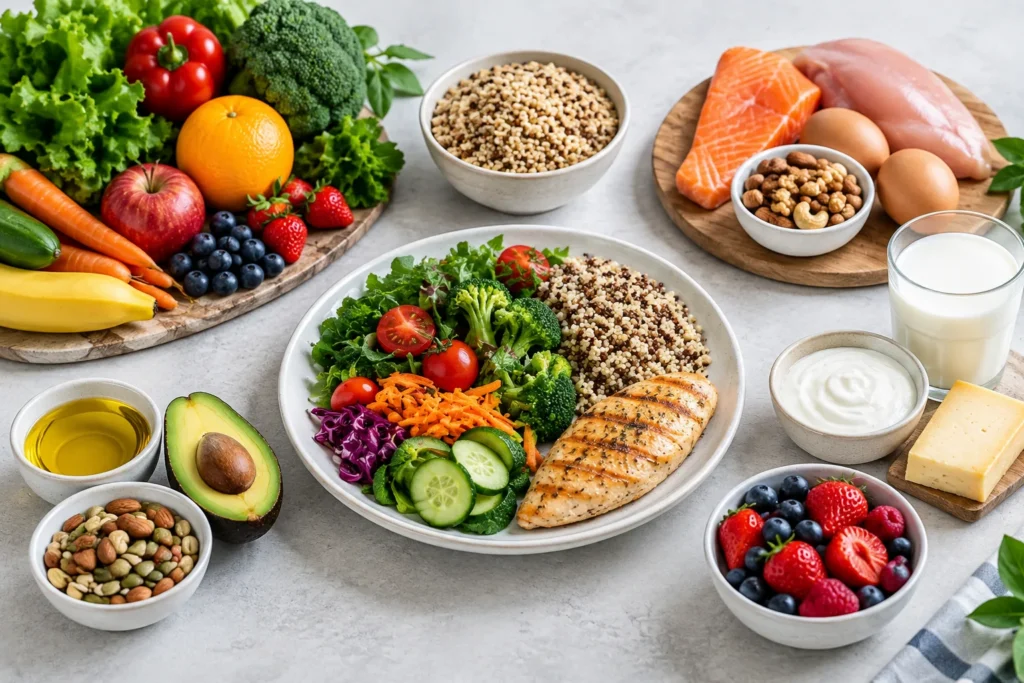
A practical balanced diet includes several food groups in appropriate proportions. Vegetables and fruits provide vitamins, minerals, and fiber; whole grains supply carbohydrates and additional fiber; and protein-rich foods support tissue maintenance. Unsaturated fats can come from sources such as olive oil, nuts, and seeds. Dairy products or suitable fortified alternatives may contribute calcium and other nutrients. Water is also essential. The proportions do not need to be identical for everyone, and dietary requirements may change with age, activity, cultural preferences, or medical needs.
Why Are Fruits, Vegetables, and Whole Grains Important?
Fruits and vegetables add variety, fiber, and important micronutrients to meals. The WHO recommends that adults and children older than 10 aim for at least 400 grams of fruits and vegetables daily. Whole grains, including oats, brown rice, and whole-wheat bread, provide carbohydrates and often more fiber than refined alternatives. Beans, lentils, and chickpeas can contribute both fiber and protein. Choose a variety of colors and types throughout the week rather than relying on a single fruit or vegetable.
Which Protein Sources and Healthy Fats Should You Choose?
Useful protein sources include beans, lentils, eggs, fish, poultry, tofu, nuts, and lean meats. Combining different sources can add variety and help meet individual nutritional needs. For fats, prioritize unsaturated options such as olive oil, avocados, nuts, and seeds, while limiting trans fats and reducing excessive saturated fat. As registered dietitian Paige Welsh explains in Cleveland Clinic’s balanced-diet guidance, a balanced diet is not about selecting only “best” foods. It is about eating a range of nutritious foods.
Balanced Diet Food Groups: What to Eat and Why
| Food group | Examples | Main role |
|---|---|---|
| Fruits and vegetables | Berries, oranges, spinach, carrots | Fiber, vitamins, and minerals |
| Whole grains | Oats, brown rice, whole-wheat bread | Energy and fiber |
| Protein foods | Eggs, fish, beans, tofu | Tissue maintenance and repair |
| Healthy fats | Olive oil, nuts, seeds | Essential fats and vitamin absorption |
| Dairy or alternatives | Milk, yogurt, fortified soy drink | Calcium and other nutrients |
| Fluids | Water, unsweetened drinks | Hydration and normal body functions |
How Can You Build a Balanced Plate for Everyday Meals?
A balanced plate is a simple visual guide for planning meals without calculating every nutrient. One practical starting point is to fill approximately half the plate with vegetables and fruits, one-quarter with protein foods, and one-quarter with whole grains or other starchy foods. This is a general guide, not a universal prescription. Appetite, energy requirements, cultural food traditions, and health conditions may change the ideal proportions. The NHS Eatwell Guide offers additional guidance on combining food groups over the day or week.
What Are Some Examples of Balanced Everyday Meals?
For breakfast, try oatmeal with plain yogurt and berries, or eggs with whole-grain toast and tomatoes. A balanced lunch might include grilled chicken or chickpeas, brown rice, and a mixed vegetable salad. For dinner, consider baked fish or tofu with roasted vegetables and potatoes. Snacks can include fruit, unsalted nuts, or plain yogurt, depending on hunger and individual needs. These examples can be adapted to different budgets, preferences, and cultural cuisines. Balance across the overall eating pattern matters more than making every meal identical.

How Can You Make a Balanced Diet Part of Your Daily Routine?
Sustainable eating habits depend on convenience, affordability, and consistency. Planning meals ahead can reduce last-minute food choices, while keeping nutritious staples available makes balanced meals easier to prepare. Frozen vegetables, canned beans, seasonal fruit, oats, and whole grains can be practical options. You do not need expensive products or special supplements to begin improving your diet. Make gradual changes that fit your routine, and adjust them as you learn which meals are satisfying, accessible, and easy to repeat.
How Can You Start Eating a Balanced Diet in Five Steps?
- Review your current meals: Identify food groups you eat regularly and those you rarely include.
- Add more vegetables and fruit: Include a serving at breakfast or add vegetables to lunch and dinner.
- Choose fiber-rich carbohydrates: Replace some refined grains with oats, brown rice, or whole-grain bread.
- Include a protein source: Add beans, eggs, fish, tofu, or another suitable option to main meals.
- Plan and review: Prepare a short shopping list, keep easy ingredients available, and assess your habits weekly.
Start with one or two changes instead of trying to overhaul every meal at once.
What Common Mistakes Should You Avoid When Building a Balanced Diet?
Healthy eating becomes harder when people rely on extreme restrictions, misleading nutrition claims, or unrealistic meal plans. A balanced approach allows flexibility while encouraging nutrient-rich choices most of the time. It should also reflect individual requirements rather than assuming that the same diet works for everyone. Focus on patterns that can be maintained, not short-term perfection. For personalized nutrition advice, especially when managing a medical condition or following a restricted diet, consult a qualified healthcare professional or registered dietitian.
Do You Need to Eliminate Carbohydrates or Your Favorite Foods?
No. Carbohydrates are an important energy source, and foods such as potatoes, rice, oats, and whole-grain bread can fit into a balanced diet. Instead of eliminating an entire food group without a medical reason, consider food quality, portions, and variety. You can also enjoy favorite foods in moderation while prioritizing vegetables, fruits, whole grains, and varied protein sources. A flexible approach is often more practical than restrictive rules that are difficult to maintain.
How Can You Balance Sugar, Salt, and Highly Processed Foods?
Compare nutrition labels, choose water more often than sugary drinks, and reduce the frequency of foods high in salt, free sugars, or unhealthy fats. Flavor meals with herbs, spices, citrus, and garlic instead of relying heavily on salt. Packaged foods are not automatically unhealthy, so assess their ingredients and nutritional value rather than judging them by packaging alone. Progress can be gradual: small, repeatable adjustments may be easier to sustain than attempting to change everything immediately.
Conclusion
A balanced diet is built through variety, sensible portions, and habits that fit everyday life. Prioritize vegetables, fruits, whole grains, varied protein sources, healthy fats, and sufficient fluids while limiting excessive salt and free sugars. You do not need perfection; you need an approach you can maintain. Salomio encourages readers to explore practical, evidence-informed wellness habits and make informed choices that support long-term well-being.



Comments