
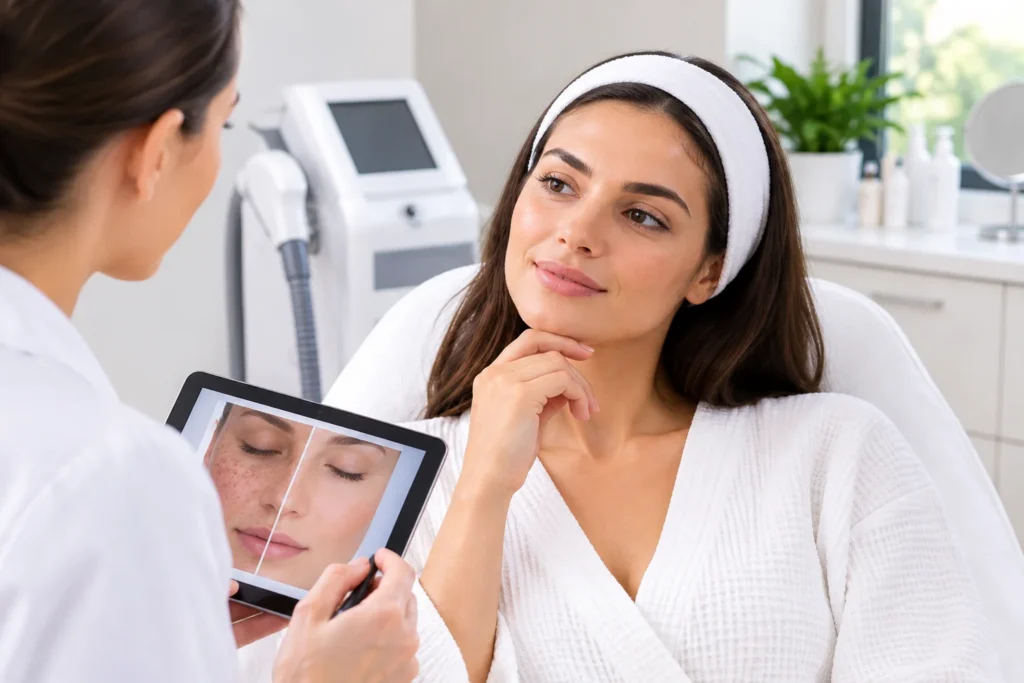
IPL skin treatment is a non-invasive cosmetic procedure that uses intense pulsed light to address selected skin concerns, including uneven pigmentation, visible redness, and certain signs of sun damage. For beauty professionals and clients, understanding how this technology works is essential for setting realistic expectations and making informed treatment decisions.
At Salomio, evidence-informed skincare education helps professionals explain treatment options more responsibly. Although IPL can improve the appearance of specific skin concerns, its effectiveness and safety depend on the device, the individual’s skin tone, the condition being treated, and the provider’s expertise. It is not suitable for every person or every skin concern.
What Is IPL Skin Treatment and How Does It Work?
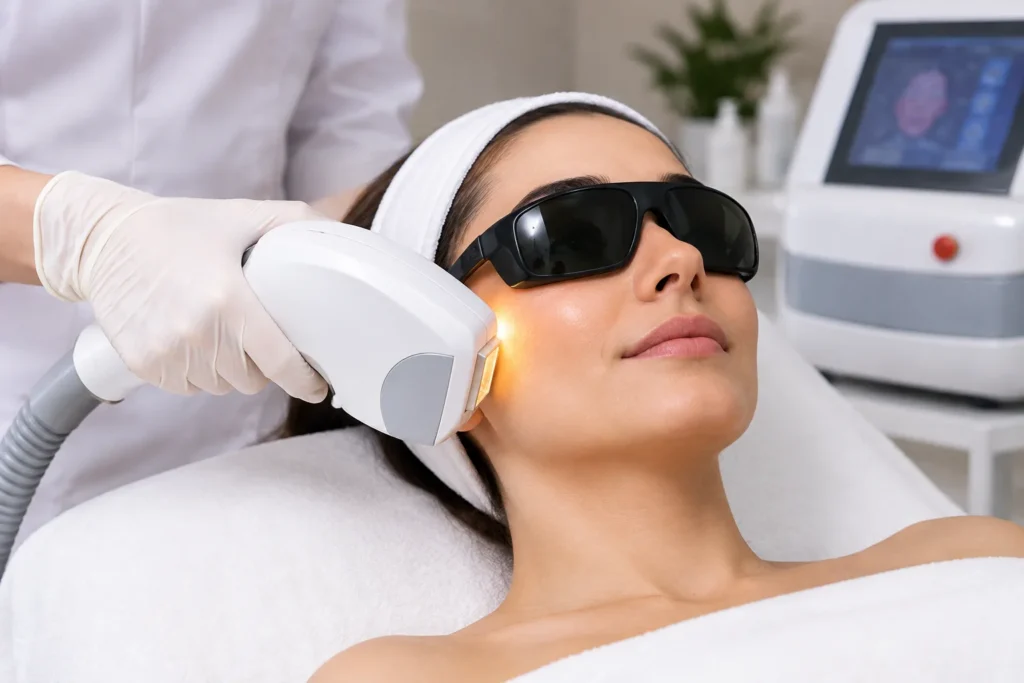
IPL stands for intense pulsed light. Unlike treatments that remove the outer skin layer, IPL delivers controlled pulses of light into the skin. Pigments and blood vessels absorb portions of this energy, generating heat that targets selected structures. The body’s natural processes then gradually remove or repair the affected tissue.
DermNet describes IPL as a non-invasive, non-ablative treatment that uses high-intensity pulses of visible light. Its broad range of wavelengths allows it to address different concerns, depending on the device and treatment settings. Source: DermNet.
How Is IPL Different From Laser Treatment?
IPL and laser treatments both use light energy, but they are not identical. A laser typically delivers light at a specific wavelength, while IPL emits a broader spectrum of wavelengths. Filters and adjustable settings help IPL devices target different structures in the skin.
This versatility does not mean IPL is automatically more effective or safer than a laser. A laser may be preferable for a particular condition, while IPL may be appropriate for another. The decision depends on the treatment goal, skin characteristics, available equipment, and practitioner experience.
What Are the Main Uses and Benefits of IPL Skin Treatment?
IPL is commonly used for selected pigmentation concerns, visible blood vessels, redness, and signs of photoaging. Certain devices are also designed for hair reduction, although the settings and treatment protocols differ from those used for skin rejuvenation.
The main potential benefit is improvement in the appearance of specific concerns without deliberately removing the entire outer skin layer. Results are gradual and vary between individuals. IPL should not be presented as a universal solution for acne scars, deep wrinkles, or every type of pigmentation.
Can IPL Improve Pigmentation, Redness, and Sun Damage?
IPL may help reduce the appearance of some freckles, sun spots, and other superficial pigment changes. It can also target selected visible blood vessels and redness. In suitable patients, treatment may produce a more even-looking skin tone.
However, not all dark spots are the same. Melasma, post-inflammatory hyperpigmentation, and other pigment disorders may respond differently, and some can worsen after light-based procedures. A proper assessment is therefore important before treating unexplained or changing lesions.
The University of Michigan Health describes photofacial IPL as a treatment that can gradually reduce unwanted pigmentation and redness through a series of sessions. Source: University of Michigan Health.
What Results Can You Realistically Expect From IPL?
Some people notice gradual improvements after treatment, but the outcome depends on the original concern, skin type, device, and treatment plan. Multiple sessions are often required, and maintenance treatments may be recommended in some cases.
IPL does not stop the natural aging process or prevent future sun damage. Sun protection remains important after treatment, and pigmentation may return with continued ultraviolet exposure. Before starting, ask the provider which changes are realistic, how success will be assessed, and what alternatives are available.
Table: IPL Skin Treatment Uses, Potential Benefits, and Key Considerations
| Treatment goal | Potential benefit | Important consideration |
|---|---|---|
| Selected sun spots and freckles | Reduced appearance of pigmentation | Confirm the diagnosis first |
| Visible facial redness | Reduced redness in suitable cases | Results depend on the cause |
| Selected superficial blood vessels | Less noticeable visible vessels | Device and settings matter |
| Signs of photoaging | Improvement in some visible skin changes | Results vary and may require multiple sessions |
| Unwanted hair | Long-term hair reduction with appropriate devices | Different treatment protocols may apply |
What Are the Risks and Safety Considerations of IPL Skin Treatment?
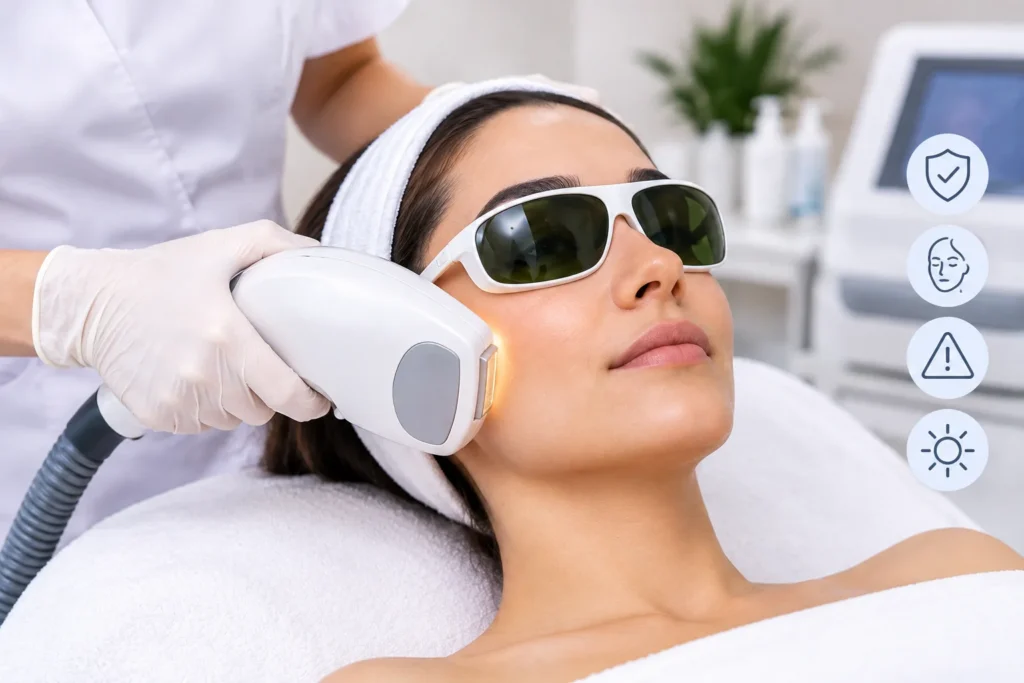
IPL can be well tolerated when appropriately selected and performed, but it is not risk-free. Temporary redness, warmth, swelling, and discomfort may occur. More serious complications include burns, blistering, scarring, infection, and darker or lighter patches of skin.
Risk can increase when the device settings are unsuitable, the skin is recently tanned, or the provider fails to identify relevant medical conditions or medications. Appropriate protective eyewear is essential because intense light can injure the eyes.
Is IPL Safe for Darker Skin Tones?
Darker skin contains more melanin, which can absorb light energy and increase the risk of unwanted heating and pigmentation changes. This does not mean every IPL device is unsuitable for every darker skin tone, but treatment requires careful assessment and appropriate technology.
The Australian Radiation Protection and Nuclear Safety Agency warns that people with more skin pigment may be more responsive to light-based treatments, making skin-type selection an important safety consideration. Source: ARPANSA.
A qualified clinician should assess skin tone, tanning history, the target condition, and the device’s suitability. Do not assume that a patch test alone guarantees safety or that every device can safely treat every skin type.
Who Should Avoid or Postpone IPL Treatment?
IPL may need to be postponed or avoided in certain circumstances, including recent tanning or sunburn, some photosensitizing medications, active skin infections, or medical conditions that affect light sensitivity or healing. Pregnancy, breastfeeding, and a history of cold sores should also be discussed with the treating clinician because recommendations can vary according to the procedure and individual circumstances.
Do not treat an unexplained, changing, or suspicious skin lesion cosmetically before it has been medically assessed. Disclose all medications, skincare products, supplements, and relevant medical history during consultation.
Dermatology reference StatPearls identifies inappropriate device settings and inadequate operator training as important contributors to IPL complications. Source: NCBI Bookshelf.
How Should You Prepare for IPL Treatment and Care for Your Skin Afterward?
Preparation and aftercare help reduce avoidable irritation and support recovery. Before treatment, the provider should review your skin concern, medical history, medications, recent sun exposure, and expectations. After treatment, follow the individualized instructions rather than relying on a generic skincare routine.
How to Prepare for an IPL Skin Treatment: A Step-by-Step Guide
- Arrange a professional assessment. Confirm the skin concern and whether IPL is appropriate for your skin type.
- Share your medical history. Mention medications, supplements, previous reactions to light-based procedures, and any history of cold sores.
- Avoid tanning. Follow your provider’s instructions about sun exposure and postpone treatment if your skin is sunburned or recently tanned.
- Review skincare products. Ask whether retinoids, exfoliating acids, or other potentially irritating products should be paused and for how long.
- Discuss risks and results. Ask about expected outcomes, the number of sessions, alternatives, and possible complications.
- Confirm eye protection. Ensure that appropriate protective eyewear will be used throughout the procedure.
Do not stop prescribed medication or begin preventive medication without medical guidance.
What Should You Do After IPL Treatment?
Follow the provider’s aftercare instructions, use gentle skincare, and protect treated skin from sunlight. Avoid picking at darkened spots, crusting, or peeling skin. Ask when you can safely resume retinoids, exfoliating acids, exercise, or other activities that may irritate the treated area.
Mild redness or warmth can occur, but severe or increasing pain, blistering, significant swelling, or unexpected changes in skin color require prompt medical advice. Seek urgent assessment for eye symptoms or suspected eye injury.
How Can You Decide Whether IPL Skin Treatment Is Right for You?
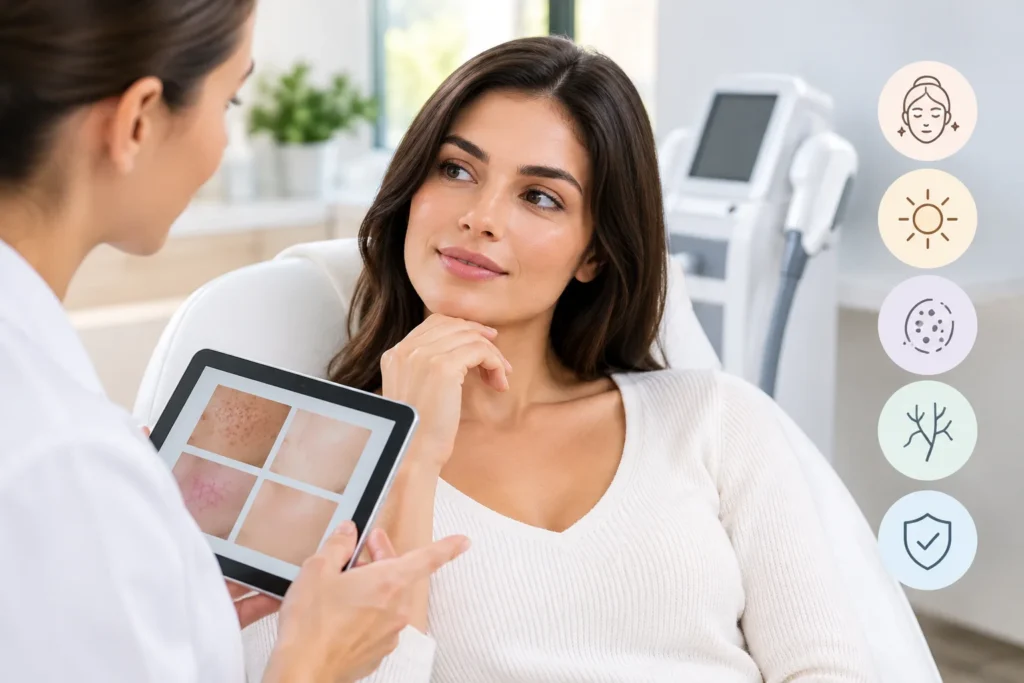
The right treatment depends on the problem you want to address, your skin characteristics, your medical history, and the expertise of the provider. IPL may be useful for some superficial pigment and vascular concerns, but other treatments may be more appropriate for deeper pigmentation, certain scars, or particular skin types.
What Questions Should You Ask Before Booking an IPL Session?
Ask who will perform the procedure, what training they have, whether the device is suitable for your skin type, and how they will protect your eyes. You should also understand the likely benefits, alternatives, recovery expectations, costs, and possible complications.
As dermatology reference StatPearls explains, “IPL is particularly challenging to use on dark-skinned individuals.” This highlights why device selection and practitioner expertise matter, rather than suggesting that one treatment setting works for everyone. Source: StatPearls, NCBI Bookshelf.
Conclusion
IPL skin treatment can improve selected pigmentation, redness, and other visible skin concerns, but outcomes depend on careful patient selection, suitable equipment, and appropriate treatment settings. Understanding the potential benefits alongside the risks is essential before committing to a procedure.
For beauty professionals, responsible advice means avoiding guaranteed claims, recognizing when medical assessment is necessary, and helping clients understand their options. Salomio encourages evidence-informed beauty decisions that prioritize realistic expectations and client safety.
Comments