
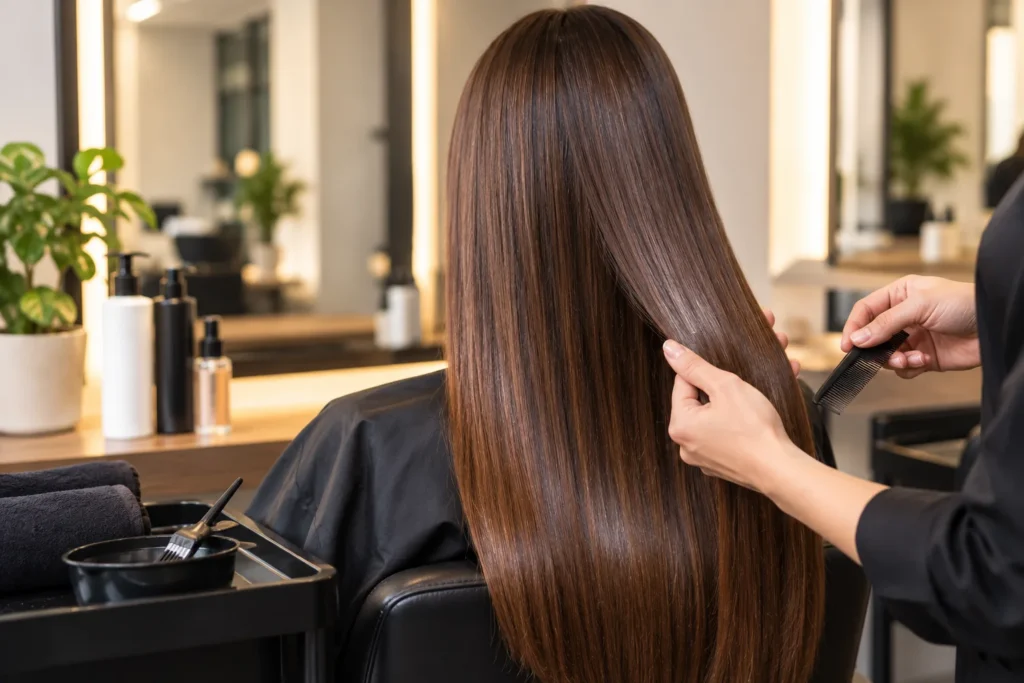
Keratin treatment for hair is a popular salon service for people who want smoother, shinier, and more manageable hair. It can help reduce frizz and shorten styling time, but the results depend on the product formula, application technique, and the hair’s existing condition. Some treatments also involve chemicals that may release formaldehyde when heated, making product selection and salon safety essential.
For clients, stylists, and salon owners, understanding both the benefits and limitations is important before recommending this service. This guide explains how keratin treatments work, their potential risks, and the aftercare practices that help maintain results.
What Is Keratin Treatment for Hair and How Does It Work?
Keratin is a structural protein naturally found in hair. However, salon treatments marketed as keratin treatments are not simply protein replenishment services. They often combine conditioning ingredients with smoothing chemicals and heat to improve the hair’s appearance and manageability. Depending on the formula, the result may range from reduced frizz to a noticeably straighter finish. Understanding the difference between natural keratin and a chemical smoothing service helps clients set realistic expectations and choose a treatment that suits their hair goals.
How Is a Keratin Hair Treatment Performed?
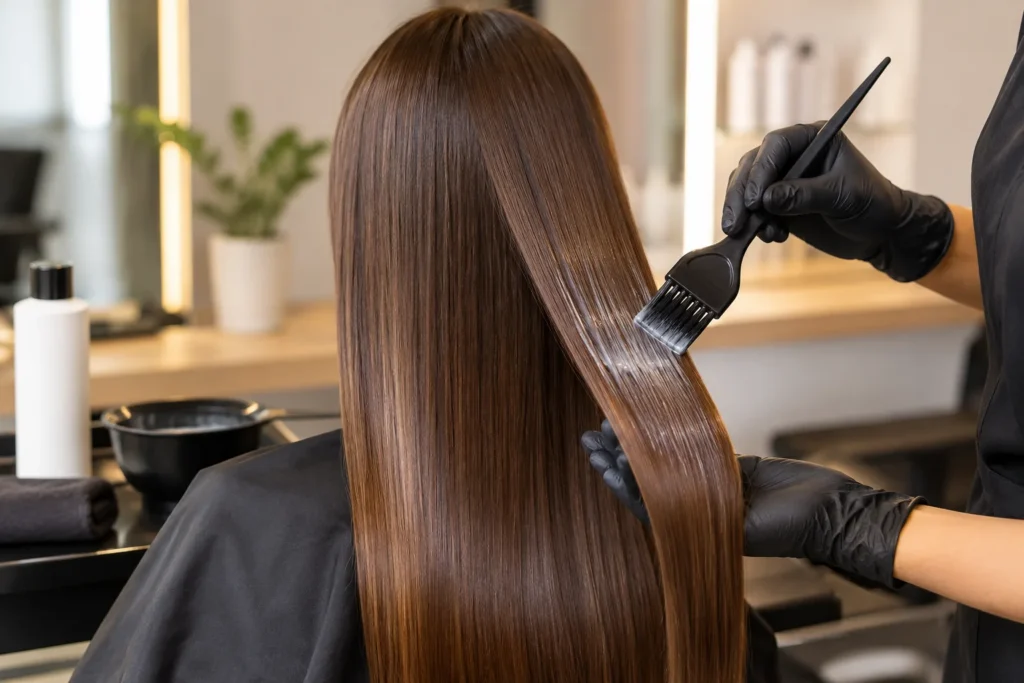
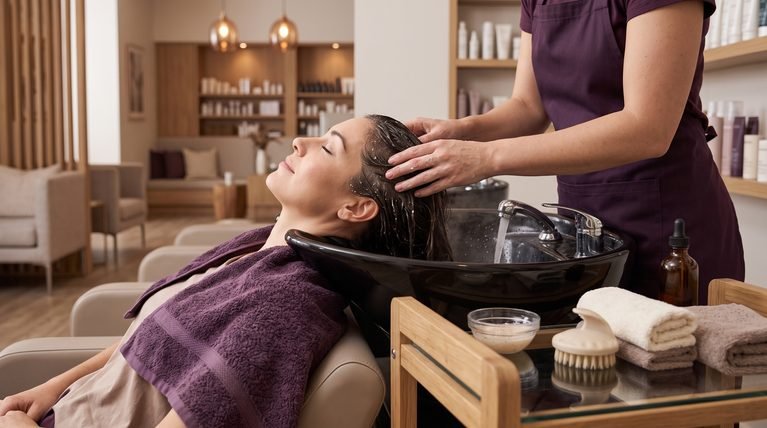
A professional treatment generally begins with cleansing the hair, followed by applying a smoothing solution according to the manufacturer’s instructions. The stylist then processes the product and uses a blow-dryer and flat iron when required. Heat helps produce the treatment’s smoothing effect, but it can also increase exposure to airborne chemicals in certain formulas.
Processing time, temperature, and technique vary by product, so there is no universal procedure suitable for every client. A consultation should assess hair texture, previous coloring or chemical services, scalp condition, and the desired result before treatment begins.
What Are the Main Benefits of Keratin Treatment for Hair?
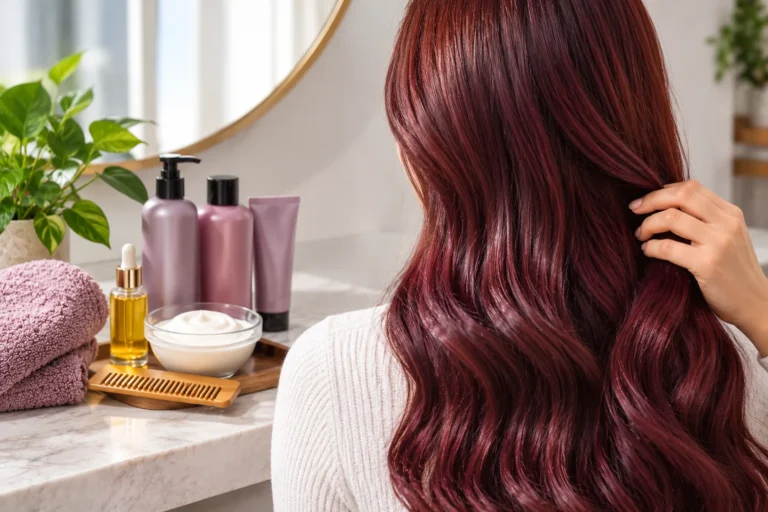
The main appeal of keratin treatment for hair is improved manageability rather than guaranteed repair. Depending on the formula and starting hair texture, clients may experience less frizz, increased shine, easier detangling, and reduced time spent styling. These benefits can be especially attractive to people whose hair becomes difficult to manage in humid conditions. However, outcomes are not identical for everyone.
Some formulas preserve more natural texture, while others substantially loosen curls. A stylist should explain the expected finish before proceeding instead of promising perfectly straight or permanently repaired hair.
Can Keratin Treatment Reduce Frizz and Improve Manageability?
Smoothing treatments can help hair appear more uniform by reducing surface roughness and controlling frizz. Clients may find that brushing and blow-drying require less effort, although the degree of improvement depends on hair density, porosity, curl pattern, and the product used.
The American Academy of Dermatology cautions that “excessive heat can damage hair.” Its hair-styling guidance supports limiting unnecessary heat exposure, an important consideration when a treatment also uses a flat iron. Keratin services should therefore be evaluated by their practical benefits and their potential effect on hair condition, not shine alone.
What Are the Risks and Side Effects of Keratin Treatment for Hair?
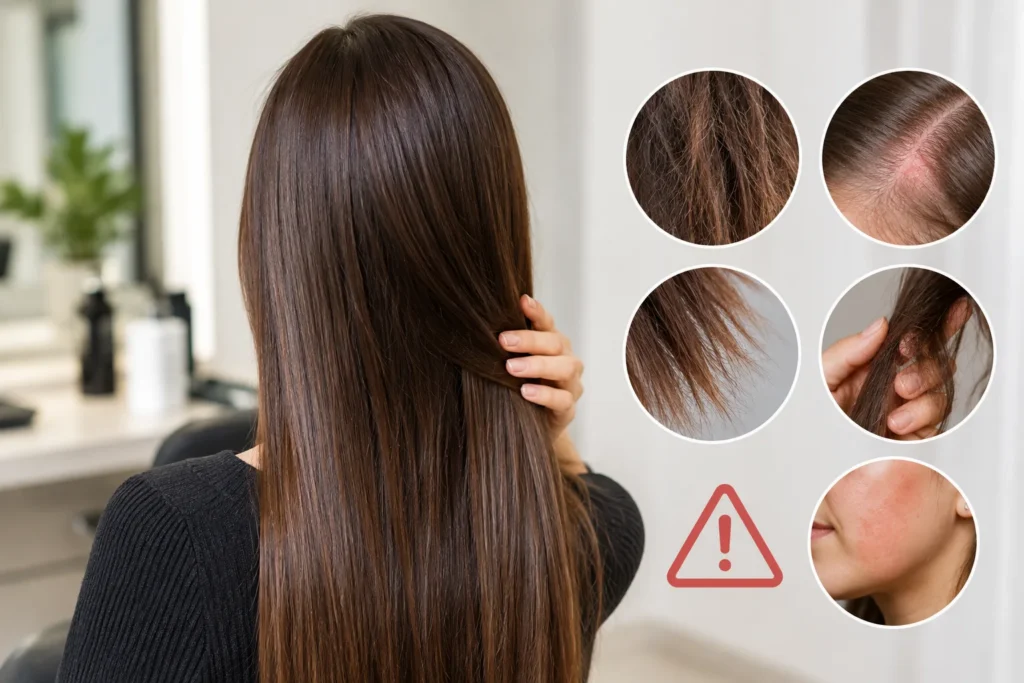
Keratin treatments can cause unwanted effects, particularly when the formula is unsuitable, the hair is already fragile, or heat is applied incorrectly. Potential problems include dryness, breakage, scalp irritation, and changes to natural curl patterns.
A separate concern is formaldehyde exposure from certain smoothing products. The US Food and Drug Administration explains that many hair-smoothing products release formaldehyde gas during the process. The level of risk depends on the ingredients, exposure, ventilation, and handling practices. Reviewing the product label and safety information before treatment is essential for both salon professionals and clients.
Is Formaldehyde in Keratin Treatments a Safety Concern?
Formaldehyde is a known human carcinogen, and inhalation can irritate the eyes, nose, throat, and lungs. The FDA explains that heating certain smoothing products can release the gas into the surrounding air. It recommends checking ingredient information and seeking trained professionals rather than applying these products at home. Names to look for include formaldehyde, formalin, and methylene glycol.
A “formaldehyde-free” claim should not replace careful review of the full ingredient list and safety documentation. The FDA’s consumer guidance provides questions clients can ask salons before booking. Proper ventilation and workplace safeguards are also important for stylists who may experience repeated exposure.
Keratin Treatment for Hair: Benefits, Risks, and Key Considerations
| Factor | Potential benefit | Important consideration |
|---|---|---|
| Frizz control | Smoother-looking hair | Results vary by formula and texture |
| Styling | Easier blow-drying and management | Heat exposure may contribute to damage |
| Shine | More polished appearance | Shine does not prove structural repair |
| Curl pattern | Reduced frizz or loosened curls | Natural texture may change |
| Product safety | Options vary by formulation | Check ingredients and safety documentation |
| Longevity | Results may last weeks to months | Washing habits and product type affect durability |
How Should You Care for Your Hair After a Keratin Treatment?
Aftercare helps maintain the cosmetic result while minimizing unnecessary stress on the hair. The correct routine depends on the specific treatment: some products require a waiting period before washing, while others allow earlier shampooing.
Clients should follow the instructions supplied by the stylist and product manufacturer rather than relying on a universal rule. Gentle cleansing, conditioning, careful detangling, and limiting excessive heat can help keep hair manageable. Aftercare cannot reverse every form of chemical damage, so prevention and realistic expectations remain important.
How Can You Follow a Simple Keratin Treatment Aftercare Routine?
Use this practical process after confirming the treatment-specific instructions with your stylist:
- Follow the initial waiting period. Do not wash or tie up your hair prematurely if your product instructions require a delay.
- Choose a suitable shampoo. Ask your stylist for a gentle, color-safe option compatible with your treatment. Sulfate-free products are often recommended, but suitability depends on the formula.
- Condition regularly. Apply conditioner to the lengths and ends to improve softness and reduce friction during detangling.
- Reduce excessive heat. Allow hair to air-dry when practical and use a heat protectant when styling tools are necessary.
- Monitor hair and scalp condition. Persistent irritation, unusual breakage, or breathing symptoms during treatment should not be ignored.
These steps support routine maintenance, but they do not guarantee a specific duration. Avoid repeating chemical treatments too frequently without assessing the condition of the hair.
How Can You Decide Whether Keratin Treatment Is Right for Your Hair?
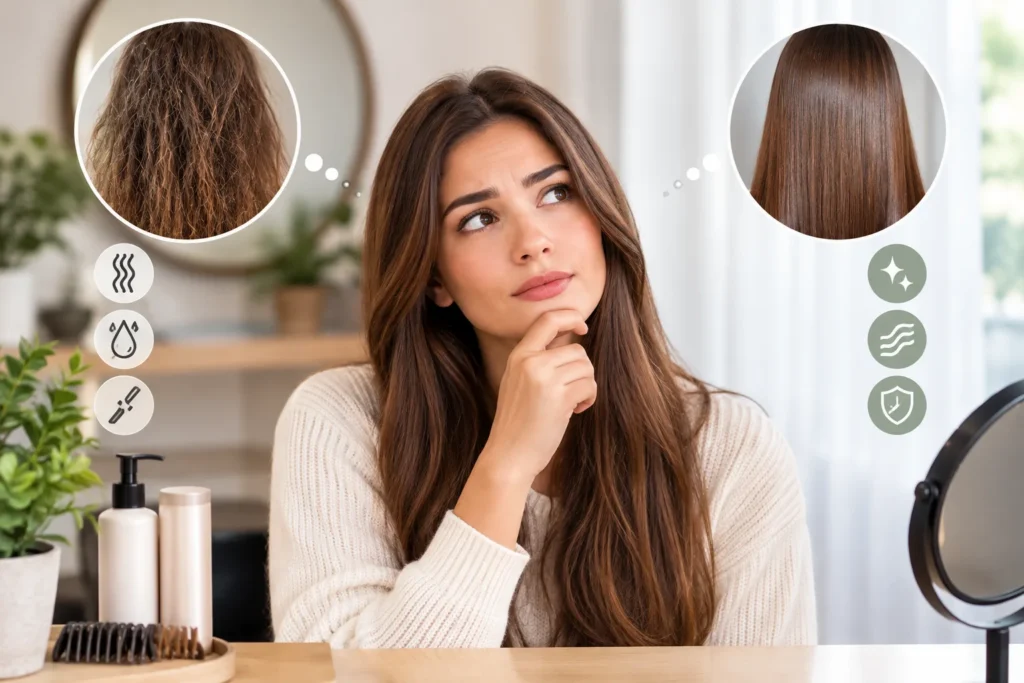
Choosing a treatment requires balancing the desired result against the hair’s current condition and the product’s safety profile. Someone seeking less frizz may not need the same formula as a client who wants a much straighter finish. Hair that is heavily bleached, brittle, or breaking may require a professional assessment before any additional chemical or high-heat service.
Clients should also consider maintenance costs, the time required for application, and whether they are comfortable with changes to their natural texture. An informed consultation is more valuable than selecting a treatment based on promotional photographs alone.
What Should You Ask Before Booking a Keratin Treatment?
Before making an appointment, ask which product will be used, whether it contains or releases formaldehyde, and whether the salon can provide its ingredient list and Safety Data Sheet. Confirm that the stylist is trained to use the product and that appropriate ventilation and protective measures are available.
Discuss previous bleaching, coloring, relaxers, or straightening services, as these may affect the hair’s tolerance for additional processing. Ask what finish to expect, when you can wash your hair, and which products are recommended afterward. If you have a sensitive scalp, respiratory concerns, or a history of reactions to hair products, seek appropriate professional advice before proceeding.
Conclusion
Keratin treatment for hair can improve smoothness, reduce frizz, and make styling easier, but the outcome depends on the formula, application, and condition of the hair. Potential chemical exposure and heat-related damage mean that safety should be considered alongside cosmetic benefits.
Check ingredients, choose a trained professional, and follow product-specific aftercare instructions. For salon professionals and beauty-conscious readers, Salomio offers a starting point for exploring hair care services and making better-informed decisions. Before booking your next treatment, ask the right questions, assess your hair’s needs, and prioritize a service that balances results with safety.
Comments