

Choosing the right care support can make everyday life more manageable for people who need help with personal routines, mobility, or daily activities. A health care assistant may provide practical support while helping individuals maintain comfort, dignity, and as much independence as possible. The exact assistance available depends on the person’s needs, the care arrangement, and the worker’s training and responsibilities.
Care can take place in a private home, residential setting, hospital, or another care environment. Before arranging a service, it is important to understand what support is included, who supervises the work, and which tasks require a qualified medical professional.
Listen
What Does a Health Care Assistant Do?
A health care assistant supports people with everyday care needs under the arrangements and supervision appropriate to the setting. The role focuses on practical assistance and respectful interaction rather than independently diagnosing conditions or providing treatment outside the worker’s qualifications.
“direct personal care and assistance with activities of daily living”
The World Health Organization describes this type of work as involving
This wording comes from the WHO’s classification of health and care occupations, which also notes that institutional care assistants generally work under the supervision of health professionals. Source: World Health Organization
Responsibilities vary by location and care plan. Some workers assist with washing, dressing, meals, and movement, while others may be trained to record basic observations or complete additional delegated tasks. Families should confirm the scope of a particular service before booking it.
Does Health Care Assistant Support in Daily Routines?
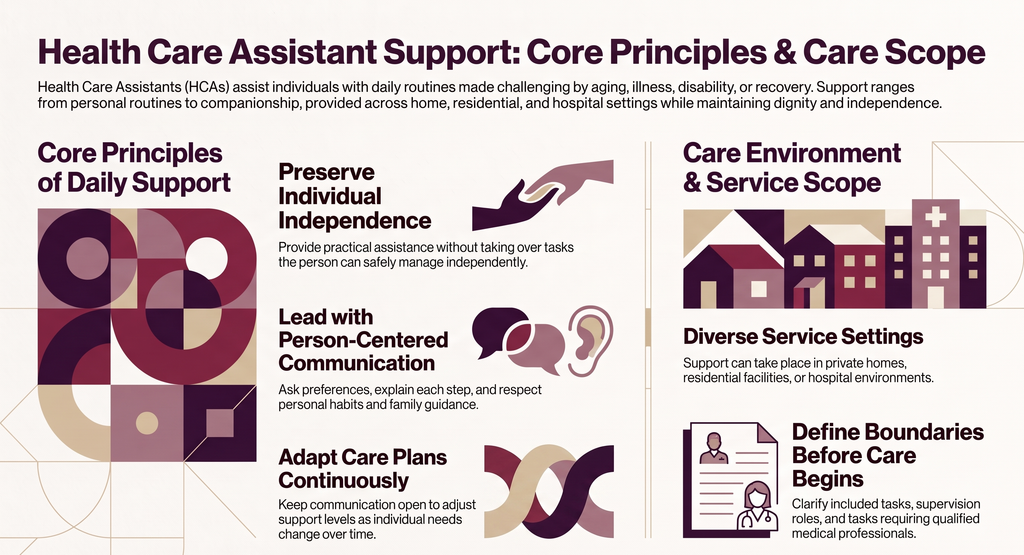
Daily routines can become more difficult because of ageing, disability, illness, injury, or recovery after a hospital stay. Practical support may help a person complete familiar activities while retaining control over personal choices.
Depending on the agreed care plan, assistance may include preparing a person for the day, helping them organise essential belongings, supporting mealtimes, or offering companionship during everyday activities. The aim is to provide appropriate help without taking over tasks the person can safely manage independently.
Good support begins with communication. The worker should ask how the individual prefers to be helped, explain each step, and respect personal habits where possible. Families can also share useful information about routines, mobility needs, communication preferences, and any instructions from the wider care team.
The level of support may change over time. Regular communication with the person receiving care and the responsible family members or professionals helps ensure that the arrangement remains appropriate.
Health Care Treatment and Personal Care
Personal care involves tasks that people may find difficult to complete independently. Depending on the agreed service, a worker may help with washing, dressing, grooming, toileting, and maintaining personal comfort.
These activities require sensitivity because they involve privacy and personal boundaries. The individual should be treated respectfully, given reasonable choices, and encouraged to participate in each task as much as they can. Before care begins, it is useful to discuss preferences around privacy, cultural considerations, and the type of assistance required.
Personal care should not be rushed. A suitable worker explains what they are doing, checks that the person is comfortable, and responds appropriately if the person wants to pause or change the approach. Any concern involving pain, an unexpected change in condition, or a possible safety risk should be communicated to the appropriate responsible professional.
The service should also make clear which tasks are included in the agreed arrangement and which require a different qualification or specialist support.
How This Treatment Support for Mobility?
Some people need assistance when standing, sitting, walking, or moving between a bed and a chair. The correct support depends on the individual’s mobility, the equipment available, and any instructions provided by the care team.
A worker may offer steadying assistance or help with approved mobility equipment when trained and authorised to do so. However, moving or lifting a person incorrectly can put both the individual and the worker at risk. Anyone arranging care should explain known mobility limitations and confirm that the worker has the necessary training and equipment.
It is also important not to assume that every person who needs help walking requires the same level of assistance. Some people need reminders or supervision, while others require a specific moving-and-handling plan. If mobility changes suddenly or a person experiences a fall, severe pain, or another urgent concern, the appropriate medical assistance should be sought rather than relying on routine care support alone.
This Care Treatments in Different Settings
The environment influences the type of help available. Home-based assistance may focus on daily routines and personal comfort, while hospital or residential care support takes place within a wider team and follows the procedures of that setting.
In a private home, the service may be arranged around the person’s usual schedule. In a care facility, responsibilities may be organised according to staffing arrangements, established care plans, and instructions from qualified professionals.
The following factors can help families understand the options:
- Home-based support: Assistance with agreed daily activities in familiar surroundings.
- Hospital-based support: Practical patient care within the hospital’s procedures and the direction of its clinical team.
- Residential care support: Help with personal routines and daily needs as part of the facility’s wider care arrangements.
Availability, qualifications, and permitted duties differ between providers and countries. Confirm the precise service description instead of assuming that every setting offers the same tasks.
Health Care Assistant vs Other Care Options
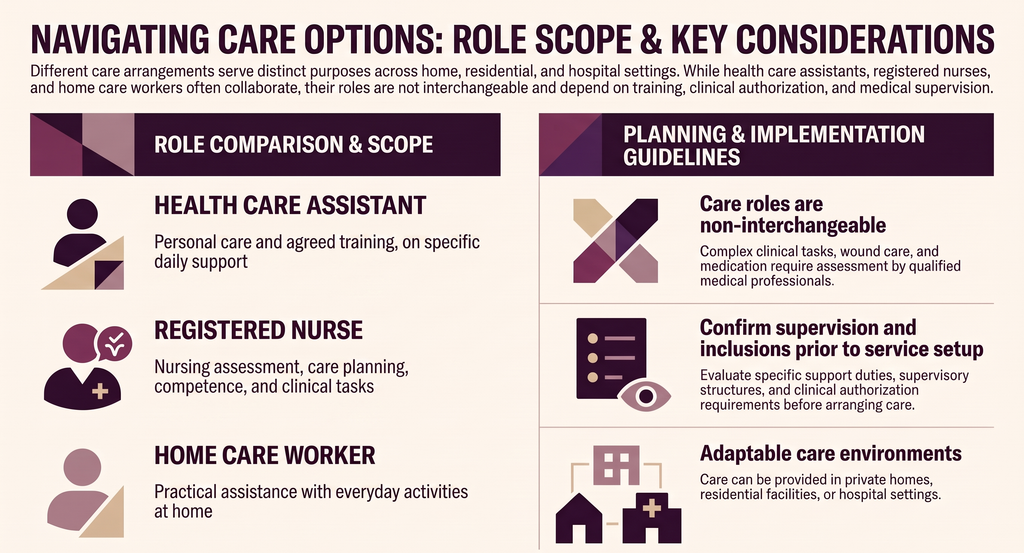
Different care arrangements serve different purposes. A support worker may help with daily activities, while a registered nurse or another qualified professional may be needed for clinical assessment, treatment, or tasks requiring specific authorisation.
| Care option | Main focus | Important consideration |
|---|---|---|
| Health care assistant | Personal care and agreed daily support | Duties depend on training, the care plan, and supervision |
| Home care worker | Practical assistance with everyday activities at home | The scope of personal care and other tasks varies by provider |
| Registered nurse | Nursing assessment, care planning, and clinical responsibilities | Confirm registration, competence, and whether the required care is within their scope |
| Family caregiver | Support provided by relatives or close contacts | Families may need guidance, respite, or additional professional support |
| Specialist therapist | Assessment and support for specific functional goals | A referral or assessment may be appropriate depending on the service |
These roles can work alongside one another, but they are not interchangeable. A person who needs medical monitoring, wound care, medication-related support, or complex clinical assistance should have their needs assessed by an appropriately qualified professional. Any delegated task must follow local rules and the worker’s demonstrated competence.
What to Discuss Before Choosing a Health Care Assistant?
Before booking, explain the person’s daily needs and ask the provider how the proposed service will meet them. A clear discussion can help prevent misunderstandings about responsibilities, scheduling, and costs.
Useful topics include the type of personal assistance required, preferred visiting times, mobility considerations, communication needs, and whether the worker will follow an existing care plan. Families should also ask how concerns are reported, who to contact when a visit is delayed, and what happens if the usual worker is unavailable.
It is sensible to confirm the provider’s recruitment checks, training standards, supervision arrangements, and process for protecting personal information. If assistance will take place at home, discuss access, emergency contacts, and any equipment the worker may need to use.
Pricing should be explained before the service begins. Ask whether charges depend on visit length, overnight support, weekends, travel, or additional tasks. Written confirmation of the agreed duties, schedule, and fees makes it easier for everyone to understand the arrangement.
This Treatment: Safety, Dignity, and Privacy
Good care is not limited to completing practical tasks. It also involves respecting the person’s decisions, communicating clearly, and maintaining appropriate boundaries.
“play a crucial role in providing high quality and compassionate care to patients.”
The NHS Professionals guidance describes healthcare assistants as people who
The statement appears on its overview of the healthcare assistant and healthcare support worker role. Source: NHS Professionals
Compassionate care means listening to concerns, explaining actions, and avoiding language or behaviour that makes a person feel dismissed. Confidential information should be handled according to the provider’s policies and applicable privacy requirements.
Safety also depends on recognising the limits of the role. Workers should follow agreed procedures, maintain appropriate hygiene, and report concerns through the correct channels. Families should understand how incidents, changes in condition, or missed visits are documented and escalated.
No care provider can guarantee that every risk will be eliminated, but clear procedures and suitable training can help support safer care.
What Are The Qualifications and Boundaries of Health Care Assistant?
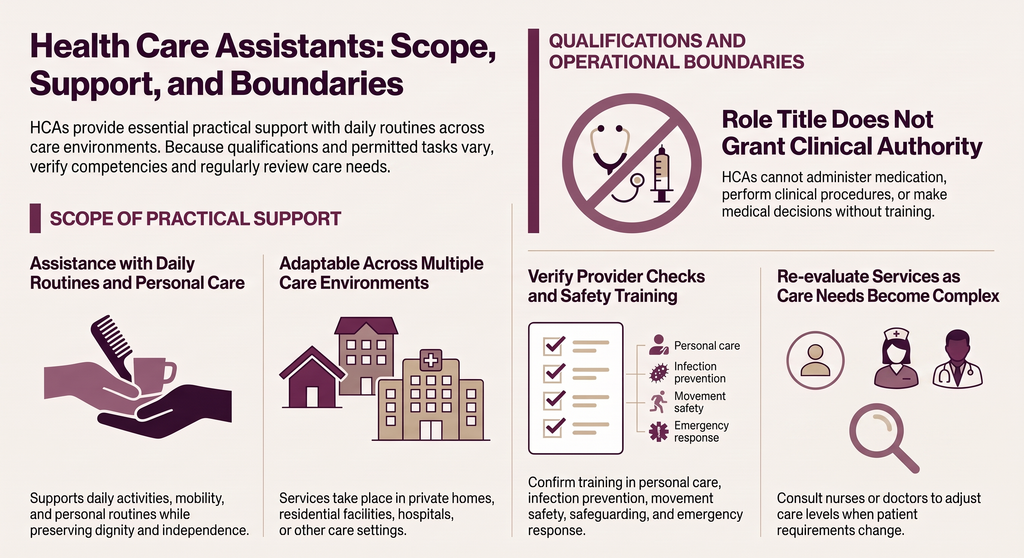
Qualifications and requirements differ between countries, employers, and care settings. Some roles require formal training or a recognised care certificate, while other responsibilities may require additional supervised training or professional registration.
Before arranging a service, ask what checks and training the provider requires. It is also helpful to confirm whether staff receive guidance on personal care, safe movement, infection prevention, safeguarding, confidentiality, and responding to emergencies.
A worker should only perform tasks that fall within their role, training, competence, and authorisation. The title alone does not establish that someone is qualified to administer medication, carry out clinical procedures, or make medical decisions. Confirm those requirements directly with the provider and the relevant health professional.
If the person’s needs become more complex, the original care arrangement may need to be reviewed. A nurse, doctor, or another qualified professional can advise whether additional services or a different level of care is appropriate.
How Can You Prepare Yourself for the First Visit?
A first visit is an opportunity to establish a respectful working relationship and confirm the practical details of care. The individual should be involved in the discussion as much as possible, including decisions about routines, preferences, and personal boundaries.
Before the visit, make sure the provider has the relevant care instructions and emergency contact information. Explain any mobility equipment or communication support that may be needed, and clarify which household tasks are included rather than assuming they form part of personal care.
At the start of the arrangement, confirm the expected visit length, arrival process, payment terms, and method for communicating updates. If the individual is uncomfortable with any aspect of the support, they should know how to raise the concern with the provider.
After the first few visits, review whether the agreed assistance is meeting the person’s needs. A practical review can identify scheduling issues, clarify responsibilities, and highlight any changes that should be discussed with the wider care team.
Conclusion
Choosing suitable care means understanding the person’s needs, checking the provider’s standards, and agreeing on clear responsibilities before support begins. A health care assistant may help with personal routines, mobility, and everyday comfort, but the exact duties depend on the setting, training, care plan, and applicable regulations. Open communication and regular review can help families and individuals make informed decisions about the support they arrange.



Comments