
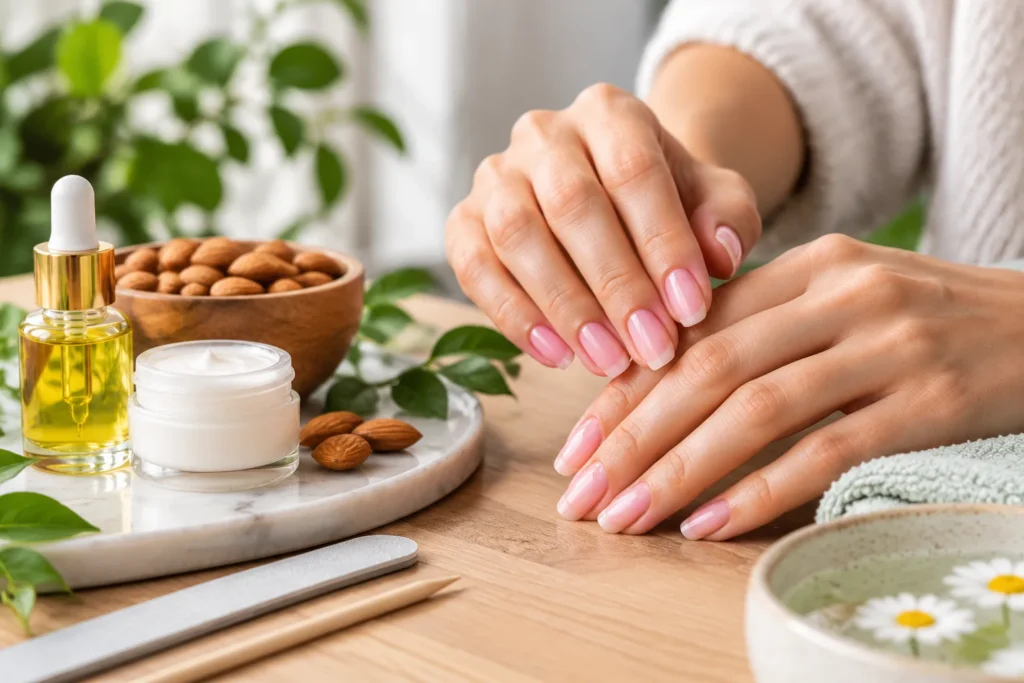
A consistent nail care routine helps keep natural nails clean, flexible, and less prone to splitting or breakage. Healthy-looking nails are not simply the result of regular manicures; they also depend on everyday habits, gentle grooming, moisture, and protection from harsh chemicals. For beauty professionals and clients, understanding these fundamentals makes nail maintenance more effective between salon visits.
The good news is that an effective routine does not require a large collection of products. A few practical steps, performed consistently, can help protect the nail plate and surrounding skin. This guide explains how to care for nails daily, prevent common forms of damage, maintain nail health after manicures, and recognize changes that may require professional attention.
What Does a Healthy Nail Care Routine Include?
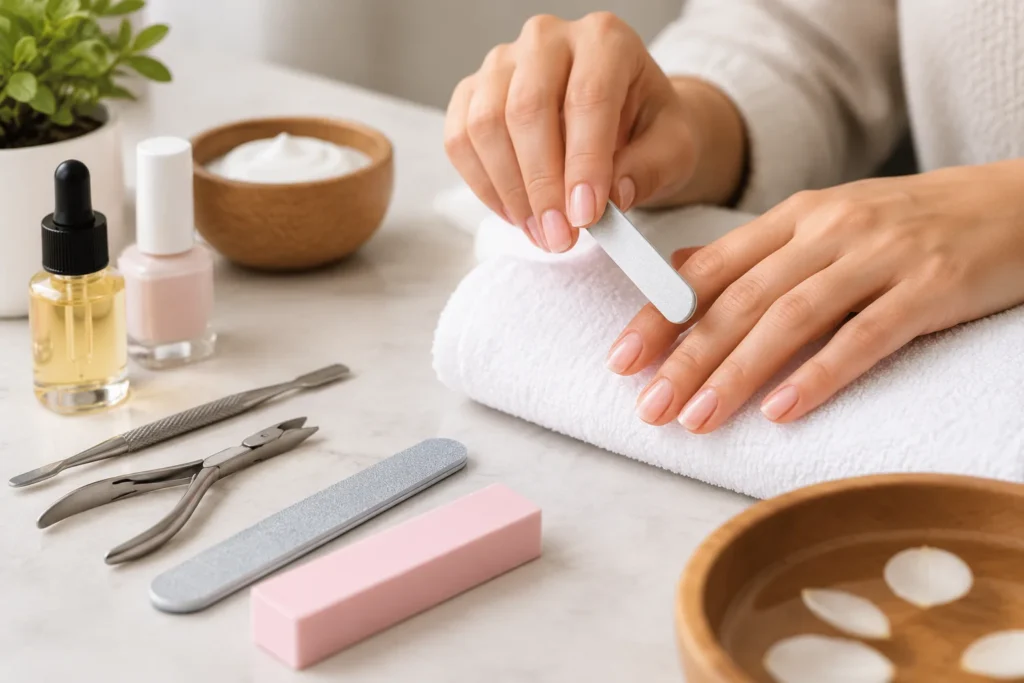
A healthy nail care routine combines hygiene, careful trimming, gentle filing, regular moisturizing, and protection from repeated exposure to water and chemicals. The goal is to preserve the natural nail rather than repeatedly correcting damage after it occurs.
Fingernails are made primarily of keratin, a structural protein. Although the visible nail plate is not living tissue, the surrounding skin and the nail-producing area are important to nail health. Excessive filing, aggressive cuticle removal, and repeated mechanical stress can damage these structures. Good care therefore focuses on prevention, not just appearance.
Why Is Consistent Nail Care Important?
Nails are exposed to everyday stress from typing, cleaning, washing, manual work, and cosmetic treatments. Repeated wetting and drying can contribute to splitting, while impacts and inappropriate grooming can cause chips or damage around the nail edges.
Consistency matters because small habits accumulate. Moisturizing after handwashing helps reduce dryness, while regular inspection makes it easier to notice changes in nail color, texture, or shape. Keeping nails clean and using properly maintained tools also supports good hygiene.
According to the American Academy of Dermatology (AAD), dermatologists recommend keeping nails clean and dry, trimming them carefully, and avoiding cuticle removal. These practices help reduce preventable damage and lower the risk of infection. Read the AAD’s healthy nail care recommendations.
Which Habits Help Keep Nails Healthy and Strong?
Start with simple habits rather than relying on nail hardeners or intensive treatments. Keep nails at a manageable length, avoid biting or picking them, and use a moisturizer on the nail plate, surrounding skin, and cuticles. Wear gloves when washing dishes or handling cleaning products, especially when your hands will remain wet for an extended period.
Avoid using nails to open containers, scrape surfaces, or remove labels. These actions place pressure on the nail and may lead to splitting or separation from the nail bed.
Healthy nails do not need to look perfectly polished. Their condition is better assessed by overall comfort, reasonable strength, and the absence of persistent damage or unusual changes.
How Can You Build a Daily and Weekly Nail Care Routine?
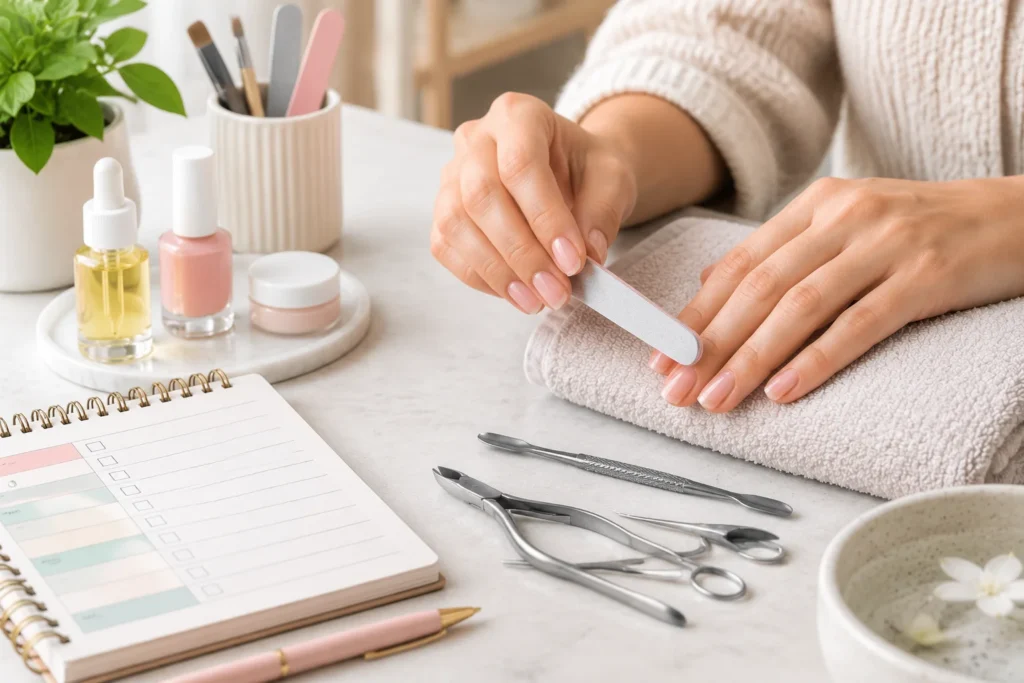
An effective routine should be easy to maintain. Daily care focuses on moisture and protection, while weekly maintenance provides an opportunity to trim, shape, and inspect the nails. The appropriate frequency depends on nail growth, lifestyle, occupation, and the condition of the surrounding skin.
There is no universal schedule that guarantees stronger nails. Instead, adjust your routine according to how quickly your nails grow and whether they tend to peel, split, or catch on clothing. Avoid excessive grooming simply because a particular day is designated for maintenance.
How Can You Follow a Simple Nail Care Routine at Home?
Use the following steps to establish a practical routine:
- Clean gently: Wash your hands with a mild cleanser and remove visible dirt without digging beneath the nail.
- Dry thoroughly: Pay attention to the areas around and beneath the nail edges.
- Trim when needed: Use clean, sharp nail clippers or scissors. Cut fingernails almost straight across, then gently round the corners.
- File carefully: Smooth rough edges with a suitable nail file, moving in one direction rather than aggressively filing back and forth.
- Moisturize: Apply hand cream after washing and massage some into the nails and surrounding skin. Cuticle oil can be an additional option for dry cuticles.
- Protect your hands: Wear suitable gloves for prolonged contact with water, detergents, or cleaning products.
- Inspect your nails: Look for persistent discoloration, unusual thickening, pain, swelling, or separation from the nail bed.
The AAD advises moisturizing after trimming because dry nails are more likely to split. Its nail-trimming guidance also recommends filing in one direction and leaving the cuticles alone.
Which Steps Should You Follow for Weekly Nail Maintenance?
Once a week, check whether your nails need trimming or light filing. Remove dirt gently, clean your personal grooming tools, and look for rough edges or hangnails. If a hangnail appears, clip the loose piece carefully with clean nail scissors rather than pulling it off, which can tear surrounding skin.
Do not cut healthy cuticles or push them back forcefully. The cuticle area helps form a protective seal around the nail, and damaging it can allow germs to enter. If your cuticles are dry, regular moisturizing is generally a safer approach than cutting them.
Daily versus weekly nail care
| Frequency | Recommended action | Main purpose |
|---|---|---|
| After handwashing | Apply moisturizer | Reduce dryness |
| During cleaning | Wear protective gloves | Limit water and chemical exposure |
| As needed | Trim and gently file | Prevent snags and breakage |
| Weekly | Inspect nails and grooming tools | Identify damage and maintain hygiene |
| Between manicures | Monitor changes and avoid picking | Reduce preventable damage |
How Can You Prevent Brittle, Peeling, and Broken Nails?
Brittle nails can have several contributing factors, including repeated water exposure, harsh cleaning products, physical trauma, aging, and some underlying health conditions. Peeling may also become more noticeable after frequent cosmetic treatments or rough removal of nail products.
The most useful first step is to identify habits that may be contributing to damage. Changing those habits can help reduce further breakage, although it will not address every possible cause of nail problems.
How Can You Protect Nails From Water and Harsh Chemicals?
Repeated contact with water can cause nails to expand and contract, potentially making them more vulnerable to splitting. Cleaning products and solvents can also dry the surrounding skin and contribute to nail damage.
Wear waterproof gloves when washing dishes, cleaning bathrooms, or handling detergents. If your hands become sweaty inside gloves, take breaks when practical and dry your hands thoroughly afterward. Apply moisturizer after washing and whenever the skin feels dry.
Limit unnecessary use of nail polish remover, particularly products that leave your nails or skin feeling very dry. Avoid scraping off polish or peeling away gel coatings. Removing these products forcefully can take layers of the natural nail with them.
The Mayo Clinic’s nail care guidance similarly recommends protecting nails from prolonged water exposure, moisturizing regularly, and avoiding habits that injure the nail bed. See its fingernail care recommendations.
Can Nutrition Support Healthy Nail Growth?
A balanced diet provides the nutrients the body needs to produce normal nail tissue. Protein, iron, zinc, and other nutrients contribute to general health, and significant nutritional deficiencies can sometimes affect nail appearance or growth.
However, brittle nails do not automatically indicate a vitamin deficiency. Taking supplements without identifying the cause may be unnecessary and, in some cases, inappropriate. Biotin is often marketed for nail strength, but evidence of benefit is limited to particular situations, and supplements can interfere with certain laboratory tests.
The practical approach is to maintain a varied diet and discuss persistent nail weakness with a healthcare professional. If the problem continues despite gentler grooming and better protection, a medical assessment may help identify an underlying cause.
How Should You Care for Nails After a Manicure?
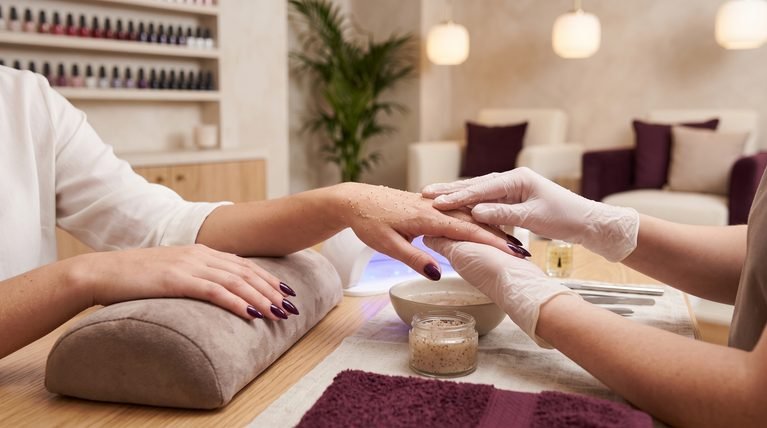
A manicure can improve the appearance of nails, but the way products are applied and removed affects their condition. Repeated gel manicures, aggressive buffing, excessive filing, and forceful product removal may leave natural nails thin, dry, or prone to splitting.
Between appointments, focus on moisture and gentle handling. Do not pick at lifting polish or attempt to remove enhancements by pulling them away from the nail plate. If your nails feel damaged after repeated treatments, consider taking a break from artificial coatings while they grow out.
How Can You Maintain Healthy Nails After Gel Polish?
Follow the removal instructions appropriate to the product, ideally with guidance from a qualified nail professional. Never peel or scrape gel polish off the nail. Avoid using sharp tools to lift product, and do not allow aggressive filing to thin the natural nail plate.
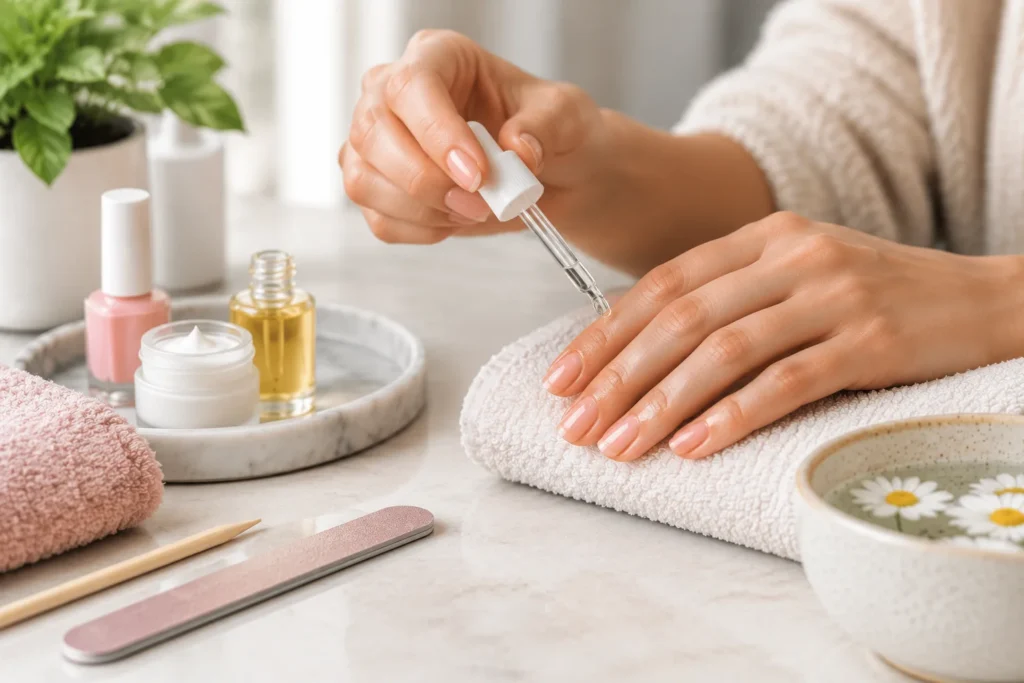
During a break from gel polish, keep nails at a comfortable length and apply moisturizer regularly. Cuticle oil may help condition dry skin around the nails, but it cannot reverse structural damage already present in the nail plate.
Choose salons that follow appropriate hygiene practices, use properly disinfected or sterilized tools as required, and avoid cutting living cuticle tissue. The Mayo Clinic advises clients not to have cuticles removed because doing so can increase the risk of nail infection.
Which Nail Care Products Are Worth Including in Your Routine?
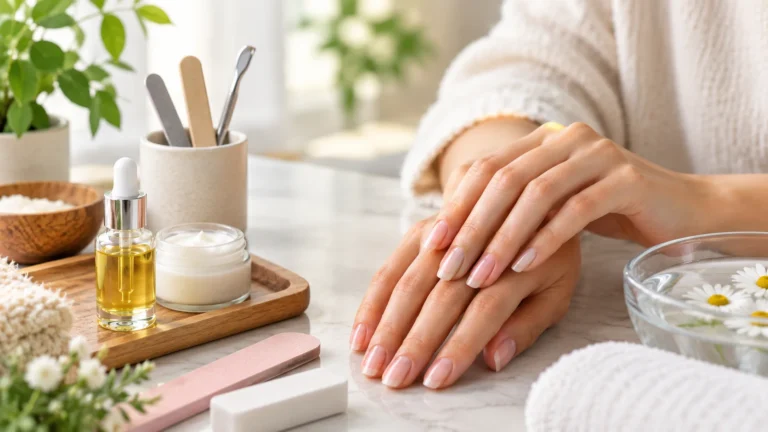
A basic routine generally needs only a few useful items: a gentle hand cleanser, hand moisturizer, nail clippers, a nail file, and clean grooming tools. Cuticle oil may be helpful if the surrounding skin is dry, while protective gloves are useful for household chores.
Products marketed as nail strengtheners may make nails feel harder, but greater stiffness does not always mean better resilience. Some formulas can contribute to brittleness or irritation, depending on their ingredients and how they are used.
As dermatologist Hassan I. Galadari, MD, explains in an AAD article:
“If your hands are dry, use an ointment-based moisturizer, such as petroleum jelly, to your hands, nails and cuticles after every time you wash your hands to help prevent dryness and the development of brittle nails.”
Read the AAD article on skin, hair, and nail care
The best product is one you can use consistently without irritation. Avoid assuming that expensive treatments are automatically more effective than basic moisturizers and careful grooming.
When Should You Seek Professional Advice About Nail Problems?
Most minor snags and occasional breakages can be managed by adjusting grooming habits. However, persistent or unexplained nail changes should not be treated as cosmetic problems alone. Nails can sometimes show signs of infection, inflammation, injury, or other health conditions.
A nail care routine supports maintenance, but it cannot diagnose or treat every nail disorder. When symptoms are unusual, painful, or persistent, medical evaluation is more appropriate than covering the affected nail with polish or an artificial enhancement.
Which Nail Changes Should You Never Ignore?
Seek advice from a healthcare professional or dermatologist if you notice persistent discoloration, a new dark streak, unexplained thickening or thinning, unusual grooves or pits, bleeding, swelling, or pain around the nail. Separation of the nail from its underlying bed also deserves assessment, particularly if it worsens or occurs without an obvious injury.
A sudden change affecting one nail may have a different cause from a change affecting several nails. Do not assume that yellowing, lifting, or thickening is always a fungal infection, and avoid self-treating persistent symptoms without appropriate guidance.
The Mayo Clinic recommends medical assessment for nail changes such as altered color or shape, thickening, separation, bleeding, swelling, or pain. Its guide to fingernail health provides further detail.
For salon professionals, the practical priority is to recognize when a service should be postponed and the client referred for medical advice. Nail technicians can support cosmetic care but should not diagnose nail diseases.
Conclusion: How Can You Make Nail Care a Lasting Habit?
A reliable nail care routine is built around simple, repeatable habits: gentle trimming, careful filing, regular moisturizing, good hygiene, and protection from water and chemicals. These steps can reduce preventable damage and help maintain healthy-looking natural nails between salon visits.
For beauty professionals, sharing evidence-informed aftercare advice can also help clients maintain results and recognize when a nail concern needs medical attention. Salomio supports a more informed approach to beauty and personal care by connecting practical guidance with professional services.
Comments