
Maintaining healthy nails between salon visits requires more than keeping polish fresh. Daily habits such as moisturizing, protecting nails from excessive water, avoiding cuticle damage, and using safe filing techniques can help reduce breakage and peeling.
For salon clients and nail professionals, consistent at-home care also supports better manicure results and helps identify potential problems before the next appointment. Learning how to maintain healthy nails can protect natural nails, extend the appearance of a manicure, and make nail care more effective between professional treatments.
1. What Daily Habits Help Maintain Healthy Nails?
Healthy nails depend on regular, gentle care rather than expensive products or complicated routines. The nail plate can become brittle when exposed to repeated moisture changes, harsh cleaning products, and physical trauma. A practical routine should focus on cleanliness, hydration, protection, and careful handling. These habits are especially important for people who frequently visit nail salons or wear nail polish, gel polish, or artificial enhancements.
Why Should You Moisturize Your Nails and Cuticles Daily?
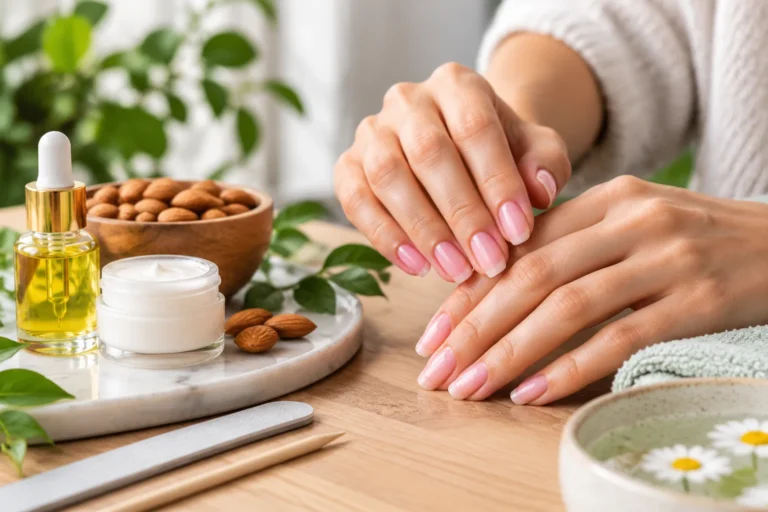
Moisturizing helps reduce dryness around the nails and supports flexibility, which may help minimize splitting and peeling. Apply hand cream after washing your hands, paying attention to the nail plate, surrounding skin, and cuticles. A thicker ointment can be useful when your hands are particularly dry, especially before bedtime.
Board-certified dermatologist Hassan I. Galadari, MD, FAAD, has recommended applying an ointment-based moisturizer to the hands, nails, and cuticles after washing to help prevent dryness and brittle nails. His advice is published by the American Academy of Dermatology (AAD).
Consistency matters more than the number of products you use. Choose a moisturizer that suits your skin, and avoid aggressively rubbing or picking at the skin around your nails.
How Can You Protect Your Nails During Everyday Activities?
Everyday tasks can expose nails to detergents, repeated wetting, and mechanical stress. Wear protective gloves when washing dishes or cleaning with household products. After removing the gloves, dry your hands thoroughly and apply moisturizer.
Avoid using your nails to open packages, scrape surfaces, or lift objects. These actions can create small cracks, cause splitting, or damage the connection between the nail plate and nail bed.
Keep nails at a manageable length and smooth rough edges with a nail file. According to the AAD’s healthy nail guidance, excessive water exposure can contribute to nail splitting, peeling, and breakage. Reducing unnecessary exposure is therefore a simple but valuable part of everyday nail care.
2. How Can You Prevent Nail Breakage, Peeling, and Dryness?
Nail breakage often results from a combination of dryness, repeated exposure to water, physical pressure, and unsuitable grooming techniques. Peeling can also become more noticeable after frequent manicures or improper removal of nail products. Although no routine can prevent every nail problem, gentle care can reduce avoidable damage. The objective is to preserve the natural nail plate, protect the surrounding skin, and avoid treatments that temporarily improve appearance while potentially worsening the underlying problem.
Which Nail-Filing Techniques Help Reduce Damage?
Use a suitable nail file to smooth rough edges, working gently in one direction rather than repeatedly sawing back and forth. Shape the nail without filing deeply into the corners or thinning the surface. If a nail is already peeling, avoid pulling away loose layers because this can expose more of the nail plate to damage.
Keep personal grooming tools clean and avoid sharing them when hygiene cannot be assured. Replace damaged files when necessary, and never use sharp tools to dig beneath the nail or cut into the surrounding skin.
The AAD recommends filing nails in one direction because back-and-forth filing can weaken them. Its nail-trimming guidance also advises moisturizing after trimming to help keep nails flexible.
Do Nail Strengtheners and Supplements Always Work?
Not necessarily. Nail strengtheners can change the stiffness of the nail, but greater stiffness does not automatically mean fewer breaks. Some strengthening products may make nails more likely to break, depending on the formulation and the condition of the nail.
Supplements should not be treated as a universal solution for brittle nails. Nutritional deficiencies may affect nail health, but taking supplements without a demonstrated need does not guarantee stronger nails. If nail changes persist, a healthcare professional can help determine whether nutrition, an underlying condition, medication, or repeated physical damage may be involved.
Avoid choosing products solely because they promise instant results. A gentle routine and appropriate professional advice are generally more useful than repeatedly switching between treatments.
3. How Should You Care for Your Nails Between Manicure Appointments?
The time between salon visits is an opportunity to maintain nail condition and notice changes. Clients should avoid peeling polish, cutting cuticles, or attempting complicated repairs at home. Nail professionals can support better outcomes by explaining aftercare clearly and recommending an appropriate appointment schedule based on the client’s nail condition and chosen service.
How Can You Maintain Healthy Nails Between Salon Visits?
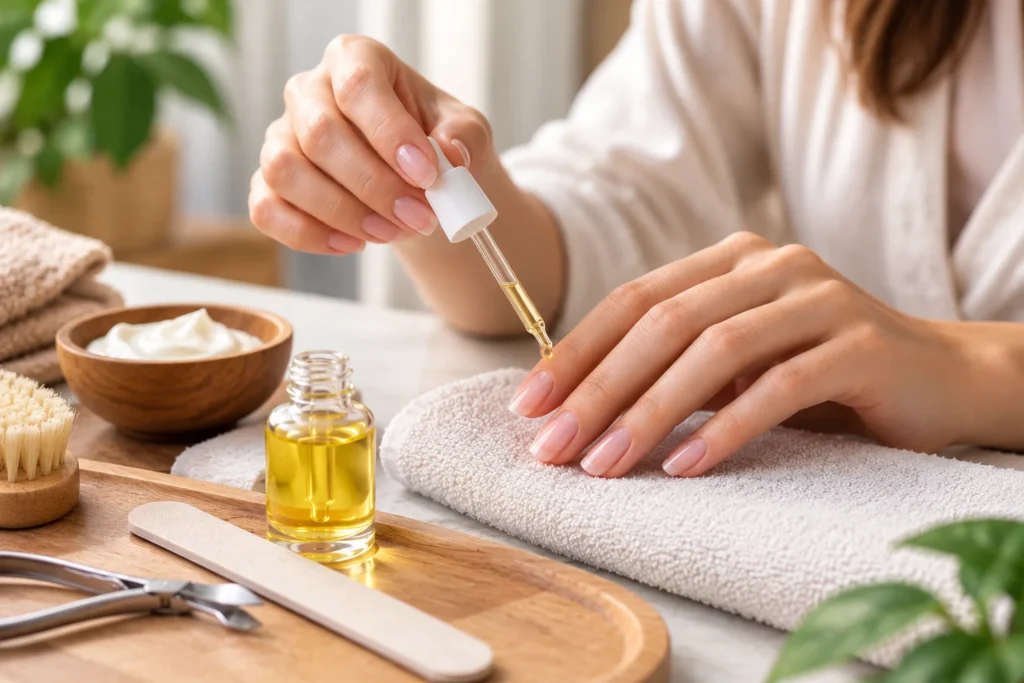
Follow these practical steps between appointments:
- Clean and dry your nails: Wash your hands regularly and dry thoroughly around and beneath the free edge.
- Moisturize consistently: Apply hand cream after washing and use cuticle moisturizer when the surrounding skin feels dry.
- Wear protective gloves: Use them for dishwashing, cleaning, and tasks involving prolonged contact with water or chemicals.
- File gently: Smooth snags in one direction instead of tearing or biting the nail.
- Leave cuticles intact: Do not cut them or forcefully push them back. The cuticle area helps protect against infection.
- Inspect your nails: Look for unexpected discoloration, lifting, swelling, pain, or changes in texture.
This routine is suitable for many people, but it does not replace individualized advice when nails are damaged or symptoms suggest an infection.
What Should You Avoid After a Manicure?
Do not peel, scrape, or forcibly remove gel polish or artificial enhancements. Pulling off these products can remove layers of the natural nail plate and leave nails rough or thin. Follow appropriate removal instructions or return to a qualified nail professional when necessary.
Avoid cutting or aggressively pushing back cuticles. The AAD explains that cuticle removal can increase infection risk because the cuticle helps protect the nail root. Its manicure and pedicure safety guidance also recommends moisturizing nails, particularly after polish removal.
If you notice soreness, unusual lifting, or skin irritation after a service, do not cover the area with another layer of product before assessing the problem.
Table: Healthy Nail Care Habits Between Salon Visits
| Habit | Recommended action | Main benefit |
|---|---|---|
| Moisturizing | Apply hand cream after washing | Helps reduce dryness |
| Water protection | Wear gloves for wet cleaning tasks | Limits repeated exposure |
| Nail filing | File gently in one direction | Helps reduce avoidable damage |
| Cuticle care | Avoid cutting or forceful pushing | Helps protect against infection |
| Gel polish care | Never peel or pick off the coating | Reduces nail-plate trauma |
| Nail inspection | Check for unusual changes | Helps identify problems early |
4. How Can You Keep Gel and Artificial Nails Healthy?
Gel polish and artificial nail enhancements can provide a polished appearance, but their maintenance requires care. Frequent applications, aggressive filing, improper removal, and continuous wear without assessing nail condition may contribute to damage. The appropriate approach depends on the product, application method, natural nail condition, and any history of irritation or allergy.
How Can You Reduce Damage From Gel Polish?
Follow the removal instructions for the specific product and avoid picking at lifting edges. Do not use force to remove coatings that remain firmly attached. If removal requires filing or a chemical remover, use the correct technique and avoid thinning the natural nail.
Pay attention to redness, itching, swelling, or a rash around the fingers. These symptoms may indicate irritation or an allergic reaction to a nail product and should not be ignored. Stop using the suspected product and seek medical advice when a reaction develops.
The AAD notes that artificial nails may worsen existing nail problems and that some product ingredients can cause allergic reactions. Read its manicure and pedicure safety recommendations before choosing your next service.
When Should You Take a Break From Nail Enhancements?
Consider pausing enhancements if your nails become unusually thin, brittle, painful, or visibly damaged. Moisturize regularly and avoid aggressive buffing while the nail grows out. A break does not instantly repair existing damage; improvement depends on new nail growth and the cause of the problem.
Nail technicians should assess the condition of the natural nail before proceeding with another application. If there is suspected infection, significant inflammation, or unexplained nail separation, postpone cosmetic coverage and recommend appropriate medical evaluation.
A professional manicure should never take priority over nail health. Clear aftercare instructions and honest communication about the condition of the nails help clients make safer decisions.
5. When Should You Seek Professional Advice About Nail Problems?
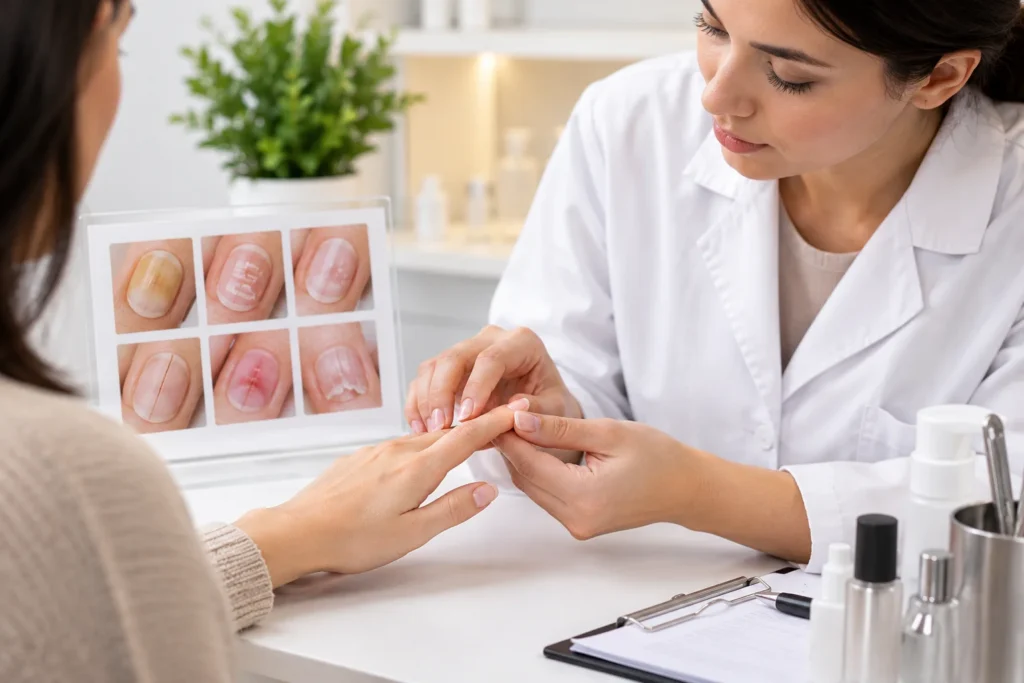
Changes in nail appearance are not always caused by cosmetics. Persistent discoloration, thickening, separation, unusual texture, swelling, or pain can sometimes indicate infection, injury, or an underlying health condition. Nail technicians can identify visible concerns and recommend that clients seek medical assessment, but they should not diagnose medical conditions or attempt to treat suspected infections through cosmetic services.
Which Nail Changes Should You Never Ignore?
Seek advice from a healthcare professional if you notice unexplained changes in nail color, shape, thickness, or texture, especially when they persist or worsen. Pain, swelling, discharge, or redness around the nail also warrants attention. A new dark streak or a changing mark beneath a nail should be assessed promptly.
Dermatologist Christine Poblete-Lopez, MD, of Cleveland Clinic states: “Your nail health is a very good reflection of your overall health.” Read the discussion in Cleveland Clinic’s article on nail health.
This does not mean every nail change signals a serious illness. However, avoiding self-diagnosis and seeking timely assessment can help distinguish harmless changes from problems requiring treatment.
Conclusion
Healthy nails between salon visits depend on consistent, gentle habits: moisturize regularly, protect nails from excessive water and chemicals, file carefully, preserve the cuticles, and avoid peeling off polish or enhancements. Checking your nails regularly also helps you notice changes that may need professional attention.
For salon clients and nail professionals, effective aftercare is an essential part of maintaining nail appearance without overlooking nail health. Explore more practical beauty and nail-care guidance on Salomio to help make informed decisions between appointments.
Comments