
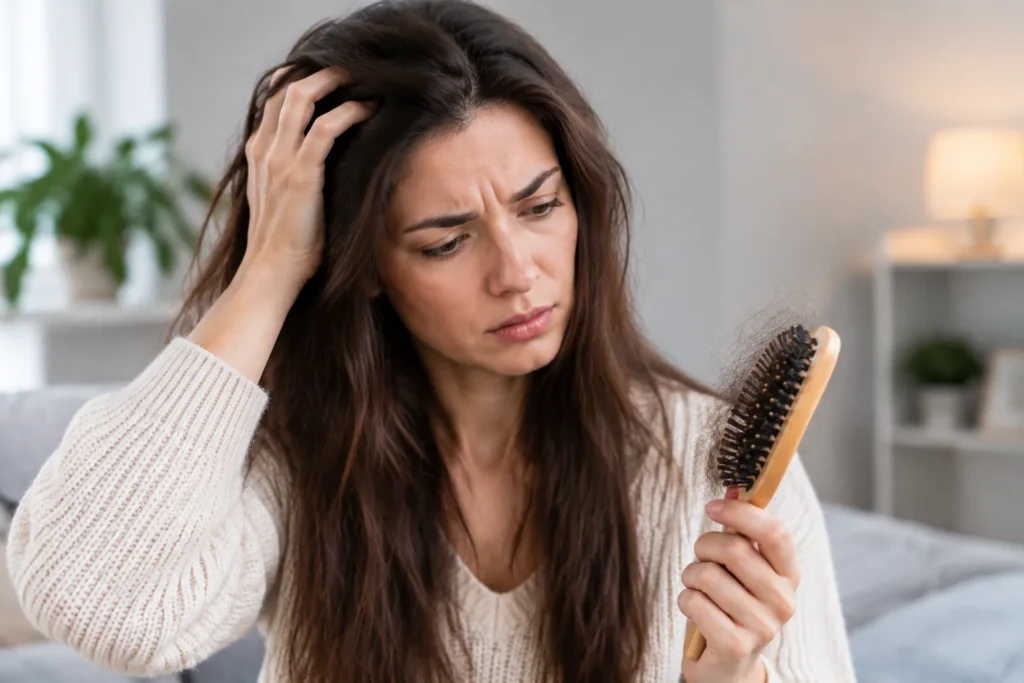
Stress and hair loss are often connected, but the relationship is more complex than it may seem. Significant emotional or physical stress can disrupt the hair growth cycle, sometimes leading to noticeable shedding several months after a stressful event. Understanding this connection helps people recognize possible warning signs and make informed decisions about hair care and professional treatment.
For salon professionals and individuals concerned about thinning hair, it is important to distinguish stress-related shedding from other conditions that require medical assessment. Although some stress-related hair loss is temporary, identifying the underlying cause is essential for appropriate care and recovery.
Can Stress Cause Hair Loss?
Yes, stress can contribute to hair loss, particularly through a condition called telogen effluvium. During this process, a larger-than-usual number of hair follicles enter the resting phase of the growth cycle, causing increased shedding later. However, stress is not the only possible explanation for hair loss.
Genetics, hormonal changes, nutritional deficiencies, illnesses, and medications can also play a role. The American Academy of Dermatology (AAD) explains that stressful life events can trigger increased shedding, while other stress-associated conditions may cause hair loss through different mechanisms.
How Does Stress Affect the Hair Growth Cycle?
Hair naturally moves through growth, transition, and resting phases. Most scalp hair is in the growth phase at any given time. Significant physical or emotional stress can disrupt this cycle, causing more follicles than usual to enter the resting phase prematurely.
Dermatologist Melissa Piliang, MD, explains in Cleveland Clinic’s guide to stress and hair loss: “That can lead to increased shedding seen days, weeks or even months later.”
The delay helps explain why people may notice hair loss after an illness, a difficult life event, surgery, or a prolonged period of pressure. The timing alone, however, cannot confirm that stress is responsible. A medical professional may need to evaluate other possible triggers, especially when shedding is severe or persistent.
What Is Telogen Effluvium?
Telogen effluvium is a form of diffuse hair shedding that can occur after a significant stressor or physical change. Instead of producing a single bald patch, it commonly causes increased shedding across the scalp. People may notice more hair on their pillow, in the shower, or in their hairbrush.
According to Mayo Clinic, “Yes, stress and hair loss can be related.”
The condition is often temporary, particularly when the triggering factor resolves. Nevertheless, a similar pattern can occur for reasons unrelated to psychological stress. Recent illness, surgery, restrictive dieting, medication changes, and thyroid problems can also contribute. Identifying the likely trigger is therefore more useful than assuming every episode of excessive shedding is stress-related.
What Are the Signs of Stress-Related Hair Loss?
Recognizing changes in shedding can help people decide when to seek professional advice. Stress-related hair loss often develops gradually after a triggering event, rather than appearing immediately when stress begins. The pattern and duration vary between individuals, and other conditions can produce similar symptoms. Observing changes over time is useful, but self-assessment cannot reliably establish the cause. People should also pay attention to scalp symptoms, sudden bald patches, and other changes that may indicate a condition requiring medical evaluation.
How Can You Recognize Excessive Hair Shedding?
Common signs include noticeably more loose hair during washing, brushing, or styling, along with reduced overall volume. Some people notice that their ponytail feels thinner or that the scalp becomes more visible through the hair. These changes may emerge a few months after a stressful event.
The scalp in uncomplicated telogen effluvium generally does not develop significant inflammation, pain, or scaling. Such symptoms may suggest another problem and should not be ignored. Hair shedding also varies naturally from day to day, so a few extra strands do not necessarily indicate a disorder.
Instead of repeatedly counting individual hairs, note persistent changes in volume and shedding. If the problem continues, worsens, or causes concern, a dermatologist can assess the pattern and determine whether further investigation is appropriate.
How Is Stress-Related Hair Loss Different From Other Types?
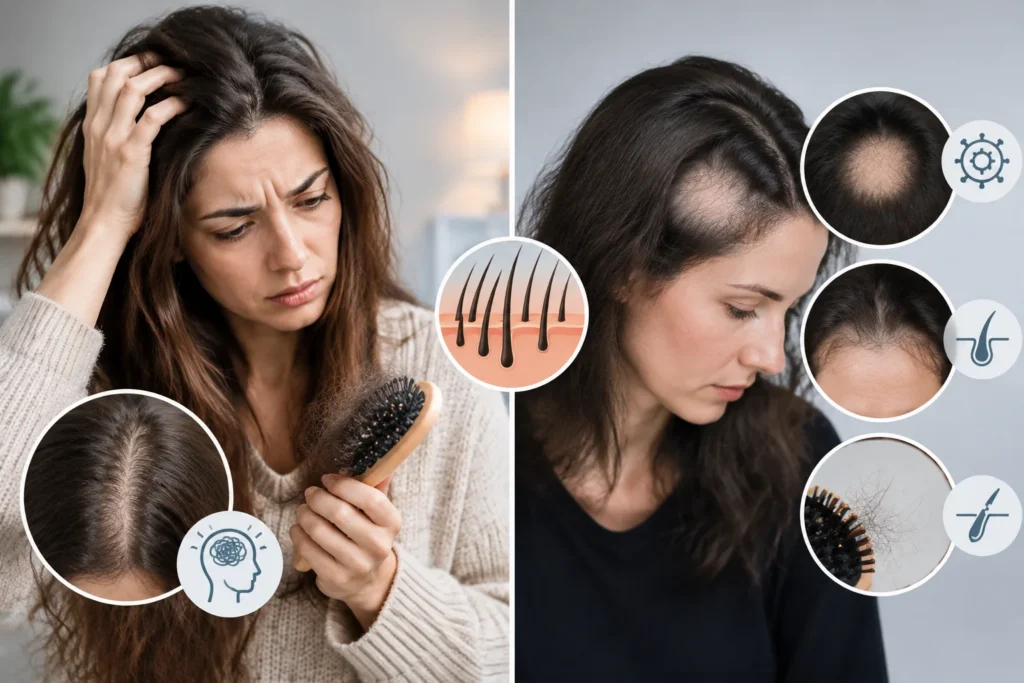
Telogen effluvium typically causes relatively widespread shedding, whereas hereditary pattern hair loss often develops gradually in characteristic areas, such as the temples, hairline, or crown. Alopecia areata, an autoimmune condition, can cause distinct patches of hair loss. These conditions can sometimes overlap, making a reliable diagnosis important.
Stress may also contribute to behaviors such as compulsive hair pulling, known as trichotillomania. This is different from the hair-cycle disruption associated with telogen effluvium and may require specific psychological or medical support.
Because the patterns can overlap, people should avoid diagnosing themselves based solely on a stressful period. A dermatologist can review medical history, examine the scalp, and determine whether blood tests or other investigations are needed.
How Long Does Stress-Related Hair Loss Last?
The duration depends on the trigger, individual health, and whether other causes are present. In many cases of acute telogen effluvium, increased shedding begins around two to three months after the triggering event. Shedding may then gradually settle, followed by visible regrowth. However, hair recovery is not immediate, because new strands need time to grow long enough to restore the appearance of density. Persistent shedding may require further investigation rather than continued waiting.
Can Hair Grow Back After Stress-Related Hair Loss?
Yes, hair often grows back after temporary stress-related shedding once the underlying trigger has resolved. According to Cleveland Clinic’s medical overview, many people begin to notice regrowth within several months. The timeline varies, and restoring the previous appearance of fullness can take considerably longer.
Regrowth may initially appear as short, fine strands around the scalp. This can be encouraging, but it does not guarantee that stress was the only cause. If shedding continues beyond six months, hair density does not improve, or new symptoms develop, seek a medical assessment.
It is also important to understand that not all hair loss is reversible. Hereditary hair loss and certain inflammatory or scarring conditions follow different patterns and may require specific treatment. Early evaluation helps distinguish temporary shedding from conditions that need ongoing care.
What Is the Difference Between Temporary Shedding and Persistent Hair Loss?
Temporary shedding often follows a recognizable trigger and gradually improves as the hair cycle returns to its usual pattern. Persistent or progressive hair loss may reflect an ongoing trigger, a nutritional deficiency, a hormonal condition, hereditary hair loss, or another medical issue.
Table: Comparing Common Hair Loss Patterns
| Feature | Possible stress-related shedding | Other potential causes |
|---|---|---|
| Onset | Often delayed after a trigger | May be gradual or sudden |
| Pattern | Usually diffuse shedding | May be patterned, patchy, or diffuse |
| Duration | Often temporary | Depends on the underlying condition |
| Next step | Identify triggers and monitor recovery | Medical assessment when indicated |
This comparison is a general guide, not a diagnostic tool. Different conditions can produce similar patterns, and professional assessment is appropriate when the cause is unclear.

How Can You Manage Stress and Support Healthy Hair?
Managing stress and maintaining healthy habits can support general well-being and may help when stress contributes to hair shedding. However, lifestyle changes cannot treat every cause of hair loss, and no routine guarantees immediate regrowth. The most effective approach combines attention to the underlying trigger, gentle hair care, adequate nutrition, and professional guidance when necessary. Avoid unproven supplements or aggressive treatments, particularly when the cause of shedding has not been established.
Which Daily Habits Can Help Manage Stress?
Regular physical activity, consistent sleep, relaxation exercises, and social support can help people manage everyday stress. Practices such as slow breathing, mindfulness, yoga, and spending time outdoors may also help some individuals feel more balanced. When stress significantly affects daily life, speaking with a qualified mental health professional can provide additional support.
These habits should be viewed as part of general health management, not as guaranteed treatments for hair loss. Hair follicles respond to multiple influences, and reducing stress may not resolve shedding caused by an unrelated medical condition.
Consistency is more useful than attempting several major lifestyle changes at once. Choose manageable habits that fit your routine and seek professional support if anxiety, low mood, or sleep difficulties become persistent.
How Can You Support Hair Recovery With Nutrition and Gentle Care?
How-to: Build a supportive hair-care routine
- Eat balanced meals: Include adequate protein and a varied range of nutrient-rich foods. Restrictive diets may contribute to shedding.
- Handle hair gently: Use a suitable shampoo and conditioner, avoid excessive heat, and reduce tight hairstyles that place tension on the roots.
- Review possible triggers: Note recent illnesses, major life events, medication changes, or dietary changes to discuss with a healthcare professional.
- Avoid unnecessary supplements: Iron, biotin, and other supplements should not be used indiscriminately. Testing and professional advice can help identify genuine deficiencies.
- Monitor progress realistically: Look for gradual changes rather than expecting immediate results, and seek assessment if shedding persists or worsens.
Salon professionals can support clients through gentle styling and appropriate product selection, but they should not diagnose medical conditions or promise that cosmetic treatments will reverse stress-related hair loss.
When Should You See a Dermatologist About Hair Loss?
Professional assessment is important when shedding is sudden, severe, persistent, or accompanied by other symptoms. Stress may be a contributing factor, but attributing every change to stress can delay the identification of a treatable condition. A dermatologist can evaluate the scalp, review potential triggers, and recommend tests or treatment when necessary. Early assessment is particularly useful when the pattern does not fit typical diffuse shedding or when hair loss continues despite improvements in general well-being.
Which Symptoms Need Medical Assessment?
Seek medical advice if you develop distinct bald patches, rapid or substantial hair loss, scalp pain, redness, scaling, or persistent itching. Hair loss involving the eyebrows or other body areas also deserves assessment. Consult a healthcare professional if shedding continues for several months, appears to be progressing, or occurs alongside other unexplained symptoms.
A clinician may ask about recent illnesses, weight changes, nutrition, family history, and medications. Depending on the findings, they may recommend blood tests or other investigations. Treatment should address the actual cause rather than relying solely on stress management or cosmetic products.
Conclusion
The connection between stress and hair loss is real, but it is not the only explanation for excessive shedding. Stress can disrupt the hair growth cycle and trigger temporary conditions such as telogen effluvium, with shedding often becoming noticeable months after a stressful event. Recovery may occur gradually, while persistent or unusual hair loss requires medical assessment.
The practical approach is to manage stress, maintain balanced nutrition, handle hair gently, and avoid unproven treatments. For salon professionals, recognizing warning signs and referring clients to qualified healthcare providers is an important part of responsible hair-care guidance. Explore more evidence-informed hair and scalp care resources on Salomio to help support healthier grooming practices.



Comments