

Personalized Nutrition Coaching can help you build realistic eating habits, improve your daily routines, and work toward health and wellness goals that fit your lifestyle. Rather than following a restrictive diet or attempting to change everything at once, coaching focuses on practical steps you can maintain over time. As summer transitions into fall, changes in schedules, activity levels, and meal routines can offer an opportunity to reassess your habits. At Salomio, nutrition and lifestyle coaching should encourage balanced choices, individual goal-setting, and sustainable progress without unrealistic promises or one-size-fits-all plans.
Listen
What Is Personalized Nutrition Coaching?
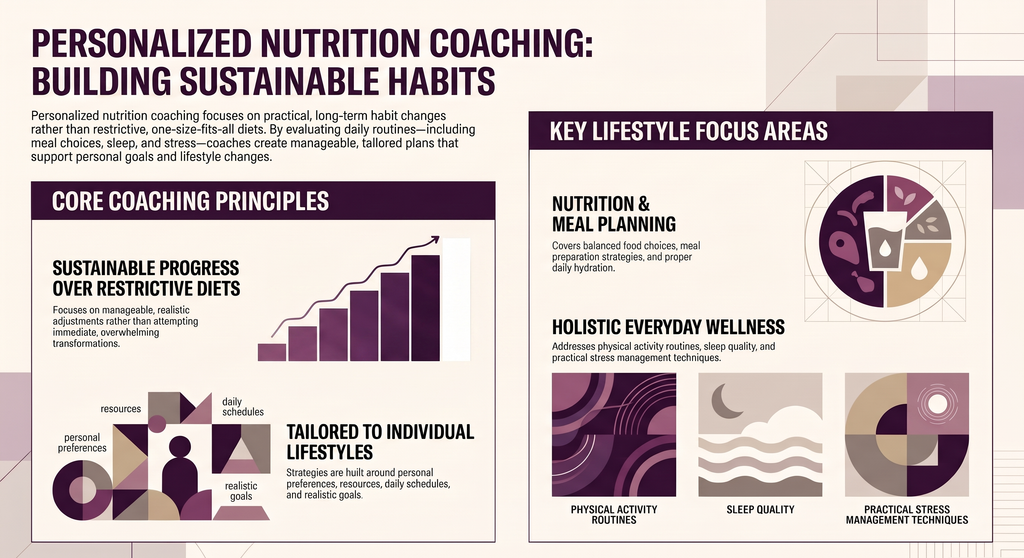
Nutrition and lifestyle coaching helps people explore their current habits and identify manageable ways to improve them. Depending on the service and the coach’s qualifications, sessions may cover meal planning, food choices, hydration, physical activity, sleep routines, and everyday stress management. The aim is to develop a plan that fits your preferences, resources, schedule, and personal goals.
How Personalized Nutrition Coaching Works
A coaching session may begin with a conversation about your current eating patterns, daily responsibilities, activity level, and the changes you would like to make. The coach can help you identify priorities and break them into achievable steps. Progress may be reviewed during follow-up sessions, allowing you to discuss what worked, what felt difficult, and which adjustments might make your routine more manageable.
Personalized Nutrition Coaching and Individual Needs
People have different food preferences, cultural traditions, budgets, work schedules, and nutritional needs. A practical plan should reflect those differences rather than prescribe the same meals or routines to everyone. Coaching can support general wellness habits, but medical nutrition therapy and advice for health conditions should come from an appropriately qualified healthcare professional, such as a registered dietitian or physician.
What Benefits Can Nutrition and Lifestyle Coaching Offer?
Coaching can provide structure, encouragement, and a way to review habits without expecting immediate perfection. Its value often comes from turning broad intentions into small actions that are easier to repeat. Outcomes vary by person, and no coaching service can guarantee weight loss, disease prevention, or a particular health result.
Setting Realistic Goals with Personalized Nutrition Coaching
A goal such as “eat healthier” can feel vague, whereas preparing a balanced lunch several days each week gives you something specific to practise. A coach may help you choose a starting point, identify barriers, and decide how to measure progress. Goals should be flexible enough to accommodate busy days, travel, family responsibilities, and occasional changes in routine.
Building Habits Through Personalized Nutrition Coaching
Long-term routines are generally more useful than short-lived challenges that require extreme effort. A coach may help you plan grocery shopping, prepare convenient meals, create reminders to drink water, or schedule movement breaks during the day. These actions are not complicated, but repeating them consistently can make healthy choices easier to incorporate into everyday life.
How Can Food Choices Support Everyday Well-Being?
A balanced eating pattern provides energy and essential nutrients while allowing room for personal preferences and enjoyment. It does not need to rely on expensive ingredients, eliminate entire food groups, or follow a rigid menu. Emphasising that healthy eating can look different depending on individual needs and circumstances. Read the WHO’s healthy diet guidance for further information.
“Healthy diets come in many forms”
The World Health Organization
Personalized Nutrition Coaching for Meal Planning
Meal planning can help you make food choices in advance instead of relying entirely on last-minute decisions. Depending on your needs, meals might include vegetables or fruit, whole grains or other fibre-rich foods, protein sources, and suitable fats. Beans, lentils, eggs, fish, yoghurt, oats, rice, and seasonal produce can all fit into different eating patterns. The right combination and portions depend on your individual needs, preferences, and activity level.
Personalized Nutrition Coaching for Everyday Routines
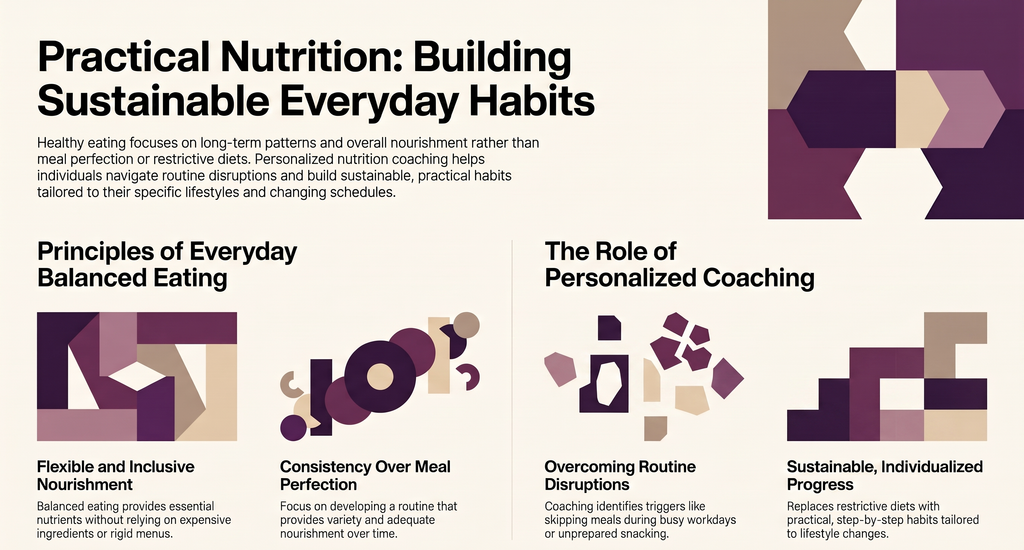
Healthy eating is not about making every meal perfect. It is about developing a pattern that provides variety and adequate nourishment over time. Coaching may help you reccognise situations that disrupt your routine, such as skipping meals during busy workdays or relying on convenient snacks when you are unprepared. Planning a few easy meals and keeping suitable options available can make balanced choices more practical.
How Do Nutrition and Lifestyle Habits Work Together?
Food choices are one part of overall well-being. Movement, sleep, hydration, stress management, and social routines can also affect how you feel and how manageable your daily habits become. The Centers for Disease Control and Prevention identifies healthy eating, physical activity, adequate sleep, and stress reduction as important components of health. A coaching plan can help you consider these areas together without trying to change everything at once.
Supporting Movement, Sleep, and Stress Management
Physical activity does not have to begin with demanding workouts. Walking, cycling, dancing, swimming, or other activities you enjoy may help you build a more active routine. Similarly, maintaining a reasonably consistent sleep schedule and making time to relax can support day-to-day well-being. Your starting point should reflect your current abilities and circumstances. If you have a chronic condition, an injury, or concerns about beginning exercise, seek appropriate healthcare advice.
Making Sustainable Changes Without Extreme Rules
Strict food rules can make everyday eating unnecessarily stressful and may not suit everyone’s nutritional needs. Instead, focus on habits you can realistically maintain, such as planning meals, eating a variety of foods, or taking regular movement breaks. Flexibility matters: a meal outside your usual routine does not undo your progress. The goal is to develop a balanced pattern rather than judge success by a single day.
How Does Professional Coaching Compare with Self-Guided Planning?
Some people prefer to manage their own routines, while others find that structured support makes it easier to stay focused. Both approaches can be useful. The right choice depends on your goals, confidence, available time, and whether you need general lifestyle support or specialist nutritional advice.
Choosing Personalized Nutrition Coaching with Professional Support
Working with a qualified coach can give you a regular opportunity to review goals, discuss obstacles, and adjust your plan. Before booking, ask about the provider’s training, scope of practice, session format, and approach to progress. If you have a medical condition, take medication that affects nutrition, or need a therapeutic diet, choose a registered dietitian or another appropriately qualified healthcare professional for individualised clinical guidance.
When Personalized Nutrition Coaching May Be Helpful
Coaching may be useful if you struggle to organise meals, want to develop more consistent habits, or need help turning general intentions into practical steps. Self-guided planning may be sufficient if you already feel confident about your routine and have straightforward goals. Neither option should rely on shame, unrealistic promises, unsafe restriction, or supplements presented as guaranteed solutions.
| Feature | Professional coaching | Self-guided planning |
|---|---|---|
| Structure | Scheduled sessions and agreed goals | Flexible planning at your own pace |
| Personalisation | Goals can be adapted through discussion | Depends on your knowledge and planning |
| Accountability | Regular opportunities to review progress | Requires personal tracking and motivation |
| Cost and time | May require a service fee and appointments | Can be inexpensive but requires self-direction |
| Best suited to | People who value guidance and structured review | People comfortable planning and adjusting independently |
How Can You Maintain Healthy Habits Through Fall?
Seasonal transitions can change daily schedules, meal preparation, outdoor activity, and sleep routines. Rather than treating fall as a reason to start a restrictive plan, use it as an opportunity to make your existing habits more convenient. Small adjustments that fit your real schedule are often easier to sustain than a complete lifestyle overhaul.
Personalized Nutrition Coaching for Seasonal Routines
Consider which routines may change as the season progresses. You might plan warm, balanced meals for cooler days, prepare lunches before busy mornings, or find indoor activities when outdoor plans are less convenient. Choose produce and ingredients that are available and affordable where you live. Seasonal eating can offer variety, but you do not need special foods or expensive products to follow a balanced eating pattern.
Maintaining Progress After Coaching
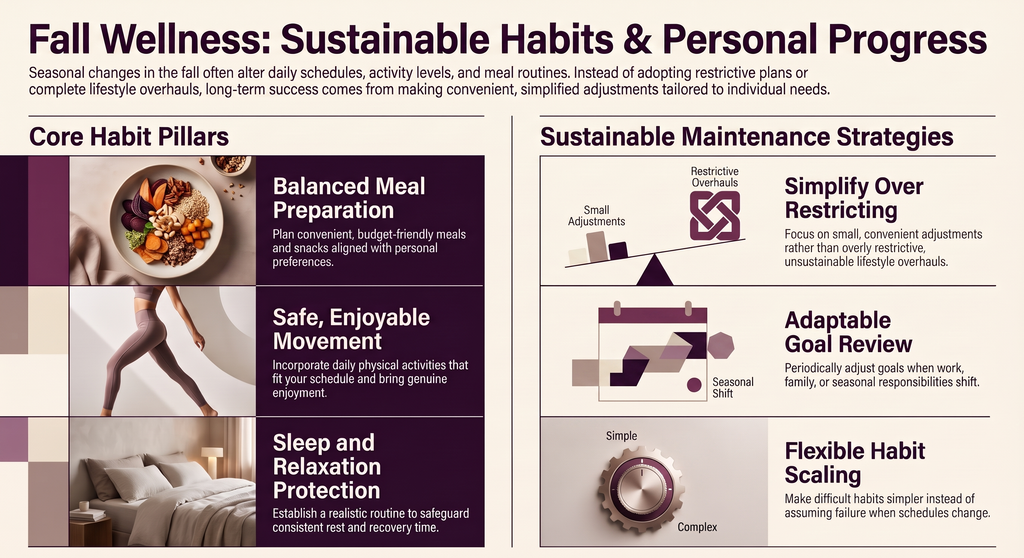
Tracking a few practical habits can help you recognise progress without becoming overly focused on numbers. You might note how often you prepare meals at home, take movement breaks, or follow a consistent bedtime. Review your goals periodically and adjust them when work, family, or other responsibilities change. If a habit becomes difficult, simplify it rather than assuming you have failed.
- Plan a few balanced meals and convenient snacks that fit your budget and preferences.
- Build movement into your day through activities you enjoy and can do safely.
- Protect time for sleep and relaxation by creating a realistic daily routine.
- Review your goals regularly and make small adjustments when your circumstances change.
Conclusion
Personalized Nutrition Coaching can help you develop practical eating habits and lifestyle routines that fit your needs, preferences, and everyday responsibilities.
By focusing on achievable goals, balanced food choices, movement, sleep, and regular reflection, you can build a routine that is easier to maintain over time. As fall begins, choose small adjustments that support your daily life rather than chasing quick fixes.
If you are considering nutrition and lifestyle coaching at Salomio, ask about the provider’s qualifications, the service’s scope, and how the plan will be tailored to you. For medical nutrition needs, seek guidance from an appropriately qualified healthcare professional.
Keep Your Goals Practical and Flexible
Start with one or two habits that feel achievable, then build on them when they become part of your routine. Progress does not need to be perfect to be meaningful, and your plan can change as your needs change.
Choose Support That Fits Your Needs
Whether you work independently or with a coach, prioritise evidence-informed guidance, realistic expectations, and a respectful approach to food and well-being. A suitable plan should help you make informed choices without unnecessary pressure or promises of guaranteed outcomes.



Comments