
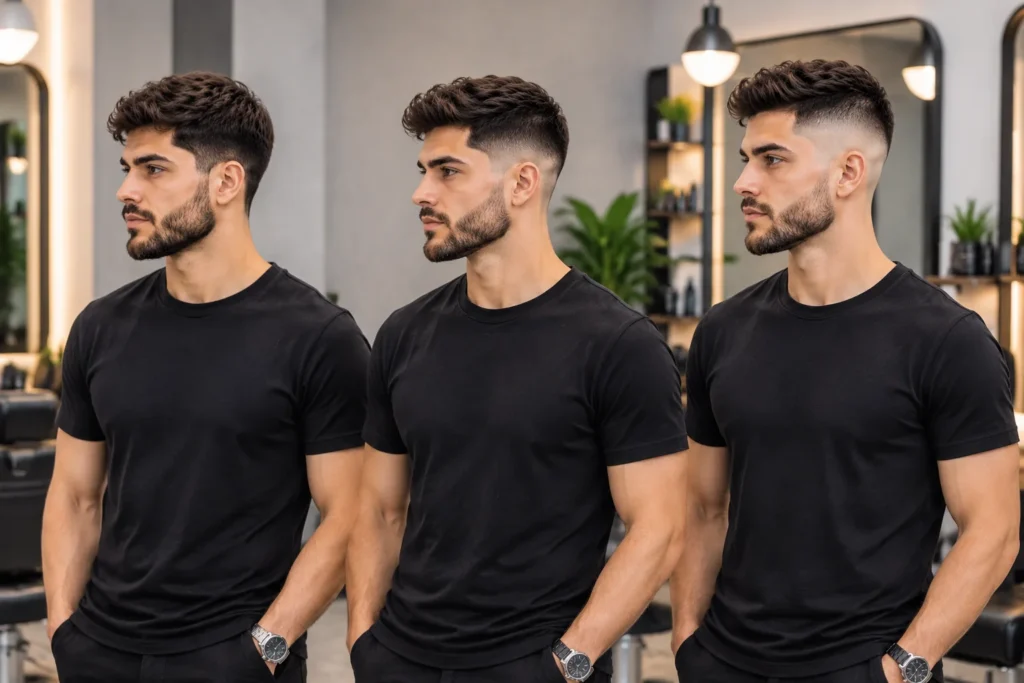
Choosing between a low fade, mid fade, and high fade may seem like a small decision, but the placement of the fade can significantly change the overall appearance of a haircut. Each style creates a different balance between the sides and the hair on top, influencing how much contrast, definition, and fullness the haircut has.
Understanding these differences helps clients make more informed choices and gives barbers a clearer starting point for consultations. This guide compares all three styles, explains how they work with different face shapes and hair types, and shows how to communicate your preferred look to a barber at Salomio.
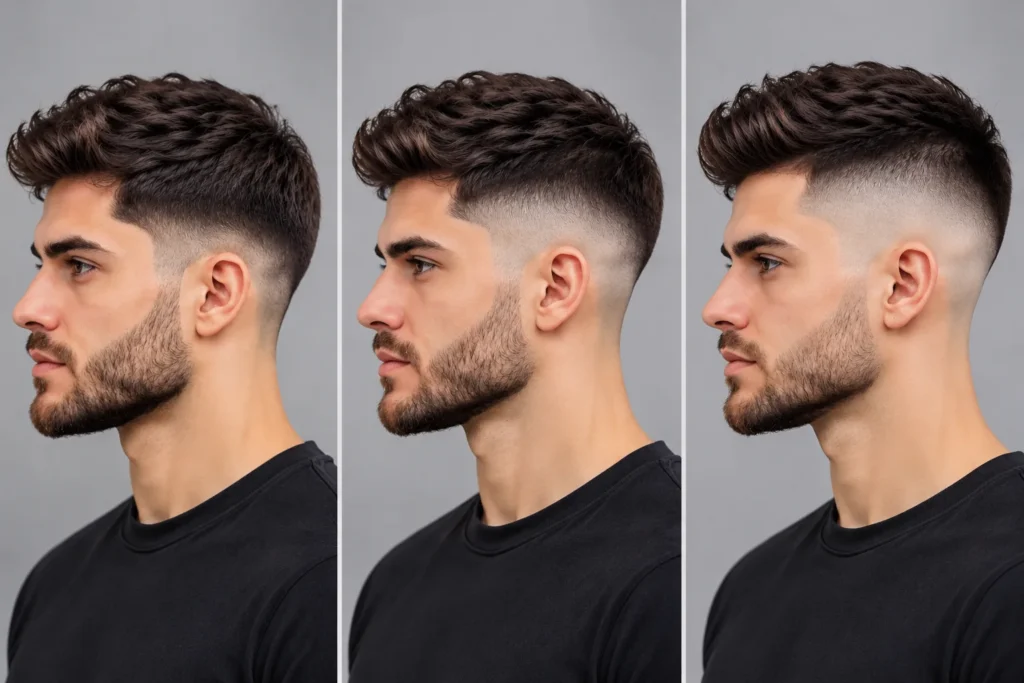
What Is the Difference Between Low Fade, Mid Fade, and High Fade?
The main difference between a low fade, mid fade, and high fade is the position where the hair gradually transitions from shorter to longer lengths. A low fade begins closer to the ears, a mid fade starts around the temples, and a high fade extends farther up the sides. This placement determines how much hair remains around the upper sides and how noticeable the contrast appears. Although all three use a blending technique, they create different silhouettes and suit different styling preferences.
How Does Fade Height Change the Overall Appearance?
Fade height changes the visual balance of a haircut. A lower transition preserves more length around the sides, creating a softer connection with the hair on top. A higher transition removes more side weight and makes the difference between the sides and top more noticeable. This is why two haircuts with similar top lengths can look completely different when their fade heights change.
The distinction is not simply about how short the hair becomes. A high fade does not automatically mean a skin fade, and a low fade does not have to leave visible stubble. Height describes the placement of the blend, while the shortest length describes its finish. Understanding these as separate choices helps clients describe exactly what they want.
Barber Aaron Chan explains this principle in GQ: “The higher you move the fade, the more contrast you create.” This observation highlights why fade placement is one of the most important decisions in the haircut.
What Are the Characteristics of Low, Mid, and High Fade Haircuts?
Each fade has a recognizable position and visual effect. However, the final result also depends on the barber’s blending technique, the client’s head shape, hair density, and the length maintained on top. Understanding the individual characteristics makes it easier to compare the three styles before choosing one.
What Makes a Low Fade Different?
A low fade starts just above the ears and follows the lower sides and back of the head. Because the transition remains close to the natural hairline, more length is preserved around the upper sides. This creates a subtle, controlled appearance that works well with classic side parts, textured hairstyles, and longer hair on top.
Low fades are often suitable for clients who want a clean haircut without making the sides look extremely short. They can also be a practical option for professional environments where a softer finish is preferred. However, the result still depends on the bottom length: a low skin fade can look much sharper than a low fade that retains short stubble.
Why Is a Mid Fade Considered a Versatile Option?
A mid fade generally begins around the temple or middle section of the sides. It offers a balance between the understated appearance of a low fade and the stronger contrast of a high fade. The transition is visible from the front and sides without removing as much upper-side length as a high fade.
This flexibility makes mid fades suitable for many hairstyles, including textured crops, quiffs, pompadours, and curly tops. Barber Joey Scandizzo describes the effect in GQ as one that “creates enough definition without becoming the focus of the haircut.” For clients who are unsure which height to choose, a mid fade can be a useful starting point, provided its placement is adapted to their head shape and preferred style.
What Makes a High Fade More Noticeable?
A high fade begins higher on the sides, often around or above the temples. It removes more length from the upper sides and creates a stronger visual separation between the top and the rest of the haircut. This makes it a popular option for people who prefer sharp outlines, short hairstyles, and a more defined silhouette.
High fades can work particularly well with buzz cuts, short textured crops, and other styles where contrast is part of the design. However, they expose more of the head’s natural shape, so the barber needs to consider the client’s head profile and hair growth patterns. A high fade may also require more frequent touch-ups if the client wants to maintain a crisp appearance.
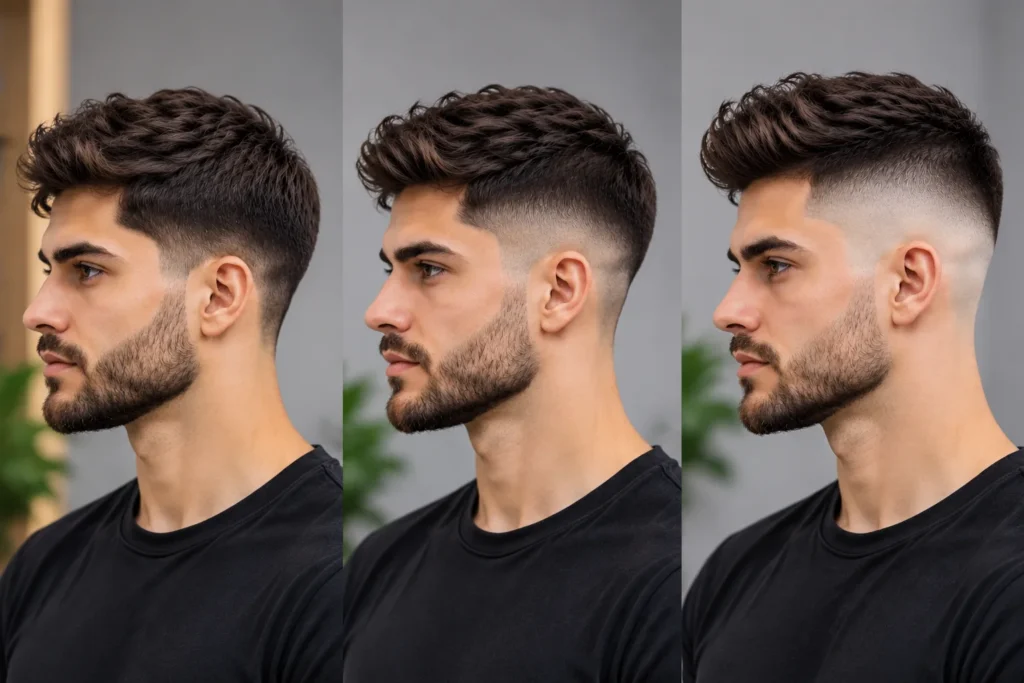
How Do Low, Mid, and High Fades Compare?
Comparing the three styles side by side makes their practical differences easier to understand. The right choice depends on the desired level of contrast, the amount of fullness preferred around the sides, and how frequently the client is willing to maintain the haircut. The following comparison provides a useful reference for consultations.
| Feature | Low Fade | Mid Fade | High Fade |
|---|---|---|---|
| Starting position | Just above the ears | Around the temples | At or above the temples |
| Contrast | Subtle | Moderate | Strong |
| Side fullness | More preserved | Partly reduced | Least preserved |
| Overall appearance | Classic and understated | Balanced and modern | Bold and defined |
| Suitable styles | Side part, longer tops | Quiff, crop, textured styles | Buzz cut, short crop |
| Visual impact | Softer | Noticeable but balanced | Most dramatic |
Which Fade Is Easier to Maintain?
Maintenance depends on the shortest length, hair growth rate, and how sharp the client wants the blend to remain. A low fade with some visible hair at the bottom may grow out more gradually because the transition is positioned lower. A high skin fade can show regrowth more clearly, making the change in length noticeable sooner.
Mid fades sit between these options, although their maintenance requirements vary. There is no universal schedule for every client. People who want a consistently sharp finish may need more frequent barber visits than those who are comfortable with a softer, grown-out appearance. Barbers should discuss maintenance expectations during the consultation rather than recommending one fixed interval for everyone.
Which Fade Is Best for Your Face Shape and Hair Type?
No single fade is universally best. Face shape, hair texture, density, head profile, and the desired hairstyle all influence the result. A suitable fade should complement the overall haircut rather than follow a general rule without considering individual features. Clients should treat face-shape recommendations as styling guidance, not strict requirements.
Which Fade Works Best for Different Face Shapes?
A low fade can preserve fullness around the sides, which may help balance a naturally long or narrow face. A high fade removes more side volume and can create the impression of additional vertical length, making it an option worth considering for some rounder face shapes. A mid fade offers a middle ground and can be adjusted to suit a wide range of proportions.
These are visual guidelines rather than guaranteed outcomes. The length and volume on top can change the perceived shape just as much as the fade itself. For example, a high fade combined with a tall quiff may emphasize vertical proportions, while a textured fringe can create a different balance. A professional barber should assess the whole head shape before deciding on the final placement.
Which Fade Suits Straight, Wavy, and Curly Hair?
Straight hair can make the transition between lengths especially visible, so precise blending is important for all three fade heights. Wavy hair often works well with a mid fade because the sides remain balanced while the natural texture on top stays prominent. Curly and coily hair can also be paired with low, mid, or high fades, depending on how much contrast the client wants.
For thick hair, a higher fade can reduce bulk around the sides, while a low fade preserves more fullness. For finer hair, the barber may need to consider how much scalp exposure the client is comfortable with. Hair texture alone should not determine the choice; density, growth direction, and the intended top style matter too.
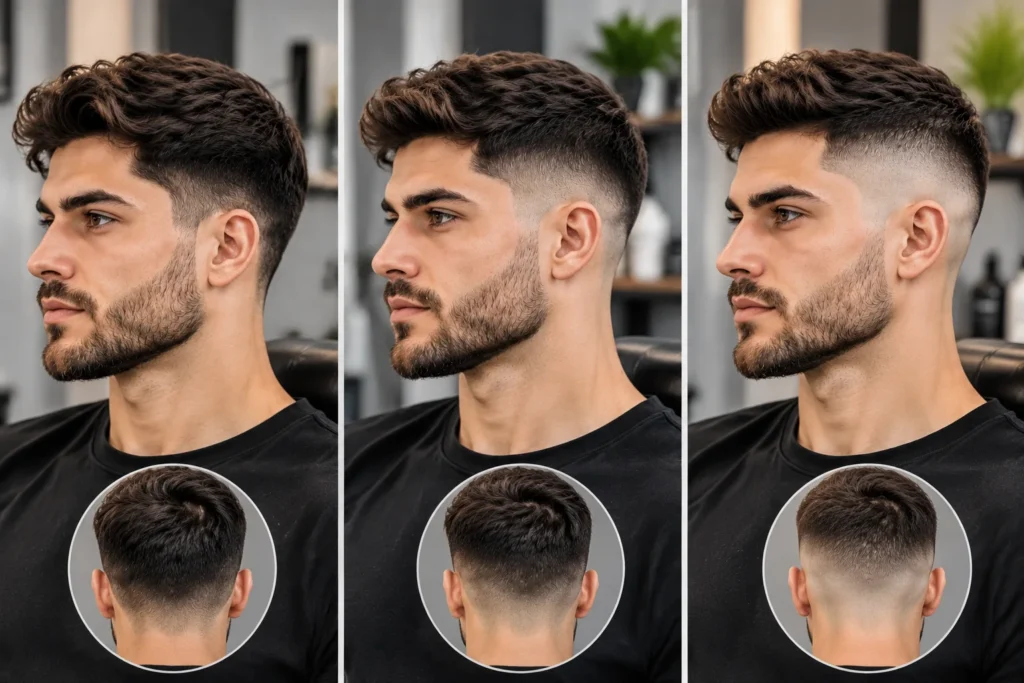
How Can You Choose the Right Fade and Explain It to Your Barber?
A successful fade starts with a clear conversation. Clients should communicate the desired height, shortest length, top style, and overall level of contrast rather than asking for a fade without further details. Barbers can then adapt the haircut to the client’s head shape and hair characteristics. A reference photo is useful, but it should support a discussion rather than replace professional assessment.
How Can You Ask for the Right Fade?
Use these steps to explain your preferred haircut clearly:
- Choose the height:
Decide whether you prefer a low, mid, or high fade. Point to the approximate starting position on the side of your head.
- Specify the bottom finish:
Explain whether you want a skin, zero, or shadow finish. These describe the shortest length, not the fade height.
- Describe the top:
Tell your barber how much length you want to keep and whether you prefer a crop, quiff, side part, or another style.
- Show a reference photo:
Choose an example with a similar hair texture and explain which details you want to recreate.
- Confirm the blend:
Ask the barber to check that the transition connects naturally with the top and follows your head shape.
What Mistakes Should You Avoid When Choosing a Fade?
One common mistake is confusing fade height with the shortest cutting length. Asking for a high fade does not automatically communicate whether the bottom should be shaved to the skin or left with short stubble. Another mistake is choosing a style based only on a photograph without considering differences in hair density, head shape, or styling routine.
Clients should also avoid assuming that the most dramatic option is always the most flattering. A well-executed low or mid fade can look just as polished as a high fade. Clear communication and a professional consultation are more reliable than choosing a style solely because it is trending.
Conclusion
The difference between low fade vs. mid fade vs. high fade comes down primarily to the height of the transition and the visual contrast it creates. Low fades provide a softer finish, mid fades offer a balanced appearance, and high fades create a sharper, more dramatic silhouette. The best choice depends on face shape, hair texture, preferred hairstyle, and maintenance expectations.
For barbers and clients, understanding these distinctions makes consultations more precise and helps avoid misunderstandings. Explore more men’s grooming and haircut guidance on Salomio, and use these comparisons to make your next haircut consultation more informed.


Comments