
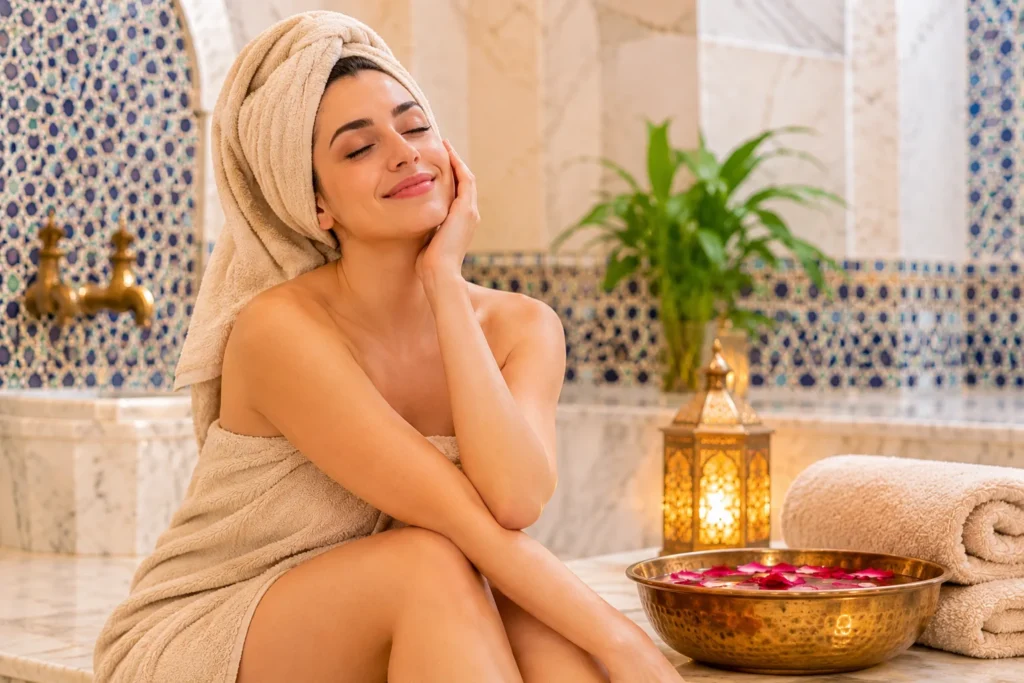
A Moroccan bath, also known as a Moroccan hammam, is a traditional body-cleansing and exfoliation ritual that combines warm steam, olive-based black soap, and a textured exfoliating glove. Originating in Moroccan bathing culture, this treatment is now offered by spas and wellness centers around the world.
It is valued for its cleansing process, traditional products, and relaxing atmosphere. However, a Moroccan bath is more than an ordinary body scrub: each stage has a specific purpose, from preparing the skin to removing dead surface cells. Understanding how it works can help you decide whether this treatment suits your skin and what to expect during a professional session.
What Is a Moroccan Bath and Where Did It Originate?
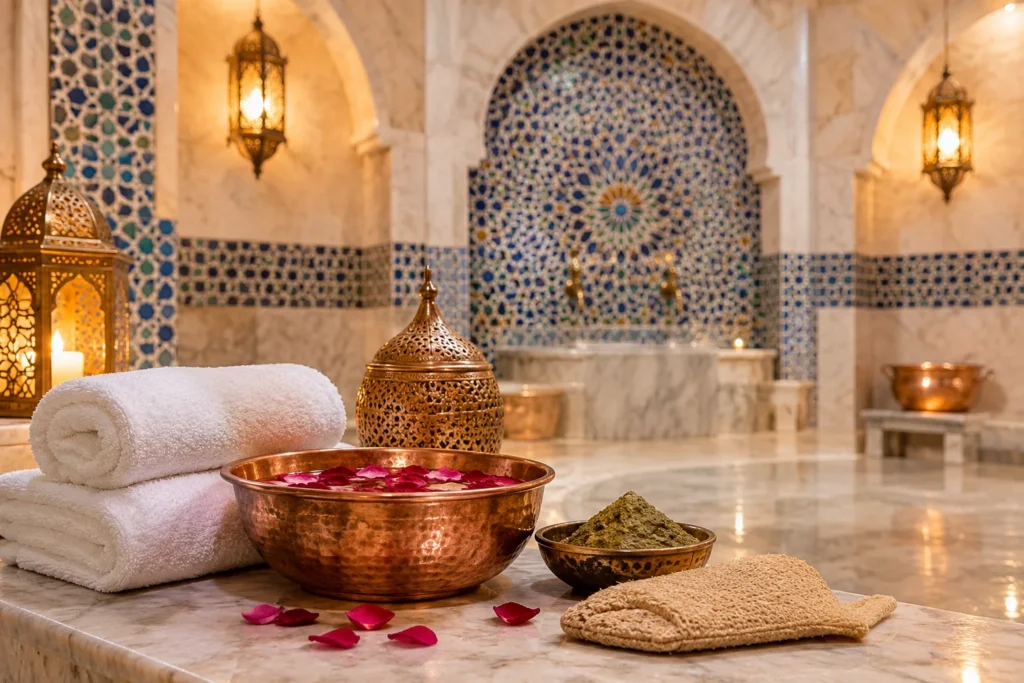
A Moroccan bath is a traditional hammam experience built around warmth, cleansing, and physical exfoliation. It commonly takes place in a heated, humid room and uses several products associated with Moroccan body-care traditions. Although modern spas may adapt the ritual, its central elements remain recognizable: Beldi black soap, a Kessa glove, and sometimes Ghassoul clay and argan oil.
The hammam also has cultural significance beyond personal care. Historically, public bathhouses have served as places for hygiene, social interaction, and shared traditions in Moroccan communities.
What Makes a Moroccan Bath Different from a Regular Bath?
A regular bath mainly involves washing the body with water and cleansing products. A Moroccan bath follows a more structured process in which warmth prepares the skin, black soap is applied, and a textured glove is used to exfoliate the body. Some treatments also include a clay mask and moisturizing products.
The experience is usually performed in a warm, humid environment rather than a standard bathroom. The combination of steam, cleansing, and manual exfoliation is what distinguishes the traditional hammam ritual from an ordinary shower or bath.
The treatment can vary between traditional public bathhouses and modern spa facilities. Some spas offer a shorter version focused on cleansing and exfoliation, while others include additional massage, masks, or relaxation services.
Why Is the Moroccan Hammam Culturally Important?
The Moroccan hammam has historically been part of everyday community life. Traditional bathhouses provided spaces for personal hygiene and social interaction, with established customs and routines. Their significance was not limited to the physical process of bathing.
In a study published in The Journal of North African Studies, researcher Said Graiouid discusses the social role of women’s hammams and describes the communal experience through the phrase
“the collective spirit it generates.”
This highlights how the hammam can function as a shared cultural space, rather than simply a beauty treatment.
Today, the ritual is available in many international spas. Although commercial versions may differ from traditional community bathhouses, understanding its cultural background helps explain why the Moroccan hammam is more than a standard exfoliating service.
How Does a Traditional Moroccan Bath Work Step by Step?
A traditional Moroccan bath generally follows a sequence of preparation, cleansing, exfoliation, and rinsing. The warm environment helps prepare the body for the treatment, while black soap is applied before the Kessa glove is used. Depending on the spa, a Ghassoul clay mask or argan oil application may be included toward the end. The exact duration and order of additional services can vary, but understanding the main stages makes it easier to know what happens during an appointment.
How Does Steam Prepare the Skin for a Moroccan Bath?
The session usually begins in a warm, humid room. The client spends a short period allowing the body to adjust to the temperature before the cleansing process begins. Warmth and humidity can soften the outer surface of the skin and make the exfoliation stage more comfortable.
The heat should feel manageable, not overwhelming. Excessive temperature or prolonged exposure may cause discomfort, particularly for people who are sensitive to heat. A professional should allow clients to take breaks, drink water when appropriate, and leave the heated room if they feel dizzy or unwell.
Steam is not a requirement for every modern Moroccan bath. Some spas use warm showers or heated treatment rooms to create a similar preparation stage.
How Are Black Soap and the Kessa Glove Used?
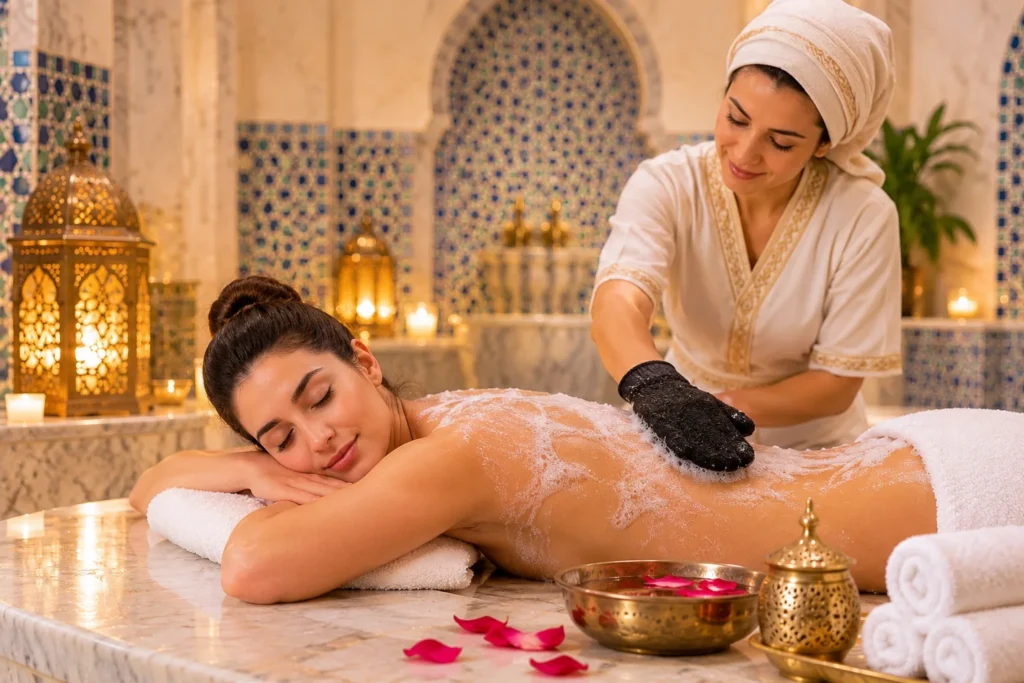
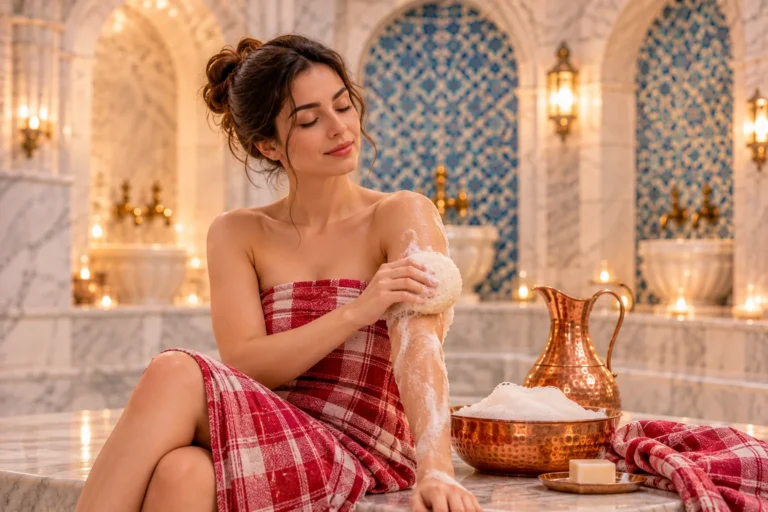
After the warming stage, Beldi black soap is spread over damp skin. This traditional olive-based paste is left on briefly according to the product instructions and then rinsed away. It helps cleanse the skin and prepare it for the exfoliation stage.
Next, the practitioner uses a Kessa glove, a textured mitt traditionally associated with Moroccan hammams. With controlled pressure and broad movements, the glove removes loose dead skin cells from the surface. The pressure should be adjusted to the client’s comfort and skin condition. Aggressive rubbing is unnecessary and can cause irritation.
The treatment usually ends with a thorough rinse. Some spas then apply Ghassoul clay or a moisturizing product, depending on the package selected.
How to Experience a Moroccan Bath Step by Step?
If you are visiting a spa for the first time, these steps explain the typical treatment sequence:
- Prepare: Inform the practitioner about sensitive skin, allergies, and existing skin conditions.
- Warm the body: Spend a short, comfortable period in the heated or humid room.
- Apply black soap: Allow the practitioner to apply Beldi soap according to the product instructions.
- Rinse and exfoliate: The soap is rinsed off before the Kessa glove is used with controlled pressure.
- Apply optional treatments: A Ghassoul clay mask or another suitable product may be included.
- Rinse and moisturize: Finish with a gentle rinse and an appropriate moisturizer or body oil.
The treatment should never feel painfully abrasive. Tell the practitioner if the pressure, temperature, or products cause discomfort.
What Products and Tools Are Used in a Moroccan Bath?
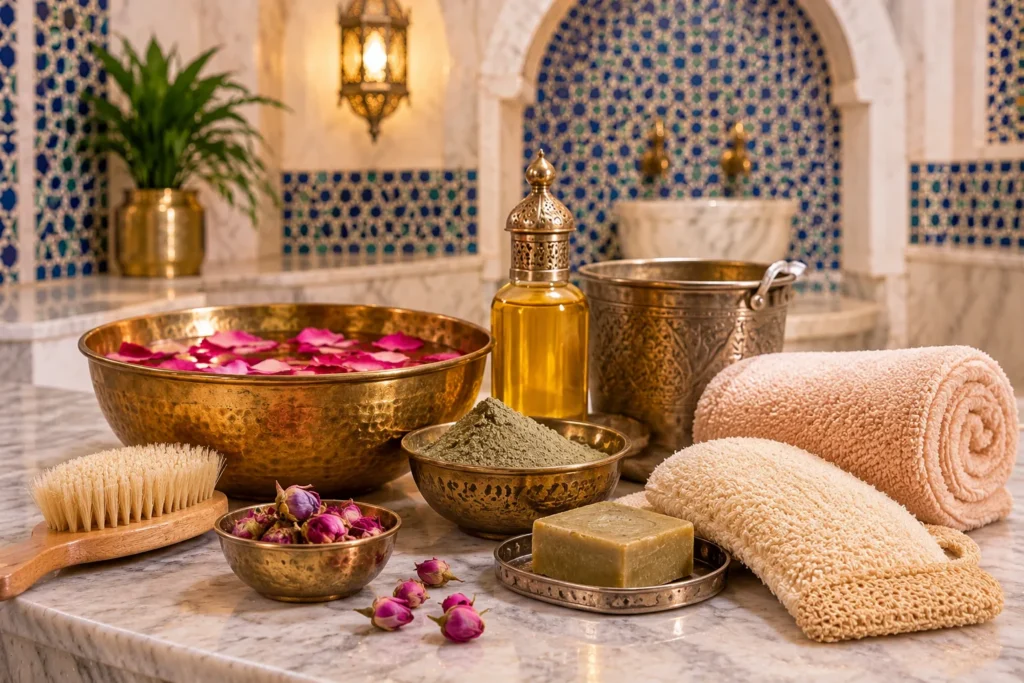
The traditional Moroccan bath is closely associated with a small group of products, each serving a different purpose. Beldi soap is used during the cleansing stage, while the Kessa glove provides physical exfoliation. Ghassoul clay may be applied as a body or hair mask, and argan oil is sometimes used afterward to soften the skin. Product formulations and ingredients can differ between manufacturers, so clients with allergies or sensitivities should check labels and discuss their needs before treatment.
What Are Beldi Black Soap, Kessa Gloves, and Ghassoul Clay?
Beldi black soap, also called Moroccan black soap or savon noir, is traditionally made using olive-derived ingredients. It has a soft, paste-like texture and is applied to damp skin before exfoliation.
The Kessa glove is a textured exfoliating mitt. Its purpose is to remove loose dead skin cells through controlled friction. It should be used gently, especially on delicate or sensitive areas.
Ghassoul, also spelled Rhassoul, is a mineral-rich clay traditionally sourced from Morocco’s Atlas region. It is mixed with water to create a paste and may be used as a cleansing or conditioning mask. Its use is optional rather than essential to every hammam session.
What Role Does Argan Oil Play After the Treatment?
Argan oil is commonly associated with Moroccan skincare and may be applied after the bath to help soften the skin. It contains fatty acids and other naturally occurring components used in cosmetic formulations.
However, argan oil is not a necessary part of every traditional hammam. Some spas use a fragrance-free moisturizer or another body-care product instead. The most suitable option depends on the client’s skin type and tolerance.
| Product or tool | Main purpose |
|---|---|
| Beldi black soap | Cleansing and preparing the skin |
| Kessa glove | Physical exfoliation |
| Ghassoul clay | Optional body or hair mask |
| Argan oil | Optional post-treatment skin conditioning |
What Are the Benefits and Possible Risks of a Moroccan Bath?
A Moroccan bath can provide a structured cleansing and exfoliation experience. Its main cosmetic benefit comes from removing some dead cells from the outer skin layer, which may leave the surface feeling smoother. The warm environment and treatment routine may also feel relaxing.
However, these effects should not be confused with medical treatment. Excessive friction, shared equipment, unsuitable temperatures, or irritating products can create problems. Understanding both the potential benefits and limitations is essential before booking a session.
How Can a Moroccan Bath Affect Skin Texture?
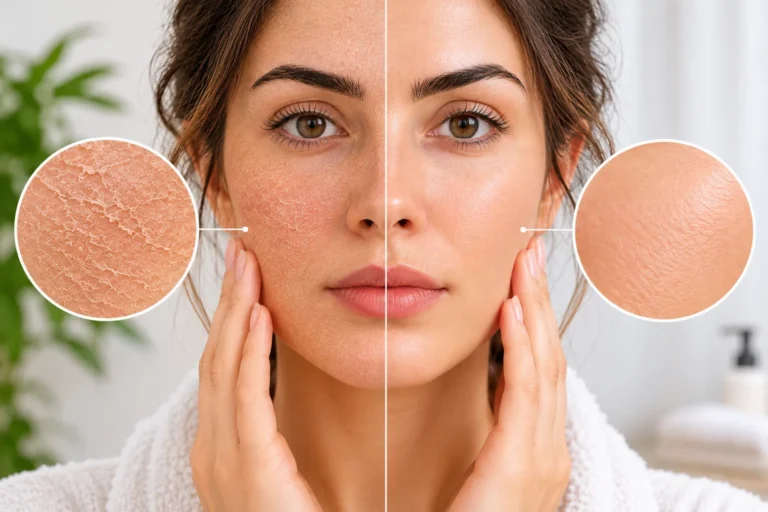
Physical exfoliation removes loose dead cells from the skin’s outer surface. This can temporarily make rough areas feel smoother and help improve the appearance of uneven surface texture. Cleansing and moisturizing afterward may also leave the skin feeling softer.
However, exfoliation does not permanently change skin tone, remove deep scars, or detoxify the body. Claims that a Moroccan bath cures acne, treats chronic skin conditions, or removes toxins are not established benefits.
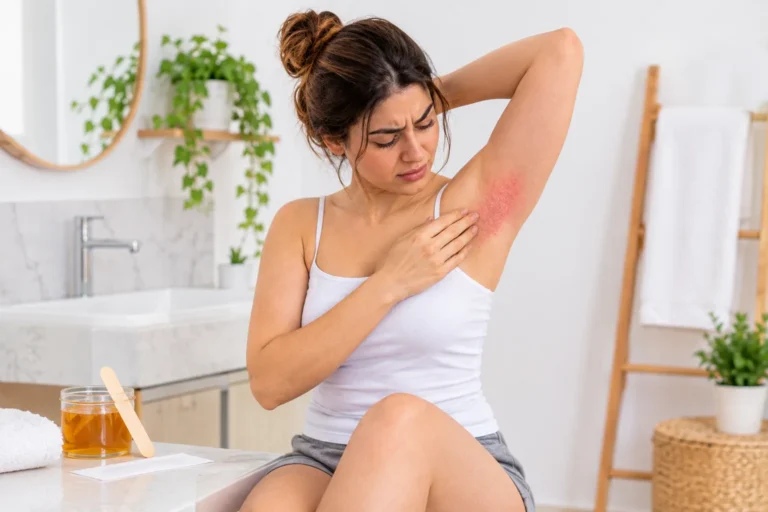
The strength of the treatment matters. Repeated or forceful scrubbing can damage the skin barrier and lead to dryness, redness, or irritation. A gentle approach is generally more appropriate than trying to remove as much dead skin as possible.
Who Should Be Careful About Having a Moroccan Bath?
People with active eczema, psoriasis, rosacea, sunburn, open wounds, or irritated skin should seek medical advice before undergoing vigorous exfoliation or heat exposure. Those with known product allergies should check the ingredients of black soap, oils, and other products before use.
A 2025 study published in Our Dermatology Online, titled The Moroccan Hammam, a Purifying Ritual: Triggered or Aggravated Dermatoses, examined reported skin conditions among 160 respondents. The researchers noted that
“it is crucial to avoid excessive friction on the skin”
because it may aggravate certain skin problems. The study was cross-sectional, so its findings do not prove that hammam use causes every reported condition. Nevertheless, it highlights the importance of hygiene, gentle technique, and individual skin assessment.
Clients should also ask whether gloves and other reusable equipment are properly cleaned between appointments. Anyone who experiences pain, intense itching, or significant irritation during a session should ask the practitioner to stop.
What Should You Expect During a Moroccan Bath Spa Experience?
A professional Moroccan bath can differ considerably from one spa to another. Some facilities recreate traditional hammam environments, while others offer the ritual as part of a broader body-treatment package.
Before booking, check which products are included, whether exfoliation is performed by a trained practitioner, and how long the session takes. Preparing your skin and communicating any sensitivities can make the experience more comfortable. Knowing what happens afterward is equally important for maintaining skin comfort.
How Long Does a Moroccan Bath Take and How Should You Prepare?
A Moroccan bath session may take approximately 45 to 90 minutes, depending on the facility and additional services. Some shorter treatments focus on black soap and exfoliation, while longer packages may include clay masks, massage, and moisturizing.
Before the appointment, avoid exfoliating the same area with strong scrubs or acids. Do not undergo treatment on sunburned, broken, or actively irritated skin. Tell the spa about relevant allergies, medications, and skin conditions. You can also ask whether you need to bring swimwear, a towel, or personal toiletries.
What Should You Do After a Moroccan Bath?
After the session, rinse away any remaining products and apply a gentle moisturizer if needed. Avoid immediately repeating exfoliation or using strong active skincare ingredients on freshly treated skin. If the body feels sensitive, choose comfortable clothing and avoid unnecessary friction.
Mild temporary sensitivity may occur, but persistent redness, burning, swelling, or a rash should not be ignored. Contact a healthcare professional if symptoms are severe or do not improve. A professional spa should also be able to explain its aftercare recommendations and the products used during the treatment.
Conclusion
A Moroccan bath combines traditional cleansing practices, physical exfoliation, and a relaxing bathing environment. Its signature products—Beldi black soap, the Kessa glove, and optional Ghassoul clay and argan oil—each contribute to the experience. While gentle exfoliation can leave the skin feeling smoother, the treatment is not suitable for every skin condition and should never involve excessive friction.
For anyone considering this service, choosing a hygienic spa and communicating skin concerns before the session are essential. Explore more professional spa and body-care guidance with Salomio to make informed choices about traditional wellness treatments.
Comments