
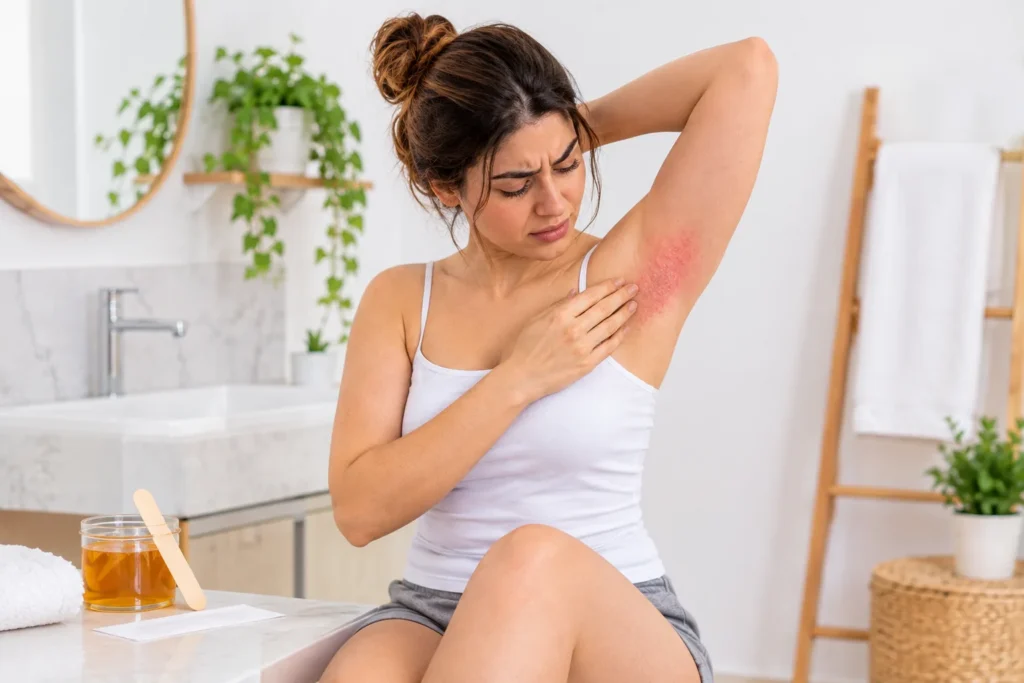
Noticing redness after waxing is common, especially when the skin has just been exposed to hair removal and friction. In most cases, mild redness and sensitivity are temporary reactions that gradually improve. However, persistent inflammation, painful bumps, blisters, or spreading redness may indicate a more serious skin reaction.
Understanding the difference helps you choose the right aftercare and recognize when professional advice is necessary. Whether you have waxed your face, legs, underarms, or bikini area, this guide explains what is normal, what may require attention, and how to protect your skin after treatment.
Is Redness After Waxing Normal?
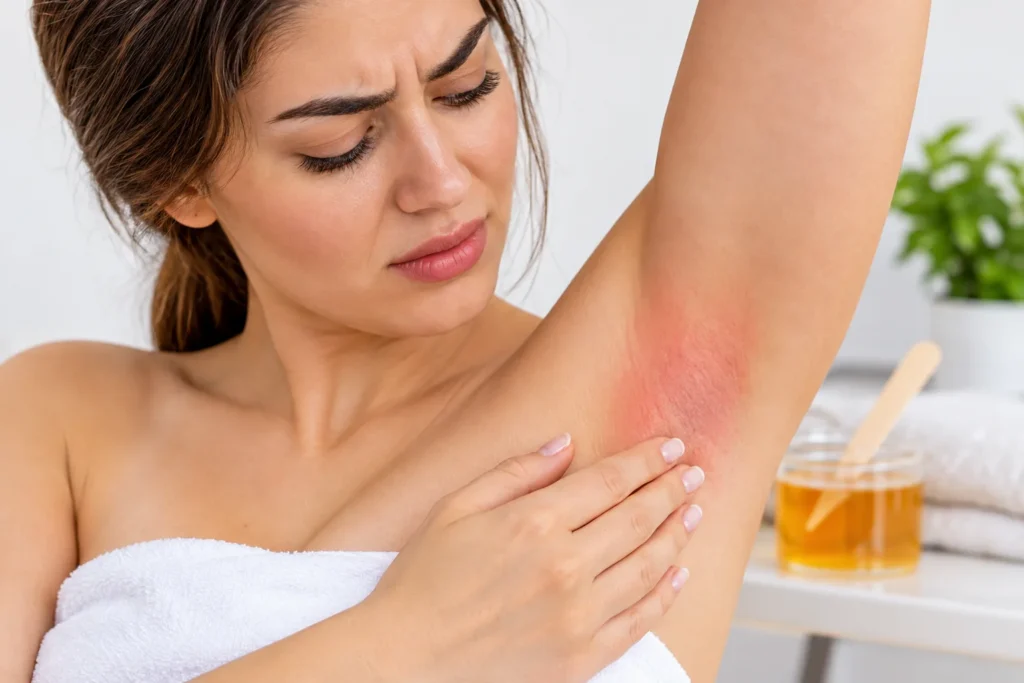
Yes. Mild redness immediately after waxing is generally a normal response to removing hair from the follicles and applying mechanical pressure to the skin. The affected area may also feel warm, sensitive, or slightly uncomfortable. These reactions usually improve as the skin settles.
However, the appearance, intensity, and duration of redness matter. Knowing what a typical reaction looks like can help you distinguish temporary sensitivity from irritation that needs further attention.
What Does Normal Redness After Waxing Look Like?
Normal post-wax redness usually appears shortly after the treatment. The skin may look slightly pink or flushed, feel warm, and develop small bumps around individual hair follicles. Mild tenderness can also occur, particularly in sensitive areas such as the upper lip, underarms, and bikini line.
DermNet explains that after waxing, “The area will be red and sensitive for a few hours.” This is a useful description of a typical short-term reaction. The redness should gradually become less noticeable rather than spread or become increasingly painful.
Skin tone also affects how inflammation appears. On some skin tones, irritation may look pink or red; on others, it may appear darker, purple, or brown. Pay attention to changes in texture, discomfort, and swelling, not color alone.
How Long Does Redness After Waxing Last?
Mild redness often improves within a few hours, although some people experience sensitivity for a day or two. The duration depends on the treatment area, individual skin sensitivity, waxing technique, and products used during the appointment.
Facial skin and the bikini area may react more noticeably than some other areas because they can be particularly sensitive. If redness is gradually fading and there is no increasing pain or swelling, gentle aftercare and observation may be sufficient.
However, redness that persists, worsens, or develops additional symptoms should not automatically be considered normal. There is no single recovery timeline that applies to everyone.
What Causes Redness and Irritation After Waxing?
Waxing removes hair from below the skin’s surface, which can temporarily affect the surrounding follicles and skin. The pulling action, repeated application, unsuitable wax temperature, and ingredients in waxing products may all contribute to irritation.
In some cases, the reaction is not simply temporary redness but a separate condition, such as contact dermatitis or folliculitis. Identifying possible causes helps determine which aftercare measures are appropriate.
Can Wax Temperature and Waxing Technique Irritate the Skin?
Yes. Wax that is too hot can burn the skin, while repeated application or aggressive removal may increase irritation and discomfort. Incorrect technique can also contribute to skin trauma, especially in delicate or already sensitive areas.
According to DermNet’s waxing guidance, “It is very important not to have the wax too hot to avoid burning the skin.” This highlights why temperature control and professional application matter.
Other factors include applying wax to irritated skin, removing strips incorrectly, and repeatedly treating the same area. Choosing a trained professional and communicating any previous reactions can reduce avoidable risks.
Could Red Bumps Indicate Folliculitis or an Allergic Reaction?
Not all bumps after waxing have the same cause. Small bumps around hair follicles may reflect temporary irritation, but painful or pus-filled spots can suggest folliculitis. The American Academy of Dermatology explains that folliculitis is a skin infection that develops in hair follicles. Waxing can damage follicles and create conditions in which germs enter them.
An allergic reaction is different. Certain ingredients in wax, including rosin, may cause allergic contact dermatitis. This can lead to itching, redness, and a rash in the treated area. If symptoms are severe, spreading, or persistent, seek medical advice rather than assuming they are ordinary post-wax irritation.
When Is Redness After Waxing Not Normal?
Mild redness that gradually improves is usually less concerning than inflammation that becomes more intense or develops additional symptoms. Warning signs may indicate a burn, infection, or allergic reaction. It is important to consider the full picture, including pain, swelling, skin texture, and whether the affected area is expanding. The following distinctions can help you recognize when routine aftercare is not enough.
What Are the Warning Signs of a Wax Burn?
A wax burn may cause more than temporary redness. Symptoms can include persistent burning pain, swelling, tenderness, and blisters. Blistering suggests a deeper skin injury and should not be treated as ordinary post-wax sensitivity.
Do not pop blisters, scrub the area, or apply irritating skincare products. If a burn has occurred, cool the area with cool running water as soon as possible; avoid ice. Burns involving the face or genital area, large or deep burns, and burns with blisters require medical assessment. The NHS burn and scald guidance provides further first-aid information.
When Should You See a Dermatologist?
Seek medical advice if redness spreads, pain or swelling increases, pus develops, or the skin becomes increasingly warm and tender. Fever, chills, or feeling generally unwell alongside worsening skin symptoms may indicate a spreading infection and require urgent medical care.
The Mayo Clinic describes folliculitis as causing “small bumps or pimples filled with pus around hair follicles.” It also advises prompt care when signs of infection worsen or spread.
If symptoms cover a large area or do not improve with appropriate care, arrange an appointment with a healthcare professional.
How Can You Reduce Redness After Waxing?
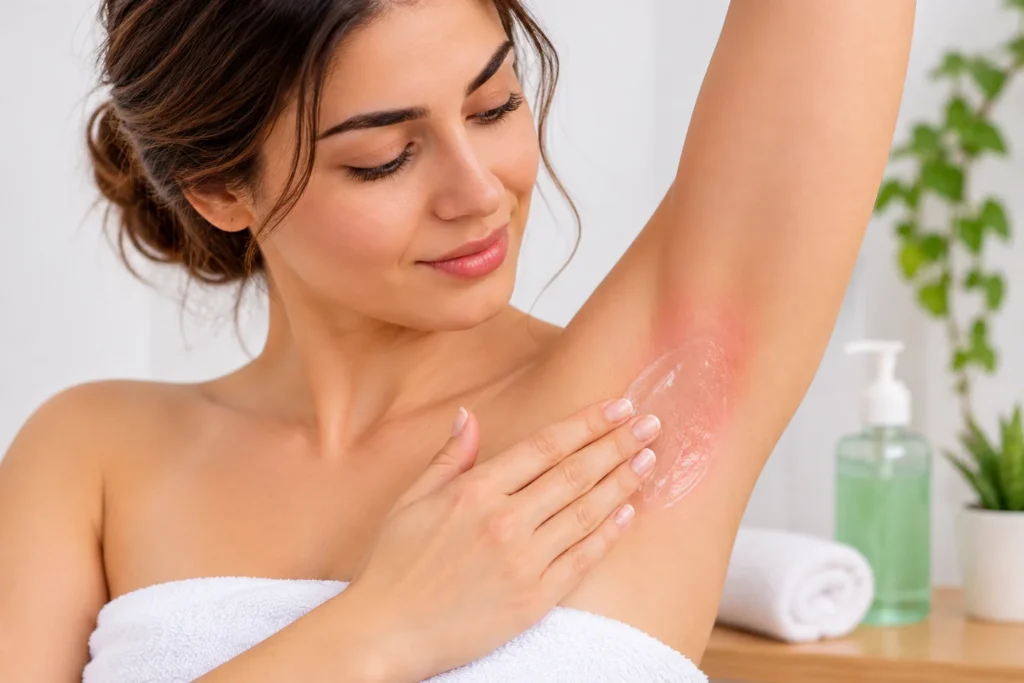
For mild irritation without signs of burns or infection, simple aftercare can help keep the skin comfortable while it recovers. The priority is to minimize friction, heat, and exposure to potentially irritating products. Avoid trying multiple treatments at once, particularly if you have sensitive skin. If the skin is blistered, broken, or severely painful, seek medical guidance instead of following routine cosmetic aftercare.
How to Soothe Mild Redness After Waxing Step by Step?
Follow these basic steps when the reaction is mild:
- Clean gently:
If needed, wash the area with lukewarm water and a mild, fragrance-free cleanser. Avoid scrubbing.
- Apply a cool compress:
Place a clean, cool, damp cloth on the skin for short periods to ease discomfort.
- Moisturize carefully:
Use a gentle, fragrance-free moisturizer if your skin tolerates it.
- Reduce friction:
Wear loose clothing and avoid rubbing, scratching, or touching the treated area unnecessarily.
- Avoid irritating products:
Temporarily avoid exfoliating acids, retinoids, fragranced products, and harsh scrubs on the affected skin.
- Monitor the reaction:
Watch for increasing pain, swelling, spreading redness, blisters, or discharge.
These steps are intended for mild irritation, not burns, allergic reactions, or suspected infections.
What Should You Avoid Immediately After Waxing?
Avoid activities and products that may increase irritation while the skin is sensitive. Hot showers, saunas, intense exercise, tight clothing, and excessive friction can make discomfort worse. Avoid exfoliating the area or using strong active skincare ingredients until the skin has settled.
Do not pick at bumps or attempt to remove ingrown hairs with sharp tools. If you notice pus-filled spots, blisters, or worsening inflammation, stop waxing the affected area and seek professional advice.
How Can You Prevent Redness After Future Waxing Sessions?
Preventing irritation starts before the appointment. Skin condition, product ingredients, medication use, hygiene, and waxing technique can all influence the outcome. A professional should assess whether the skin is suitable for treatment and discuss any relevant sensitivities or previous reactions. Good preparation does not eliminate every risk, but it can reduce avoidable irritation and help make future sessions safer.
How Should You Prepare Your Skin Before Waxing?
Avoid waxing over sunburned, irritated, or broken skin. Tell your waxing professional about known allergies, previous reactions, and skincare products or medications you use. Certain retinoids can increase the risk of skin injury during waxing, so discuss them with a healthcare professional before booking.
Choose a salon that follows appropriate hygiene practices and uses controlled wax temperatures. If you have repeatedly experienced severe irritation, consider asking a dermatologist whether waxing is suitable for your skin or whether another hair removal method may be more appropriate.
Conclusion
Redness after waxing is often a temporary response to hair removal, but it should gradually improve rather than become more severe. Recognizing the difference between mild sensitivity, folliculitis, allergic reactions, and burns helps you make safer decisions about aftercare. Gentle cleansing, reduced friction, and avoiding irritating products can support recovery when symptoms are mild.
For salon professionals and clients alike, safe waxing practices and appropriate skin assessment are essential. Explore more professional beauty and skincare guidance with Salomio to make informed decisions about hair removal and skin care.


Comments