

Throughout the day, the skin is constantly exposed to factors such as sunlight, wind, dry air, washing, air conditioning, and temperature changes. These factors can reduce the water content of the skin’s outer layer. Skin hydration is not limited to drinking water or using a hydrating product; it involves choosing the right ingredients, maintaining the skin barrier, using proper cleansing techniques, and preventing excessive water loss. If your skin feels tight, rough, or dull in the middle of the day, understanding the difference between dry and dehydrated skin and creating a suitable routine can help maintain soft and flexible-looking skin. In this guide, we explore practical and science-based ways to maintain skin moisture from morning to night.

Why Does the Skin Lose Water Throughout the Day?
Water in the outer layer of the skin can naturally be lost to the surrounding environment. Therefore, maintaining skin moisture is not only about adding water; reducing water loss is equally important. Low humidity, wind, frequent washing with hot water, unsuitable cleansers, and disruption of the skin barrier can worsen dryness. DermNet also identifies reduced moisture in the stratum corneum and increased water loss from the skin as important factors in dry skin. Therefore, effective hydration requires both supplying the outer layer of the skin with the water it needs and creating conditions that prevent this water from evaporating too quickly.
What Factors Cause Skin Moisture to Decrease During the Day?
One of the most important factors is low environmental humidity. Spending long periods in rooms with air conditioning or very dry air can increase the feeling of dryness. Wind and weather changes can have a similar effect.
Frequent washing, especially with hot water and unsuitable cleansing products, is another factor. Some cleansers can remove too much of the skin’s surface oils and interfere with the skin barrier. DermNet recommends considering non-soap cleansers and reducing exposure to hot water for dry or sensitive skin.
Sun exposure is also important. Daily use of a broad-spectrum sunscreen with SPF 30 or higher is part of the daily skin-care recommendations from the American Academy of Dermatology.
Why Is the Skin Barrier Important for Retaining Water?
The skin barrier can be viewed as a protective layer that helps regulate the exchange of water between the skin and its environment. When this barrier functions properly, water loss from the skin’s surface is better controlled. However, disruption of the barrier can lead to increased dryness and sensitivity.
Moisturizers are important for exactly this reason. They do not simply add water to the skin; their different ingredients can attract or retain water, soften the spaces between surface skin cells, and reduce water evaporation. Specialized sources generally identify three important groups of moisturizing ingredients: Humectants, Emollients, and Occlusives.
Can Your Work and Living Environment Affect Skin Hydration?
Yes. If you spend much of the day in an environment with dry air, constant air conditioning, or indoor heating, your skin may lose more moisture. In these conditions, it is not only important to increase how often you apply a product; the entire skin-care routine should be adjusted to the environmental conditions.
Using a suitable moisturizer, avoiding unnecessary washing, and using a humidifier in very dry environments can be part of this strategy. DermNet also discusses adjusting environmental humidity and using moisturizers as part of dry-skin management.
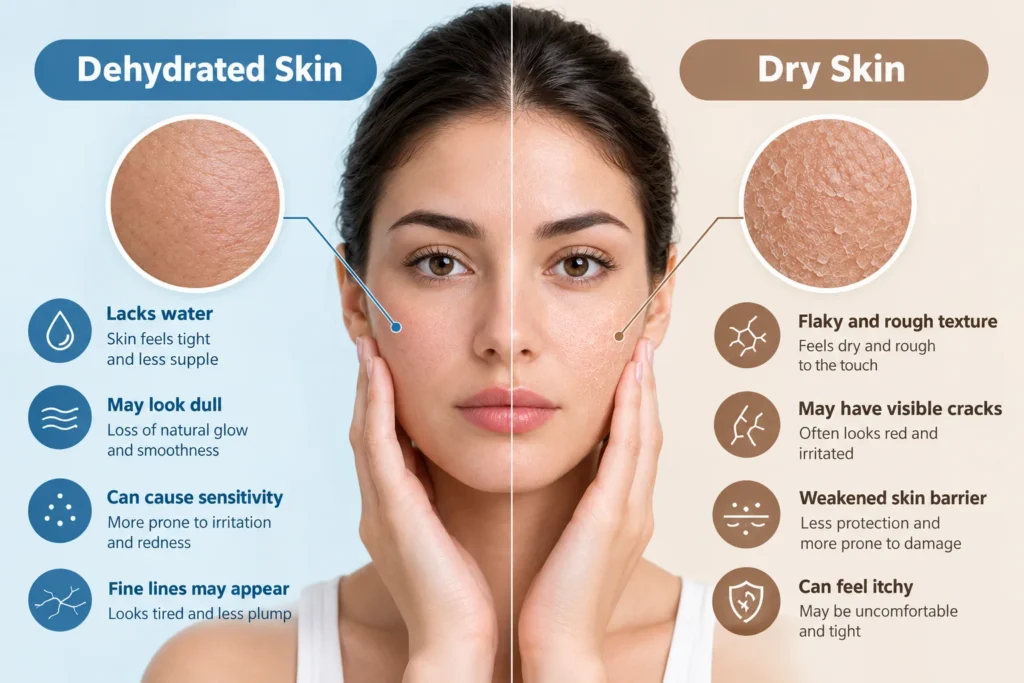
How Can You Tell the Difference Between Dehydrated and Dry Skin?
One common mistake in skin care is using the term “dryness” for every type of moisture deficiency. However, dry skin and dehydrated skin are not necessarily the same thing. Dry skin generally refers to a condition in which the skin does not have enough oils and lipids to maintain its softness, while “dehydrated” primarily refers to a lack of water. Correct identification is important because a person can have oily skin and still experience skin dehydration. Therefore, before choosing products, it is better to first determine whether the main issue is water loss, a compromised skin barrier, or true dry skin.
What Are the Signs of Dehydrated Skin?
Dehydrated skin may look dull, and you may experience tightness or reduced flexibility. In some people, fine surface lines may also become more noticeable, especially when the skin lacks water.
An important point is that dehydration does not necessarily mean that you have a “dry skin type.” For example, oily skin can also lack water while continuing to produce oil. Therefore, choosing a product based only on how oily the skin is may not always be sufficient.
If your skin feels fine at the beginning of the day but becomes tight, dull, or uncomfortable after several hours, examining environmental factors, your cleanser, and your skin-care routine may be helpful.
“Moisturizers are used to reduce water loss from the skin and maintain the function of the skin barrier.”
— DermNet, a specialist dermatology resource
How Is Dry Skin Different From Dehydrated Skin?
Dry skin is more closely associated with a lack of oils and changes on the skin’s surface. It can cause roughness, flaking, cracking, or a feeling of tightness. DermNet associates dry skin with reduced moisture in the stratum corneum and notes that this condition can be accompanied by surface cracking.
In contrast, dehydration is primarily a water-related condition and can occur with different skin types.
This difference matters when choosing products. For very dry skin, ingredients that both attract water and reduce water loss may be more suitable, while oily and dehydrated skin may respond better to lighter formulations.
Does Oily Skin Also Need Hydration?
Yes. Oil and water are two different concepts. The presence of sebum or oil on the skin’s surface does not mean that the skin contains enough water.
One common mistake is completely avoiding moisturizer because the skin is oily. However, oily skin may still benefit from a lightweight, non-comedogenic product. The product texture should be selected according to the skin’s needs; for example, a lightweight gel or lotion may feel more comfortable for some people than a heavy cream.
The goal of hydrating oily skin is not to add more oil to the surface but to help maintain water and support proper skin-barrier function.

What Are the Best Hydrating Ingredients for the Skin?
Choosing the right ingredients is important because not all hydrating products work in the same way. An effective formula may contain ingredients that attract and retain water, compounds that soften the skin’s surface, and substances that help prevent water evaporation. Specialized sources commonly identify ingredients such as glycerin, hyaluronic acid, urea, and certain lipids as common components of moisturizers. The final choice should match your skin type, level of dryness, sensitivity, and environmental conditions.
What Are the Benefits of Hyaluronic Acid for the Skin?
Hyaluronic acid is one of the best-known Humectants used in skin-care products. This group of ingredients has an ability to attract and retain water and can help increase the water content of the outer layer of the skin.
The American Academy of Dermatology lists hyaluronic acid among the ingredients you may look for in a suitable moisturizer.
However, hyaluronic acid alone should not be expected to solve every hydration problem. The complete product formula matters. If the goal is to maintain moisture for longer, combining a Humectant with ingredients that help reduce water evaporation may be more practical.
How Does Glycerin Help Hydrate the Skin?
Glycerin is a well-known Humectant used in moisturizing products. It helps attract and retain water in the stratum corneum and is therefore used in many moisturizing formulas. DermNet places glycerin among the ingredients that attract water and retain it in the outer layer of the skin.
An important advantage of glycerin is that its use is not limited to one skin type. However, its final performance depends on the product formula, concentration, and combination with other ingredients.
For this reason, when choosing a product, it is better not to look only for one specific ingredient and instead evaluate the overall formula.
Are Ceramides Important for Maintaining Skin Moisture?
Ceramides are a group of important lipids found in the structure of the skin barrier. They help maintain the integrity of the skin’s outer layer and are therefore used in many products designed for dry or vulnerable skin.
Medical sources identify ceramides, along with cholesterol and free fatty acids, as important components of the lipid structure of the skin barrier.
Therefore, if the main skin concern involves both dehydration and dryness or a weakened skin barrier, a product that combines moisturizing ingredients with skin-barrier-supporting ingredients may be worth considering.
Can Urea Help Maintain Skin Moisture?
Urea is a well-known ingredient in products designed for dry skin. DermNet describes it as a hydrophilic substance that can attract and retain water in the skin. At different concentrations, urea can provide moisturizing benefits as well as a softening effect on the stratum corneum.
However, not all urea concentrations are suitable for every area or skin condition. Some urea-containing formulas may cause a stinging sensation on cracked or irritated skin. Therefore, for very sensitive or damaged skin, it is better to choose a product with guidance from a specialist.
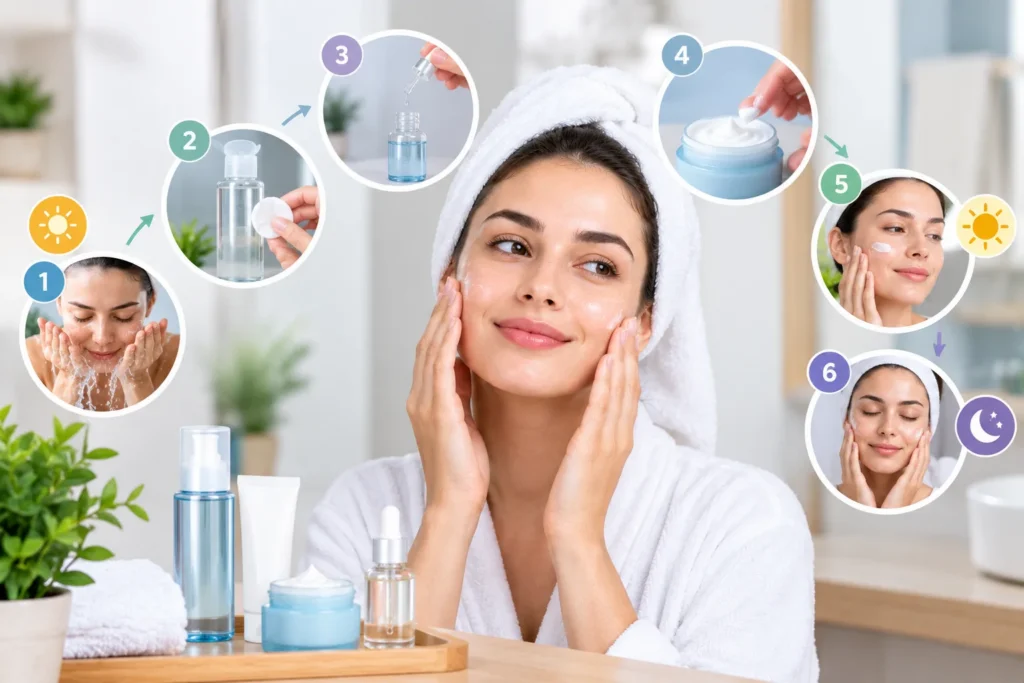
How Can You Create a Daily Skin Hydration Routine?
You do not need to use a large number of products to maintain skin moisture throughout the day. A simple and consistent routine can include several key steps: gentle cleansing, applying a suitable moisturizer, protecting the skin from sunlight, and reapplying care when necessary. Timing also matters; specialized sources recommend applying moisturizer after cleansing while the skin is still slightly damp.
How Can You Prevent Your Skin From Drying Out in the Morning?
In the morning, use a gentle cleanser appropriate for your skin type and avoid very hot water. After cleansing, applying moisturizer to slightly damp skin can help retain water.
Next, sunscreen should be a consistent part of your routine. The American Academy of Dermatology recommends a broad-spectrum, water-resistant sunscreen with SPF 30 or higher for daily protection.
If you have oily skin, using a lightweight formula instead of completely eliminating moisturizer may be a more practical choice. For dry skin, a cream or richer formula will generally feel more comfortable.
How Many Times a Day Should You Moisturize Your Skin?
There is no fixed number that applies to everyone. It depends on your skin type, level of dryness, environment, and the product you use.
If your skin starts feeling dry or tight again after several hours, reapplying moisturizer may be reasonable. The American Academy of Dermatology recommends reapplying moisturizer throughout the day for dry skin and whenever the skin feels dry.
For oily skin, instead of unnecessarily increasing the frequency of application, it is better to choose an appropriate texture and formula. If you wear makeup during the day, the product should also be selected so that it works well with your routine and makeup products.
How Can You Maintain Skin Moisture After Washing Your Face?
After washing, gently pat your skin dry with a towel and avoid vigorous rubbing. Then apply a suitable moisturizer shortly afterward.
This timing matters because moisturizers can help retain the water that remains in the outer layer of the skin after washing. DermNet also recommends applying moisturizer immediately after bathing or washing.
If you experience intense tightness immediately after washing, your cleanser, water temperature, or washing frequency may be too irritating for your skin.
Is Natural Skin Hydration Effective?
Natural methods should be evaluated realistically. Drinking water is essential for maintaining normal body hydration, but you should not expect increased water intake alone to solve every problem related to dry or dehydrated skin.
On the other hand, using household ingredients such as lemon juice or acidic substances on the skin can cause irritation, and “natural” does not necessarily mean safe.
For maintaining skin moisture, evidence and professional recommendations focus more on a combination of measures such as using a gentle cleanser, applying a suitable moisturizer, reducing drying factors, and protecting the skin from environmental conditions.
What Mistakes Can Reduce Skin Hydration?
Several common mistakes can reduce the effectiveness of a skin hydration routine:
- Washing the face with very hot water
- Overusing harsh cleansers
- Skipping moisturizer because you have oily skin
- Not using sunscreen
- Exfoliating more than the skin needs
- Choosing products based solely on advertising
- Using fragranced products on very sensitive or dry skin
- Ignoring weather conditions
- Rubbing the skin aggressively while drying it
The American Academy of Dermatology also recommends fragrance-free products for dry skin and generally prefers creams or ointments over some lighter lotions.

How Can You Turn Skin Hydration Into a Daily Habit?
Effective hydration depends less on the number of products you use and more on consistency and choosing the right care steps. In the morning, cleanse your skin gently, apply a suitable moisturizer, and use sunscreen. During the day, consider your skin’s condition and the environment and reapply moisturizer when necessary. At night, after cleansing, use a product that matches your skin’s needs.
If your skin is constantly dry, cracked, red, itchy, or irritated, the issue may not simply be a lack of moisture. Conditions such as eczema and certain skin problems can cause dryness, and in these situations, evaluation by a dermatologist becomes more important.
How Can You Create a Simple Morning-to-Night Routine to Maintain Skin Moisture?
A simple routine could look like this:
Morning
- Gentle cleansing
- Apply a suitable moisturizer
- Use sunscreen with SPF 30 or higher
During the Day
- Pay attention to feelings of tightness or dryness
- Reapply moisturizer when necessary
- Protect the skin from sunlight and dry environmental conditions
Night
- Remove makeup and impurities
- Cleanse gently
- Apply a suitable moisturizer
This routine should be adjusted according to your skin type and individual needs. Using a large number of products does not necessarily produce better results.
Conclusion
Skin hydration is not a one-step action; it is the result of a combination of healthy habits. Using a gentle cleanser, a moisturizer suited to your skin type, ingredients such as glycerin and hyaluronic acid, supporting the skin barrier with ingredients such as ceramides, and protecting the skin from sunlight every day can all be part of a sensible routine. It is also important to distinguish between dry and dehydrated skin because these two conditions are not necessarily the same.
If your goal is to create a consistent skin-care routine and make informed choices about beauty services and products, Salomio can be a starting point for finding information and solutions related to the world of beauty.


Comments