
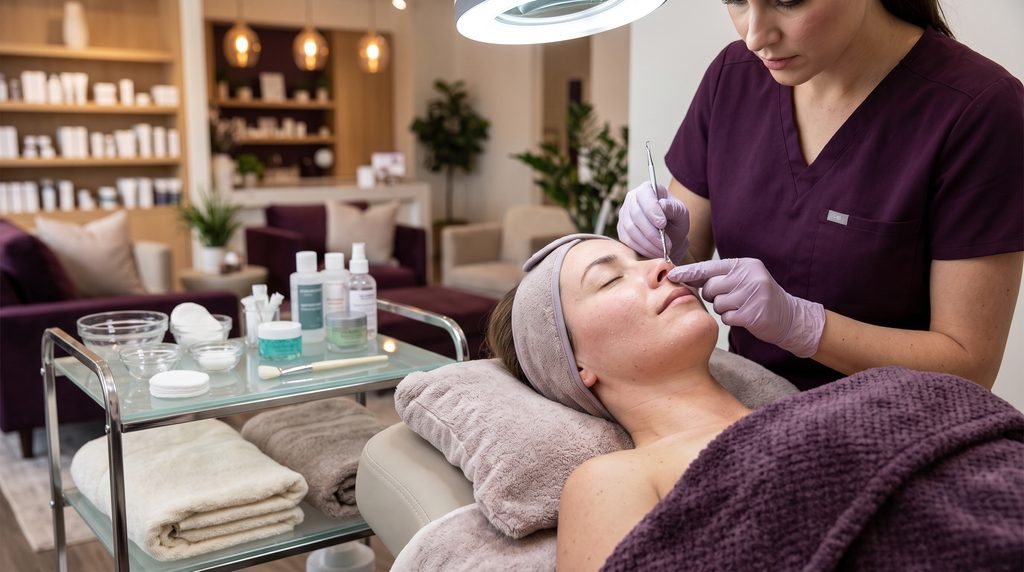
Professional Blackhead Extraction can be an option for people who want to address visible blackheads and pore congestion as part of a considered skincare routine. Blackheads commonly appear when oil and dead skin cells collect inside open hair follicles. Although their dark appearance can be frustrating, they are not simply dirt, and aggressive scrubbing will not make them disappear safely. As summer transitions into fall, this is a useful time to review cleansing habits, product choices, and professional skincare options. At Salomio, a blackhead removal service should focus on appropriate cosmetic care, gentle techniques, and realistic expectations for your skin.
Listen
What Is Professional Blackhead Extraction?
Blackhead extraction is a skincare procedure intended to remove suitable blockages from pores. Depending on the provider and service, the appointment may include cleansing, preparation of the skin, careful extraction, and soothing aftercare. The technique should be selected according to the skin’s condition, the type of blemish, and the provider’s qualifications.
Understanding Blackheads and Clogged Pores
Blackheads are a type of acne lesion known as an open comedone. They form when oil and dead skin cells block a follicle while its opening remains exposed to air. This creates the familiar dark appearance. Whiteheads are different because their openings are closed or covered. Tiny, visible dots on the nose can also be sebaceous filaments, which are normal structures that help move oil through pores. Correctly identifying the concern helps prevent unnecessary extraction.
How Professional Blackhead Extraction Works
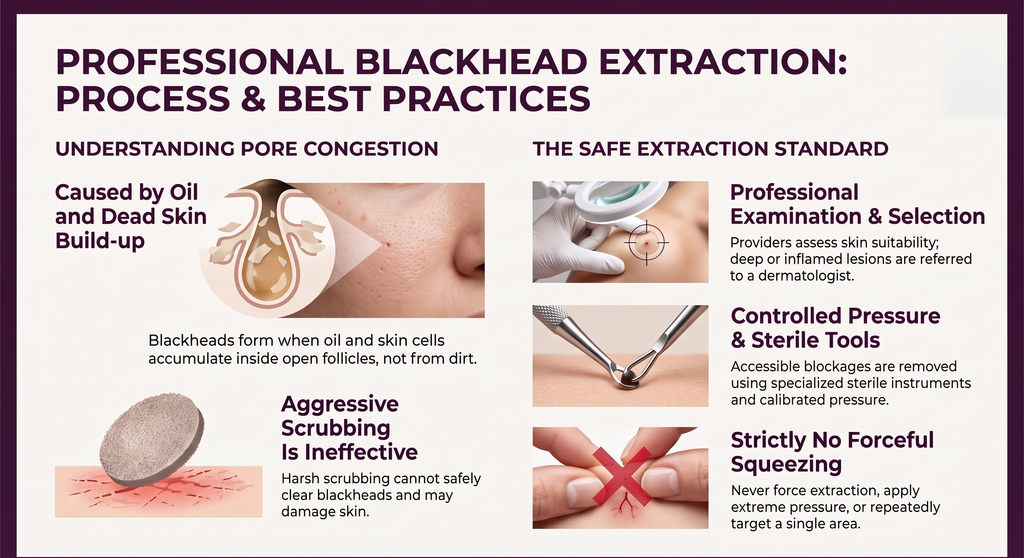
A qualified skincare professional examines the skin and decides whether extraction is appropriate. When suitable, the provider may use a sterile extraction instrument and controlled pressure to remove accessible blockages. Not every blackhead should be extracted, and deep, painful, inflamed, or difficult lesions may require assessment by a dermatologist.
Extraction should never involve forceful squeezing, excessive pressure, or repeated attempts on the same area.
What Benefits Can Professional Blackhead Extraction Provide?
For suitable, accessible blackheads, professional removal may reduce their visible appearance immediately after the procedure. The outcome varies according to the number and depth of blockages, the skin’s sensitivity, and the technique used. Extraction does not permanently close pores or prevent new blackheads from developing, so ongoing skincare remains important.
Reducing Visible Congestion with Professional Blackhead Extraction
Carefully removing an accessible blackhead may leave the treated area looking less congested. This can be helpful when blackheads are concentrated around the nose, chin, or forehead. However, some dark dots are not removable blackheads, and repeated attempts to extract them can damage the skin. A responsible provider should explain when leaving a spot alone is the safer choice.
Supporting a Smoother-Looking Complexion
When pore blockages are successfully removed, the skin may look more even in the treated area. Gentle cleansing and suitable moisturising can help maintain skin comfort afterward. However, extraction does not treat every cause of uneven texture, enlarged-looking pores, or acne. A consistent routine and, when necessary, advice from a dermatologist may be more useful than relying on repeated extraction sessions alone.
Who Is Suitable for Professional Blackhead Extraction?
This service may suit people with visible, accessible blackheads who want professional help managing pore congestion. Suitability depends on skin sensitivity, current breakouts, existing conditions, medications, and previous reactions to skincare products.
A consultation should take place before treatment, especially if you have recently experienced irritation or have concerns about acne.
Choosing Professional Blackhead Extraction for Congested Skin
If you notice persistent blackheads despite gentle cleansing, a professional can help you understand whether extraction is appropriate. People with oily skin may be more prone to clogged pores, but blackheads can occur with different skin types. Your provider should consider your routine and skin condition rather than assuming that every congested area needs manual removal.
When Extraction Should Be Avoided
Avoid cosmetic extraction on sunburned, broken, infected, or significantly irritated skin. Deep, painful lumps, inflamed acne, or lesions that bleed easily should not be squeezed during a routine facial.
If you have severe acne, a history of scarring, or a skin condition that affects healing, consult a qualified healthcare professional before booking. Seek medical advice for new or changing lesions that do not appear to be ordinary blackheads.
How Does Professional Blackhead Extraction Compare with Home Care?
Professional extraction and home skincare can play different roles in managing blackheads.
A trained provider may remove selected blockages using appropriate equipment, while a home routine helps reduce the buildup that contributes to new ones.
Neither approach guarantees that blackheads will never return, and the safest choice depends on your skin and the severity of the problem.
Professional Blackhead Extraction Versus Squeezing at Home
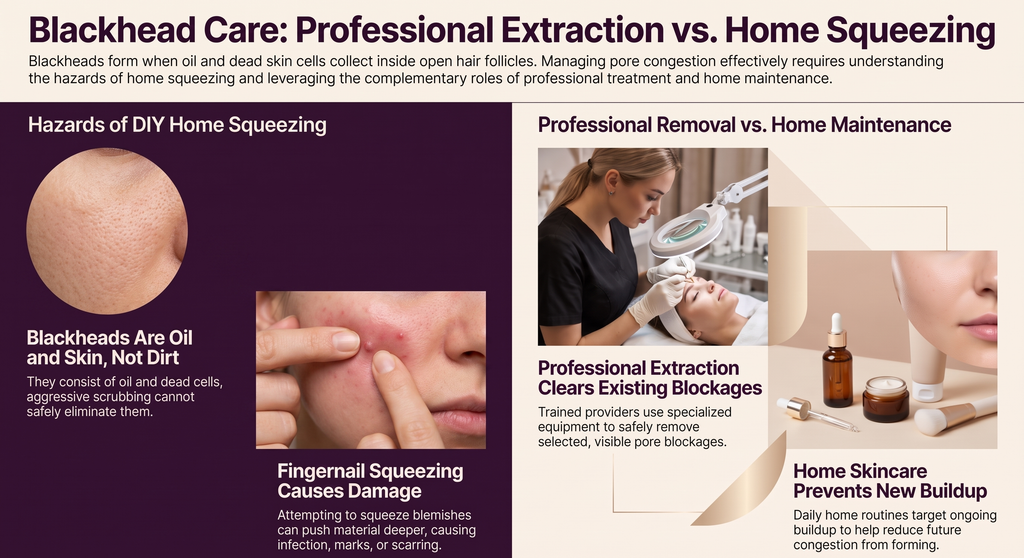
Attempting to squeeze blackheads with fingernails can irritate the skin, push material deeper, and increase the risk of infection, dark marks, or scarring. Dermatologists at the American Academy of Dermatology advise against picking or squeezing facial blemishes. Read its guidance on caring for pores for additional advice.
“Picking at, squeezing, or digging into your pores can also irritate your skin.”
The organisation
Comparing Professional Extraction and Everyday Skincare
The following comparison explains how the approaches differ. A combination of suitable professional care and a gentle home routine may be helpful, but extraction is not essential for everyone.
| Feature | Professional extraction | Home skincare |
|---|---|---|
| Main purpose | Removes selected, accessible pore blockages | Helps cleanse skin and manage future congestion |
| Typical methods | Skin assessment and careful extraction when appropriate | Gentle cleanser and suitable non-comedogenic products |
| Immediate effect | Some visible blackheads may be removed | Results depend on the products and consistency of use |
| Main concern | Forceful or unsuitable extraction can cause irritation | Harsh scrubs and excessive active ingredients can irritate skin |
| Best approach | Choose a qualified provider who assesses suitability | Use a consistent routine and follow product directions |
What Happens During a Professional Blackhead Extraction Appointment?
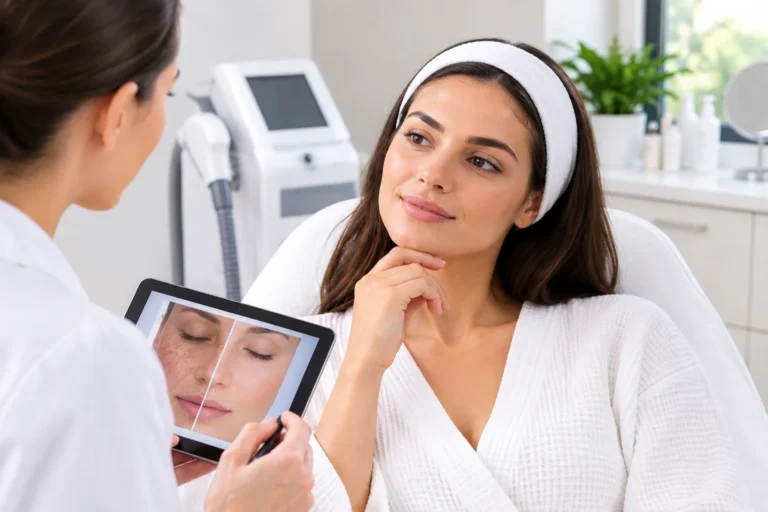
A well-planned appointment should begin with a skin assessment and an explanation of the proposed steps. The process varies between providers, and not every facial includes extraction. Your comfort and skin safety should take priority over removing every visible spot.
Preparing the Skin Before Extraction
The provider may cleanse the skin to remove makeup, sunscreen, and surface residue before assessing the affected areas. Depending on the protocol, they may use a suitable preparation method to make accessible blockages easier to remove. Steam is not essential for every facial and should not be used at temperatures that risk burns or discomfort. Tell the provider about allergies, sensitive skin, recent exfoliation, and any active skincare treatments you use.
Aftercare Following Professional Blackhead Extraction
After extraction, the provider may apply a gentle moisturiser or another suitable soothing product. Mild temporary redness can occur, but significant pain, increasing swelling, or persistent irritation should not be ignored. Avoid squeezing the treated areas at home or immediately applying several strong exfoliating products. Follow the specific aftercare advice provided for your skin and the treatment performed.
How Can You Maintain Clearer-Looking Skin During Fall?
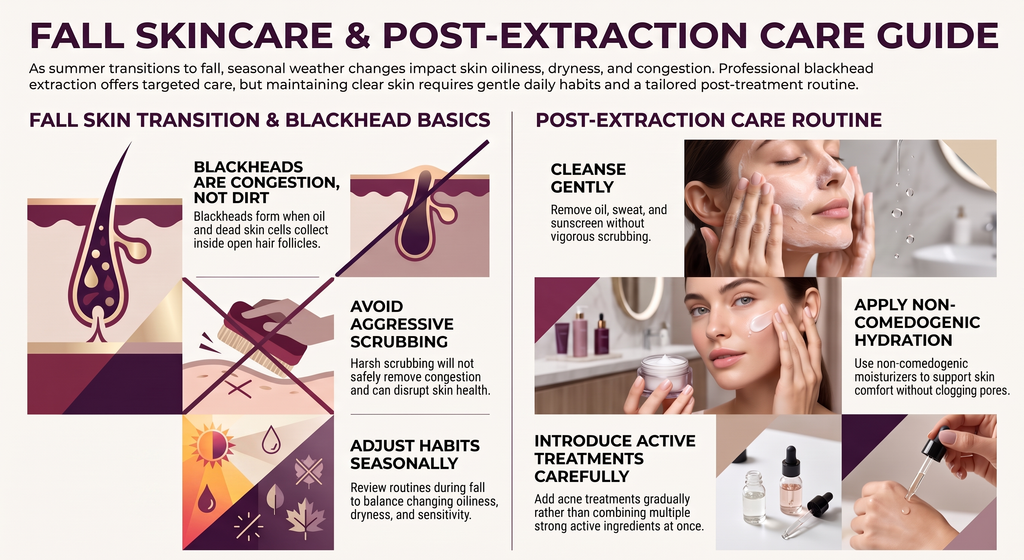
As summer gives way to fall, your skin may respond to changes in weather, indoor environments, and daily habits. Seasonal changes do not automatically mean that you need more treatments. Instead, review your routine and make adjustments based on oiliness, dryness, sensitivity, and the products you already use.
Building a Routine After Professional Blackhead Extraction
Gentle cleansing helps remove oil, sweat, sunscreen, and makeup without the need for vigorous scrubbing. A moisturiser suited to your skin can support comfort, including when you have oily or acne-prone skin. Products labelled non-comedogenic are designed not to clog pores, although individual reactions can still vary. If you use acne treatments, introduce products carefully and follow their directions rather than combining multiple strong ingredients at once.
Preventing Future Congestion with Consistent Care
Blackheads can return because oil and dead skin cells continue to collect inside follicles. Salicylic acid may help unclog pores for some people, while retinoid products can help manage blackheads over time. These products are not suitable for everyone and can cause dryness or irritation. Ask a healthcare professional or pharmacist for advice if you are unsure which option is appropriate, especially if you are pregnant, breastfeeding, or using prescription skincare.
- Cleanse gently and remove makeup before sleeping.
- Choose moisturisers and makeup labelled non-comedogenic when suitable for your skin.
- Avoid picking, squeezing, and harsh scrubbing, even when blackheads are noticeable.
- Use broad-spectrum SPF 30 or higher during outdoor exposure and follow the product directions.
Conclusion
Professional Blackhead Extraction may help remove selected visible pore blockages when performed appropriately by a qualified provider. It works best as one possible part of a broader skincare routine that includes gentle cleansing, suitable moisturising, and sun protection. As fall begins, focus on consistency rather than aggressive scrubbing or frequent extraction. If you are considering a blackhead removal facial at Salomio, ask about the procedure, hygiene practices, and aftercare before booking. For painful, persistent, or severe acne, seek advice from a qualified healthcare professional.
Comments