
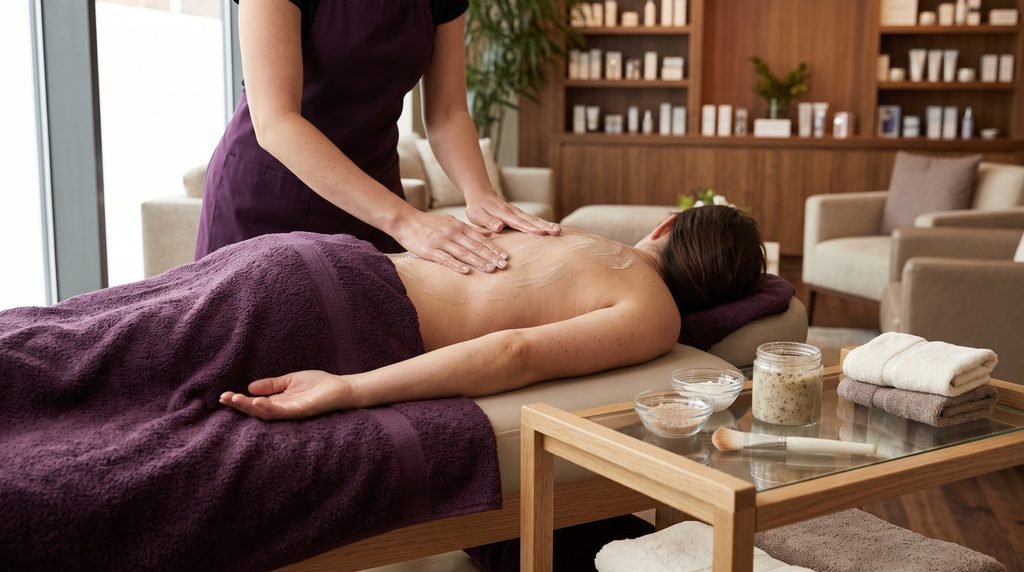
A body skin brightening routine can help skin look fresher and feel smoother when it focuses on gentle exfoliation, moisturising, and sun protection rather than harsh whitening products. After summer, you may notice dryness, a dull appearance, or areas of uneven-looking tone. As fall begins, this is a useful time to review your body-care habits and choose products that suit your skin. At Salomio, a brightening body service should be approached as cosmetic care, with realistic expectations and attention to skin comfort, not as a promise to change your natural skin colour.
Listen
What Is a Body Brightening Treatment?
A body brightening service is a cosmetic treatment designed to improve the appearance and feel of the skin. Depending on the salon protocol, it may include cleansing, gentle exfoliation, a suitable body mask or serum, and moisturising.
The exact steps and ingredients can vary, so it is important to ask what the service includes before your appointment.
How Body Skin Brightening Works
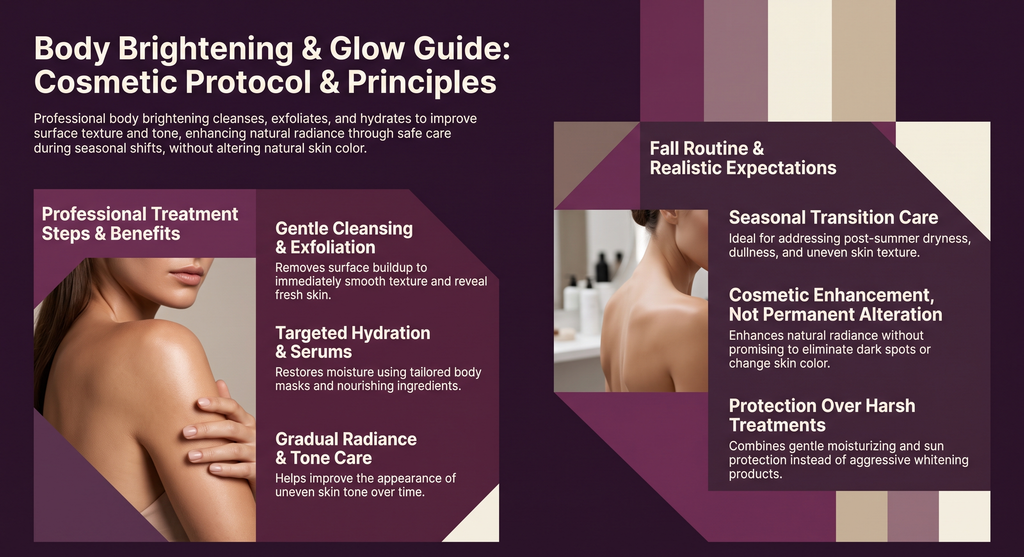
Some brightening treatments focus on removing surface buildup and improving hydration, which can make skin appear smoother and more radiant. Others use cosmetic ingredients intended to improve the look of uneven tone over time. The outcome depends on the formula, your skin, and the cause of any discoloration. A salon treatment cannot guarantee that dark spots will disappear or that your complexion will become a particular shade.
What Results Can You Realistically Expect?
After a suitable treatment, your skin may feel softer and look more refreshed, particularly if dryness or surface roughness contributed to its dull appearance.
Changes in pigmentation usually require a more targeted approach and may take time. Some dark patches are associated with irritation, friction, or medical skin conditions, so persistent or changing marks should be assessed by a qualified healthcare professional.
What Benefits Can a Body Brightening Service Offer?
The potential benefits depend on the products and techniques used. Gentle exfoliation may help remove some dead surface cells, while moisturisers support the skin barrier and reduce the feeling of dryness. These steps can be helpful when your skin-care routine needs a refresh after summer.
Improving Smoothness with Body Skin Brightening
When an appropriate exfoliating product is used correctly, it may help improve the appearance of rough or flaky areas. Moisturising afterwards helps the skin feel comfortable and supple. However, frequent or aggressive exfoliation can cause irritation and may make some types of discolouration more noticeable. A gentle approach is usually preferable to combining multiple strong products in one session.
Supporting a Radiant Appearance with Body Skin Brightening
Hydrated skin often reflects light more evenly, giving it a fresh appearance. A suitable moisturiser can support this effect without attempting to bleach the skin. If uneven tone is the main concern, the right approach depends on its cause. The American Academy of Dermatology advises that treatment for dark spots begins by addressing what caused them and protecting the skin from sunlight. Read its guidance on fading dark spots.
Who Is Suitable for a Brightening Body Treatment?
A cosmetic brightening service may suit adults who want to improve the feel and appearance of dry, dull, or uneven-looking body skin. Suitability depends on skin sensitivity, allergies, existing conditions, and the ingredients used. Before booking, explain any previous reactions, current skin treatments, or areas of concern to your therapist.
Choosing Body Skin Brightening for Dull or Dry Skin
If your skin feels rough or looks dull, a treatment built around gentle cleansing and moisturising may be worth considering. You may not need exfoliation if your skin is already sensitive or if your everyday routine is working well. The aim should be to support your skin’s comfort and natural appearance, rather than to pursue a specific skin tone.
When to Avoid a Brightening Body Service
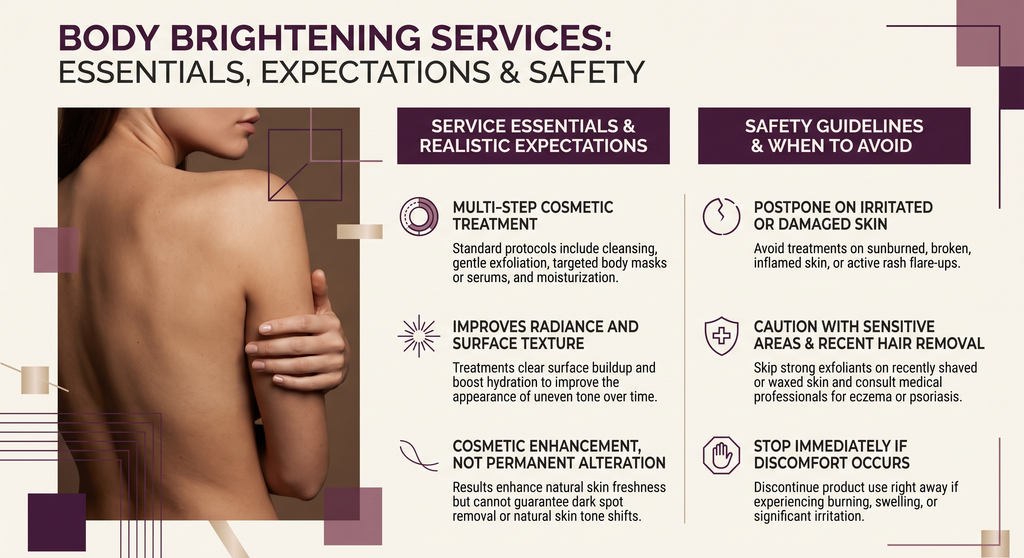
Postpone treatment on sunburned, broken, inflamed, or irritated skin. If you have eczema, psoriasis, an active rash, or a history of reactions to cosmetic ingredients, ask a healthcare professional whether the proposed products are appropriate. Avoid applying strong exfoliants to recently shaved or waxed areas unless the product guidance and your provider confirm it is suitable. Stop if a product causes burning, swelling, or significant discomfort.
Which Ingredients Are Common in Brightening Body Care?
Brightening products can contain moisturising ingredients, gentle exfoliants, antioxidants, or ingredients marketed for the appearance of uneven tone. No single ingredient is right for everyone, and a longer ingredient list does not necessarily mean a better result. Ask the salon which products it uses and whether they are suitable for your skin.
Moisturisers and Gentle Exfoliants
Ingredients such as glycerin and hyaluronic acid are used in skin-care products to help attract and retain moisture. Depending on the formulation, lactic acid or other exfoliating ingredients may help smooth the skin’s surface. These ingredients can still irritate some people, particularly when used at high concentrations or combined with other exfoliating products. Follow the product directions and avoid layering several strong treatments without professional guidance.
Choosing Safe Products for Body Skin Brightening
Read product labels, follow directions, and avoid unlabelled or suspiciously marketed skin-lightening creams. The US Food and Drug Administration warns that some skin-lightening products contain mercury or hydroquinone and may cause serious harm. Prescription treatments for pigmentation concerns should only be used under appropriate medical supervision.
“Do not use over-the-counter skin lightening products”
FDA safety warning
How Does a Brightening Body Treatment Compare with Everyday Body Care?
A salon service and a home routine can complement each other, but they serve different purposes. A salon may provide a structured sequence of products, while everyday care helps maintain hydration and protect the skin between appointments. Neither approach should rely on harsh scrubbing or unverified whitening claims.
Choosing Body Skin Brightening at a Salon
A salon treatment can offer a dedicated period for cleansing, exfoliation when suitable, and moisturising. Before booking, ask about the products, whether the service includes active exfoliating ingredients, and what aftercare is recommended. If you have a history of skin sensitivity or pigmentation, the therapist should take this into account and refer you for medical advice when appropriate.
Salon Treatment vs. Home Body Care
The following comparison can help you decide what fits your needs. The best option may be a simple home routine, a salon service, or a combination of both, depending on your skin and preferences.
| Feature | Salon treatment | Home routine |
|---|---|---|
| Main purpose | Provides a structured cosmetic-care session | Supports regular cleansing, hydration, and protection |
| Typical steps | May include cleansing, suitable exfoliation, and moisturising | Usually includes gentle washing and daily moisturiser |
| Frequency | Depends on the service, products, and skin tolerance | Can be adjusted to daily needs and product instructions |
| Potential limitation | May not be suitable for sensitive or irritated skin | Results depend on consistency and suitable product choices |
| Best approach | Discuss ingredients, sensitivities, and aftercare first | Choose labelled products and avoid harsh or unverified formulas |
How Should You Prepare for and Maintain Your Results?
Good preparation and aftercare help reduce the risk of irritation. Your therapist should explain what to expect and provide guidance based on the actual products used. As summer transitions into fall, changes in clothing, bathing habits, and indoor environments may affect how dry your skin feels. Adjust your routine according to your skin rather than following a rigid seasonal schedule.
Preparing for Body Skin Brightening
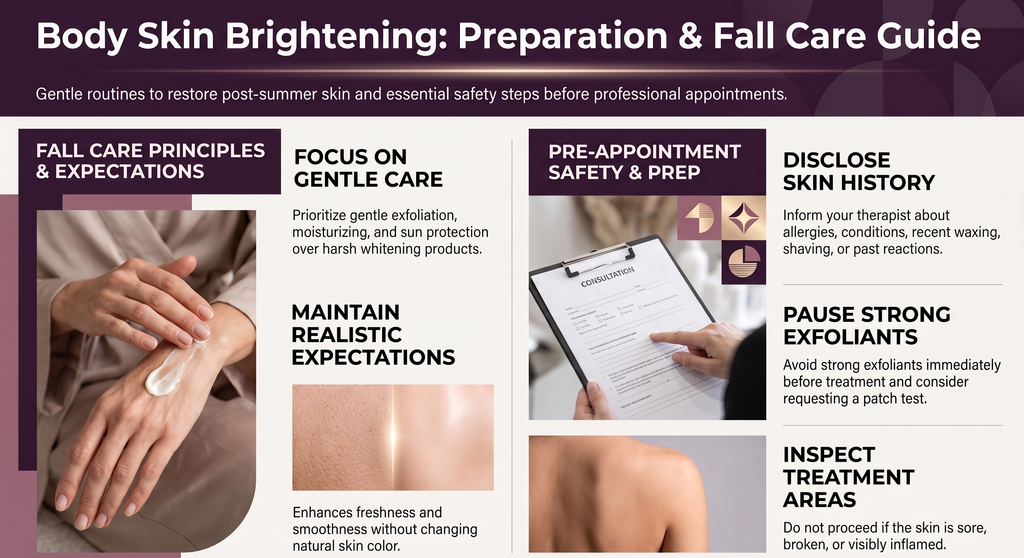
Before your appointment, tell the therapist about allergies, skin conditions, recent waxing or shaving, and any products that have caused reactions. Avoid using strong exfoliants immediately before the service unless your provider advises otherwise. If you are unsure about a new product, ask whether a patch test is appropriate. Do not proceed if the skin in the treatment area is sore, broken, or visibly inflamed.
Maintaining Comfort After Treatment
After your appointment, use a gentle moisturiser and follow the salon’s specific aftercare instructions. Avoid adding new active products or scrubbing the treated area while it feels sensitive. When exposed skin will be outdoors, use broad-spectrum sunscreen with SPF 30 or higher and reapply as directed. The American Academy of Dermatology notes that sunscreen is an important part of preventing and managing dark spots. Seek medical advice if you develop persistent redness, swelling, blistering, or worsening discolouration.
- Use a gentle body cleanser and moisturise regularly, especially when skin feels dry.
- Protect exposed skin from the sun with broad-spectrum SPF 30 or higher.
- Avoid harsh scrubs, unlabelled lightening creams, and combining multiple strong exfoliants.
- Ask a healthcare professional about persistent, changing, painful, or unexplained dark patches.
Conclusion
A suitable body skin brightening service can be part of a body-care routine focused on smoother-feeling, hydrated, and more radiant-looking skin. The most responsible approach combines realistic expectations, gentle products, sun protection, and attention to your skin’s response. As fall arrives, prioritise comfort and consistency over aggressive exfoliation or promises of dramatic whitening. If you are considering this service at Salomio, ask about the products and steps involved before booking. For persistent pigmentation or other skin concerns, consult a qualified healthcare professional.
Comments