
How often should you get a facial? For many people, scheduling a professional facial every four to six weeks can be a reasonable starting point, but the ideal frequency depends on skin type, treatment intensity, individual concerns, and recovery time. A consistent skincare plan can help maintain hydration, improve skin texture, and address specific concerns without unnecessary treatments.
For beauty professionals and clients exploring services through Salomio, understanding these factors makes it easier to choose appropriate treatments and set realistic expectations. Rather than following a fixed schedule, consider how your skin responds and seek professional advice when needed.
How Often Should You Get a Professional Facial?
For many people receiving a standard, gentle facial, a session every four to six weeks is a common recommendation. Cleveland Clinic explains that this interval can align with the skin’s approximately monthly renewal cycle. However, this is a general guideline, not a medical requirement for everyone. Some people may benefit from less frequent appointments, while specific skin concerns may require a different treatment plan. The right schedule should account for the service being performed, your skin’s condition, and the advice of a qualified skincare professional. Source: Cleveland Clinic
Is a Facial Every Four to Six Weeks a Good Starting Point?
A four-to-six-week interval can provide a practical starting point for people receiving routine cleansing, gentle exfoliation, hydration, and other non-intensive facial services. It also gives clients time to evaluate how their skin responds before booking another appointment.
As esthetician Kanaan explains in Cleveland Clinic’s guidance, “every four to six weeks is ideal because it aligns with your skin’s natural cycle — about 30 days.” This recommendation should still be interpreted in context: a monthly facial is not essential for everyone, and more frequent treatments do not automatically produce better results.
If your skin is comfortable and your skincare goals are being maintained between appointments, you may not need to follow the same frequency indefinitely. Discuss adjustments with your esthetician based on your treatment history and current needs.
What Factors Determine Your Ideal Facial Schedule?
Several factors influence how frequently you should book a professional facial. These include your skin type, sensitivity, treatment goals, the ingredients used, and the intensity of exfoliation or extraction.
Your home skincare routine also matters. Products containing retinoids, benzoyl peroxide, or exfoliating acids may increase irritation risk when combined with certain professional treatments. Seasonal changes can affect dryness and sensitivity, while persistent acne or other skin conditions may require medical guidance rather than repeated salon treatments.
Before your appointment, tell your provider about your current products, recent procedures, allergies, and any unusual skin reactions. This information helps them choose an appropriate service and recommend a suitable interval between sessions.
How Often Should You Get a Facial for Your Skin Type?
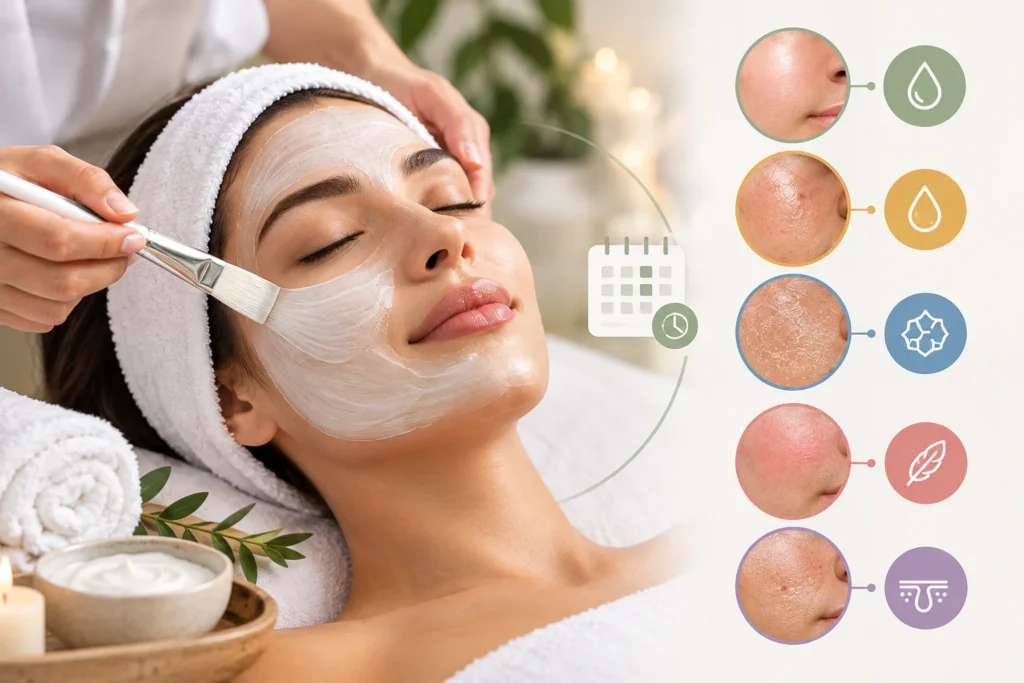
Skin type can influence the choice of facial and the amount of recovery time required. Oily skin, for example, may need a different approach from dry or sensitive skin, but oiliness alone does not determine treatment frequency. Skin conditions, product tolerance, and the specific procedure are equally important. A professional assessment can help identify whether your main concern is dehydration, congestion, sensitivity, or another issue. The goal is to select a treatment that addresses your needs without compromising the skin barrier or creating unnecessary irritation.
How Often Should You Get a Facial for Oily or Acne-Prone Skin?
People with oily or acne-prone skin may consider regular professional facials to address congestion and maintain a consistent skincare routine. However, extractions and exfoliating treatments should be selected carefully, particularly when acne is inflamed or the skin is irritated.
A facial every four to six weeks may be suitable for some people receiving gentle treatments, but others may need a different schedule. If you use prescription acne medication, retinoids, benzoyl peroxide, or salicylic acid, tell your provider before treatment. These products can affect skin sensitivity and may influence which procedures are appropriate.
Deep cleansing is not a substitute for acne treatment. If breakouts are painful, persistent, or leaving scars, consult a dermatologist before relying on salon facials to manage the condition.
How Often Should You Get a Facial for Dry or Sensitive Skin?
Dry or sensitive skin often benefits from a gentle approach that prioritizes hydration and barrier support. Depending on the products and techniques used, a person may tolerate a standard facial every four to six weeks or prefer longer intervals.
Avoid assuming that visible peeling or a strong tingling sensation means a treatment is working better. Excessive exfoliation can worsen dryness, redness, and discomfort. The American Academy of Dermatology recommends adjusting exfoliation to skin type and method, noting that more aggressive exfoliation should be performed less often. Source: AAD
If your skin is actively irritated, sunburned, or affected by a flare-up, postpone elective exfoliating treatments and seek professional advice about when it is appropriate to resume them.
How Does the Type of Facial Affect Treatment Frequency?
Not all professional facials involve the same techniques. A gentle hydrating facial may focus on cleansing and moisturizing, whereas a chemical peel or other intensive procedure can involve stronger active ingredients and a more significant recovery period. Consequently, the interval between treatments should be based on the specific procedure rather than the general recommendation for routine facials. Before booking, ask your provider what the service involves, how long recovery may take, and whether your current skincare products need to be adjusted. These details help you make a more informed decision.
How Often Should You Get a Hydrating or Deep-Cleansing Facial?
Hydrating facials and gentle deep-cleansing treatments may fit into a recurring skincare schedule, often around every four to six weeks when appropriate for the individual. However, the best interval depends on how your skin responds and what the service actually includes.
For a hydrating facial, ask which ingredients and products will be used, especially if your skin is sensitive or prone to reactions. For deep cleansing, discuss the need for extractions and whether they are suitable for your current skin condition. Stronger exfoliation is not always necessary to achieve a comfortable, refreshed appearance.
Daily cleansing, moisturizer, and broad-spectrum sunscreen remain important between appointments. A professional facial should complement a consistent home routine rather than replace it.
How Often Can You Repeat Chemical Peels or Intensive Treatments?
Chemical peels and other intensive procedures require more individualized planning than standard facials. Their frequency depends on factors such as peel depth, active ingredients, skin condition, previous treatment response, and the provider’s instructions.
Healthline explains that superficial chemical peels may be spaced weeks apart, while medium-depth peels generally require longer intervals. Deeper procedures involve substantially different risks and should be planned by appropriately qualified medical professionals. Source: Healthline
Do not schedule another intensive treatment simply because a particular number of weeks has passed. Your skin should have recovered, and your provider should confirm that repeating the procedure is appropriate. If you experience persistent redness, pain, swelling, or unexpected skin changes, seek medical advice rather than proceeding with another session.

How Can You Maintain Your Results Between Facials?
The condition of your skin between appointments is just as important as the professional treatment itself. Consistent home care can help maintain hydration and support the skin barrier, while aggressive exfoliation or frequently changing products may increase irritation. A practical routine does not need to contain numerous steps: gentle cleansing, suitable moisturizing, and daily sun protection provide a useful foundation for many people. Your esthetician can recommend products that complement your facial, but ongoing or unusual skin symptoms may require assessment by a dermatologist.
Which Skincare Habits Help Maintain Facial Results?
Use a gentle cleanser, apply a moisturizer appropriate for your skin, and use broad-spectrum sunscreen with SPF 30 or higher during the day. Follow any aftercare instructions provided for your particular facial, especially if it included exfoliation or extractions.
Avoid introducing several new active ingredients immediately after a treatment. Depending on the procedure, your provider may recommend temporarily avoiding retinoids, exfoliating acids, scrubs, or other potentially irritating products. The appropriate duration varies by treatment, so follow the instructions you receive rather than assuming every facial requires the same aftercare.
Consistency is more useful than repeatedly adding new products. If your skin remains comfortable and your goals are being maintained, discuss whether you can extend the interval between appointments.
How-to: How Can You Build a Personalized Facial Schedule?
Use these steps to plan your next professional facial:
- Identify your main concern. Decide whether you want to address dryness, congestion, uneven texture, or general maintenance.
- Choose the appropriate service. Discuss your skin type and goals with a qualified provider before selecting a treatment.
- Start with a suitable interval. For a gentle, standard facial, four to six weeks can be a starting point if your provider agrees.
- Track your skin’s response. Note persistent redness, dryness, breakouts, discomfort, and how long it takes your skin to settle.
- Adjust the schedule. Extend the interval or reconsider the treatment if irritation develops, and seek medical advice for persistent symptoms.
The American Academy of Dermatology advises that “the more aggressive the exfoliation, the less often it needs to be done.” Source: AAD This principle is especially relevant when choosing between routine facials and more intensive procedures.
What Are the Signs That You May Be Getting Facials Too Often?
Persistent redness, burning, unusual dryness, increased sensitivity, or peeling may indicate that your skin is not tolerating the treatment schedule or products being used. These symptoms do not automatically prove that facials are the cause, but they should not be ignored.
Dermatologist Viseslav Tonkovic-Capin states, in Healthline’s guidance on exfoliation, “No exfoliation should cause any visible flaking or redness of the skin.” This is a reminder to treat irritation as a warning sign rather than a measure of effectiveness.
Pause potentially irritating treatments if symptoms develop and ask a qualified professional for guidance. Seek medical evaluation for severe pain, swelling, blistering, signs of infection, or symptoms that persist. A dermatologist can help determine whether an underlying skin condition or a treatment reaction needs attention.
Conclusion
The best answer to how often should you get a facial depends on your skin type, treatment goals, procedure intensity, and recovery. A four-to-six-week interval may work for many standard facials, but it is not a universal rule. Pay attention to your skin’s response, maintain a consistent home routine, and seek qualified guidance before repeating intensive treatments. Salomio helps beauty-conscious readers make more informed decisions about professional skincare services.



Comments