
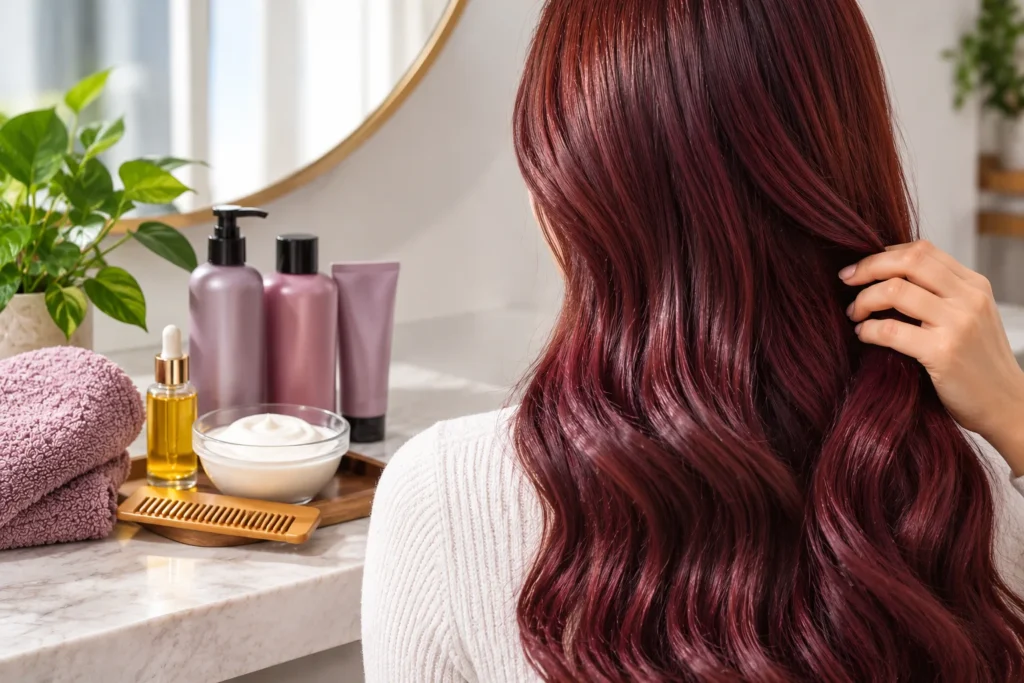
Hair treatment for colored hair is essential for managing dryness, rough texture, and breakage after chemical coloring. Hair dye, particularly when combined with bleaching or lightening, can weaken the hair fiber and make it more vulnerable to damage. The right aftercare routine helps improve softness, manageability, and shine while protecting the appearance of the color.
For clients and salon professionals, understanding the difference between moisturizing, conditioning, and bond-repair treatments is key to choosing appropriate care. This guide explains practical ways to restore the appearance of colored hair without making unrealistic promises about reversing all chemical damage.
1. Why Does Colored Hair Need Special Treatment?
Color-treated hair may require more careful maintenance because chemical processing can affect the hair’s outer protective layer and internal structure. The degree of damage depends on the coloring technique, hair condition, and whether bleaching or other chemical services were involved. A suitable treatment routine should address the hair’s actual needs rather than relying on a single product marketed as a complete repair solution.
How Does Hair Coloring Affect the Hair Cuticle?
Permanent coloring and bleaching can alter the hair cuticle, the outer layer that helps protect the hair fiber. When this layer becomes damaged, hair may feel rougher, tangle more easily, and lose its smooth appearance. Lightening hair substantially can be particularly damaging because it requires a stronger chemical process.
The American Academy of Dermatology (AAD) explains that coloring and perming can leave hair dry and brittle. Gentle cleansing, conditioning, and reducing additional chemical stress can help prevent further damage.
What Are the Signs of Damaged Color-Treated Hair?
Common signs include persistent dryness, increased tangling, frizz, split ends, and breakage during brushing. Hair may also appear dull because its surface no longer reflects light as evenly. These symptoms do not necessarily mean the color itself is defective; they may indicate that the hair needs gentler handling and better conditioning.
Pay attention to how your hair behaves after washing and styling. If it becomes difficult to detangle or breaks easily, reduce heat exposure and consider a treatment designed for damaged hair. Severe breakage or ongoing scalp irritation warrants professional assessment rather than repeated experimentation with cosmetic products.
2. Which Hair Treatments Help Restore Color-Treated Hair?
Choosing a treatment depends on whether the main concern is dryness, roughness, tangling, or chemical damage. Moisturizing conditioners improve softness and manageability, while certain specialized treatments are formulated to support damaged hair fibers. No cosmetic product can guarantee that chemically damaged hair will return completely to its original condition. The most effective approach combines suitable products with habits that prevent additional damage.
How Can Deep Conditioning Improve Dry Colored Hair?
Deep-conditioning masks can help improve softness, reduce friction, and make colored hair easier to comb. Look for a formula designed for color-treated or dry hair, and follow its application instructions. Fine hair may need a lightweight product, while thicker or coarser hair may tolerate a richer formula.
Use a mask as directed rather than assuming that more frequent application always produces better results. Apply it mainly to the lengths and ends if the product is intended for those areas. A conditioner after each shampoo can also help reduce friction and improve manageability.
Dermatologist Paradi Mirmirani, MD, FAAD, notes that leave-in conditioners can help make hair smoother and easier to detangle. Read the AAD’s expert guidance on leave-in conditioners.
When Should You Consider a Bond-Repair Treatment?
Bond-repair products are designed to support hair weakened by certain chemical processes. They may be useful for some color-treated or bleached hair, especially when breakage and poor manageability are concerns. However, formulations differ, and results depend on the product, hair condition, and how it is used.
Do not assume that every product labeled “repair” works in the same way. Follow the instructions and avoid combining multiple intensive treatments without understanding their intended use. If hair is severely compromised, consult a qualified colorist about whether further chemical services should be postponed.
3. How Can You Build a Post-Color Hair Care Routine?
A practical routine protects hair from repeated stress while maintaining the desired color. The goal is not to use as many products as possible but to select a gentle shampoo, an effective conditioner, and additional treatments according to your hair’s needs. Washing frequency should reflect scalp oiliness, lifestyle, and product buildup rather than a universal schedule. Consistency and careful handling are more valuable than constantly changing products.
How Can You Care for Colored Hair After Washing?
Follow this simple How-to routine:
- Cleanse gently: Apply shampoo primarily to the scalp and avoid vigorous rubbing through the lengths.
- Condition after washing: Distribute conditioner through the lengths and ends as directed.
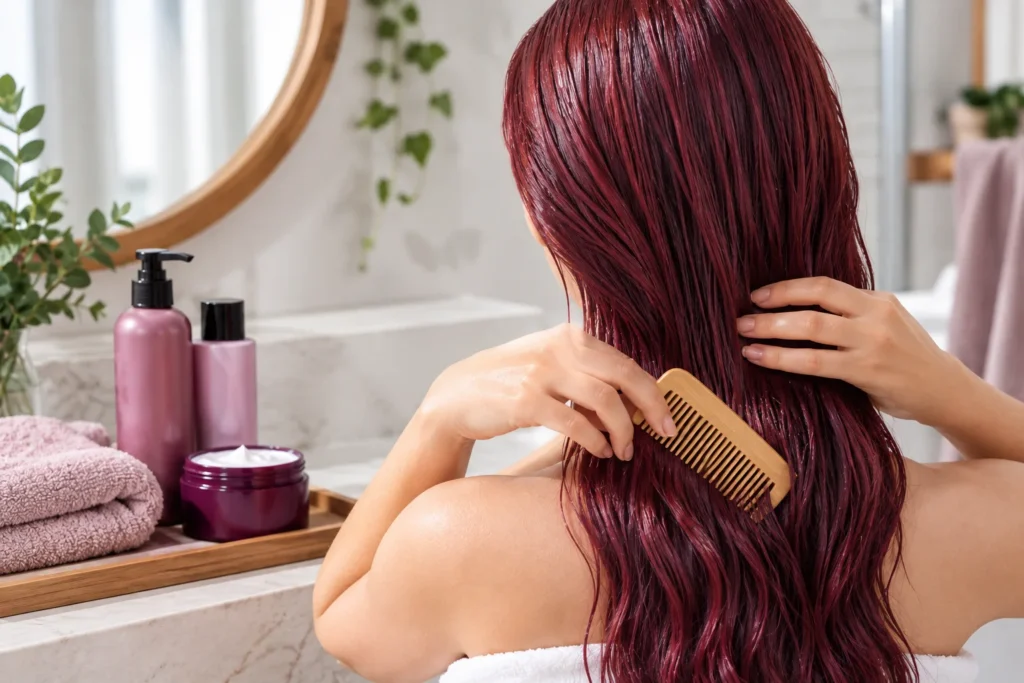
- Detangle carefully: Use a wide-tooth comb and work through knots gently, starting near the ends.
- Reduce heat: Allow hair to air-dry when practical or use a lower heat setting.
- Apply protection: Use a leave-in conditioner or heat protectant suitable for your hair and styling method.
- Trim damaged ends when needed: Trimming can remove split ends, although it does not repair damage higher up the hair shaft.
When Should You Wash Your Hair After Coloring?
Follow your colorist’s advice and the instructions for the coloring service. There is no single waiting period that applies to every dye and technique. When you do wash your hair, choose a suitable color-safe shampoo and avoid unnecessarily hot water.
Wash as often as your scalp requires, but avoid excessive cleansing if it leaves the lengths dry. Conditioning after shampooing helps improve manageability and reduce friction during styling.
4. How Can You Prevent Color Fading and Further Damage?
Hair color can gradually fade through washing, environmental exposure, and normal wear. Damaged hair may also become harder to manage, making careful maintenance especially important. Protecting color therefore involves two related goals: limiting unnecessary fading and reducing additional physical or chemical damage. A consistent routine can preserve the appearance of the shade, although no treatment can prevent all fading.
How Can You Protect Colored Hair From Heat and Sun Exposure?
Frequent high-heat styling can contribute to dryness and breakage. Use a heat protectant labeled for your styling tool, choose a moderate temperature, and limit repeated passes with straighteners or curling irons. A protectant can reduce some styling-related stress but cannot eliminate all heat damage.
Sun exposure can also leave hair feeling dry, rough, or brittle and may affect color appearance. The AAD recommends protecting colored hair from the sun, including wearing a wide-brimmed hat outdoors. If you swim in chlorinated pools, rinse your hair afterward and condition it to improve softness and manageability.
| Treatment | Main purpose | Best suited for |
|---|---|---|
| Rinse-out conditioner | Improves softness and detangling | Routine after-shampoo care |
| Deep-conditioning mask | Improves moisture and manageability | Dry or rough hair |
| Leave-in conditioner | Reduces friction and frizz | Tangled or difficult-to-style hair |
| Heat protectant | Helps limit styling-related damage | Hair exposed to hot tools |
| Bond-repair treatment | Targets certain forms of chemical damage | Some damaged or bleached hair |
5. When Should You Seek Professional Treatment for Colored Hair?
At-home care may be sufficient for mild dryness and roughness, but significant damage requires a more individualized approach. A professional colorist can assess whether another chemical service is appropriate and recommend a routine based on hair condition. Persistent scalp symptoms should not be treated as ordinary post-color dryness, because irritation or an allergic reaction may require medical attention.
Conclusion
The most effective hair treatment for colored hair combines gentle cleansing, regular conditioning, appropriate repair products, and protection from excessive heat and environmental stress. The right routine can improve softness, manageability, and shine while helping reduce further damage. Explore more expert hair-care guides on Salomio to make informed decisions about post-color treatments and professional salon services.
Comments