
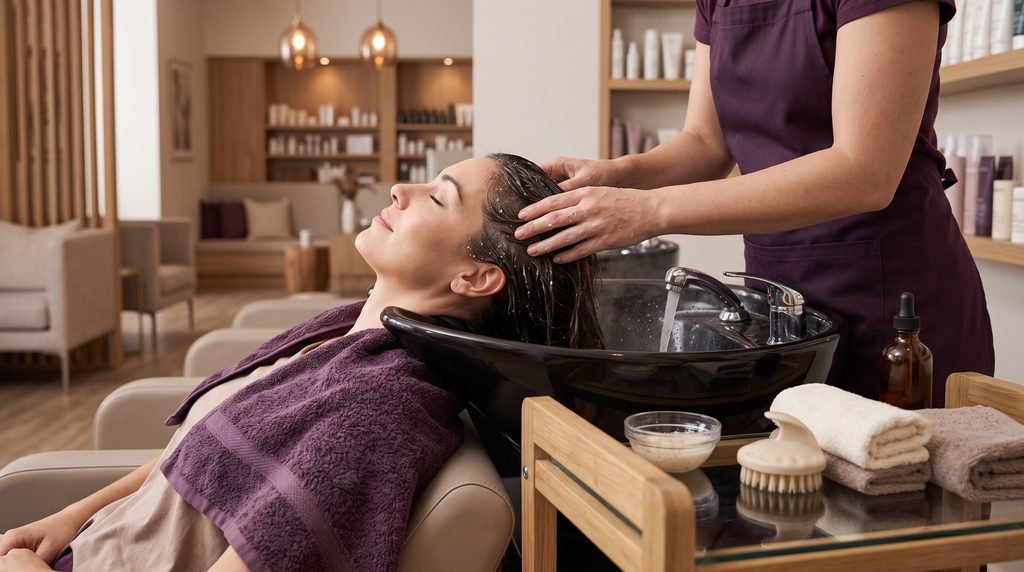
A fresh seasonal hair-care routine starts with the skin beneath your hair. A scalp exfoliation treatment can help lift away surface buildup from styling products, excess oil, and dead skin cells, leaving the scalp feeling cleaner when the right method is chosen. As summer transitions into fall, changes in styling habits, washing frequency, and indoor environments may encourage you to review your scalp-care routine. However, exfoliation is not necessary for everyone, and gentle cleansing remains essential for everyday care.
Listen
What Is a Scalp Exfoliation Treatment?
This service focuses on cleansing and gently exfoliating the scalp rather than treating the hair lengths alone. Depending on the salon’s products and methods, it may use a formulated scrub or another exfoliating product to loosen surface residue. The aim is to support a clean, comfortable scalp without unnecessary friction or irritation.
How a Scalp Exfoliation Treatment Works
A professional begins by assessing your scalp’s visible condition and discussing your hair-care routine. An appropriate product is applied to the scalp and worked in gently according to its instructions. It is then rinsed thoroughly, and a suitable shampoo or conditioner may follow. The process should feel comfortable rather than painful or aggressively abrasive.
What a Scalp Exfoliation Treatment Can and Cannot Do
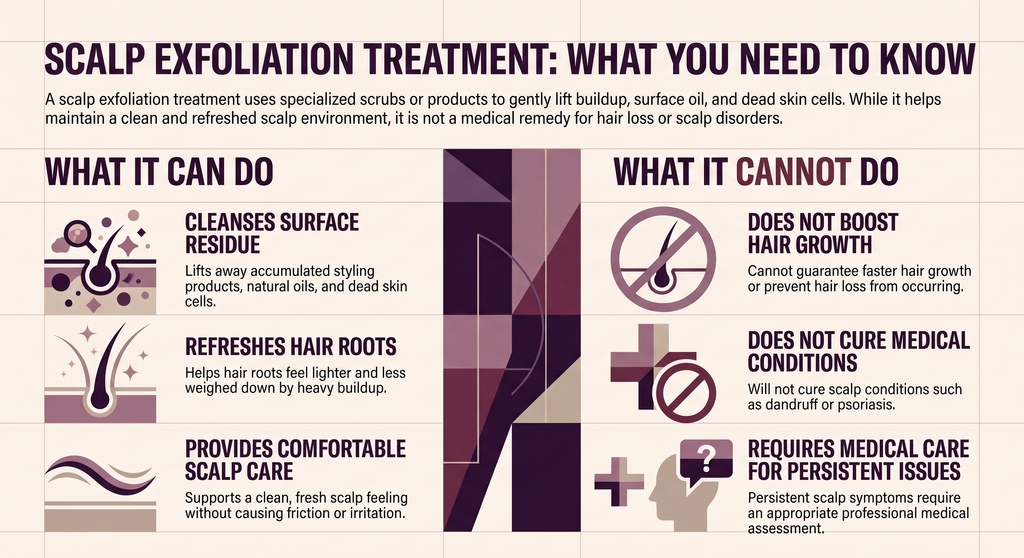
Exfoliation may help remove some accumulated oil, dead skin cells, and styling residue. It can make the scalp feel fresher and may help hair roots feel less weighed down by buildup. However, it does not guarantee faster hair growth, prevent hair loss, or cure dandruff, psoriasis, or other scalp conditions. Persistent symptoms require appropriate medical assessment.
What Benefits Can a Scalp Exfoliation Treatment Offer?
When suitable for your scalp, exfoliation can be a useful addition to a balanced cleansing routine. Results depend on your scalp type, the product selected, and how gently the service is performed. A treatment should complement regular washing rather than replace it.
Removing Surface Buildup with a Scalp Exfoliation Treatment
“built-up products, dead skin, and excess oil.”
The American Academy of Dermatology
Hair sprays, dry shampoos, oils, and styling creams can leave residue when they are not fully removed during washing. Gentle exfoliation may help loosen some of this material. The American Academy of Dermatology recommends applying shampoo to the scalp to wash away Read its healthy hair-care guidance for more advice on everyday cleansing.
Supporting a Fresher Feel with a Scalp Exfoliation Treatment
People with an oily scalp or frequent product use may appreciate the clean feeling that follows a suitable exfoliating service. A thorough rinse and an appropriate shampoo can also help remove loosened residue. The benefit is cosmetic and depends on individual needs; excessive scrubbing can leave the scalp irritated or dry instead of comfortable.
Who May Be Suitable for a Scalp Exfoliation Treatment?
Not every scalp needs exfoliation. Suitability depends on your scalp condition, sensitivity, hair texture, and existing routine. Before beginning, tell your stylist about itching, flaking, recent chemical services, allergies, or products that have caused a reaction.
Considering a Scalp Exfoliation Treatment for Oily Roots
If your roots become oily quickly or you regularly use styling products, you may want to discuss whether an occasional exfoliating service suits your routine. You may not need a scrub if regular shampooing already removes residue effectively. The right washing frequency varies by hair texture, scalp oiliness, and personal needs, so a stylist should avoid recommending the same schedule to everyone.
When to Avoid a Scalp Exfoliation Treatment
Do not exfoliate an area with open cuts, sunburn, sores, marked redness, or active irritation. If you have a diagnosed scalp condition, severe itching, thick scaling, painful bumps, or unexplained patches of hair loss, consult a healthcare professional before booking. Scrubbing may worsen some conditions, and a salon service should not be used as a substitute for diagnosis or medical treatment.
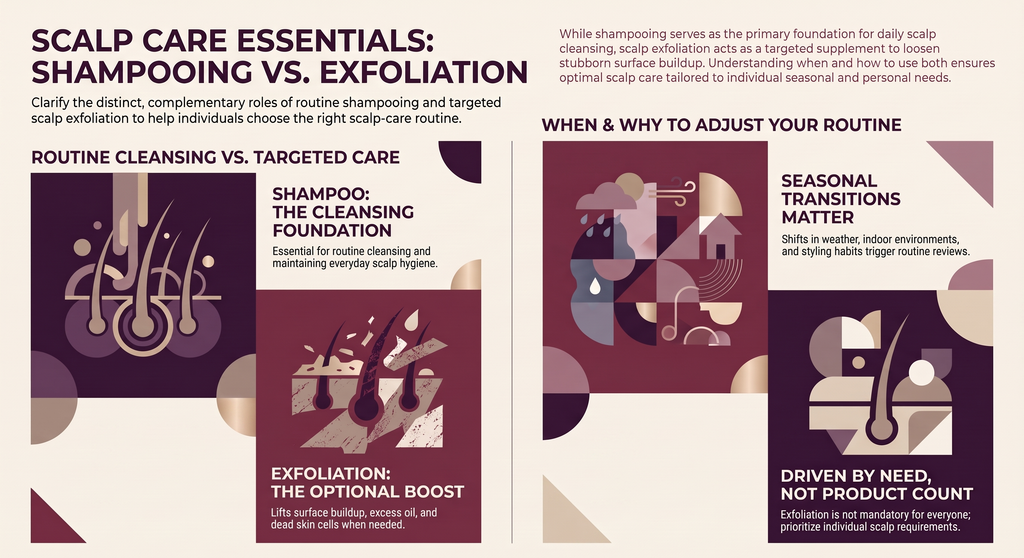
How Does a Scalp Exfoliation Treatment Compare with Shampooing?
Both methods can help remove residue, but they serve different roles. Shampoo is the foundation of routine cleansing, while exfoliation is an optional extra that may help loosen surface buildup. The best choice depends on what your scalp needs rather than how many products you can add to your routine.
Choosing a Scalp Exfoliation Treatment Instead of Extra Scrubbing
“it’s important to exfoliate safely so that it does not damage your skin.”
As dermatologist Rebecca Clare Tung, MD, FAAD,
A properly selected exfoliating product may be useful when ordinary cleansing leaves noticeable residue. However, using a rough scrub more often is not necessarily better. The American Academy of Dermatology warns that exfoliation can harm skin if performed improperly.
Scalp Exfoliation Treatment vs. Regular Shampoo
Use this comparison to understand which option may fit your current routine. Neither method is universally better, and an exfoliating service is not required simply because the seasons change.
| Feature | Scalp exfoliation | Regular shampooing |
|---|---|---|
| Main purpose | Loosens surface buildup and dead skin cells | Removes everyday oil, sweat, dirt, and product residue |
| Role in a routine | Optional addition when suitable | Core part of routine scalp cleansing |
| Frequency | Depends on the product and individual tolerance | Depends on scalp oiliness and hair type |
| Potential concern | Overuse may cause irritation or dryness | Unsuitable products or excessive washing may dry some hair types |
| Best next step | Choose a gentle method and avoid inflamed skin | Use a shampoo suited to your scalp and follow product directions |
What Happens During a Scalp Exfoliation Treatment Appointment?
A salon appointment should be adapted to your scalp’s condition and the product being used. Before starting, the stylist should explain the process, check for relevant sensitivities, and make sure the service is appropriate. Product instructions and salon protocols may vary, so the following steps are a general guide rather than a guarantee of every salon’s procedure.
Preparing for a Scalp Exfoliation Treatment
Your stylist may ask about your usual shampoo, styling products, scalp sensitivity, and any recent treatments. This is the time to mention allergies, tenderness, or a history of irritation. Avoid arriving with unreported scalp concerns, and do not assume a scrub is suitable just because you have visible flakes. Flaking can have several causes, including dryness and dandruff.
Applying and Rinsing a Scalp Exfoliation Treatment
If the service is suitable, the stylist applies the selected product to the scalp and follows its recommended contact time and technique. The product is gently massaged when appropriate, then rinsed away completely. A follow-up shampoo or conditioner may be used depending on the formula and your hair type. The appointment should not involve painful pressure, persistent stinging, or aggressive scratching.
How Should You Care for Your Scalp After Exfoliation?
Aftercare helps you avoid unnecessary irritation and maintain a comfortable scalp. Your routine should focus on gentle cleansing and using products suited to your needs. Fall can be a helpful reminder to review your hair habits, but seasonal changes do not mean that everyone needs more exfoliation.
Maintaining Results After a Scalp Exfoliation Treatment
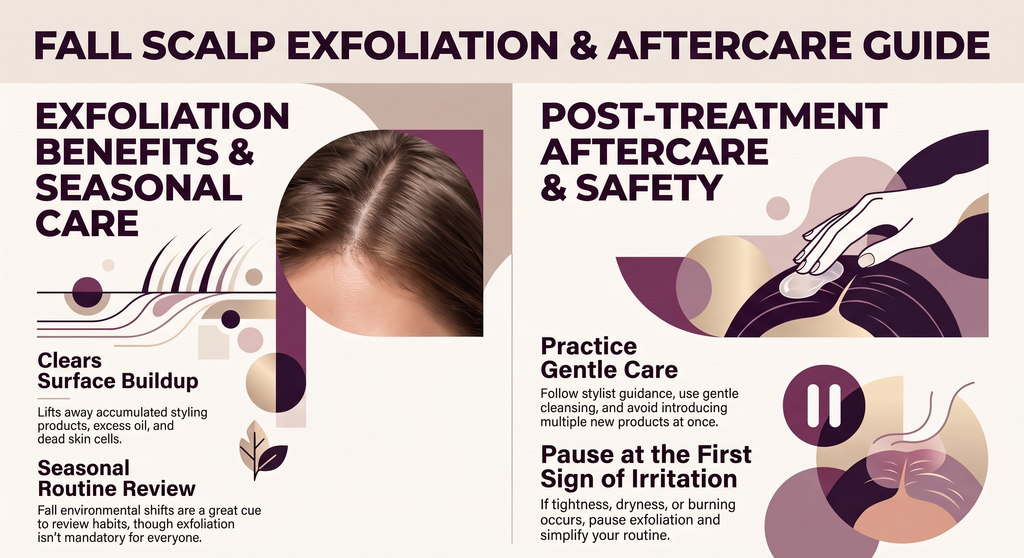
Follow the stylist’s product-specific guidance, wash according to your scalp’s needs, and avoid immediately adding several new scalp products. If your scalp feels tender, tight, or unusually dry, pause exfoliating products and simplify your routine. Stop using a product that causes burning or a reaction. Seek medical advice if irritation persists or becomes severe.
Building a Fall Routine Around a Scalp Exfoliation Treatment
As you move from summer into fall, consider whether your hair-care habits have changed. You might use more styling products, wear hats more often, or spend more time in heated indoor spaces. Rather than automatically increasing exfoliation, adjust your cleansing and conditioning routine to how your scalp and hair actually feel. Gentle care and consistency are more useful than frequent intensive treatments.
- Choose shampoo and conditioner that suit your scalp and hair texture.
- Rinse styling products thoroughly and avoid leaving heavy residue unnecessarily.
- Use exfoliating products only as directed and stop if irritation develops.
- Seek professional medical advice for persistent flakes, itching, pain, sores, or unexplained hair loss.
Conclusion
A well-chosen scalp exfoliation treatment can be an optional way to loosen surface buildup and leave the scalp feeling fresh. It works best as part of a thoughtful routine that prioritizes regular cleansing, gentle handling, and products suited to your scalp. As fall arrives, review your habits instead of automatically adding intensive treatments. If you are considering a service at Salomio, discuss your scalp’s needs and sensitivities with the salon before proceeding. For persistent irritation, severe flaking, or hair loss, seek advice from a qualified healthcare professional.

Comments