
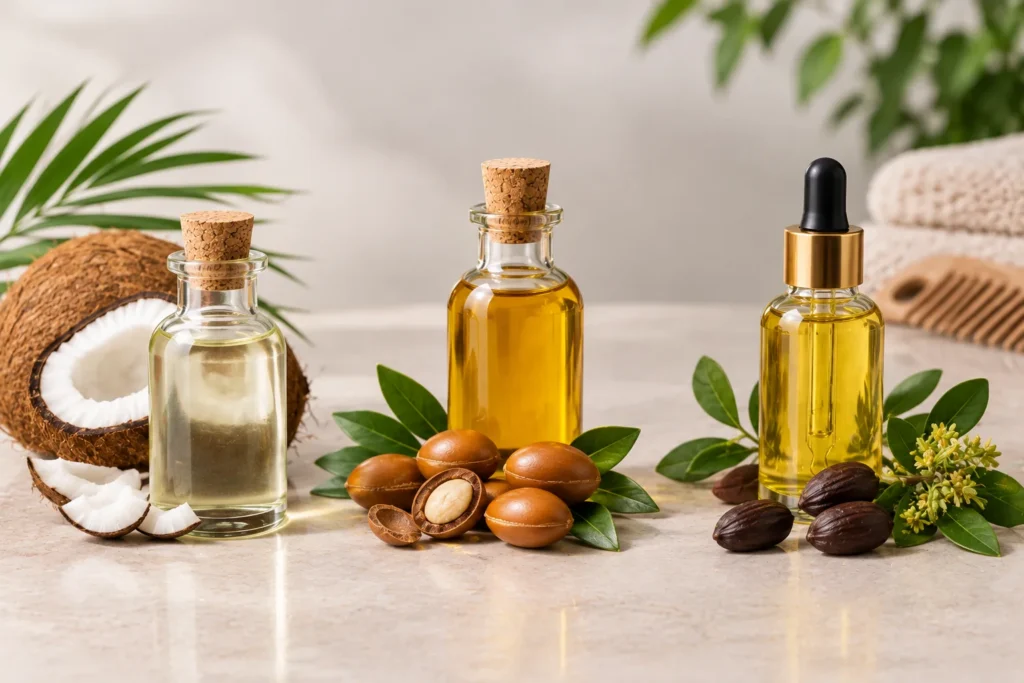
Hair oil can be a valuable addition to a hair care routine when the product matches your hair type and specific needs. Understanding hair oil benefits helps you choose products that improve softness, shine, manageability, and the appearance of dry or damaged strands.
However, not every oil delivers the same results, and claims about faster hair growth require careful evaluation. For salon professionals, hairstylists, and consumers, selecting the right oil means considering hair texture, scalp condition, ingredients, and application methods. This guide explains the benefits of hair oil, compares popular options, and shows how to use them effectively.
What Are the Main Hair Oil Benefits for Healthy Hair?
Hair oils can help improve the appearance and manageability of hair by coating the strands, reducing friction, and supporting moisture retention. Depending on the oil and formulation, they may make dry hair feel softer, increase shine, and help reduce damage associated with grooming. However, oils are not interchangeable with conditioners, and their effects depend on hair texture, porosity, product composition, and application technique. Understanding these differences helps consumers make informed choices rather than relying on marketing promises.
How Can Hair Oil Improve Shine and Manage Frizz?
One of the most noticeable hair oil benefits is improved shine. When an oil forms a thin coating over the hair surface, it can help smooth the appearance of the cuticle and reflect light more evenly. This may make dull hair look glossier and feel smoother. Oils can also reduce friction between strands, helping minimize tangling and making hair easier to style.
For frizzy or textured hair, a small amount of suitable oil may help control flyaways and improve definition. However, using too much can leave the hair greasy or weigh it down, especially when strands are fine. Hair oils also do not permanently repair split ends. They can temporarily improve their appearance, but trimming remains the practical way to remove split ends.
Can Hair Oil Help Reduce Dryness and Breakage?
Certain oils can help protect hair fibers from damage and improve how hair feels during grooming. Research on coconut oil suggests that it can reduce protein loss from hair under specific conditions, making it a useful option for some people concerned about brittleness. A systematic review published in the Journal of Drugs in Dermatology found clinical evidence supporting coconut oil for brittle hair, although evidence for hair growth was limited (read the systematic review).
Hair oils may also reduce friction during brushing and styling. This can be useful for dry, curly, or chemically treated hair that is prone to breakage. Nevertheless, oils work best as one part of a routine that includes suitable shampoo, conditioner, gentle detangling, and heat protection.
Which Hair Oil Is Best for Your Hair Type?
Choosing an oil should begin with identifying the result you want to achieve. Dry, coarse hair may benefit from richer oils, while fine hair often needs a lighter product that does not leave a heavy coating. Scalp concerns require a different approach from problems affecting the hair lengths. Ingredient quality, fragrance, formulation, and individual sensitivity also matter. Rather than assuming that natural oils are automatically better, compare their intended uses and introduce one product at a time.
Is Coconut Oil Good for Dry or Damaged Hair?
Coconut oil is widely used as a pre-wash treatment because research suggests it can penetrate the hair shaft more effectively than some other oils and reduce protein loss under certain conditions. This makes it a reasonable option to consider for brittle, dry, or chemically treated hair. It may also help strands feel smoother and reduce friction during washing and detangling.
However, coconut oil is relatively rich and may leave fine hair looking flat or greasy. Start with a small quantity, concentrating on the mid-lengths and ends rather than automatically coating the scalp. Leave it on briefly before shampooing, then assess how your hair responds. If the hair feels stiff, coated, or difficult to cleanse, reduce the amount or try a lighter formulation.
What Are the Benefits of Argan, Jojoba, and Rosemary Oils?
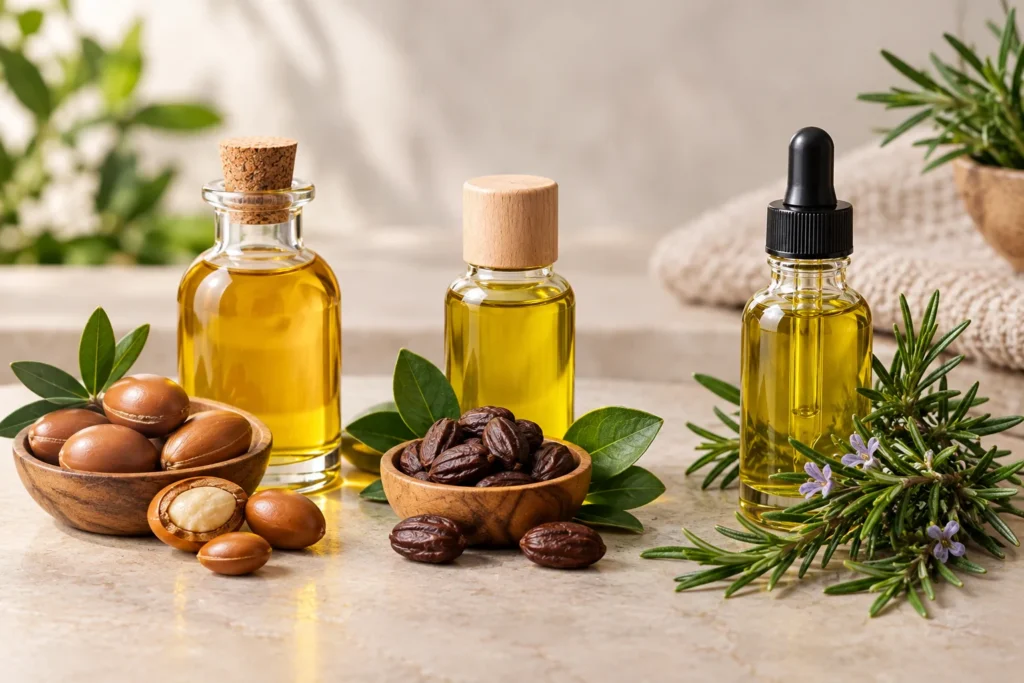
Argan oil is commonly used in finishing products to improve softness, shine, and manageability. Jojoba oil is often included in hair and scalp formulations because its composition resembles certain components of natural skin oils. Both may be useful for cosmetic conditioning, but individual results depend on the product and hair type.
Rosemary oil is marketed for hair growth, yet it should not be presented as a proven solution for every cause of hair loss. Evidence remains limited, and results from a particular study cannot automatically be generalized to every commercial product. Rosemary essential oil should not be applied undiluted to the scalp because it may cause irritation. For persistent thinning or sudden shedding, professional assessment is more appropriate than relying on cosmetic oils alone.
Hair Oil Benefits: Which Oil Should You Consider?
| Oil | Potential use | Important consideration |
|---|---|---|
| Coconut oil | Pre-wash care and brittle hair | May feel heavy on fine hair |
| Argan oil | Shine and smoother-looking strands | Evidence for hair growth is insufficient |
| Jojoba oil | Lightweight-feeling conditioning products | Check the complete formulation |
| Rosemary essential oil | Studied for possible hair-growth effects | Requires appropriate dilution; evidence is limited |
| Castor oil | Cosmetic shine and coating | Strong evidence for hair growth is lacking |
How Should You Use Hair Oil for the Best Results?
Correct application matters as much as the product itself. Applying too much oil, using a heavy formula on fine hair, or leaving an unsuitable product on the scalp can create buildup and discomfort. Some oils are best used before shampooing, while lightweight finishing products may be designed for use after washing. Follow the product label and adjust the amount according to your hair’s response. A consistent routine should improve manageability without making cleansing difficult or irritating the scalp.
Should You Apply Hair Oil to Your Scalp or Hair Lengths?
The best application area depends on the product and your needs. For dry ends, frizz, or surface roughness, applying a small amount to the mid-lengths and ends is often a practical starting point. This targets the hair fibers without unnecessarily coating the scalp. People with fine hair may need only a drop or two, while thick, coarse, or tightly curled hair may tolerate a richer application.
Scalp oiling is not suitable for everyone. People who experience dandruff, persistent itching, or an oily scalp should be cautious because certain oils may worsen symptoms or contribute to buildup. Cleveland Clinic dermatologist Shilpi Khetarpal, MD, notes that “Certain hair types can benefit from oiling more than others” (Cleveland Clinic’s hair-oiling guide). If scalp symptoms persist, seek advice from a dermatologist rather than treating them with oil alone.

How Can You Choose and Apply Hair Oil Correctly?
A useful hair-oiling routine should be simple, targeted, and easy to adjust. Consider whether your main concern is dryness, frizz, breakage, or scalp discomfort before purchasing a product. Read the ingredient list, follow the manufacturer’s instructions, and avoid introducing several new oils simultaneously. This makes it easier to identify which product works for your hair. Salon professionals can also assess texture, chemical treatments, and styling habits when recommending a suitable oil, while keeping expectations realistic about what a cosmetic product can achieve.
How Can You Build a Simple Hair Oiling Routine?
Follow these steps to introduce hair oil into your routine:
- Identify your goal: Decide whether you want to improve shine, soften dry ends, or reduce friction during grooming.
- Choose an appropriate formula: Consider hair thickness, texture, scalp condition, and whether the oil is designed for pre-wash or leave-in use.
- Start with a small amount: Warm the product between your palms and distribute it evenly over the intended area.
- Follow the recommended application time: A pre-wash treatment may be left on briefly before shampooing, while a finishing oil may be designed to remain on the hair.
- Check the results: Notice whether your hair feels smoother and remains easy to cleanse. Reduce the amount or discontinue use if irritation or uncomfortable buildup develops.
There is no universal requirement to oil hair daily. Some people may benefit from occasional pre-wash treatments, while others prefer a small amount after styling. Frequency should reflect the product instructions, hair needs, and individual response.
What Mistakes Should You Avoid When Using Hair Oil?
Hair oil can be useful, but excessive application or choosing the wrong product can undermine the results. Common mistakes include assuming that every oil promotes growth, applying undiluted essential oils, ignoring scalp symptoms, and using large quantities that are difficult to wash out. Another misconception is that a natural ingredient cannot cause irritation. A more effective approach is to select products according to their intended purpose and discontinue use if the hair or scalp responds poorly.
Can Hair Oil Cause Dandruff or Scalp Irritation?
Some people develop itching, redness, or increased flaking when a product irritates their scalp or does not suit their condition. Oils may also contribute to an uncomfortable coating when applied heavily or not cleansed appropriately. Dandruff has several possible causes, so it should not automatically be attributed to dryness or a lack of oil.
The American Academy of Dermatology explains that “It is a common misconception that dandruff is caused by poor hygiene” (AAD guidance on treating dandruff). If you have persistent flakes, use evidence-based dandruff care rather than assuming that adding more oil will solve the problem. Stop using a product that causes irritation, and consult a dermatologist if symptoms continue or become severe.
Does Hair Oil Actually Make Hair Grow Faster?
Hair oil should not be treated as a guaranteed hair-growth treatment. Some oils may help improve hair condition or reduce certain types of breakage, which can help hair retain length. However, retaining length is different from increasing the rate of growth from the follicle. The systematic review of coconut, castor, and argan oils found limited evidence for coconut oil’s impact on growth and no strong evidence supporting castor oil for hair growth (systematic review).
Hair thinning can result from genetics, hormonal changes, nutritional deficiencies, scalp conditions, medications, or other health factors. If you experience sudden shedding, patchy hair loss, or progressive thinning, consult a qualified healthcare professional. An appropriate diagnosis is more useful than relying on unverified claims about oils.
Conclusion
The most useful hair oil benefits come from matching the product to your hair type, applying it correctly, and maintaining realistic expectations. Coconut oil may help reduce protein loss under specific conditions, while other oils can improve softness and shine. However, no oil is ideal for everyone, and cosmetic conditioning should not be confused with proven hair regrowth. Choose products carefully, monitor your scalp’s response, and seek professional advice when hair loss or irritation persists.
Ready to improve your hair care routine? Explore more evidence-informed hair care guides on Salomio and discover practical ways to choose products that suit your hair’s needs.

Comments