

Knowing how often should men get a haircut helps maintain a polished appearance without spending unnecessary time or money at the barbershop. The ideal schedule depends on hairstyle, hair length, texture, growth rate, and personal grooming preferences.
A sharp fade may need frequent maintenance, while longer hairstyles can often go several weeks between appointments. For men, the goal is to find a practical balance between maintaining the desired shape and allowing hair to grow naturally. Understanding these factors makes it easier to create a consistent grooming routine that suits your lifestyle and budget.
How Often Should Men Get a Haircut on Average?
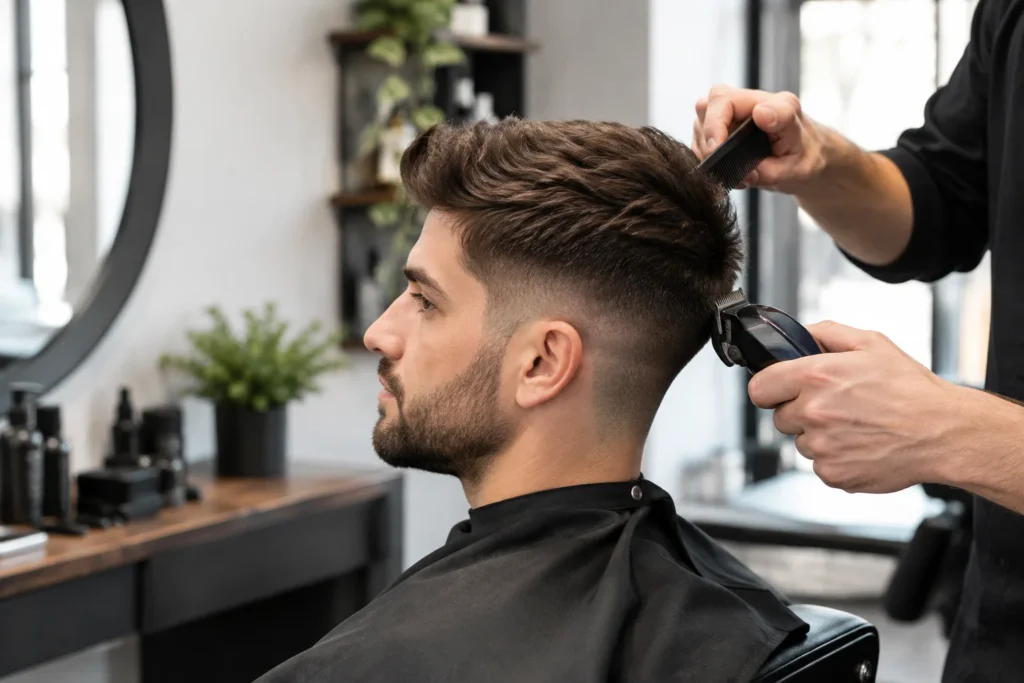
Most men benefit from a haircut every three to six weeks, although this is a general guideline rather than a universal rule. Short, precisely shaped styles usually require more frequent maintenance because small changes in length can alter their appearance. Medium and longer hairstyles often remain presentable for longer.
The right schedule should reflect how quickly your hairstyle loses its shape, rather than following a fixed calendar. Men who prefer sharp edges may book regular appointments, while those who enjoy a relaxed, grown-out style can wait longer.
What Factors Determine Men’s Haircut Frequency?
Three factors are particularly important: hairstyle, hair growth, and personal preference. Short sides and defined outlines make regrowth more noticeable, while longer layers can accommodate additional length without looking dramatically different. Hair texture and density also affect how a style sits as it grows.
Celebrity hairstylist Anthony Joseph Hernandez explains in GQ’s guide to maintaining a good hair day, “To have great hair every day, you need to be willing to put in at least a little effort.” Consistent grooming does not necessarily mean getting a complete haircut every few weeks. A smaller trim or neckline cleanup may be enough between full appointments.
How Often Should Men Get a Haircut Based on Hairstyle?
Different hairstyles have different maintenance requirements. A close fade can lose its crisp appearance quickly, whereas a longer, layered cut usually has more flexibility. Choosing a suitable appointment interval helps preserve the intended shape without removing more length than necessary.
How Often Should Men Get a Fade or Taper?
Men with skin fades or very short fades may prefer a touch-up every one to three weeks to maintain a clean transition between hair lengths. Low fades and tapers can often last longer, depending on how subtle the blend is and how much regrowth the wearer tolerates.
A full haircut is not always necessary at every visit. A barber may refresh the sides, neckline, and edges while leaving the top largely untouched. This approach can preserve the overall style and make maintenance more efficient. The best interval is the one that keeps the fade looking intentional without creating unnecessary appointments.
How Often Should Men Maintain Buzz Cuts, Crew Cuts, and Long Hair?
Buzz cuts and other short, uniform styles may need refreshing every two to four weeks because even modest growth changes their proportions. Crew cuts and textured crops can sometimes last three to five weeks, depending on the length and shape.
Men with medium or long hair may be comfortable waiting approximately six to twelve weeks between trims. Longer hair does not automatically need frequent cutting, particularly when the goal is to gain length. However, periodic shaping can help maintain layers, balance, and manageability. A trim should remove only the amount needed to achieve the desired result.
What Is the Recommended Haircut Schedule by Style?
The following table provides practical starting points. Actual intervals vary with growth, styling preferences, and the precision of each cut.
Table: Men’s Haircut Frequency by Hairstyle
| Hairstyle | Suggested interval | Main reason |
|---|---|---|
| Skin fade | 1–3 weeks | Maintains sharp contrast |
| Taper | 2–4 weeks | Keeps edges tidy |
| Buzz cut | 2–4 weeks | Preserves uniform length |
| Crew cut | 3–5 weeks | Maintains overall shape |
| Medium-length style | 4–8 weeks | Controls shape and layers |
| Long hair | 6–12 weeks | Maintains ends and shape |
| Growing-out hairstyle | 6–12 weeks, as needed | Supports gradual shaping |
These are flexible grooming estimates, not medical requirements or rigid industry standards.
How Do Hair Type and Growth Affect Haircut Frequency?
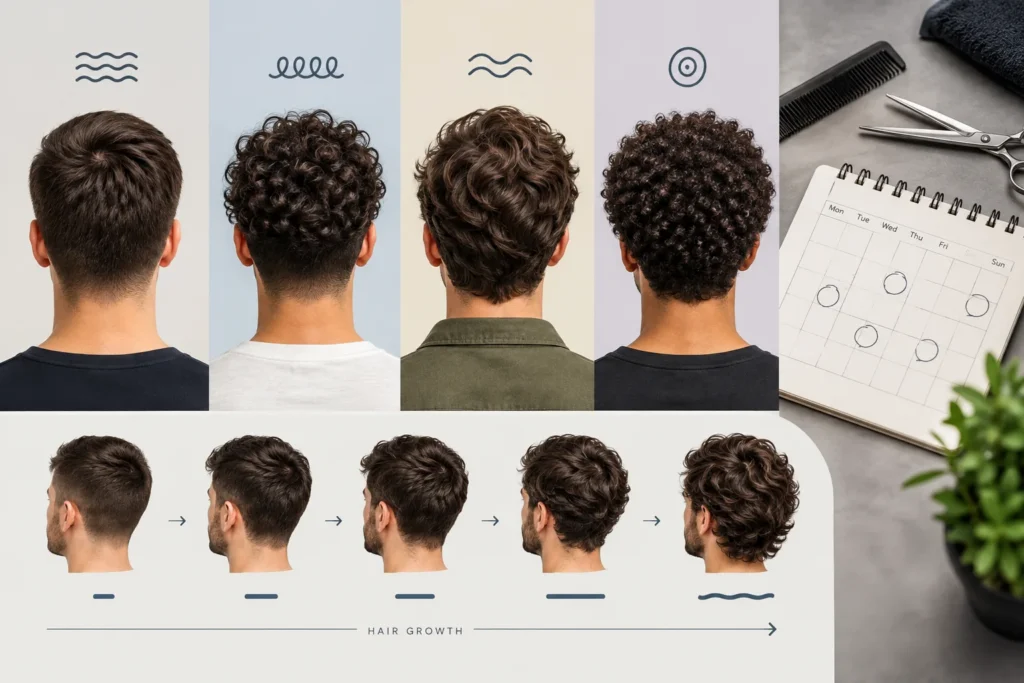
Hair growth and texture influence how a haircut looks over time. Hair generally grows around half an inch per month on average, although individual rates vary. This growth can be especially noticeable in short styles, where a small increase in length changes the contrast between sections.
How Often Should Men With Curly, Wavy, or Thick Hair Get a Haircut?
Men with curly, wavy, or thick hair should choose their schedule based on how their hair behaves as it grows. Curly hair may appear shorter than its actual length because of shrinkage, while additional length can change curl definition, volume, and shape. Thick hair may become harder to manage when the sides or crown gain bulk.
A trim every four to eight weeks can be a useful starting point for many medium-length styles, but longer curls may need less frequent cutting. Rather than cutting hair simply because a certain number of weeks has passed, evaluate whether the style still falls naturally and remains easy to manage.
Does Cutting Hair More Often Make It Grow Faster?
No. Cutting hair does not accelerate growth at the follicle, which is located in the scalp. Haircuts remove the visible hair shaft, not the living structures responsible for producing new hair.
Regular trims can still improve the appearance of hair by removing damaged ends and maintaining a deliberate shape. Men growing their hair longer should communicate their goal clearly to their barber and request minimal trimming when appropriate. If hair growth or shedding changes unexpectedly, a dermatologist can help identify possible causes rather than relying on more frequent haircuts.
What Signs Tell Men It Is Time for a Haircut?
The calendar is only one way to determine when to book an appointment. A hairstyle may need attention earlier if its outline becomes uneven, the sides lose their shape, or the top no longer styles as intended. Conversely, hair that still looks and feels manageable may not need cutting simply because several weeks have passed.
How Can You Tell When Your Haircut Has Lost Its Shape?
Look for practical signs rather than focusing exclusively on length. The neckline may appear untidy, sideburns may become less defined, and the hair around the ears may begin to overlap them. A fade may lose its original contrast, while longer hair may develop uneven layers or become more difficult to style.
Split ends, tangling, and rough-looking ends can also indicate that a trim may be helpful. However, these signs do not mean every man needs a complete haircut. A targeted cleanup can often address specific areas while preserving length elsewhere.
How Can You Check Whether You Need a Haircut?
Use this simple How-to guide before scheduling your next appointment:
- Check the outline: Look at the neckline, sideburns, and area around your ears.
- Assess the shape: Notice whether the sides, top, or layers still resemble your intended style.
- Try your usual styling routine: If the hair no longer sits as expected, it may need reshaping.
- Consider your goal: Decide whether you want a full haircut, a small trim, or simply more growing time.
- Book accordingly: Tell your barber which areas need attention and how much length you want to retain.
This quick assessment helps prevent unnecessary cuts while keeping your grooming routine consistent.

What Is the Best Haircut Schedule for Your Grooming Goals?
The best schedule is one you can maintain comfortably and consistently. Men who prefer precise, professional-looking short styles may prioritize frequent appointments. Those growing their hair out may focus on occasional shaping instead. Budget, lifestyle, upcoming events, and the availability of a trusted barber can also influence the decision.
How Should Men Plan Haircuts When Growing Their Hair Out?
Growing longer hair requires patience and clear communication. Frequent full haircuts can slow visible length progress because the ends are repeatedly shortened. However, avoiding every trim indefinitely may make the style harder to manage if the ends become damaged or the shape loses balance.
Celebrity hairstylist Ortiz recommends regular trims to help prevent split ends in GQ’s guide to growing long hair for men. When booking, explain that length retention is the priority. Ask for a light trim or strategic shaping rather than a substantial reduction. The appropriate interval depends on hair condition, styling goals, and the amount of maintenance required.
Conclusion
So, how often should men get a haircut? For many men, every three to six weeks is a practical starting point, but the ideal interval depends on hairstyle, growth, texture, and grooming preferences. Fades and buzz cuts generally need more frequent maintenance, while longer hairstyles can often go several weeks longer between trims.
The key is to recognize when your style needs attention and communicate your goals clearly to your barber. With a personalized schedule, you can maintain a polished appearance without cutting your hair more often than necessary. Explore more men’s grooming guidance on Salomio to help build a practical, professional hair care routine.


Comments