

Preparing for a wedding involves more than choosing the right suit. A well-planned grooming routine helps grooms look polished, feel confident, and avoid last-minute problems with their hair, beard, and skin. For readers and grooming professionals, Salomio provides a starting point for exploring practical men’s grooming advice.
The most effective groom grooming tips focus on preparation, consistency, and choosing services that suit individual needs. From scheduling a haircut to preventing shaving irritation, this guide explains how to prepare for your wedding with a realistic timeline and a simple grooming checklist.
What Are the Most Important Groom Grooming Tips Before a Wedding?
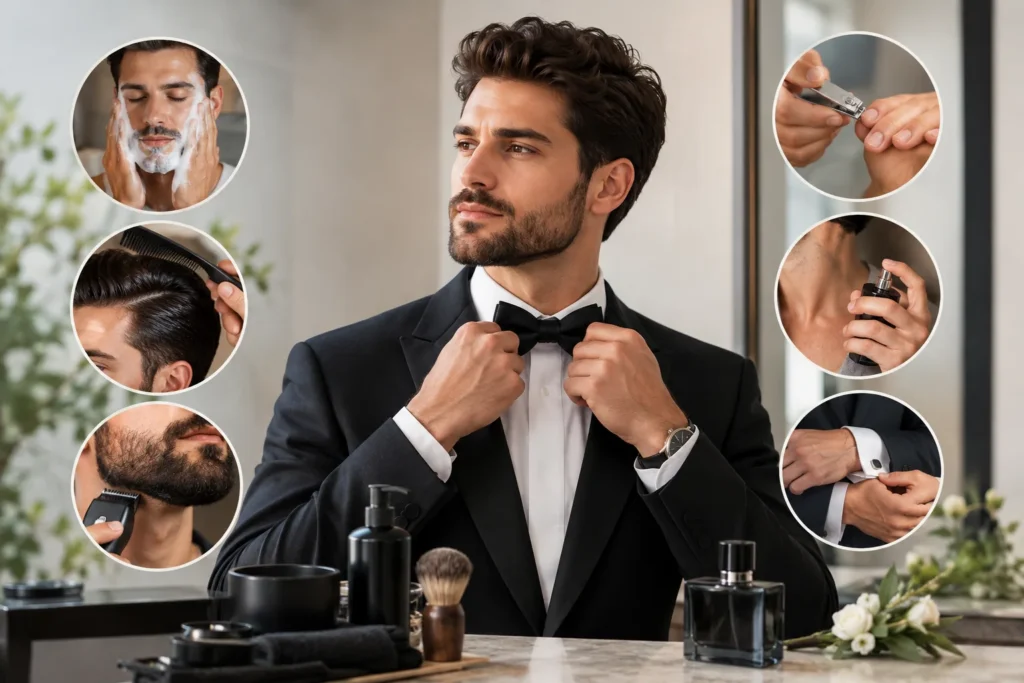
Successful wedding grooming starts with planning rather than experimenting at the last minute. Haircuts, beard shaping, skincare, and personal grooming all work best when they fit naturally into an established routine. Your hair texture, facial hair growth, skin sensitivity, wedding location, and personal style should guide your decisions. A classic, clean-shaven appearance requires different preparation from a textured hairstyle with a full beard. By identifying your priorities early, you can coordinate appointments, test suitable products, and reduce the risk of irritation or an unexpected appearance on the wedding day.
Why Should Grooms Start Grooming Early?
Starting several weeks before the wedding gives you time to refine your appearance without rushing. You can test a hairstyle, consult a barber, establish a consistent skincare routine, and identify products that work well for your skin. If you are considering a new beard shape or haircut, a trial appointment helps you decide whether the look suits your face and wedding attire.
Early preparation is particularly useful for people with sensitive skin or a history of razor bumps. Introducing unfamiliar products immediately before an important event increases the chance of irritation. Instead, keep your routine familiar and make changes gradually. Your objective is not to transform your appearance overnight; it is to present a well-groomed version of your everyday self.
How Should Grooms Prepare Their Hair and Beard for the Wedding?
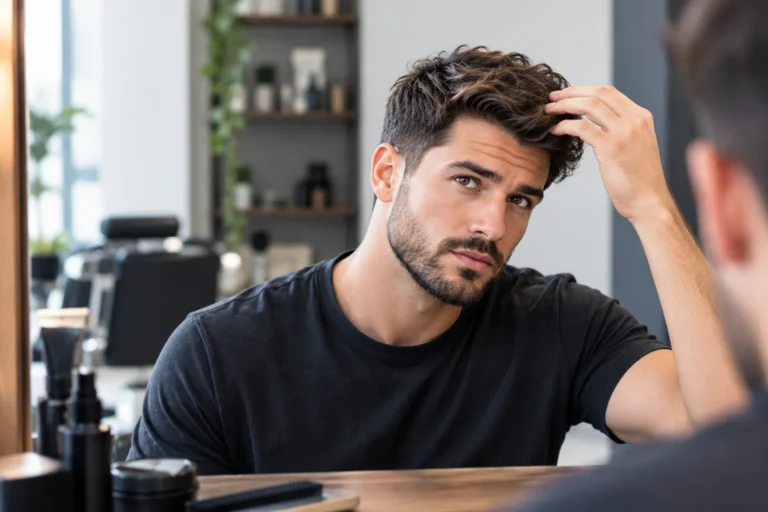
Hair and facial hair have a significant influence on a groom’s overall appearance, especially in close-up photographs. The most suitable style depends on face shape, hair density, texture, beard growth, and personal preference. Rather than copying a trending look, choose a style that complements your features and works with your formalwear. Discuss your expectations with a barber and, where possible, bring reference photographs. Planning the timing of your haircut and beard trim also allows you to account for how quickly your hair grows and how the style settles after grooming.
When Should a Groom Get a Haircut Before the Wedding?
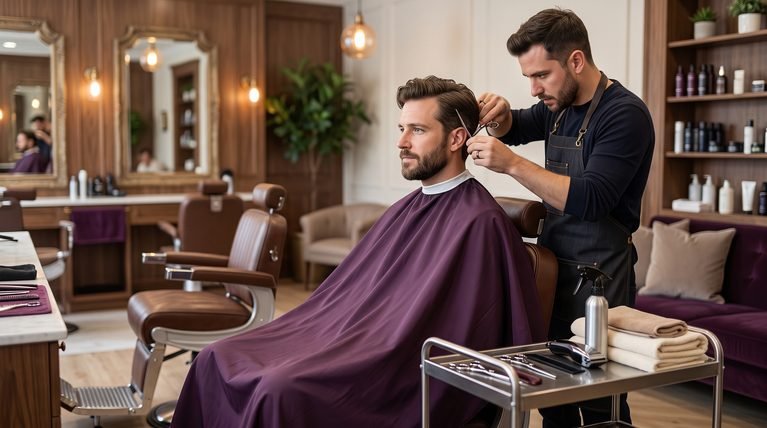
For many grooms, scheduling a haircut approximately five to seven days before the wedding provides time for the style to settle. However, this is a guideline rather than a universal rule. A very short fade may look best with a fresher trim, while a traditional scissor cut may need several days to soften into its intended shape.
If you are trying a new hairstyle, arrange a trial cut well before the wedding. This gives you an opportunity to adjust the length, styling method, and overall shape. Avoid making a dramatic change immediately before the event unless you already know the style works for you. On the wedding day, use familiar styling products in moderate amounts to prevent greasy roots, stiffness, or visible residue.
How Can You Choose the Right Beard Style?
The right beard style should complement your facial proportions and the formality of your wedding look. A neatly trimmed short beard can create definition, while a fuller beard may suit someone who prefers a more natural appearance. Clean-shaven grooms should also consider their skin’s sensitivity and how quickly facial hair becomes visible.
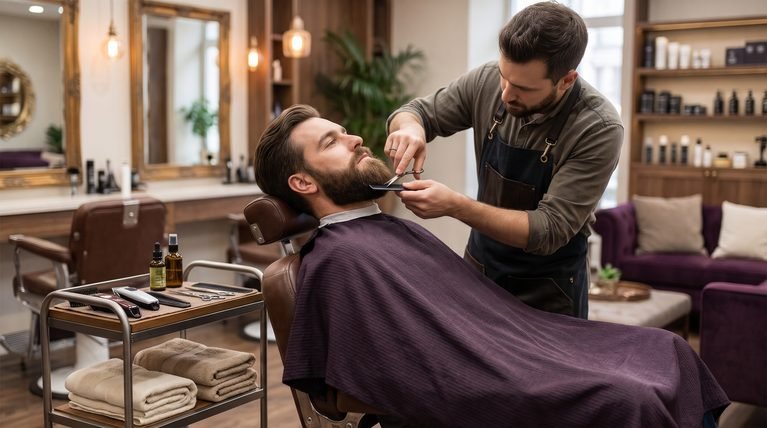
Schedule beard shaping with enough time to correct minor adjustments if necessary. If you normally maintain your beard at home, use clean tools and avoid trimming more aggressively than usual. For professional barbering services, communicate the desired cheek line, neckline, length, and finish clearly. Consistency is more important than following a trend. A beard that looks intentional and well-maintained will generally complement the rest of your grooming more effectively than an unfamiliar style.
How Can Grooms Build an Effective Pre-Wedding Skincare Routine?
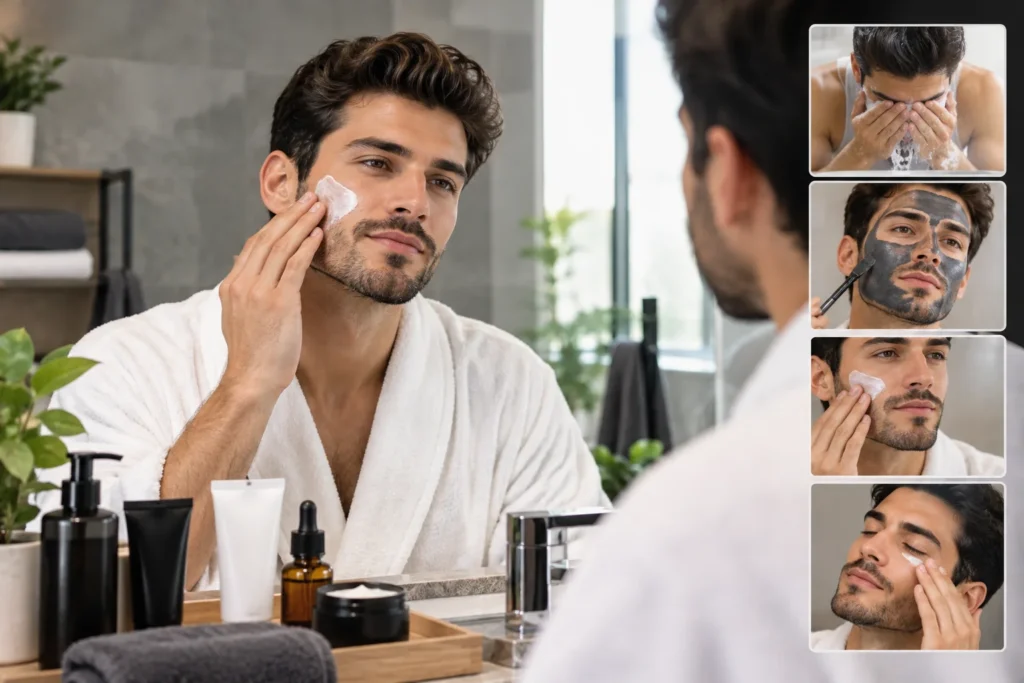
Healthy-looking skin usually benefits more from consistency than from a complicated collection of products. A simple routine can help remove excess oil, maintain hydration, and support the skin barrier. Begin with products suited to your skin type and introduce new ingredients gradually. The American Academy of Dermatology recommends that men consider their skin type when selecting products and use a gentle cleanser, moisturizer, and appropriate sun protection. Read its skincare guidance for men for additional recommendations.
Which Skincare Steps Should You Follow Every Day?
A practical routine begins with a gentle cleanser, followed by a moisturizer appropriate for your skin. During the day, use broad-spectrum sunscreen with SPF 30 or higher on exposed skin. Men with oily or acne-prone skin may prefer products labeled non-comedogenic, while those with sensitive skin may benefit from fragrance-free formulations.
In the final days before the wedding, avoid unnecessary experiments with strong exfoliants, unfamiliar masks, or aggressive treatments. If you already have a skincare concern, consult a qualified professional well in advance rather than trying to resolve it immediately before the event.
How Can You Create a Grooming Checklist for the Wedding Day?
A grooming checklist reduces uncertainty by separating tasks according to when they should happen. Haircuts and major style decisions belong earlier in the preparation period, while the wedding morning should focus on familiar, low-risk steps. The exact schedule depends on your skin, hair growth, event timing, and whether you have booked professional services. Keeping essential products together also prevents delays. Use the following timeline as a flexible planning tool, adjusting it to your normal routine and the recommendations of your barber or skincare professional.
Groom Grooming Timeline: What to Do and When
| Timing | Recommended action |
|---|---|
| 4–6 weeks before | Test your hairstyle, beard shape, and skincare routine |
| 2–3 weeks before | Confirm barber appointments and assess product compatibility |
| 5–7 days before | Get a haircut if this timing suits your preferred style |
| 2–3 days before | Consider a familiar beard trim or routine grooming appointment |
| The night before | Prepare grooming products, clothing, and essential accessories |
| Wedding morning | Cleanse, moisturize, style hair, and complete any familiar finishing steps |
How Can You Prepare on the Morning of the Wedding?
Follow these five steps to keep wedding-morning grooming organized:
- Cleanse gently: Wash your face with a familiar cleanser and lukewarm water.
- Moisturize appropriately: Apply your usual moisturizer and allow it to absorb before getting dressed.
- Shave carefully if needed: Soften facial hair, use shaving cream, and shave in the direction of hair growth.
- Style your hair: Use a familiar product sparingly and check the result in natural light.
- Complete a final check: Inspect your beard lines, neckline, hair, nails, and clothing before photographs begin.
To reduce the risk of irritation, avoid dry shaving, use a clean and sharp razor, and do not repeatedly pass over the same area. If shaving commonly causes redness or ingrown hairs, consider your established trimming routine instead of attempting an unfamiliar technique on the wedding morning.
What Grooming Mistakes Should You Avoid Before Your Wedding?
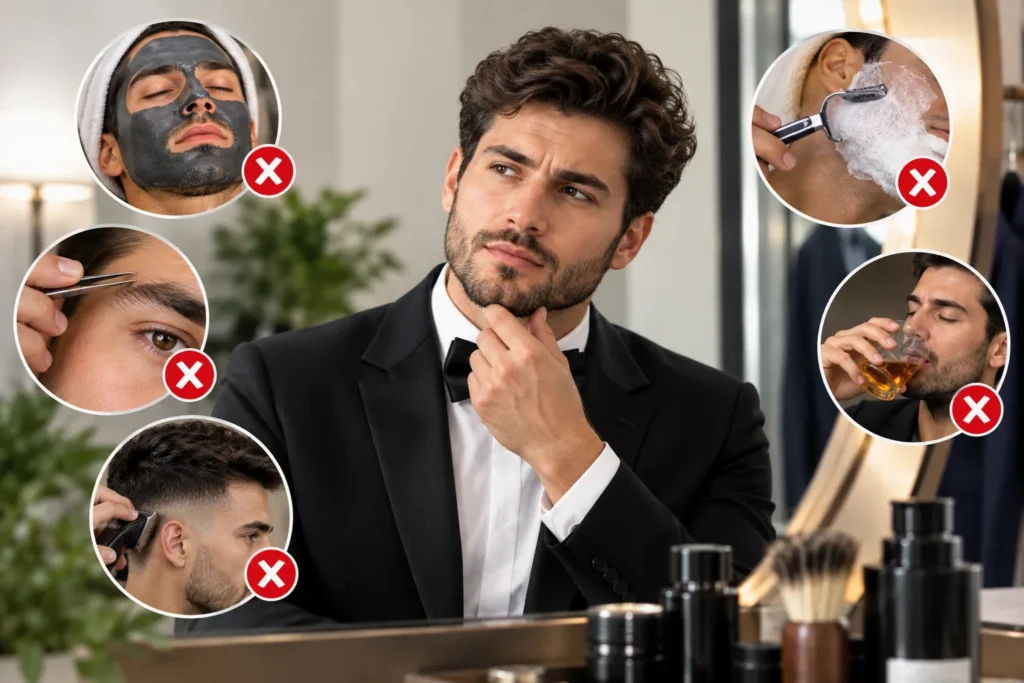
Even a well-planned grooming routine can be undermined by last-minute decisions. Common mistakes include trying new skincare products, requesting a dramatic haircut without a trial, over-trimming a beard, or using excessive styling product. Another mistake is treating every grooming recommendation as universally suitable. Skin sensitivity, hair texture, facial hair growth, and personal preferences all influence the best approach.
The safest strategy is to prioritize familiar products, schedule services early, and communicate clearly with grooming professionals. If you develop persistent irritation or a skin concern, seek appropriate professional advice rather than masking the problem with additional products.
What Should Grooms Avoid Doing in the Final Days?
Avoid introducing unfamiliar products or aggressive treatments when there is little time to assess how your skin will respond. Strong exfoliation, untested facials, and new shaving methods may cause unwanted irritation in some people. Do not assume that more product creates a better result: excessive wax, gel, or pomade can make hair look heavy and unnatural.
You should also avoid making major changes to your beard or hairstyle without discussing the likely outcome with your barber. Instead, focus on small refinements and the basics: clean hair, neatly maintained facial hair, moisturized skin, clean nails, and well-prepared clothing. A polished appearance comes from coordination and attention to detail, not from an unnecessarily complicated routine.
Conclusion
The most effective groom grooming tips combine early planning, a suitable haircut, neatly maintained facial hair, and a simple skincare routine. Scheduling appointments ahead of time and avoiding last-minute experiments can reduce unnecessary stress and help you feel confident in photographs. Salomio encourages readers to approach grooming with practical, evidence-informed choices rather than complicated routines or short-lived trends.
Comments