
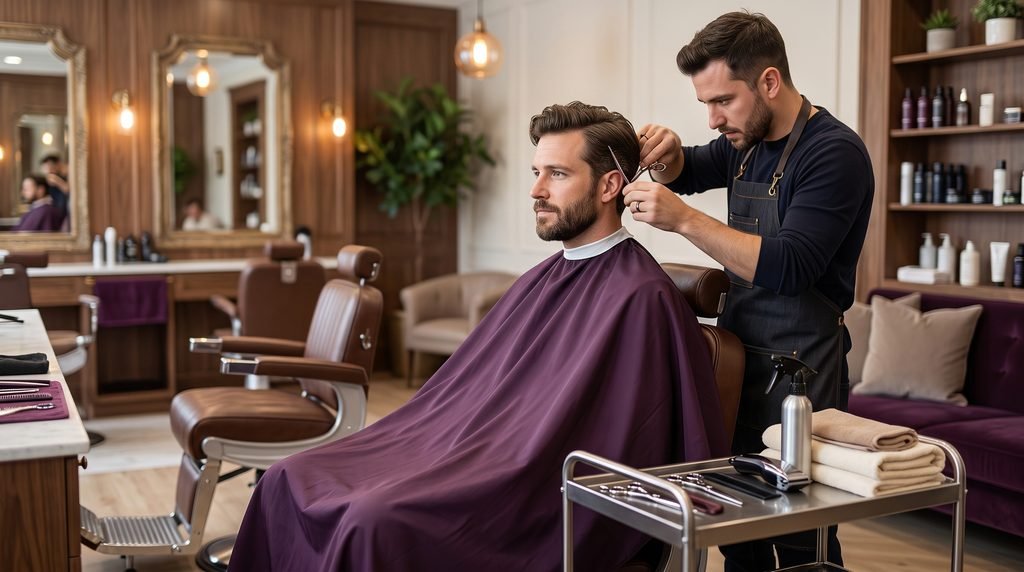
Discover the features of a classic men’s haircut, from traditional side-parted styles to neat tapers and timeless short cuts. This guide explains how to choose a style for your hair type and personal preferences, compares popular haircut options, describes the barbering process, and shares practical maintenance tips for keeping your look tidy between appointments.
Listen
What Makes a Classic Men’s Haircut Timeless?
Defining the Classic Men’s Haircut
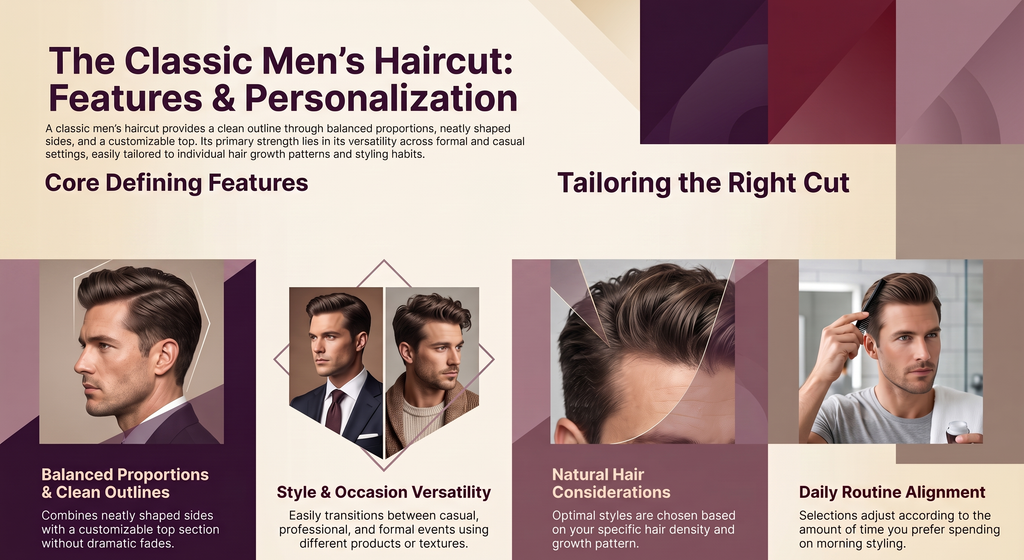
A classic men’s haircut typically combines balanced proportions, neatly shaped sides, and a top section that can be combed, brushed, or styled naturally. Rather than relying on a dramatic fade or an intricate design, it emphasizes a clean outline and a shape that fits the wearer’s preferences.
The exact result can range from a short crew cut to a traditional side part. Your barber can adjust the length, taper, and finish to create a look that feels traditional without being overly formal.
Classic Men’s Haircut Styles for Different Occasions
One reason traditional cuts remain popular is their flexibility. A neatly tapered style can work for everyday activities, professional settings, family occasions, and formal events. Styling products can make the finish more polished, while a natural texture can create a more relaxed appearance.
The best choice depends on your hair’s growth pattern, density, and how much time you want to spend styling it each morning.
Which Classic Men’s Haircut Style Should You Choose?
The Side Part
The side part features a longer top section arranged to one side, with shorter sides and a tidy outline. A barber can follow your natural parting or create a more defined separation, depending on your preference.
This style may suit people who enjoy a structured finish and are comfortable using a comb and a small amount of styling product. The barber can also adjust the top length to accommodate straight or slightly wavy hair.
The Crew Cut
The crew cut keeps the hair relatively short, with the top often slightly longer than the sides. It offers a simple shape and usually requires less daily styling than a longer side-parted cut.
You can ask for a softer transition or a more defined taper. The final result should reflect your preferred length and how much contrast you want between the top and sides.
How Does a Classic Men’s Haircut Compare with Other Styles?
Comparing Traditional and Modern Cuts
Traditional cuts generally prioritize balanced proportions and a natural transition between lengths. Modern variations may include stronger fades, more texture, or a sharper contrast between the top and sides.
Neither approach is automatically better. Your choice should reflect your personal style, workplace preferences, hair texture, and willingness to return for regular maintenance.
Classic Men’s Haircut Options at a Glance
| Haircut style | Main features | Styling and upkeep |
|---|---|---|
| Classic side part | Longer top, defined part, neat sides | Usually needs a comb and light styling product |
| Crew cut | Short top and sides with a compact shape | Generally simple daily styling |
| Classic taper | Gradually shorter sides and neckline | Maintains a natural, balanced outline |
| Ivy League | Short, structured top that can be parted | Offers some styling flexibility |
| Modern fade | Stronger transition to very short sides | May need more frequent trims to keep the contrast |
What Happens During a Classic Men’s Haircut Appointment?
Consultation and Preparation
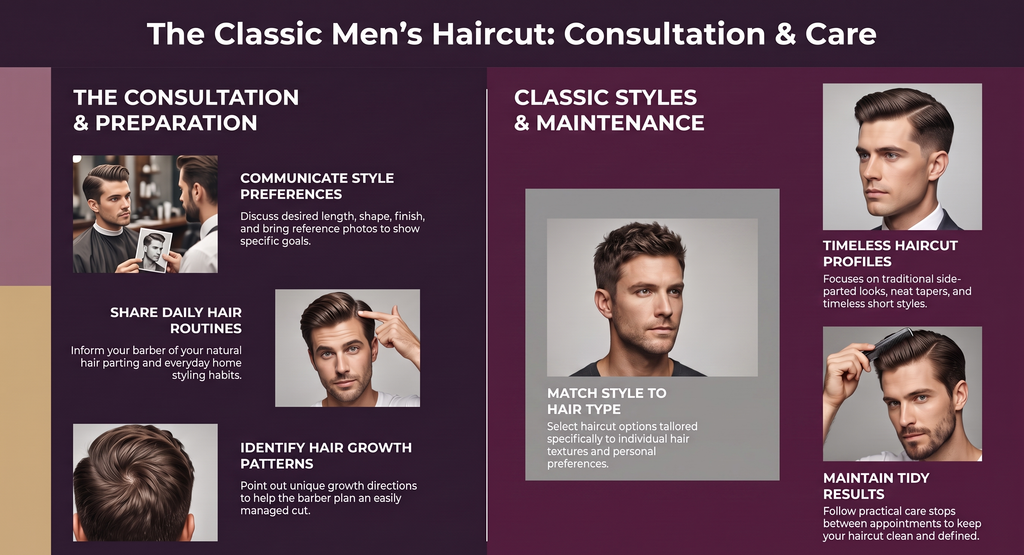
Your appointment usually begins with a conversation about the length, shape, and finish you want. Bring a reference photo if you have a particular style in mind, and explain which parts of your current haircut you would like to keep or change.
Tell the barber about your usual styling routine, natural parting, and any areas where your hair grows in a different direction. This helps the barber plan a cut that is easier for you to manage at home.
Cutting, Blending, and Finishing
The barber may use scissors, clippers, or a combination of both to shape the top, sides, and back. The neckline and sideburns are then refined to match the selected style. Depending on the service, the barber may wash your hair or finish with a styling product.
Before leaving, check the length and outline in a mirror. If you want a slightly softer edge or a little more length on top, discuss it before the appointment is finished.
How Can You Maintain a Classic Men’s Haircut?
Daily Styling Tips
Your styling routine can be simple. Start with clean hair and choose a product that suits your hair type and the finish you prefer. A lightweight cream may provide a natural appearance, while a pomade can create more definition for a side part.
“Choose hair care products that say they’re made for your hair type.”
The American Academy of Dermatology
Using a suitable product and avoiding excessive heat can help you style your hair without adding unnecessary stress to the strands.
To keep your haircut looking neat between barber appointments:
- Wash regularly: Use a shampoo suited to your scalp and hair type.
- Style lightly: Apply a small amount of suitable styling product to achieve your preferred finish.
- Limit heat: Avoid excessive heat styling and use a heat protectant when needed.
- Maintain the shape: Book a trim when the sides, neckline, or top begin to lose their desired shape.
Classic Men’s Haircut: When to Book a Trim
How often you need a trim depends on the haircut’s length, how quickly your hair grows, and how precise you want the outline to remain. Shorter styles may show regrowth more quickly, while slightly longer traditional cuts can retain their shape for longer.
Rather than following a fixed schedule, book when the sides, neckline, or top no longer sit the way you prefer. Your barber can suggest a practical interval based on your chosen style.
How Do You Choose the Right Barber for a Classic Men’s Haircut?
Classic Men’s Haircut: Communicating Your Preferences
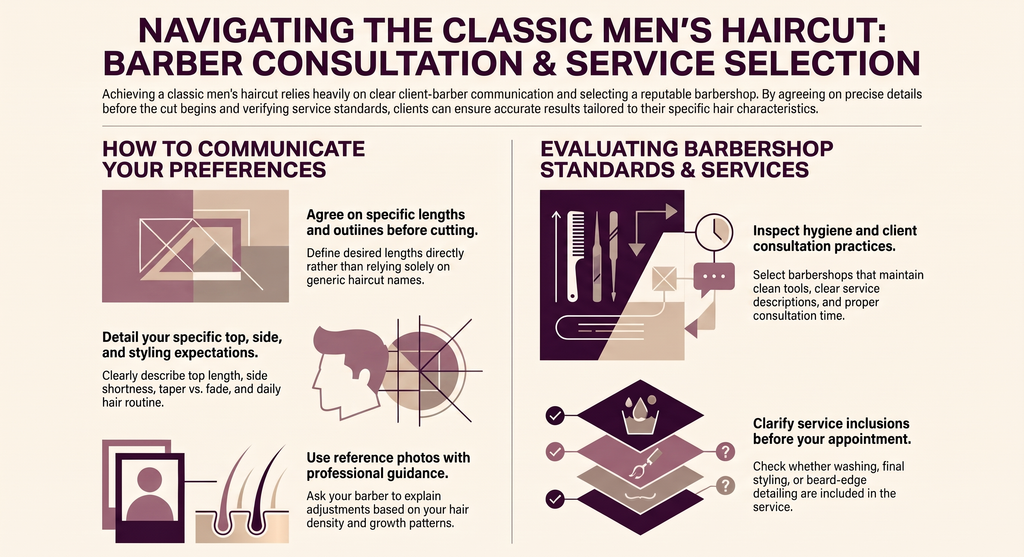
Clear instructions help the barber understand your expectations. Describe the top length, how short you want the sides, whether you prefer a natural taper or a stronger fade, and how you usually style your hair.
A reference photo can help, but remember that your hair density and growth pattern may affect the final result. Ask the barber to explain any adjustments before cutting.
Checking the Service and Barbershop
Look for a barbershop that explains its services clearly, maintains clean tools and work areas, and takes time to understand your preferences. You can also ask whether the appointment includes washing, styling, or beard-edge detailing, as these extras vary between providers.
Barber and grooming professionals often emphasize communication when choosing a style. As a practical principle, agree on the desired length and outline before the first cut rather than relying on the haircut name alone.
Conclusion
Choosing Your Classic Men’s Haircut
A Classic Men’s Haircut offers a versatile approach to men’s grooming, with options ranging from short crew cuts to structured side parts and natural tapers. The right style depends on your hair texture, preferred appearance, and the time you want to spend styling it.
Planning Your Classic Men’s Haircut Appointment
Before booking, consider which styles you like and how much maintenance you can comfortably manage. Discuss your preferences with the barber, confirm the service details, and agree on the length before cutting begins. With clear communication and a practical care routine, you can choose a traditional style that fits your everyday life.


Comments