
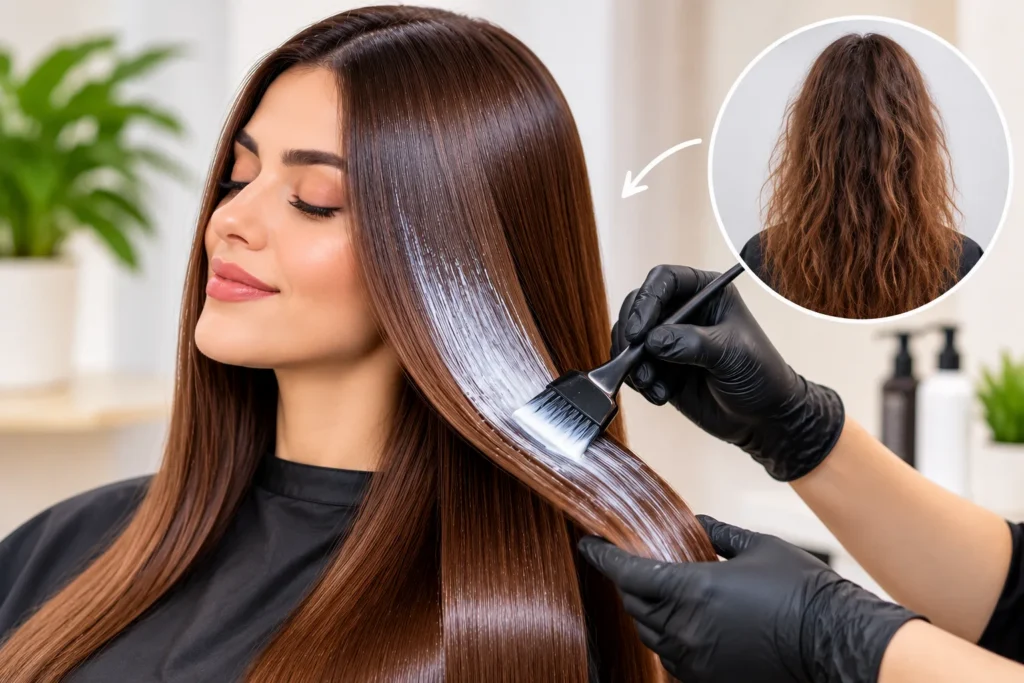
Healthy-looking hair depends on more than moisture and shine. The hair shaft contains keratin proteins that contribute to its structure, strength, and elasticity. Chemical processing, heat styling, and repeated mechanical stress can weaken the hair fiber, making it more prone to breakage.
A hair protein treatment is designed to condition and temporarily strengthen weakened strands using ingredients such as hydrolyzed proteins and amino acids. However, not every hair type needs additional protein. Understanding how these treatments work, recognizing the signs of weakened hair, and choosing the right formula can help consumers and salon professionals make better hair-care decisions.
What Is a Hair Protein Treatment and How Does It Work?
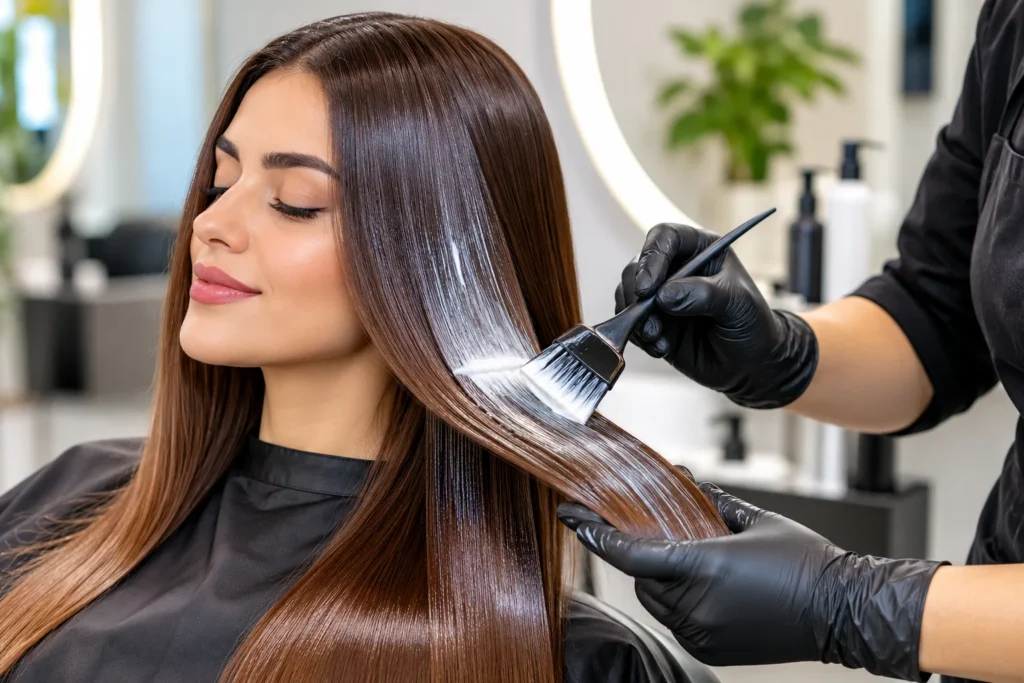
A hair protein treatment is a conditioning product formulated with protein-derived ingredients to improve the appearance and feel of the hair shaft. Common formulas contain hydrolyzed keratin, wheat protein, silk protein, collagen, or amino acids. These ingredients are processed into smaller components that can interact with the hair surface and, depending on their molecular size and formulation, deposit on or enter parts of the hair fiber. Their purpose is to improve manageability, reduce friction, and temporarily support weakened strands rather than permanently rebuild damaged hair.
What Ingredients Are Commonly Found in Hair Protein Treatments?
Different protein ingredients offer different cosmetic properties. Hydrolyzed keratin is derived from keratin and is commonly included in strengthening conditioners and masks. Hydrolyzed wheat and silk proteins can help condition the hair and improve its surface feel. Amino acids, which are building blocks of proteins, may also be included to support conditioning and manageability.
The term hydrolyzed means that a protein has been broken into smaller components. This can make it easier for the ingredients to interact with the hair fiber. A scientific review published in the Indian Journal of Plastic Surgery explains that hydrolyzed amino acids can produce a “temporary increase in hair strength and hydrophobicity.” This is an important distinction: protein products can improve certain hair properties, but they do not permanently restore a damaged strand. Read the scientific review on hair cosmetics.
How Do Protein Treatments Affect Hair Structure?
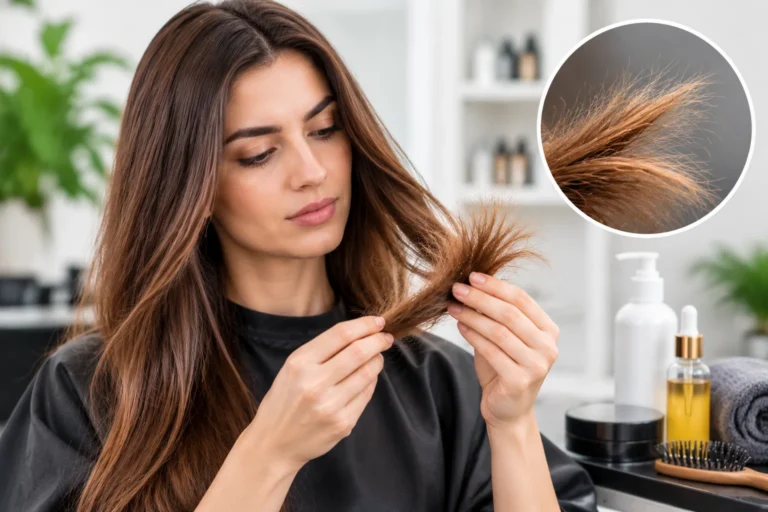
Each hair strand has an outer cuticle and an inner cortex. The cuticle consists of overlapping protective cells, while the cortex contains much of the hair fiber’s structural material and contributes to its strength and elasticity. Chemical treatments, excessive heat, and friction can disrupt these structures, leaving hair rough, weak, or more difficult to manage.
Protein-based conditioners work mainly as cosmetic treatments. Depending on their formulation, they can deposit conditioning ingredients on the hair surface or interact with damaged areas of the fiber. This may improve smoothness, reduce friction during combing, and help hair feel stronger. Results vary according to the product, hair condition, and application method.
Who Needs a Hair Protein Treatment?
Not everyone needs a protein treatment, and using one simply because hair feels dry is not always appropriate. Protein-focused products are generally more relevant when strands have become weak, overly stretchy, limp, or prone to breakage, particularly after chemical processing. The decision should be based on the hair’s condition rather than its texture alone. Straight, curly, fine, and thick hair can all benefit from conditioning products, but the formula and frequency should match individual needs.
Does Chemically Treated or Bleached Hair Need Protein?
Coloring, bleaching, relaxing, and other chemical services can alter the hair’s protective layers and internal structure. As a result, processed hair may become more porous, less manageable, and more vulnerable to breakage. A protein-containing conditioner or mask may help improve the feel and resilience of weakened strands by depositing conditioning ingredients and reducing friction.
However, not every chemically treated strand automatically needs an intensive protein treatment. Some processed hair mainly needs moisture, lubrication, and gentle handling. A salon professional should assess elasticity, texture, porosity, and the degree of damage before recommending a treatment. Combining protein products with suitable conditioning care is often more practical than relying on a single product to solve every hair concern.
What Signs Suggest That Your Hair May Benefit From Protein?
Certain changes in how hair behaves may indicate that a strengthening product is worth considering. These signs are clues, not a definitive diagnosis of protein deficiency.
- Excessive stretching: Wet strands stretch unusually far and do not return easily to their original shape.
- Weak or limp texture: Hair feels unusually soft, lacks body, or struggles to hold its normal style.
- Frequent breakage: Strands snap easily during brushing or styling, especially after chemical processing.
- Reduced curl definition: Curls may lose their usual bounce and appear limp or poorly defined.
- High-porosity damage: Hair absorbs water quickly but has difficulty retaining moisture, particularly after chemical treatments.
Hair.com, powered by L’Oréal Professional Products Division, notes that hair that feels unusually soft, stretchy, gummy, or limp may benefit from protein-focused care. It also emphasizes that dry, rough, brittle hair may need moisture instead. Read its guide to recognizing protein needs.
| Hair condition | Possible signs | Care to consider |
|---|---|---|
| Weak, stretchy hair | Excessive stretching and poor recovery | A suitable protein treatment |
| Chemically damaged hair | Breakage and reduced manageability | Balanced strengthening and conditioning |
| Dry, rough hair | Stiffness, dryness, and rough texture | Moisture-focused conditioning |
| Limp hair | Reduced body and curl definition | Assess whether protein may help |
| Brittle hair | Snapping with little flexibility | Review moisture, damage, and product buildup |
What Are the Benefits of Hair Protein Treatment?
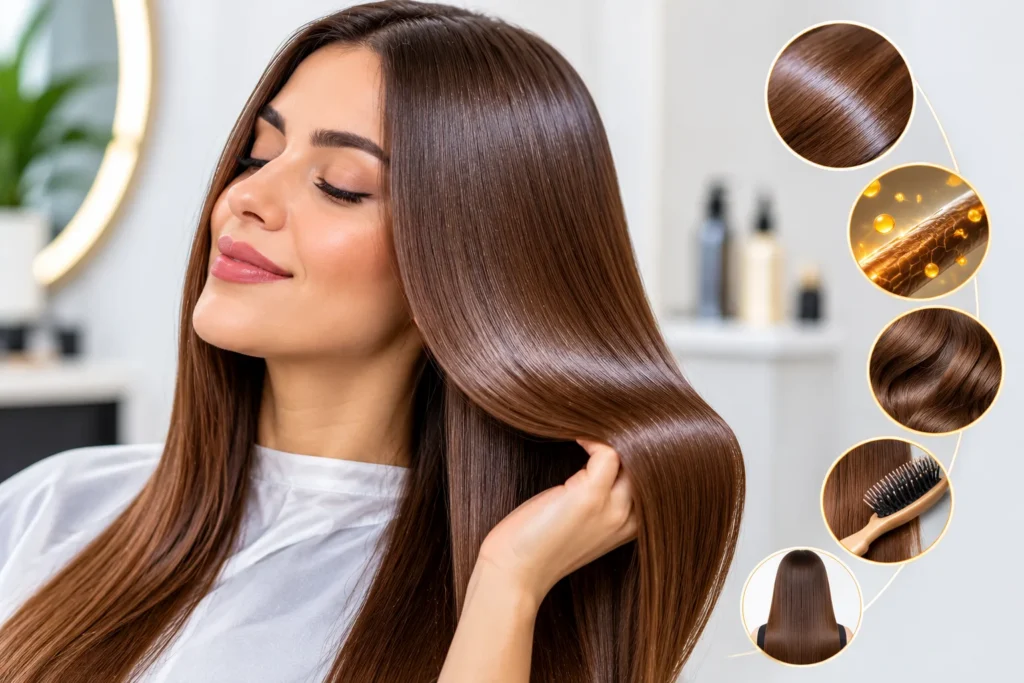
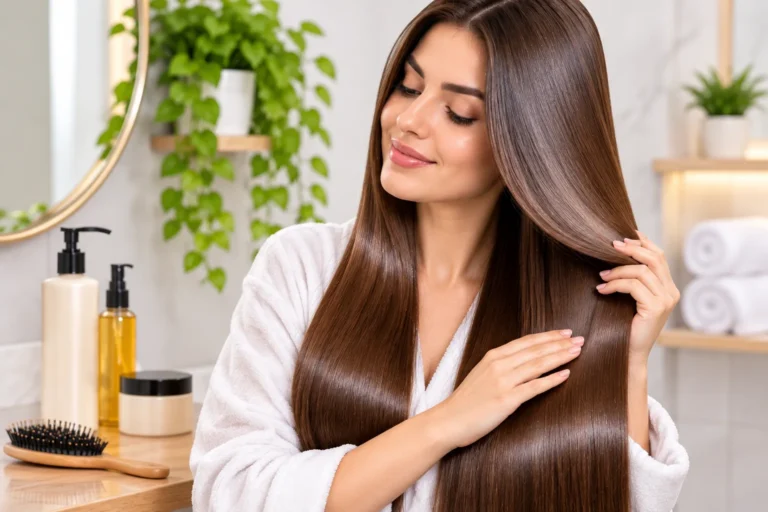
When selected appropriately, protein treatments can be useful additions to a hair-care routine. Their main purpose is to improve the cosmetic condition of the hair fiber, particularly when it has been weakened by chemical or physical stress. They may help hair feel smoother, more manageable, and less vulnerable to friction-related breakage. However, results depend on the product’s ingredients, concentration, formulation, and the condition of the hair. These treatments should be viewed as supportive care, not as a permanent repair solution.
Can Protein Treatments Help Reduce Hair Breakage?
Protein-based conditioning products may help reduce some forms of breakage by improving the surface condition of the hair and reducing friction during combing. This can be particularly useful for strands weakened by bleaching, coloring, frequent heat styling, or rough handling.
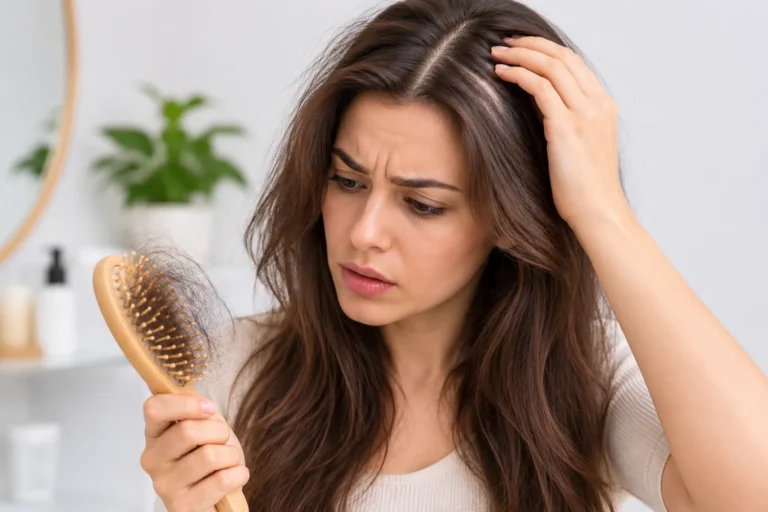
However, breakage has multiple causes. Excessive heat, tight hairstyles, chemical damage, rough towel-drying, and aggressive brushing can all contribute. A protein treatment cannot compensate for ongoing damage caused by these habits. Use a suitable conditioner, detangle gently, reduce unnecessary heat exposure, and trim severely split ends when needed. If hair breakage is persistent or accompanied by unusual shedding, consult a dermatologist rather than assuming that protein is the solution.
Can Protein Treatments Improve Hair Texture and Manageability?
Some protein treatments can make hair feel smoother and easier to style by conditioning the hair fiber. This may improve the appearance of damaged ends, reduce roughness, and help curls maintain a more defined shape. Fine hair may also benefit from a lightweight strengthening formula if it feels weak or limp.
The effect is temporary and depends on the formula. A heavy mask may weigh down fine strands, while a product designed for severely damaged hair may not be suitable for every hair type. Start with a product formulated for your hair’s condition and follow its instructions. Assess the result after use rather than assuming that a stronger or more concentrated treatment will always deliver better results.
How Should You Use a Hair Protein Treatment Correctly?
Correct application is essential because protein products vary in strength, ingredients, and intended use. Some are rinse-out masks, while others are conditioners or leave-in treatments. There is no universal schedule that suits every person. Hair condition, previous chemical services, product concentration, and the rest of the hair-care routine all influence how often a treatment should be used. Following the manufacturer’s directions and observing how the hair responds are more reliable than applying intensive treatments frequently without assessment.
How-to: How Do You Apply a Hair Protein Treatment at Home?
Use these steps as a general guide, while following the instructions on your specific product:
- Choose the right formula: Select a product designed for your hair condition, such as chemically treated or damaged hair.
- Cleanse gently: Wash your hair with a suitable shampoo if the product instructions recommend applying it to clean hair.
- Remove excess water: Gently squeeze out excess water with a towel. Avoid rough rubbing.
- Apply evenly: Distribute the treatment through the mid-lengths and ends, unless the product specifically instructs otherwise.
- Follow the recommended time: Leave it on only for the period stated on the packaging.
- Rinse if required: Rinse thoroughly when using a rinse-out formula.
- Evaluate the result: Notice whether your hair feels smoother and more manageable or unusually stiff and dry.
Do not combine several intensive protein products in one session unless a qualified professional has recommended that routine.
How Often Should You Use a Protein Treatment?
The ideal frequency depends on the product and the hair’s condition. A regular conditioner containing a small amount of protein may be suitable for routine use, while an intensive mask may be intended for occasional application. Some products recommend weekly or less frequent use, but these schedules should not be treated as universal rules.
Begin with the manufacturer’s recommended frequency and monitor your hair between applications. If strands become stiff, rough, or less flexible, reduce or pause protein-heavy products and reassess the routine. A stylist can help determine whether the problem is excess protein, dryness, product buildup, or ongoing damage.
What Is the Difference Between Protein, Moisture, and Keratin Treatments?
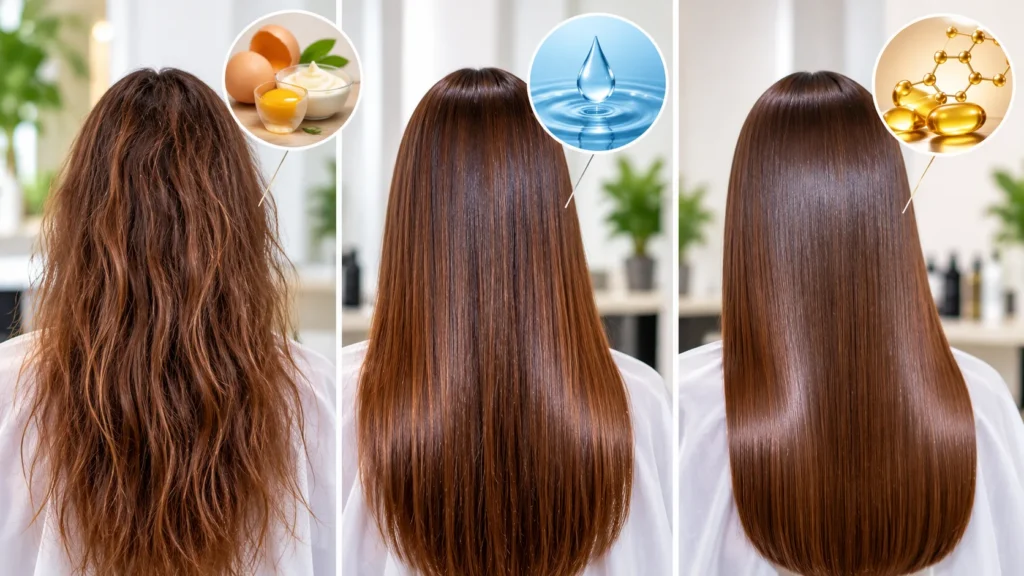
Protein, moisture, and keratin treatments are often discussed together, but they do not all serve the same purpose. Protein products focus on conditioning and temporarily supporting weakened hair fibers. Moisture-focused products aim to improve softness, flexibility, and manageability through ingredients such as humectants, emollients, and conditioning agents. Keratin may refer to a protein ingredient in a conditioner or to a salon smoothing service. Understanding these differences helps prevent unsuitable product choices and unrealistic expectations.
How Is a Protein Treatment Different From a Moisture Treatment?
Protein and moisture products address different hair-care needs, although many formulas combine both types of ingredients. Protein-focused products may be useful when hair feels weak, overly stretchy, or limp. Moisture-focused conditioners are often more appropriate when hair feels dry, rough, or stiff.
| Feature | Protein treatment | Moisture treatment |
|---|---|---|
| Main purpose | Temporarily support weakened hair fibers | Improve softness and flexibility |
| Common ingredients | Hydrolyzed keratin, wheat, silk proteins, amino acids | Glycerin, panthenol, oils, conditioning agents |
| May suit | Weak or chemically damaged strands | Dry, rough, or dehydrated-feeling hair |
| Potential issue if unsuitable | Stiffness or brittleness from excessive use | Heavy buildup or weighed-down hair, depending on formula |
The goal is not to choose one category permanently. Many hair routines benefit from a balanced combination based on how the strands respond.
Is a Keratin Treatment the Same as a Hair Protein Treatment?
No. A conditioner containing hydrolyzed keratin is a protein-based cosmetic product, while a salon keratin smoothing service may involve a chemical formula and heat to change the hair’s appearance and manageability. These services differ in ingredients, application, and intended results.
Some hair-smoothing products can release formaldehyde when heated. The FDA warns that exposure can affect salon clients and professionals, particularly where ventilation is inadequate. Before booking a smoothing service, ask about the product’s ingredients, safety information, application process, and ventilation. FDA guidance on formaldehyde in hair smoothing products.
Conclusion
A hair protein treatment can be a useful part of a care routine when strands are weak, overly stretchy, or damaged by chemical and physical stress. However, it is not necessary for everyone, and using more protein does not automatically produce healthier hair. The best approach is to assess the hair’s condition, choose a suitable formula, follow product instructions, and maintain a balance between strengthening and moisture.
For salon professionals and consumers, understanding the difference between protein care, hydration, and keratin smoothing helps create more informed treatment decisions. Explore more professional hair-care guidance and practical Hair Therapy resources on Salomio to make better decisions for healthier-looking hair.
Comments