
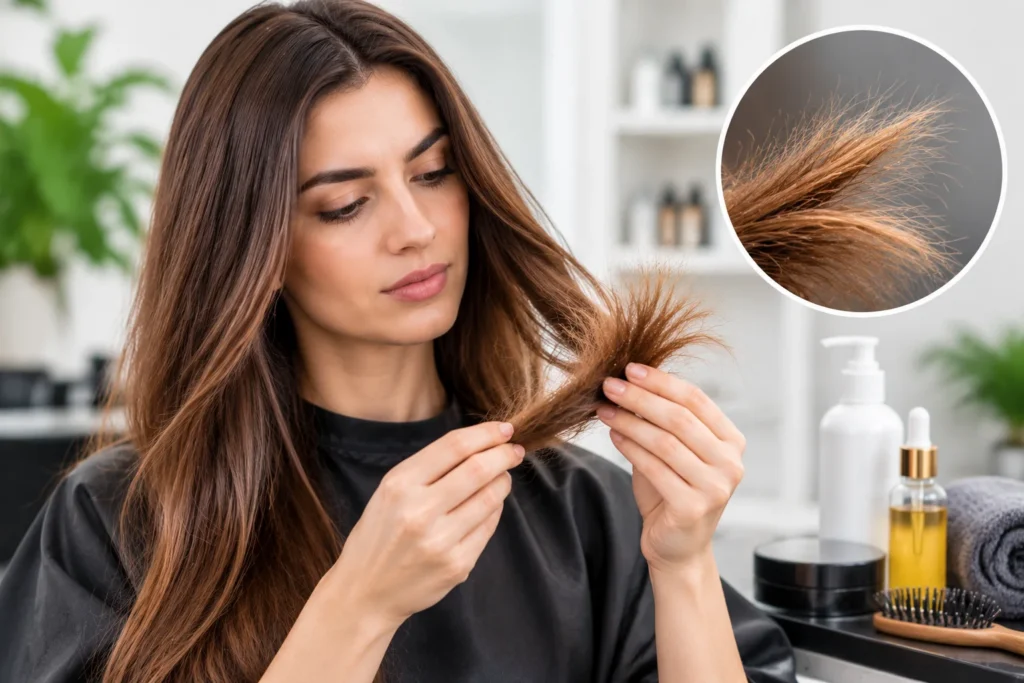
Split ends are a common sign of hair damage that can make strands look dry, frizzy, and difficult to manage. They develop when the protective outer layer of the hair shaft becomes damaged, allowing the fibers to separate at the ends. Although conditioners and serums can temporarily improve the appearance of damaged hair, they cannot permanently repair a split strand.
Understanding the causes of split ends and choosing the right split ends treatment can help reduce further damage and maintain healthier-looking hair. This guide from Salomio explores practical prevention methods, home care, and professional salon options.
What Are Split Ends and How Can You Recognize Them?
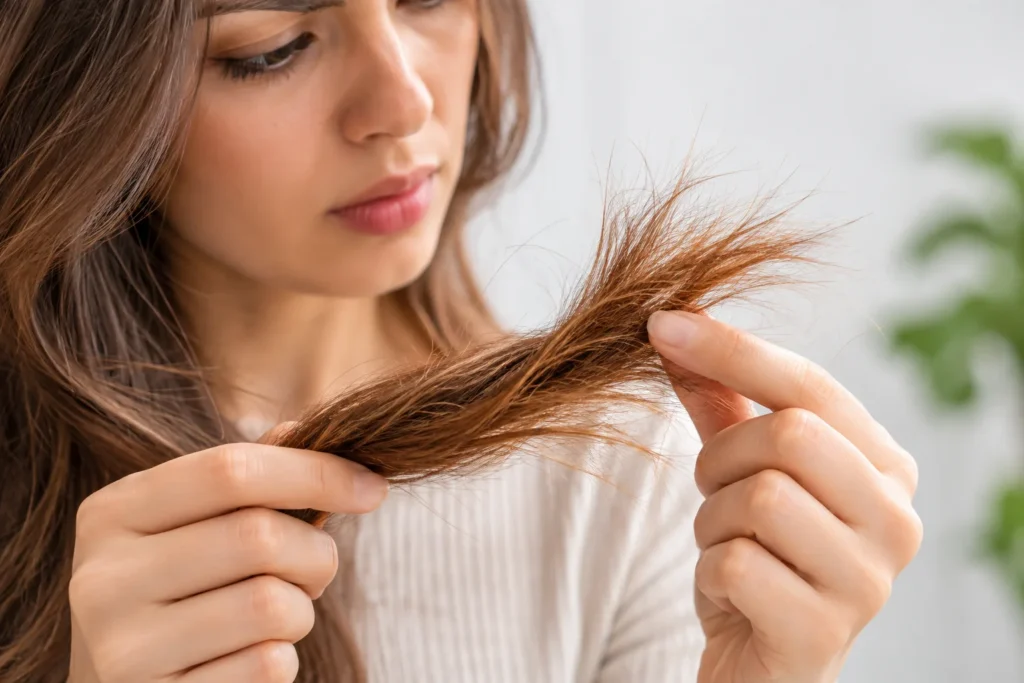
Split ends occur when the ends of a hair strand begin to separate or fray. The technical term is trichoptilosis. Since the ends are the oldest and most exposed parts of the hair shaft, they are particularly vulnerable to friction, heat, chemical processing, and everyday styling.
Recognizing the early signs helps prevent further breakage and makes it easier to choose suitable care. Although split ends are not usually a medical condition, they indicate structural damage that should not be ignored when maintaining hair length and appearance.
What Do Split Ends Look Like?
The most recognizable sign is a hair tip that divides into two or more sections, sometimes resembling a Y shape. However, split ends can also appear as small branches, feather-like fraying, or tiny white dots near the ends of strands. Hair with split ends may feel rough, tangle easily, and look less smooth or shiny.
Another indication is repeated breakage around the same length. Damaged ends can catch on neighboring strands, making detangling more difficult. These signs are useful for identifying damage, but they should not be confused with hair loss from the roots. If breakage is widespread or accompanied by scalp symptoms, a dermatologist can help identify other possible causes.
How Are Split Ends Different from Hair Breakage?
Split ends and hair breakage are related but not identical. Split ends involve the separation of the hair shaft, usually near its tip. Breakage refers to strands snapping at different points along their length. A person can experience both conditions at the same time because weakened hair is more likely to fracture.
The distinction matters when choosing a treatment. Trimming removes split ends, while reducing friction, heat, and chemical damage helps limit further breakage. If short broken strands appear throughout the hair rather than mainly at the tips, the problem may involve broader hair-shaft damage and may require changes to styling habits or professional assessment.
What Causes Split Ends?
Split ends usually develop through repeated physical, thermal, or chemical stress. Hair fibers can withstand everyday grooming, but excessive exposure to damaging practices gradually weakens their protective cuticle. Once this outer layer becomes compromised, the inner structure is more vulnerable to fraying and splitting.
The condition can affect any hair type, although long, chemically processed, curly, or frequently heat-styled hair may need particularly careful handling. Identifying the main source of damage is essential because removing existing split ends without changing the damaging routine may lead to recurring problems.
How Do Heat Styling and Chemical Treatments Damage Hair?
Frequent use of flat irons, curling wands, and high-temperature blow dryers can weaken the hair shaft and contribute to dryness and breakage. Chemical services such as bleaching, coloring, relaxing, and perming can also alter the hair’s structure, making it more vulnerable to damage, particularly when services overlap or are performed too frequently.
The Canadian Dermatology Association explains that chemicals used in coloring, perming, and relaxing can permanently weaken hair and make it more prone to breakage. To reduce risk, avoid applying additional chemical treatments to already damaged sections without professional assessment. Hairdressers should also evaluate the hair’s condition and processing history before recommending another service.
Can Everyday Hair Care Habits Cause Split Ends?
Yes. Rough towel-drying, aggressive brushing, tight hairstyles, and repeated friction can contribute to hair damage. Brushing tangled hair forcefully or pulling through knots can place unnecessary stress on fragile strands. Cotton pillowcases, rough clothing, and frequent rubbing may also increase friction, especially when hair is already dry or chemically treated.
Board-certified dermatologist Paradi Mirmirani, MD, explains: “Hair myths, such as brushing your hair one hundred strokes each day, can cause split ends.” This advice highlights why excessive brushing is not a useful way to improve hair health. Gentle detangling and appropriate conditioning are more effective ways to reduce mechanical stress.
What Is the Most Effective Split Ends Treatment?
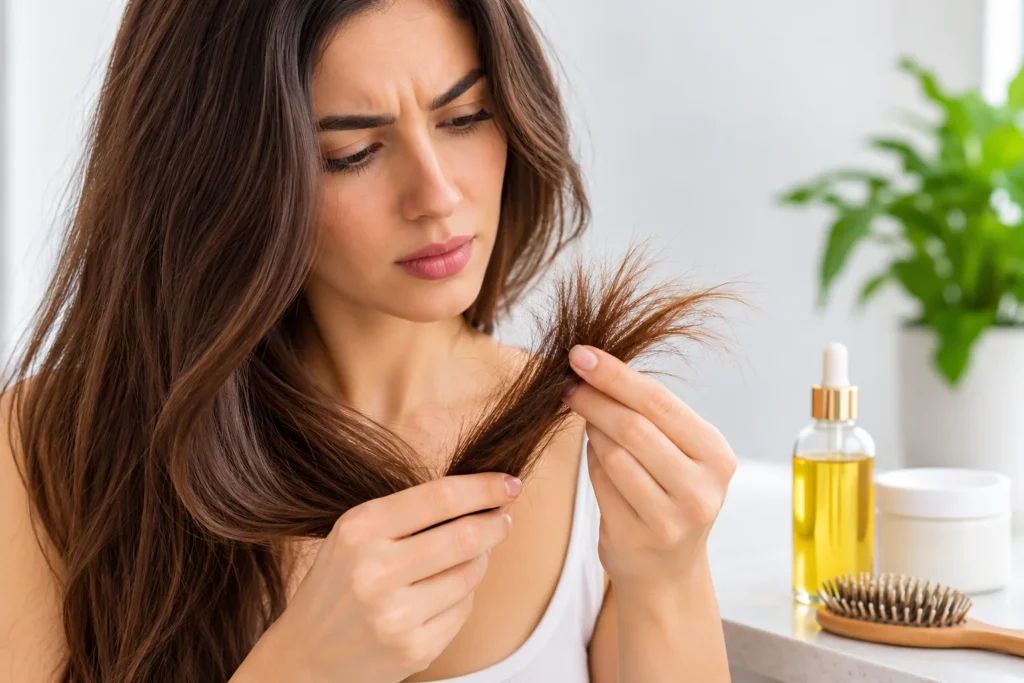
The most effective way to remove existing split ends is to trim the damaged section. Hair conditioners, masks, oils, and smoothing serums can improve softness, reduce friction, and temporarily make frayed ends look smoother. However, these products cannot permanently reconnect a split hair fiber. A realistic treatment plan should therefore combine removing damaged ends with preventing new damage. The amount of hair that needs trimming depends on how far the splitting extends and the individual’s desired hairstyle and length.
Can Split Ends Be Repaired Without Cutting Hair?
Products marketed for split ends can improve the appearance and feel of damaged hair. Conditioners and leave-in treatments coat the strands, improve slip, and reduce friction during brushing. Silicone-based serums and certain oils can also make the ends appear smoother and shinier.
However, these effects are cosmetic rather than permanent structural repair. Once a strand has split, applying a mask or oil cannot restore its original structure. Avoid products that promise to permanently fuse split ends. Instead, use conditioning products to manage the appearance of damage while arranging a suitable trim. This distinction helps clients make informed decisions and prevents unrealistic expectations about salon or retail treatments.
Why Is Trimming the Most Reliable Way to Remove Split Ends?
Trimming removes the section where the hair fiber has separated. A stylist can assess the condition of the ends, determine how much length needs to be removed, and create a clean shape. For clients who want to retain length, a small maintenance trim or hair dusting may be discussed, provided the damage is limited and the technique is appropriate.
The Canadian Dermatology Association identifies trimming as the remedy for split ends. Regular maintenance can also prevent visibly damaged ends from remaining in the hairstyle for too long. The ideal trimming schedule varies according to hair growth, styling practices, chemical history, and the condition of the ends; there is no universal interval that suits everyone.
How Can You Prevent Split Ends and Protect Your Hair?
Preventing split ends requires consistent habits rather than relying on a single product or occasional salon treatment. The goal is to reduce repeated stress on the hair shaft, maintain softness, and protect fragile ends during washing, drying, and styling. People who frequently color, bleach, straighten, or curl their hair may need a more protective routine. Small changes, such as using conditioner after washing and reducing unnecessary heat, can make daily hair care gentler and help limit future damage.
Which Hair Care Habits Help Prevent Split Ends?
The American Academy of Dermatology recommends using conditioner after shampooing and handling hair gently to reduce damage. It states: “Conditioner coats your strands, which reduces breakage and split ends.” A suitable conditioner can improve detangling and reduce friction, especially when applied to the lengths and ends.
Other useful habits include using a wide-tooth comb, avoiding aggressive towel rubbing, limiting high-temperature styling, and choosing hairstyles that do not pull tightly on the hair. Heat-protectant products can help reduce styling damage when used as directed, but they do not make excessive heat harmless. Protective care should be consistent, particularly for chemically treated or fragile hair.
How Can You Build a Routine to Reduce Split Ends?
Follow these practical steps to protect your hair:
- Wash gently: Apply shampoo mainly to the scalp and avoid rubbing the lengths aggressively.
- Condition regularly: Use a conditioner suited to your hair type, focusing on mid-lengths and ends.
- Detangle carefully: Work through knots gently, starting at the ends and moving upward.
- Reduce heat exposure: Air-dry when possible and use lower temperature settings when styling.
- Protect fragile ends: Consider a leave-in conditioner or smoothing serum to reduce friction.
- Schedule suitable trims: Ask a stylist to assess damaged sections and recommend a realistic maintenance plan.
Which Professional Treatments Can Help Manage Split Ends?
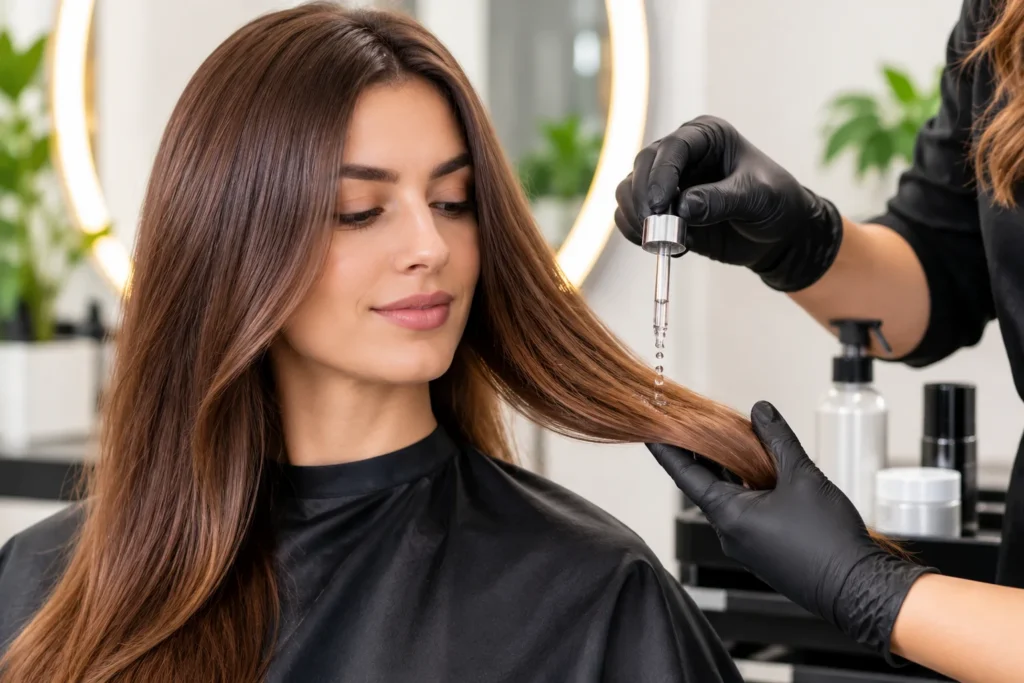
Professional salon services can improve the appearance, softness, and manageability of damaged hair, but they do not all have the same purpose. A trim removes split sections, while conditioning and bond-building services may help improve the feel or appearance of weakened strands. The right option depends on the extent of damage, previous chemical services, hair texture, and styling goals. A professional consultation is especially useful when the ends are severely frayed or when clients want to preserve as much length as possible without making unrealistic demands on the hair.
What Salon Treatments Are Suitable for Damaged Hair?
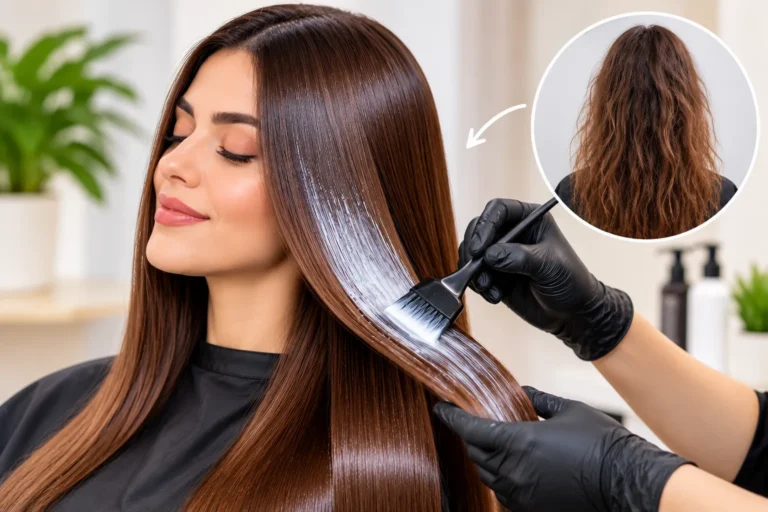
A professional trim is the most direct option for removing split ends. Hair dusting may be considered when damage is limited to small sections and the client wants to maintain length. Deep-conditioning treatments can improve softness and reduce tangling, while selected bond-building services may support the appearance and manageability of chemically damaged hair.
Keratin and smoothing treatments may also change the feel and appearance of hair, but they should not be presented as permanent split-end repair. Some procedures involve heat or chemicals, which may add stress to already fragile strands. A stylist should review the hair’s condition, explain realistic results, and recommend a service that does not increase existing damage.
Conclusion
Effective split ends treatment starts with understanding the difference between temporary cosmetic improvement and actual removal of damaged hair. Trimming is the reliable way to eliminate existing splits, while conditioning, gentle detangling, reduced heat exposure, and careful chemical processing help prevent new damage.
Professional salon treatments can improve the appearance and manageability of weakened hair when selected appropriately. For more practical hair-care guidance and professional beauty insights, explore Salomio and make informed decisions about maintaining healthier-looking hair.
Comments