
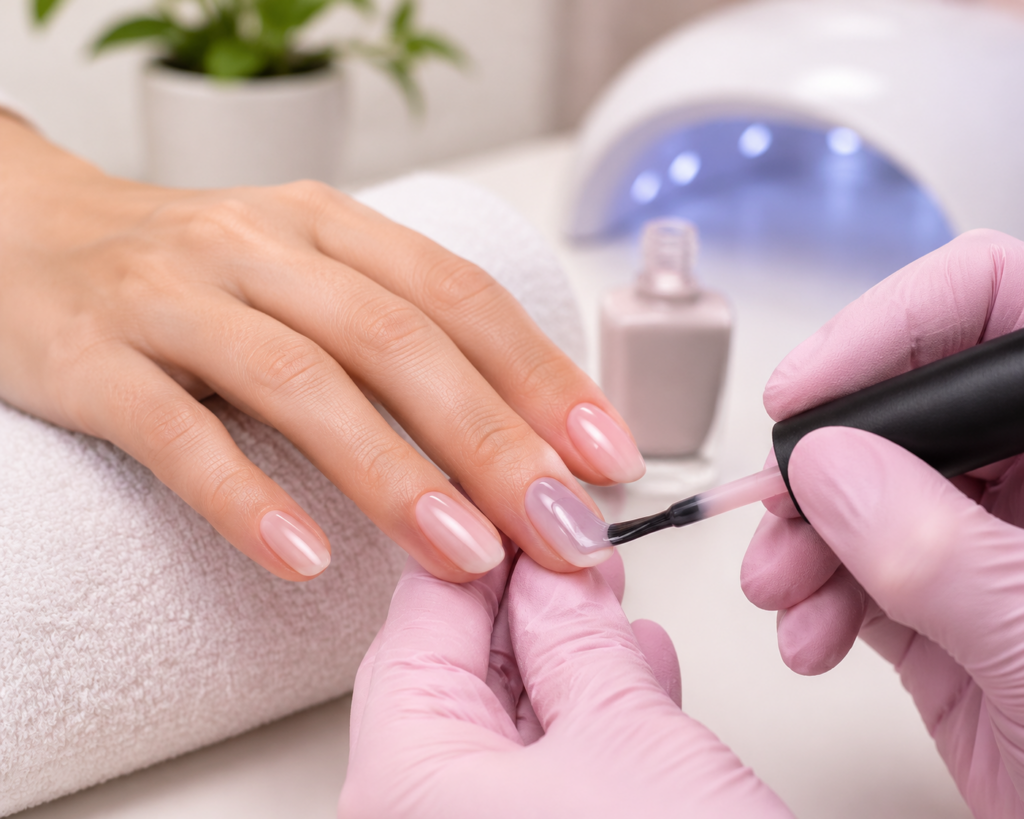
Natural nail care has become an important part of modern manicure services. Many clients want stronger, longer-looking nails without relying on traditional acrylic extensions or frequent artificial enhancements. One treatment gaining popularity in professional nail salons is BIAB nails, a builder-gel manicure designed to add structure and support to natural nails.
But what exactly is BIAB, and can it genuinely help protect weak or brittle nails? Understanding how this product works, its benefits, and its limitations helps clients make informed decisions and enables nail technicians to recommend suitable services based on individual nail conditions.
What Are BIAB Nails and How Do They Work?
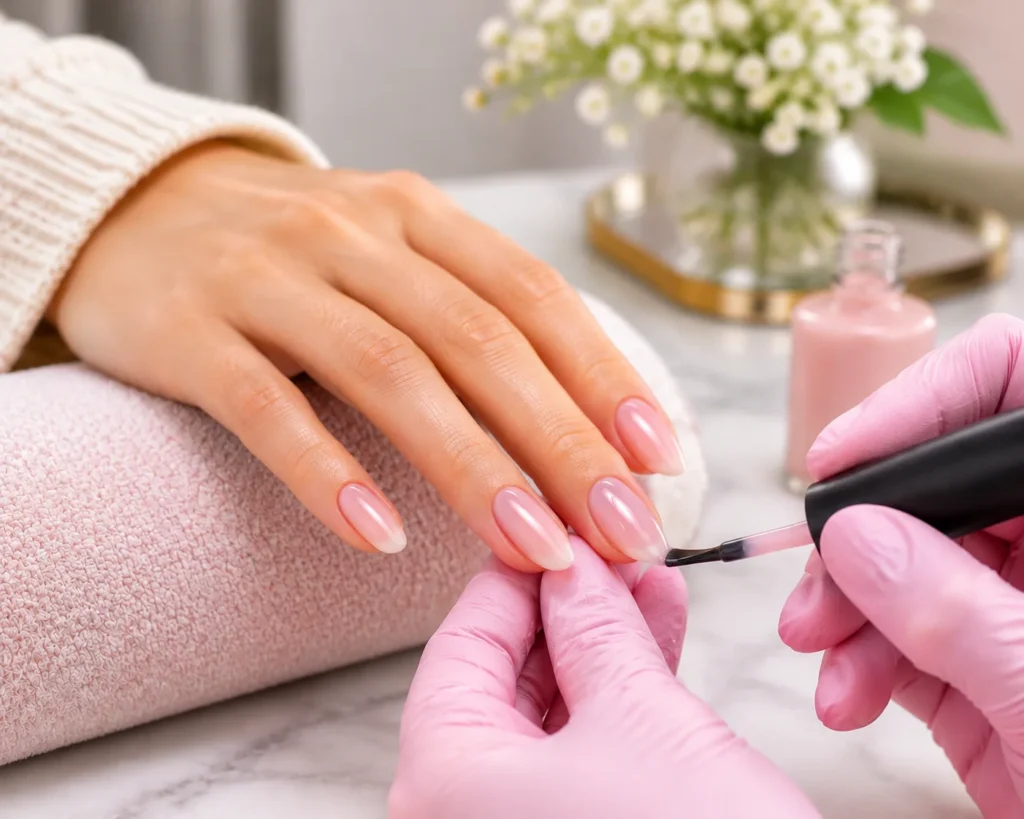
BIAB stands for Builder in a Bottle. It describes a builder-gel product supplied in a bottle with a built-in brush, making application similar to gel polish. However, BIAB is generally thicker and designed to create more structure than standard gel colour. It can be applied over natural nails to form a supportive overlay, helping clients maintain their preferred nail length and achieve a smooth finish.
Although BIAB is widely used as a general term for builder-gel manicures, the name is associated with The GelBottle Inc. Similar products from other brands may have different formulas and application requirements.
How Is BIAB Different from Regular Gel Polish?
The main difference is the purpose and consistency of each product. Regular gel polish primarily provides colour and shine. It creates a relatively thin coating and is not specifically designed to build the same level of structure as builder gel.
BIAB has a thicker consistency, allowing a nail technician to create a supportive overlay and shape the nail’s structure. This can help reduce excessive bending and provide additional resistance to everyday pressure. It can also be finished with a nude shade, a milky colour, or compatible gel polish.
For clients who prefer natural-looking manicures, BIAB offers a balance between appearance and structural support. However, the exact strength and flexibility depend on the product formula and the technician’s application technique.
How Is BIAB Applied to Natural Nails?
A professional BIAB service begins with an assessment of the natural nails. The technician checks for visible damage, unusual discolouration, lifting, or signs of infection before proceeding. The nails are then shaped and prepared according to the manufacturer’s instructions.
A suitable base layer may be applied before the builder gel. The technician distributes the product carefully, creating an appropriate structure without allowing uncured gel to touch the surrounding skin. Each layer must be cured using a compatible UV or LED lamp.
The manicure is usually completed with a top coat or another compatible finishing product. Correct preparation, product selection, curing, and application are essential for a durable result and to reduce the risk of lifting or allergic reactions.
How Does BIAB Support and Protect Natural Nails?
BIAB is designed to provide external support rather than change the natural growth process of the nail. Its structured coating can make the nail less vulnerable to bending and everyday mechanical stress. This may be useful for people whose nails frequently split, peel, or break before reaching their preferred length. However, BIAB does not repair the internal structure of a damaged nail or treat medical conditions affecting nail growth. Its potential benefits depend on the condition of the natural nail, the formula used, and the quality of application and maintenance.
How Can BIAB Help Reduce Nail Breakage?
Thin or flexible nails may bend during everyday activities such as typing, cleaning, opening packaging, or handling objects. Repeated bending and pressure can contribute to splitting and breakage, particularly around the free edge.
A properly applied BIAB overlay adds a layer of structure that helps the natural nail resist some of this mechanical stress. It can also create a smoother surface, making the free edge less likely to catch on clothing or other materials.
Celebrity nail artist Shirley Cheng describes builder gel as “basically an extra layer of protection for your nails.” This explanation highlights its primary cosmetic purpose: adding support while leaving the natural nail underneath.
Nevertheless, BIAB does not make nails indestructible. Excessive length, impact, poor application, and incorrect removal can still cause damage.
Can BIAB Help Natural Nails Grow Longer?
BIAB does not directly stimulate nail growth or make the nail matrix produce new nail tissue faster. Natural nail growth is influenced by factors such as genetics, age, general health, and individual nail conditions.
Its potential benefit is indirect. By adding structural support, BIAB may help prevent the free edge from breaking as frequently. This allows some clients to retain more of their natural nail length over time.
For example, someone whose nails repeatedly break before reaching a preferred length may find it easier to maintain that length with a suitable builder-gel overlay. However, results vary, and BIAB should not be presented as a treatment for slow nail growth or underlying nail disorders.
What Are the Main Benefits of BIAB Nails?
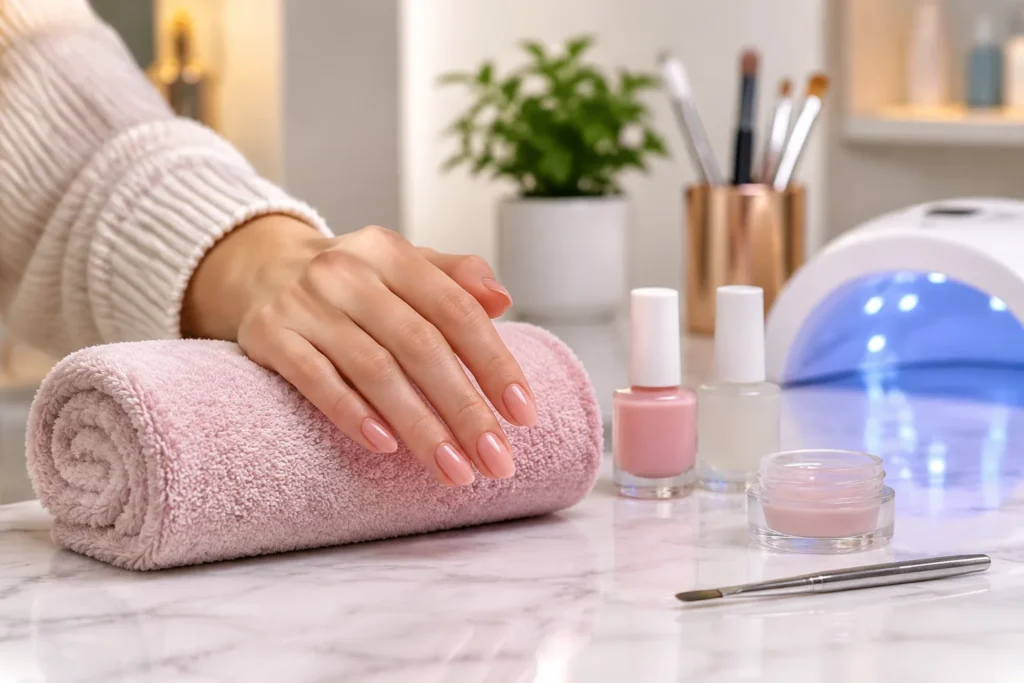
BIAB has become a popular option because it combines a natural-looking finish with additional structure. It can suit clients who prefer short or medium-length nails and want a manicure that offers more support than traditional gel polish. The treatment may also reduce the need for extensions when the goal is to maintain natural nail length. However, the final result depends on nail condition, product compatibility, professional technique, and aftercare. Understanding both the advantages and limitations helps clients decide whether BIAB fits their manicure preferences.
Why Is BIAB a Popular Choice for Brittle Nails?
Clients with brittle nails often look for a manicure that helps them maintain a consistent shape without frequently losing length. BIAB can provide a protective overlay that reduces some of the mechanical stress associated with everyday activities.
Another advantage is its versatility. Depending on the product, BIAB can be used as a natural-looking overlay, a base for colour, or a structure for certain short extensions. This makes it suitable for different manicure preferences.
However, covering damaged nails does not necessarily improve their underlying condition. The American Academy of Dermatology warns that gel manicures can contribute to nail brittleness, peeling, and cracking. Therefore, clients with persistent nail problems should consider professional assessment rather than relying on BIAB to conceal the damage.
How Long Do BIAB Nails Last?
The duration of a BIAB manicure varies according to the product, application quality, nail growth, lifestyle, and aftercare. Many salon services are maintained through appointments approximately every three to four weeks, although this is not a universal rule.
As natural nails grow, a visible gap develops near the cuticle area. The structure may also need adjustment as the nail’s balance changes. A nail technician should assess the condition of the product and natural nail before deciding whether to infill, rebalance, or remove the overlay.
Clients should not wait until the product has significantly lifted or become uncomfortable. Picking, pulling, or attempting to repair lifting at home can damage the natural nail plate.
How Does BIAB Compare with Gel Polish and Acrylic Nails?
Choosing between BIAB, gel polish, and acrylic depends on the desired appearance, nail length, maintenance preferences, and natural nail condition. Although these services all enhance the appearance of nails, they are not interchangeable. BIAB focuses on adding structure to natural nails, gel polish mainly provides colour, and acrylic systems are commonly used for stronger enhancements and extensions. Comparing their main characteristics helps clients understand which option may be more appropriate for their needs.
What Is the Difference Between BIAB, Gel Polish, and Acrylic?
The following table compares these three popular manicure options. Product formulas and professional techniques can vary, so the information should be treated as a general guide rather than a universal specification.
Table: BIAB vs Gel Polish vs Acrylic Nails
| Feature | BIAB | Gel Polish | Acrylic |
|---|---|---|---|
| Main purpose | Structured nail overlay | Colour and shine | Strength and extensions |
| Consistency | Usually thicker | Usually thinner | Powder and liquid system |
| Natural nail application | Yes | Yes | Yes |
| Structural support | Moderate to high, depending on formula | Limited | High |
| Nail extensions | Possible with suitable products | Not designed for extensions | Commonly used |
| Curing method | UV/LED lamp | UV/LED lamp | Chemical curing |
| Removal | Depends on formula | Usually soak-off | Usually professional filing and removal |
Which Nail Enhancement Is Best for Your Needs?
BIAB may suit clients who want to maintain natural nail length while adding structure. Gel polish is a practical choice for those who mainly want colour and a glossy finish without additional thickness. Acrylic may be more appropriate when significant extensions or a particular enhancement structure is required.
No option is automatically the healthiest for everyone. Nail condition, product ingredients, allergies, application quality, and removal methods all matter. A professional nail technician should discuss these factors before recommending a service, especially when a client has thin, damaged, or sensitive nails.
How Can You Maintain BIAB Nails and Protect Natural Nail Health?
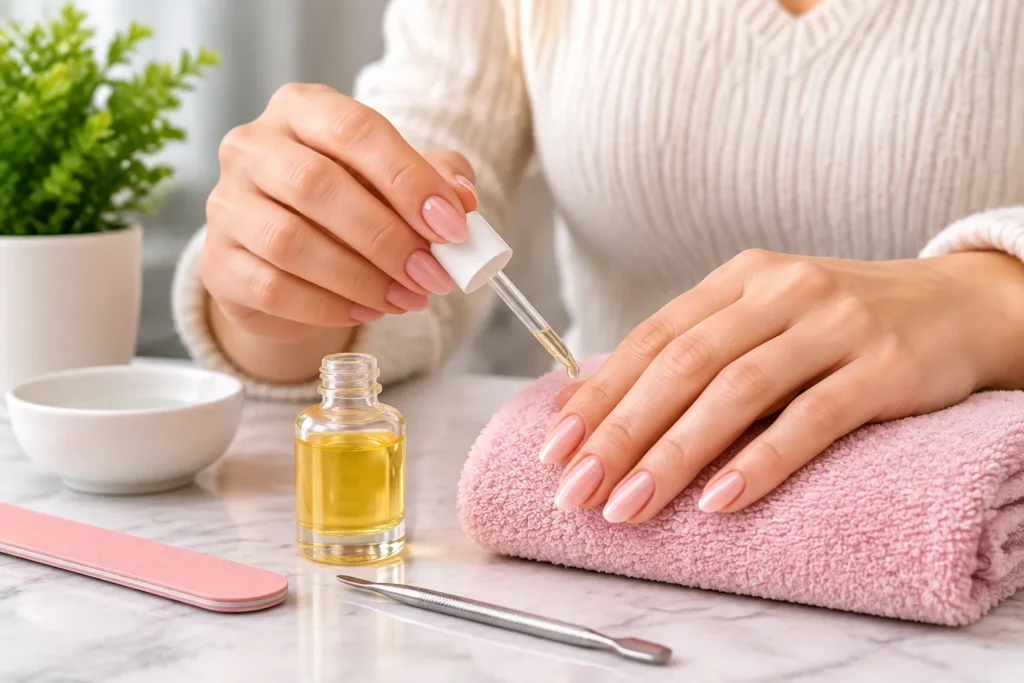
A well-maintained BIAB manicure requires more than a professional application. Daily habits, regular appointments, and careful removal all influence the condition of the natural nail underneath. Clients should avoid using their nails as tools, keep the surrounding skin moisturised, and seek professional maintenance when the product begins to grow out. Nail technicians also play an important role by following product instructions, maintaining hygiene, and checking for signs of damage or sensitivity. These practices help clients enjoy the cosmetic benefits of BIAB while reducing avoidable risks.
How Can You Care for BIAB Nails Between Appointments?
A few consistent habits can help maintain the appearance of a BIAB manicure:
- Apply cuticle oil regularly to moisturise the skin around the nails.
- Use hand cream to reduce dryness.
- Wear gloves when handling cleaning products or washing dishes for extended periods.
- Avoid biting, picking, or peeling the product.
- Do not use your nails to open packages or scrape surfaces.
- Schedule maintenance before significant lifting or structural problems develop.
The American Academy of Dermatology advises clients: “Don’t pick gel nail polish.” Although this guidance refers to gel manicures generally, the principle also applies to builder-gel overlays because pulling off hardened product can remove layers of the natural nail.
How Should BIAB Be Removed Safely?
BIAB removal depends on the specific formula. Some builder gels are designed to soak off with acetone, while hard-gel formulas require professional filing. It is therefore essential to check the manufacturer’s instructions rather than assuming every BIAB product can be removed in the same way.
A qualified nail technician should remove the product carefully, avoiding aggressive filing or scraping of the natural nail plate. Clients should never pull off lifting sections or force the product away from the nail.
If redness, itching, swelling, pain, or nail separation develops, the service should be stopped and medical advice sought. Dermatologist Dr. Shari Lipner advises seeking professional help when a reaction persists: “If your skin is still reacting after two to four weeks, it’s time to see a dermatologist.”
How Can You Maintain Healthy Nails After a BIAB Manicure?
Follow this simple routine between professional appointments:
- Moisturise daily:
Apply cuticle oil and hand cream to reduce dryness around the nails.
- Protect your hands:
Wear gloves during household cleaning and prolonged contact with water or detergents.
- Check for lifting:
Look for gaps, cracks, or changes in the product rather than trying to fix them yourself.
- Avoid excessive pressure:
Use your fingertips or appropriate tools instead of your nails to open or scrape objects.
- Book professional maintenance:
Ask your nail technician to assess the overlay and determine whether it needs an infill or removal.
Conclusion
BIAB offers a practical option for clients who want a structured manicure without necessarily choosing traditional extensions. Its main benefit is the additional support it provides to natural nails, which may help reduce breakage and preserve nail length. However, it does not accelerate growth or repair underlying nail conditions. Professional application, compatible products, careful maintenance, and correct removal remain essential for protecting nail health.
For salon owners and nail technicians, understanding BIAB’s benefits and limitations makes it easier to recommend suitable services and set realistic client expectations. Explore professional nail-care services and discover more beauty insights with Salomio to make informed choices for healthier-looking nails.
Comments