
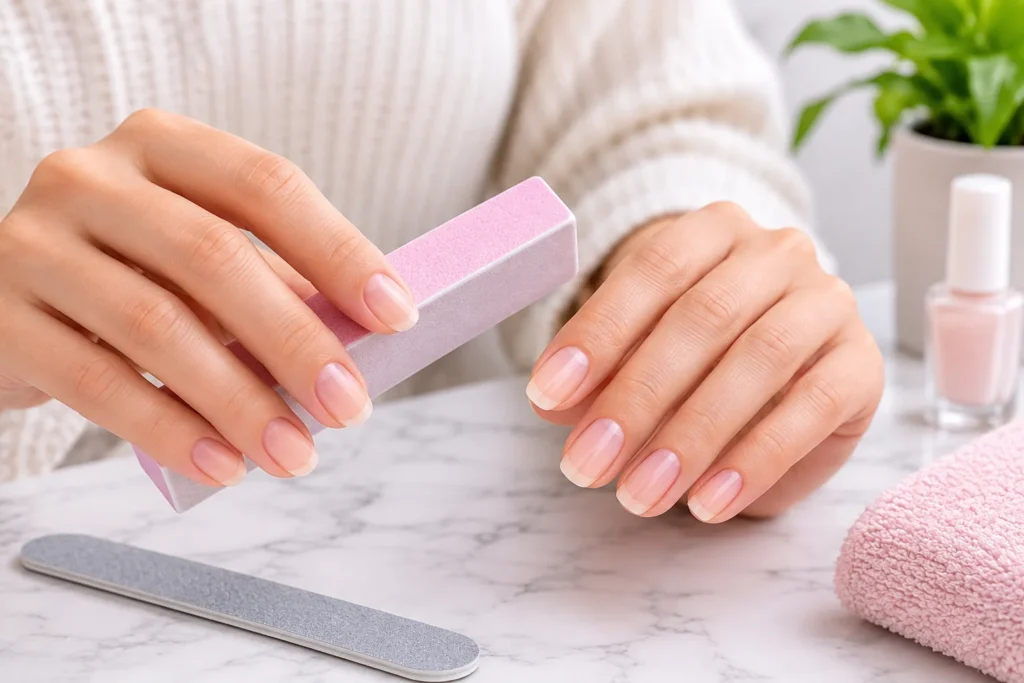
Nail buffing is a common part of professional manicures and at-home nail care. It involves using a specialized buffer to smooth the nail surface and create a more polished, natural-looking finish. When performed correctly, this technique can improve the appearance of uneven nails and add shine without requiring nail polish. However, buffing is not a treatment for weak nails, and excessive friction can gradually thin the nail plate.
For beauty professionals and anyone interested in maintaining healthy nails, understanding the correct nail buffing technique is essential. This guide explores its benefits, tools, application methods, and important precautions.
What Is Nail Buffing and How Does It Work?
Nail buffing is a cosmetic technique that uses an abrasive tool to smooth the upper surface of the natural nail. Unlike filing, which primarily shapes the free edge, buffing focuses on the nail plate. It can reduce the appearance of minor surface irregularities and create a smoother finish. The process may involve several buffer surfaces with different levels of abrasiveness. However, the objective should be to improve the nail’s appearance without removing unnecessary layers of its natural structure.
How Is Nail Buffing Different from Nail Filing?
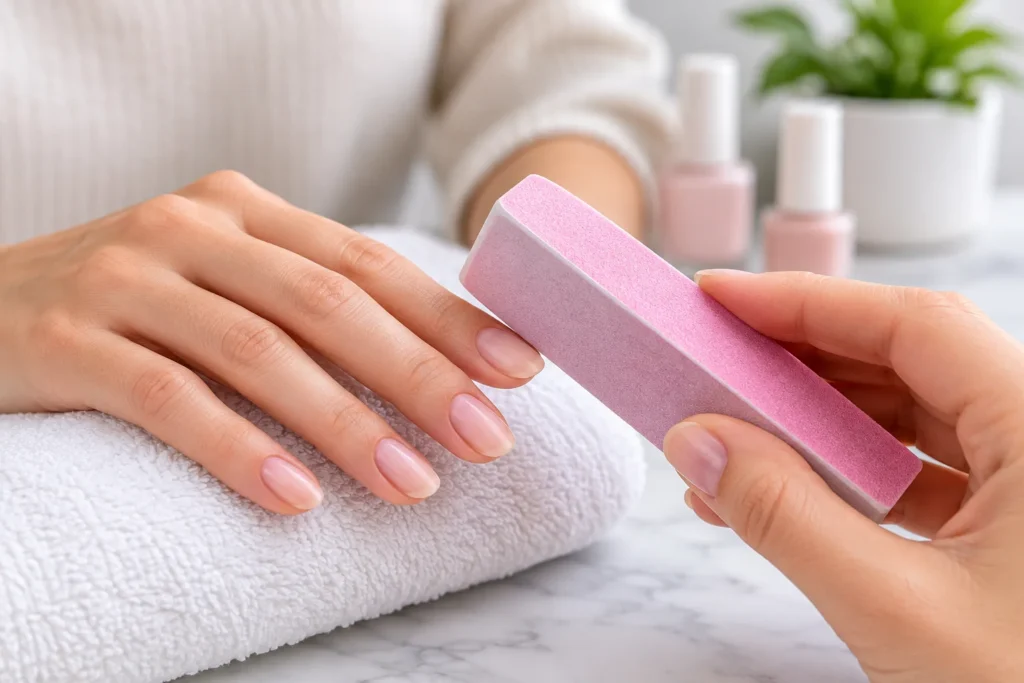
Nail filing and buffing serve different purposes. Filing is mainly used to shorten or shape the free edge of the nail, while buffing works on the upper surface of the nail plate. A nail file is generally more abrasive and is not intended to polish the natural nail surface.
Buffing tools usually have finer abrasive surfaces designed for smoothing and polishing. Some buffers also include a final polishing side that creates a glossy appearance. These tools should not be confused with coarse files or electric drills used for artificial nail enhancements. Choosing the correct tool for the intended purpose helps reduce unnecessary abrasion and protects natural nails.
What Happens to the Nail Surface During Buffing?
The nail plate consists of tightly connected layers of keratin. A buffer creates controlled friction against its surface, helping reduce minor irregularities and produce a smoother finish. The polishing effect is cosmetic: it does not rebuild the nail structure or increase its natural thickness.
Because buffing involves abrasion, repeated or aggressive use can remove too much of the nail plate. This may leave nails thinner, weaker, and more vulnerable to splitting. A professional should therefore assess the condition of each client’s nails before deciding whether buffing is appropriate.
What Are the Main Benefits of Nail Buffing?
When used carefully, nail buffing can improve the appearance of natural nails and complement a manicure. Its main benefits are cosmetic rather than medical. It can help create a smoother-looking surface, enhance natural shine, and provide a neat finish without applying colored polish. However, the results depend on the condition of the nails and the technique used. Buffing should not be treated as a necessary step in every manicure, particularly when the nail plate is already thin, damaged, or sensitive.
Can Nail Buffing Make Natural Nails Look Smoother and Shinier?
One of the main reasons people choose nail buffing is to achieve a clean, polished appearance. A fine-grit buffer can reduce the visibility of minor surface irregularities and help create a more even-looking finish. A dedicated polishing surface can also produce a natural shine, making clear or colored polish optional.
This can be useful for clients who prefer minimal nail care or want their nails to look presentable between manicures. However, deep ridges, discoloration, and significant changes in nail texture should not simply be buffed away. These changes may have underlying causes that require professional assessment rather than additional abrasion.
Does Nail Buffing Strengthen Nails or Help Them Grow Faster?
Nail buffing does not directly strengthen nails or accelerate their growth. Although smoother nails may look healthier, the process does not stimulate keratin production or repair structural damage. In fact, excessive buffing can make the nail plate thinner and more fragile.
For clients with weak or brittle nails, a gentle care routine is generally more appropriate than frequent polishing. Keeping nails at a manageable length, moisturizing the surrounding skin, and avoiding harsh treatments can help reduce everyday damage. The American Academy of Dermatology also recommends protecting nails from practices that weaken their natural structure. Its guidance on reducing artificial nail damage explains how filing the natural nail surface can cause thinning.
Which Tools and Techniques Are Used for Nail Buffing?
Selecting the correct buffer is important for achieving a controlled finish. Nail buffers are available in different shapes, materials, and abrasive levels. Some have two surfaces, while others include three or four sides for different stages of smoothing and polishing. The appropriate choice depends on whether the goal is light surface refinement or a glossy finish. For natural nails, gentle tools and minimal abrasion are preferable. Beauty professionals should also consider nail condition, hygiene requirements, and the manufacturer’s instructions before using any buffer.
What Are the Different Types of Nail Buffers?
Buffers vary in their design and intended use. A two-way buffer usually provides two abrasive or polishing surfaces, while three-way and four-way blocks may offer separate stages for smoothing, refining, and adding shine. Some buffers are made from foam with abrasive coatings, while others use specialized materials for professional applications.
| Buffer type | Main purpose | Typical application |
|---|---|---|
| Two-way buffer | Smoothing and polishing | Basic nail care |
| Three-way buffer | Multiple surface-finishing stages | Natural nail manicures |
| Four-way buffer | Smoothing, refining, and shining | Multi-step manicures |
| Fine-grit buffer | Gentle surface refinement | Light polishing |
| Electric buffer | Controlled mechanical filing or polishing | Selected professional services |
Not every multi-sided buffer is suitable for every nail. Always check the manufacturer’s instructions and avoid assuming that every side should be used during every manicure.
What Does Nail Buffer Grit Mean?
Grit describes the coarseness of an abrasive surface. In general, a lower grit number indicates a coarser abrasive, while a higher number indicates a finer one. Coarser surfaces remove material more aggressively and are generally unsuitable for routine polishing of natural nails.
Fine-grit surfaces are more appropriate for gentle finishing, but even these can cause damage if used repeatedly or with excessive pressure. Nail technicians should follow the buffer manufacturer’s recommendations rather than selecting a grit based only on appearance. The educational material from Milady’s Standard Nail Technology explains the different buffer surfaces and the importance of controlled application.
How Can You Buff Your Nails Safely at Home?
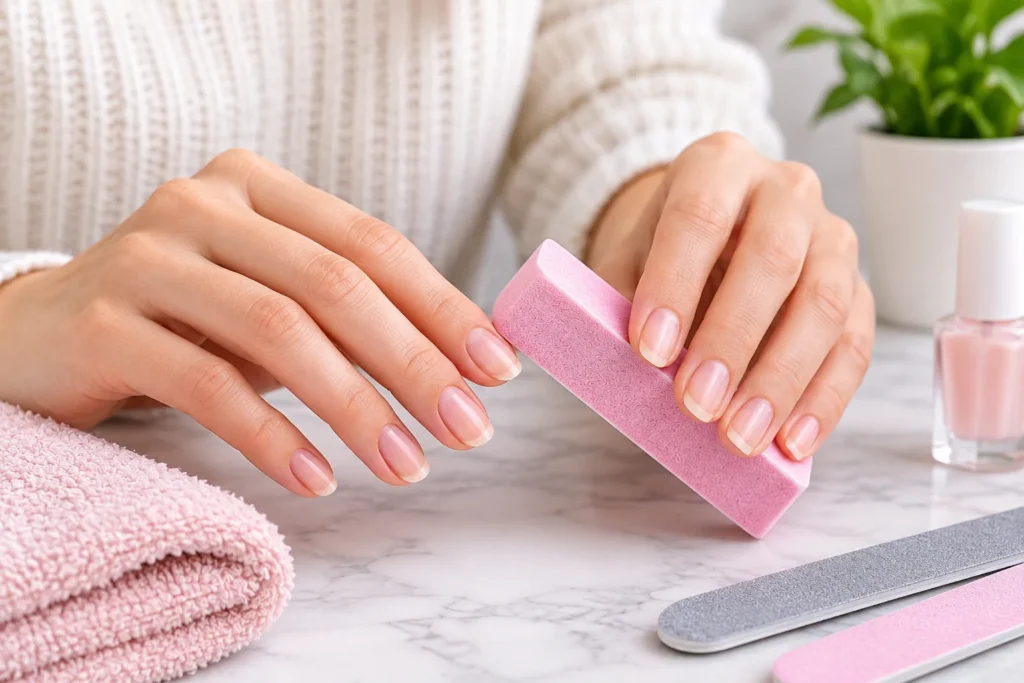
At-home nail buffing should be gentle, occasional, and focused on improving appearance rather than removing noticeable layers of the nail plate. Before starting, check whether your nails are healthy enough for the procedure. Avoid buffing nails that are painful, peeling, severely brittle, or visibly damaged. Use a clean buffer intended for natural nails, follow its instructions, and stop if you notice discomfort or heat. The following steps provide a simple approach to cosmetic buffing while minimizing unnecessary friction.
How Do You Buff Natural Nails Step by Step?
- Clean your nails: Remove old nail polish if necessary and wash your hands. Dry your nails thoroughly before beginning.
- Inspect the nail plate: Check for splitting, peeling, discoloration, or unusual changes. Skip buffing if the nails appear damaged.
- Choose a suitable buffer: Select a fine, nail-friendly buffer designed for natural nails. Avoid coarse files intended for artificial enhancements.
- Smooth gently if appropriate: Use the designated smoothing surface with light pressure and limited strokes. Do not repeatedly work on the same area.
- Finish with the polishing surface: If the buffer includes a polishing side, follow its instructions and use it gently to create a natural-looking shine.
- Moisturize afterward: Apply cuticle oil or a suitable hand and nail moisturizer to help maintain skin and nail flexibility.
There is no need to use every side of a buffer or repeat the process until the nail looks perfectly smooth. If the surface is already even, additional buffing offers little benefit.
What Are the Risks and Precautions of Nail Buffing?
Although nail buffing is widely used in manicures, it is not risk-free. The main concern is excessive abrasion, which can gradually reduce the thickness of the natural nail plate. This is particularly relevant for clients who regularly receive manicures, use electric tools, or have naturally fragile nails. Professional nail technicians should understand when to avoid buffing and how to recognize signs of damage. A conservative approach is preferable because preserving the natural nail is more important than achieving temporary shine.
Can Excessive Nail Buffing Damage Natural Nails?
Yes. Repeated or aggressive buffing can thin the nail plate, increase fragility, and contribute to peeling or splitting. A dermatological review titled Nail Cosmetics identifies the risk clearly: “Over-zealous buffing of the nail plate can thin the nail plate and cause fragility.” Read the research in Nail Cosmetics.
Professional training materials also warn about excessive friction. Milady’s nail technology guidance states: “Excessive pressure or buffing too long on the nail plate” can generate painful heat and potentially contribute to nail separation. This is why technicians should use controlled pressure and stop if a client experiences burning or discomfort.
How Often Should You Buff Your Nails?
There is no universal schedule that applies to everyone. The appropriate frequency depends on nail thickness, condition, the type of buffer, and the amount of abrasion involved. Buffing should not automatically be included in every manicure. If nails are already smooth and shiny, there may be no reason to repeat the process.
Clients with thin, brittle, peeling, or damaged nails should avoid buffing until their condition improves. Anyone noticing persistent splitting, pain, unusual discoloration, or changes in nail shape should seek advice from a qualified healthcare professional or dermatologist instead of trying to correct the issue with a buffer.
What Precautions Should Nail Technicians Follow?
Beauty professionals should assess the natural nail before starting, select an appropriate tool, and avoid aggressive surface removal. Buffers must be cleaned, disinfected, or disposed of according to their material, manufacturer instructions, and local hygiene regulations. Single-use tools should never be reused between clients.
Technicians should also explain that buffing is optional and does not strengthen nails. If a client reports heat, pain, or sensitivity, the procedure should stop immediately. The FDA’s nail care product guidance also emphasizes following product directions and paying attention to safety warnings.
Conclusion
Nail buffing can be a useful cosmetic technique when performed gently and with the right tools. It helps improve the appearance of natural nails by smoothing minor surface irregularities and creating shine. However, it does not strengthen nails or accelerate growth, and excessive abrasion can cause thinning and fragility.
For salon professionals, the priority should be choosing appropriate tools, assessing nail condition, and protecting the natural nail plate. Explore more practical nail care guidance and professional beauty insights with Salomio, and make informed decisions that support healthier-looking nails.
Comments