
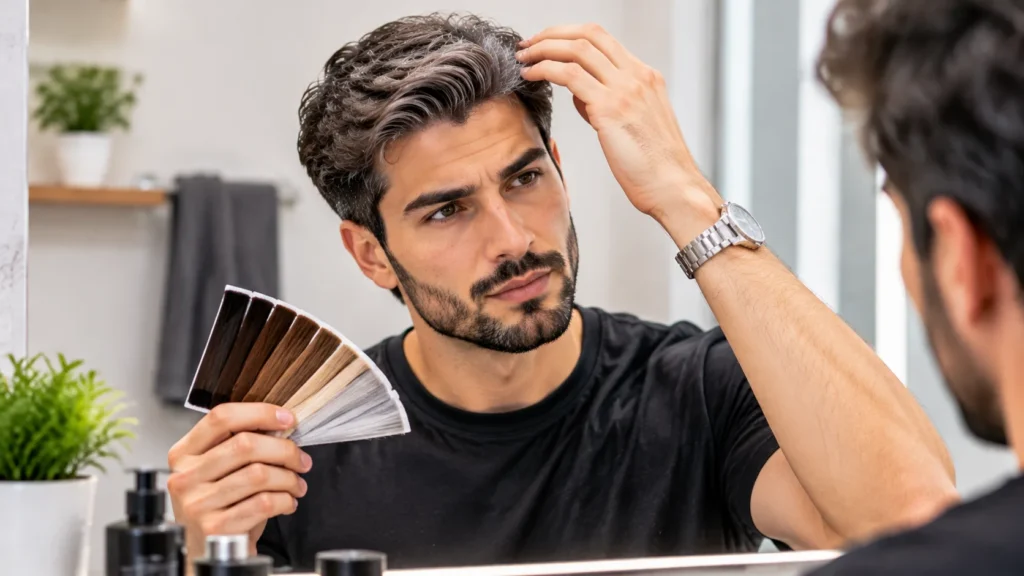
Men’s hair coloring has evolved beyond simply covering gray hair. Today, men choose professional color services to refresh their appearance, add dimension, experiment with new shades, or create a more natural-looking style. From classic dark brown and ash tones to blonde highlights and subtle gray blending, the right approach depends on hair type, natural color, personal style, and maintenance preferences.
For barbers, hairstylists, and salon professionals, understanding these options helps deliver more personalized services. This guide explores popular men’s hair coloring shades, professional techniques, color selection, and essential safety considerations.
What Is Men’s Hair Coloring and Why Is It Popular?
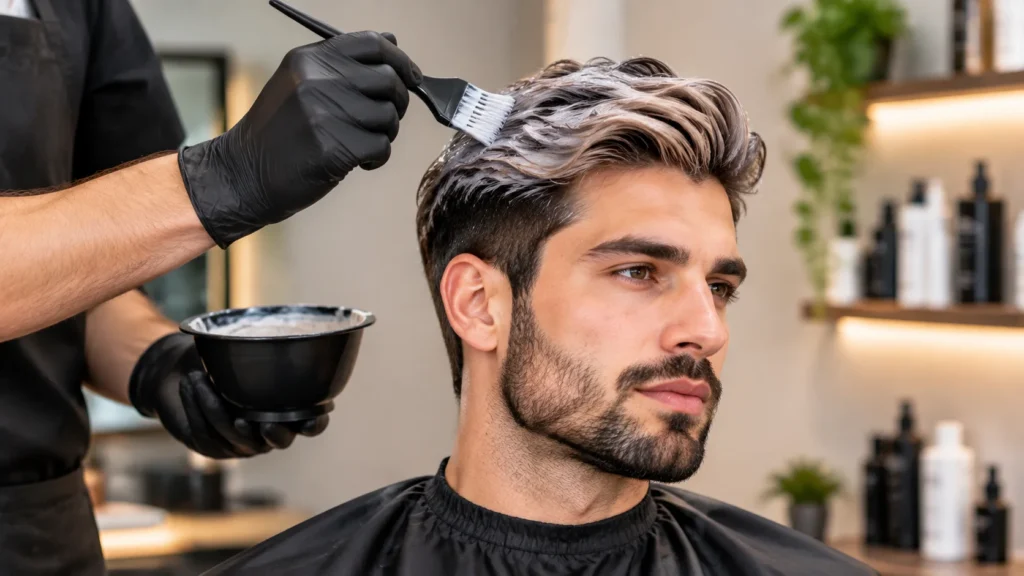
Men’s hair coloring involves applying color products to natural hair to change, enhance, or restore its appearance. Some clients want complete color transformation, while others prefer subtle adjustments that preserve their natural look. Professional services can also address gray hair, uneven tones, or previous color treatments. The growing variety of products and techniques means that men’s color services can be adapted to different hair lengths, textures, and grooming preferences. Understanding the desired result is the first step toward choosing an appropriate coloring method.
What Are the Main Reasons Men Choose Hair Coloring?
Men choose hair coloring for several reasons. One common motivation is gray coverage, particularly when clients want a consistent shade or a more youthful-looking appearance. Others prefer gray blending, which reduces the contrast between pigmented and gray strands without completely hiding natural silver tones.
Color can also introduce a new style. Subtle highlights create dimension, while darker shades can enhance the appearance of naturally brown or black hair. Some clients choose fashion colors to express their personality or complement a particular haircut. For salon professionals, identifying the client’s expectations is essential because a natural-looking refresh and a dramatic transformation require different products, techniques, and maintenance plans.
What Are the Most Popular Hair Colors for Men?
The best hair color depends on the client’s natural base, desired level of contrast, skin tone, and personal style. Natural-looking shades remain practical choices for clients who prefer understated grooming, while lighter and fashion colors create more noticeable changes. A professional consultation should consider how a shade will look in different lighting conditions and how much upkeep it requires. The following options represent versatile color directions rather than universal recommendations.
Which Natural Hair Colors Create a Timeless Look?
Dark brown, espresso, medium brown, and ash brown are popular options for men seeking a refined appearance. Dark brown and espresso can enhance naturally dark hair without creating a dramatic change. Medium brown offers a softer result, while ash brown introduces cooler undertones that may help reduce an overly warm appearance.
Caramel and honey highlights can add warmth and dimension to brown hair. These shades are often applied selectively rather than across the entire head, creating movement without a uniform color effect. The final choice should account for the natural hair base and the client’s preferred level of contrast. A strand test can help assess how a proposed shade develops before a full service.
Which Bold and Lighter Shades Are Worth Considering?
Blonde, platinum blonde, silver, copper, and fashion shades such as blue or purple offer more noticeable transformations. Blonde and platinum results often require pre-lightening when the natural hair is dark. This can involve a chemical process that needs careful assessment to reduce the risk of dryness and breakage.
Silver and gray shades can complement existing gray hair or create a deliberate fashion look, but achieving a clean, cool result may require lightening and toning. Copper adds warmth, while blue and purple offer more creative options. Clients should understand that lighter and vivid shades may require more frequent toning, color-refreshing services, and specialized aftercare.
| Hair shade | Appearance | Common application |
|---|---|---|
| Dark brown | Classic and natural | Overall color refresh |
| Ash brown | Cool and understated | Tone adjustment |
| Caramel | Warm and dimensional | Highlights |
| Honey blonde | Bright and soft | Highlights or all-over color |
| Platinum blonde | Very light and striking | Pre-lightened hair |
| Silver | Cool and modern | Gray enhancement or fashion color |
| Copper | Warm and expressive | All-over color or highlights |
Which Professional Hair Coloring Techniques Work Best for Men?
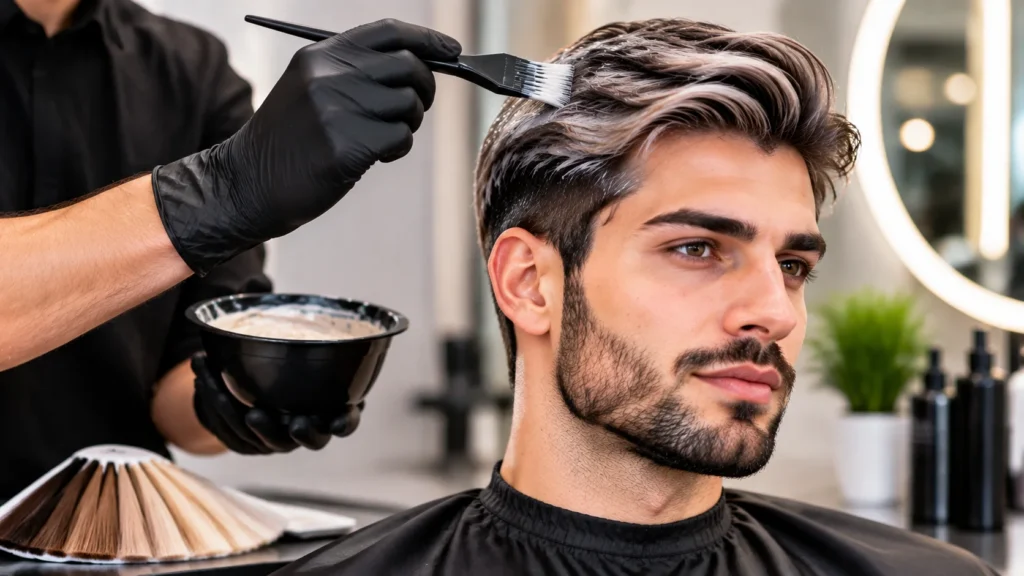
Professional techniques allow stylists to control color placement, coverage, contrast, and regrowth. The right method depends on the amount of gray hair, the natural base, the haircut, and the client’s maintenance expectations. Some services create an even result, while others preserve natural variation. For men with shorter hairstyles, placement is particularly important because the cut may expose different sections of the head. A consultation helps determine whether the goal is complete coverage, subtle blending, or visible color dimension.
What Is the Difference Between Gray Blending and Gray Coverage?
Gray coverage aims to conceal gray strands by depositing enough pigment to create a more uniform result. It is suitable for clients who prefer their hair to appear consistently colored. Gray blending, by contrast, reduces the visual contrast between gray and pigmented hair while allowing some natural silver to remain visible.
Blending can be achieved through carefully selected demi-permanent color, lowlights, or other customized techniques. It may create a softer transition as the hair grows, which is useful for clients who want to avoid a noticeable root line. Wella Professionals’ educational material explains that the choice between coverage and blending depends partly on the percentage of gray and the client’s desired result. Read its professional color education guide.
How Do Highlights, Lowlights, and Balayage Change Men’s Hair?
Highlights lighten selected sections to create brightness and dimension. Lowlights introduce darker sections, helping add depth or reduce the contrast between lighter and darker strands. Both techniques can be adapted to short or longer men’s hairstyles, depending on section placement and the desired finish.
Balayage uses a freehand application approach to create softer transitions between shades. It can be useful when clients want a less uniform result or a gradual-looking color effect. Micro-highlights and babylights offer finer placement for subtle brightness, including around the temples. These techniques require professional judgment because hair length, growth patterns, and the existing color influence the final appearance.
How Can Men Choose the Right Hair Color and Maintain It?
Choosing a suitable shade involves more than following a trend. A professional should assess the natural hair color, skin undertone, hair condition, previous chemical treatments, and the client’s willingness to maintain the result. The desired haircut and facial hair can also influence how the finished color looks. A shade that works well on one person may create a different effect on someone with another natural base or complexion. A thoughtful consultation helps set realistic expectations and reduces the likelihood of unwanted results.
How Can Men Choose a Hair Color That Suits Their Appearance?
Start by identifying whether the client wants a subtle refresh or a noticeable transformation. Shades close to the natural hair color usually create a softer result and may require less maintenance. Warm colors such as caramel and copper can add warmth, while cool shades such as ash brown and silver create a different tonal effect.
The American Academy of Dermatology recommends:
“Choose a dye within three shades of your natural color.”
This is a useful general guideline for limiting the intensity of chemical processing, although individual results depend on the product and starting hair color. Read the AAD’s coloring and perming tips.
How Can Men Maintain Colored Hair?
Color-treated hair benefits from a consistent, gentle care routine. Use shampoo and conditioner formulated for colored hair, avoid unnecessarily frequent washing, and follow the stylist’s advice about heat styling. Sun exposure, repeated washing, and unsuitable products can contribute to fading or changes in tone.
The maintenance schedule depends on the coloring technique. All-over permanent color may require root touch-ups as natural hair grows, while highlights and balayage can often be maintained with less frequent appointments. Toners or glossing services may be recommended to refresh the shade. Clients should also avoid repeating chemical processes without assessing the condition of the hair first.
What Safety Precautions Should Men Follow Before Coloring Their Hair?
Hair coloring can involve chemicals that irritate the skin or trigger allergic reactions. Professional application does not eliminate these risks. Before a service, the stylist should review the client’s previous color history, scalp condition, and any known product sensitivities. Lightening treatments also require an assessment of hair strength and previous chemical processing. Clear aftercare instructions and realistic expectations are important parts of a professional service.
How Can Hair Coloring Be Performed More Safely?
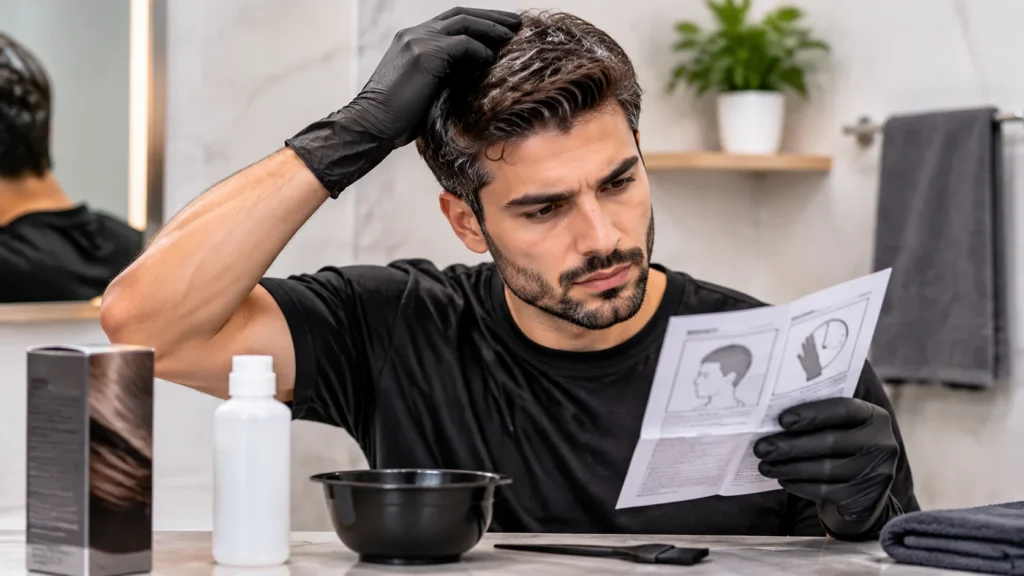
A salon professional should follow the product manufacturer’s instructions, use suitable protective equipment, and avoid applying color to an irritated or damaged scalp. The FDA advises:
“Do a patch test before using dye on your hair.”
It also recommends following package directions and performing the test each time the product is used. A patch test should follow the specific product instructions and does not guarantee that an allergic reaction will not occur.
Never use ordinary hair dye to color eyebrows or eyelashes. These products are not intended for use around the eyes and can cause serious injury. If a client experiences burning, swelling, itching, or another unexpected reaction, the product should be removed according to its instructions and appropriate medical advice sought. See the FDA’s hair dye safety guidance.
What Should Clients Expect During a Professional Coloring Appointment?
- Consultation: Discuss the desired shade, previous color treatments, maintenance preferences, and possible limitations.
- Hair and scalp assessment: Check hair condition, natural color, gray percentage, and scalp health.
- Color selection: Choose a suitable product and technique based on the intended result.
- Preparation and application: Follow the manufacturer’s instructions, including required testing, sectioning, timing, and protective measures.
- Rinsing and finishing: Remove the product as directed, assess the result, and apply suitable post-color care.
- Aftercare advice: Explain washing, conditioning, styling, and the expected schedule for maintenance.
Conclusion
Men’s hair coloring offers many options, from natural brown shades and subtle highlights to bold blonde and silver transformations. The most successful result comes from matching the technique to the client’s natural hair, desired appearance, and maintenance expectations.
Gray blending, highlights, balayage, and all-over color each serve different purposes, while careful product selection and safety practices help protect hair and scalp. Explore more professional grooming and hair care guidance with Salomio, and help clients make informed choices by recommending a coloring service suited to their needs.

Comments