
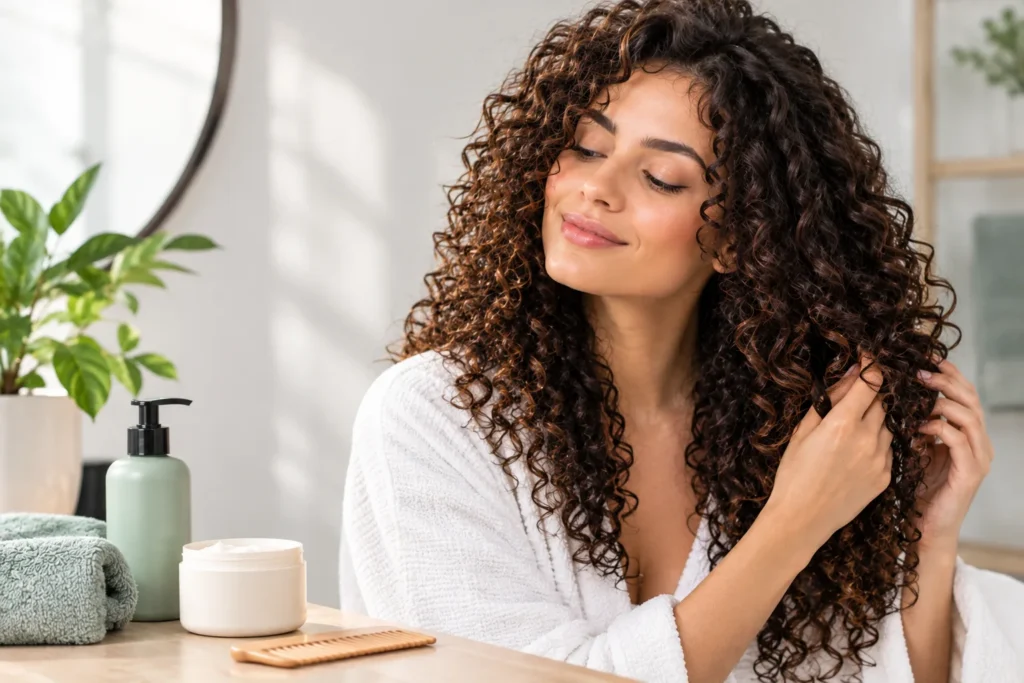
A consistent curly hair care routine helps maintain moisture, reduce frizz, improve curl definition, and minimize breakage. However, curly hair does not respond equally to every product or styling method. Hair thickness, curl pattern, scalp condition, and daily habits all influence the results.
For readers of Salomio, understanding these differences makes it easier to build a practical routine rather than buying products that may not suit their needs. The goal is to keep curls manageable, healthy-looking, and defined without unnecessary steps or excessive styling.
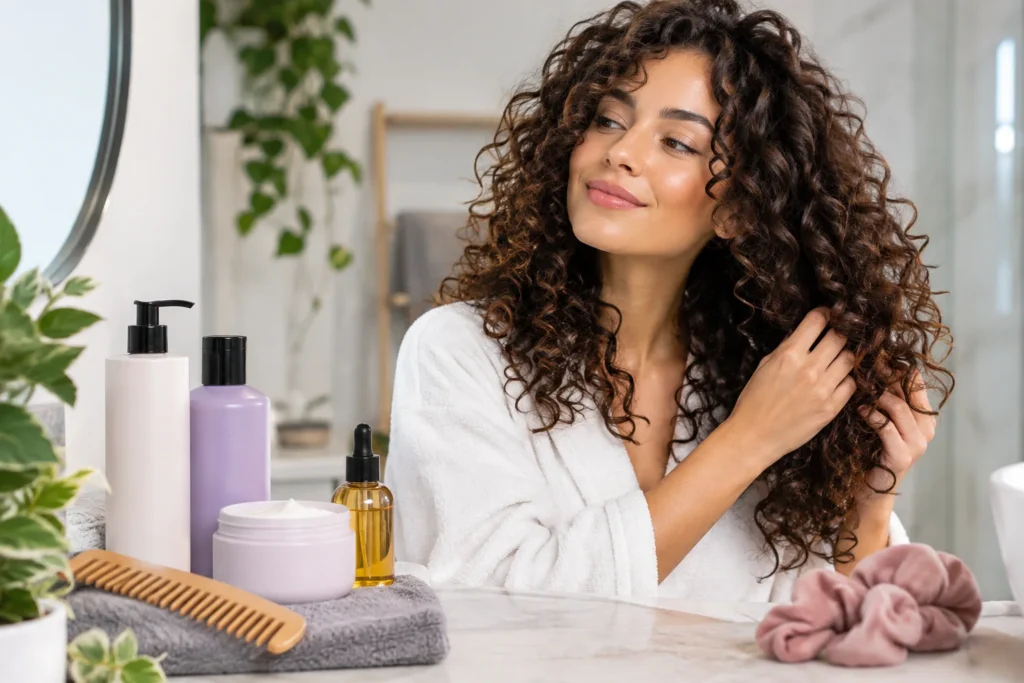
How Can You Build a Curly Hair Care Routine That Works?
An effective routine should address three priorities: scalp cleanliness, adequate conditioning, and gentle styling. Curly hair can be more vulnerable to dryness and breakage, particularly when it is tightly coiled or frequently manipulated.
The American Academy of Dermatology (AAD) recommends choosing products designed for your hair type and adjusting washing frequency according to scalp and hair needs. A simple routine is often more sustainable than using numerous products without understanding their purpose.
What Should You Know About Your Curl Type?
Start by observing whether your hair forms loose waves, defined spirals, or tight coils. Then consider strand thickness, overall density, dryness, and how easily your hair becomes weighed down by products. Fine curls may respond better to lightweight conditioners and styling products, while thick or tightly coiled hair may need richer conditioning.
These are starting points rather than fixed rules. Notice how your hair behaves after washing and styling, and adjust one product at a time. This approach helps identify what improves definition without leaving curls greasy, stiff, or flat.
Which Products Do You Really Need?
Most routines can begin with a suitable shampoo, rinse-out conditioner, and one styling product, such as a leave-in conditioner, curl cream, or gel. A leave-in conditioner may help reduce frizz and make curly hair easier to detangle. Dermatologist Zoe Draelos explains that its benefits can appear immediately, including less frizz and easier combing.
Choose products according to your hair’s needs rather than assuming every curl type requires the same combination. If your hair becomes limp or coated, reduce the amount or simplify the routine before adding another product.
How Should You Wash and Moisturize Curly Hair?
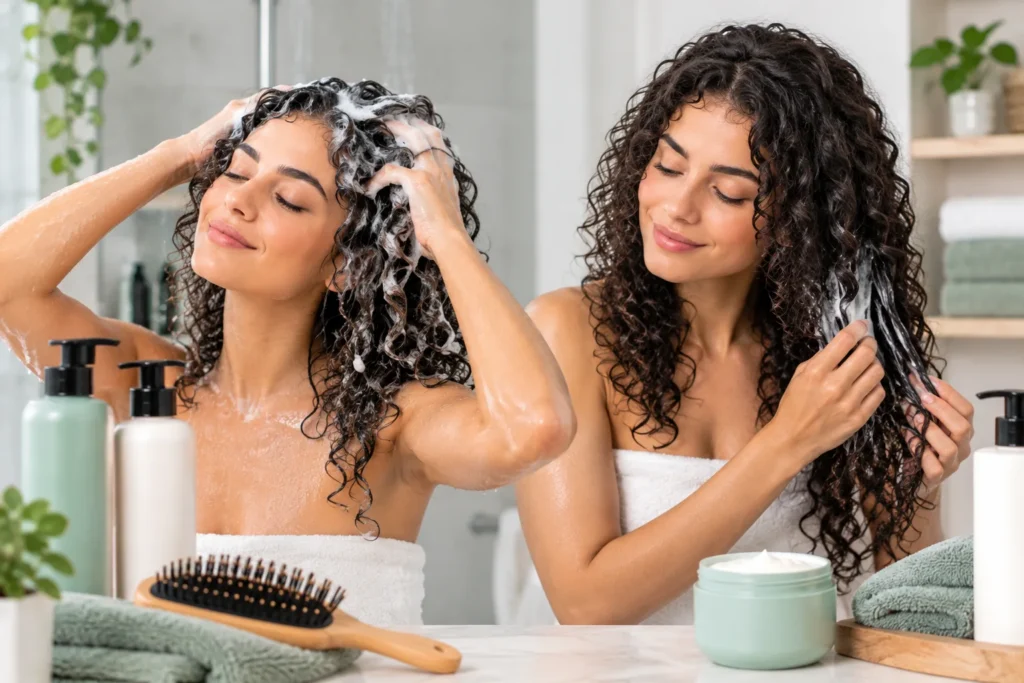
Cleansing removes excess oil, sweat, dead skin, and styling-product buildup, while conditioning improves softness and manageability. The challenge is cleaning the scalp without leaving the lengths unnecessarily dry. There is no single washing schedule suitable for everyone: scalp oiliness, exercise, climate, product use, and curl texture all matter. The AAD recommends applying shampoo primarily to the scalp and using conditioner after washing. For dry or curly hair, conditioner can be distributed along the hair length as needed.
How Often Should You Wash Curly Hair?
Wash when your scalp and hair need cleansing rather than following an inflexible calendar. If your scalp becomes oily, sweaty, itchy, or affected by product buildup, you may need to wash more frequently. Very dry or tightly coiled hair may tolerate longer intervals between washes, provided the scalp remains comfortable and clean.
Apply shampoo to the scalp and gently massage it in; let the lather rinse through the lengths instead of scrubbing them aggressively. If you regularly use heavy gels, oils, or creams, an occasional clarifying shampoo may help remove buildup. Follow product directions and condition afterward.
How Can You Condition and Detangle Curls Without Damage?
Apply rinse-out conditioner after shampooing and distribute it through the areas that need the most moisture and slip. Detangle gently with your fingers or a wide-tooth comb, working from the ends upward and separating the hair into sections when necessary.
The AAD recommends detangling thick, curly hair in the shower while conditioner is present. Avoid forcefully pulling knots apart, as this can contribute to breakage. After rinsing, use a suitable leave-in conditioner if needed. Do not automatically apply every product to the scalp; many leave-in products are intended for the hair lengths and ends.
How Can You Keep Curls Defined and Reduce Frizz?
Curl definition depends on how the hair is conditioned, styled, and dried. Frizz can become more noticeable when strands are dry, tangled, exposed to friction, or handled excessively during drying. The objective is not to eliminate every flyaway but to help curls retain their natural pattern.
Applying styling products evenly to damp hair and limiting unnecessary manipulation can support a more consistent result. The right method varies by curl type, so experiment with small adjustments rather than changing your entire routine at once.
Which Styling Products Help Define Curls?
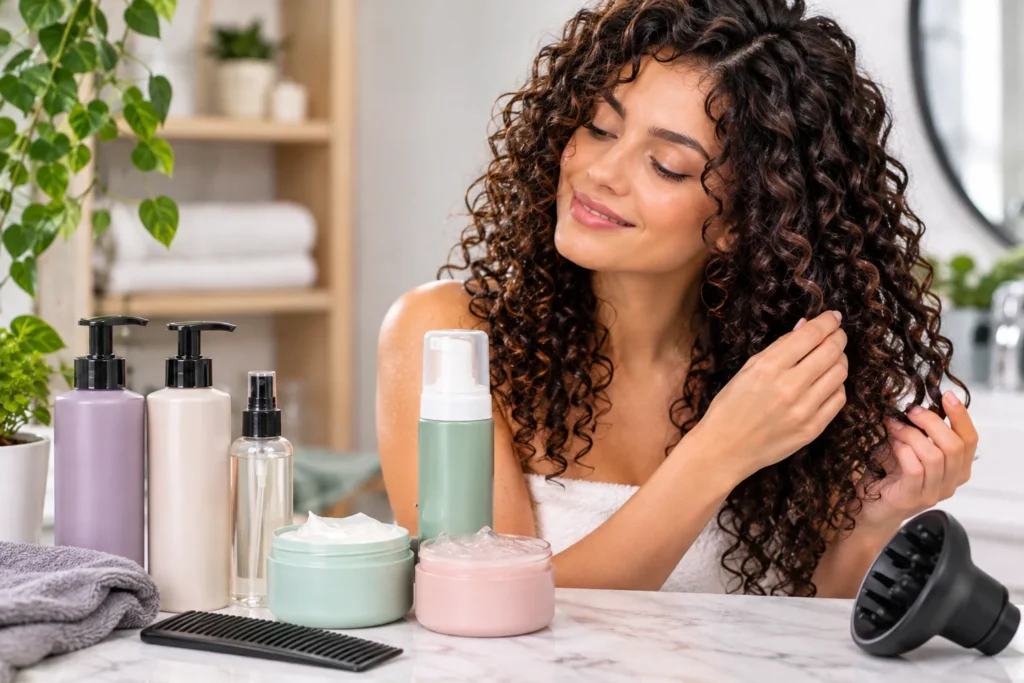
Leave-in conditioner, curl cream, mousse, and gel serve different purposes. Leave-in conditioner improves manageability, while curl creams provide conditioning and help shape curls. Mousse can offer lightweight body, and gel often provides stronger hold to help a style last.
Start with a small amount, distribute it evenly, and scrunch the hair gently upward if that technique suits your curl pattern. You can combine products when needed, but using more is not always better. If curls feel sticky, coated, or unusually heavy, reduce the amount or switch to a lighter formula.
How Should You Dry Curly Hair Without Causing Damage?
After styling, gently squeeze excess water from your hair with a soft T-shirt or microfiber towel instead of rubbing vigorously. You can air-dry your curls or use a diffuser on a low or moderate heat setting. When using a dryer, avoid excessive heat and consider a heat-protectant product suitable for your styling method.
The AAD warns that excessive heat can damage hair and recommends limiting heat exposure. Try to avoid repeatedly touching or rearranging curls while they dry, because excessive manipulation can disrupt their shape and increase visible frizz.
How Can You Maintain Curls Between Wash Days?
A curly hair care routine does not end when your hair dries. Everyday friction, weather, sleeping habits, and repeated restyling can affect curl definition between washes. Maintenance should refresh the existing style without saturating the hair with additional products each day. Start by identifying whether your curls need water, a little conditioner, or simply less handling. Protecting the hair overnight and refreshing only the sections that need attention can save time while helping your style last longer.
How Can You Refresh Curls Without Washing Them Again?
Lightly dampen flattened or frizzy sections with water, then reshape them using your fingers. If water alone is insufficient, apply a small amount of leave-in conditioner or a curl-refreshing product according to its instructions. Avoid coating the entire head with several layers of cream, oil, and gel every morning.
Excess product can accumulate and make curls feel heavy. If the scalp becomes uncomfortable or the hair develops noticeable buildup, washing may be more effective than repeatedly refreshing the style. Adjust the process to your hair’s condition instead of following a rigid daily formula.
How Should You Protect Curly Hair While Sleeping?
Friction from bedding can disturb curl patterns and contribute to tangling. Before bed, consider loosely gathering longer curls into a high, relaxed ponytail, often called a pineapple, or using a loose braid if it suits your hair length. A satin or silk bonnet or pillowcase may also help reduce friction. Avoid tight hairstyles that pull on the hairline. The AAD recommends loose overnight styling to help preserve curls and reduce friction-related frizz and breakage. In the morning, reshape only the sections that need attention.
What Mistakes Should You Avoid in Your Curly Hair Care Routine?
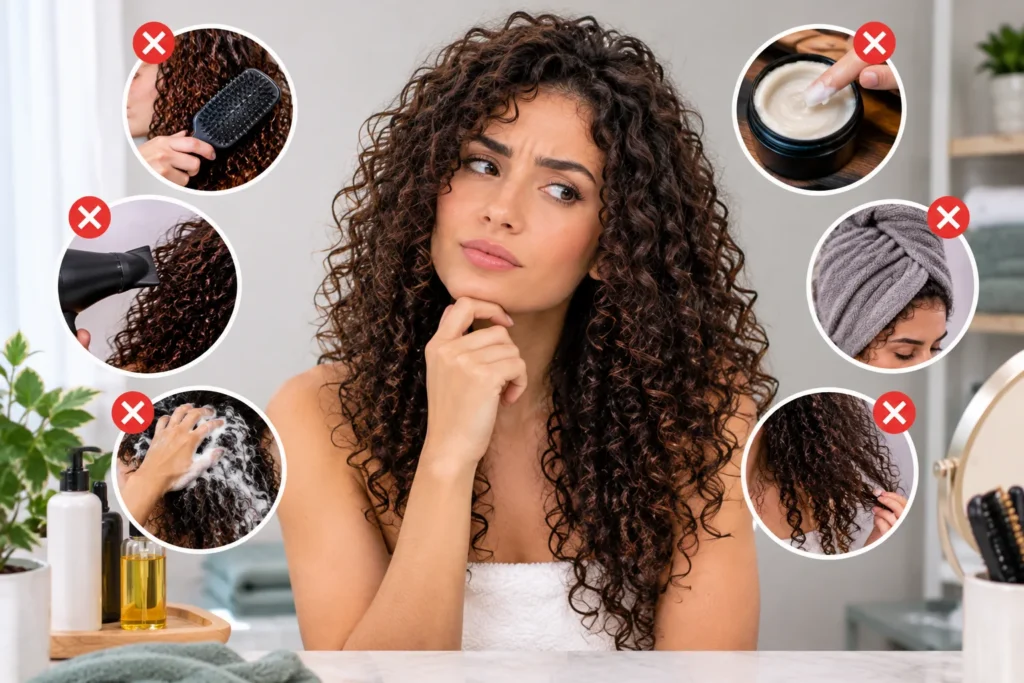
Even good products may disappoint when the application method does not suit the hair. Common problems include overwashing, aggressive detangling, excessive heat, product buildup, and frequent restyling. A useful routine should make hair easier to manage over time rather than leave it increasingly dry, tangled, or coated.
If a product causes irritation or persistent discomfort, stop using it and review its ingredients. When breakage or scalp symptoms continue despite gentler care, consider seeking advice from a qualified dermatologist.
What Is a Simple Curly Hair Care Routine?
Follow these steps on wash day, adapting products and frequency to your needs:
- Cleanse: Apply a suitable shampoo to your scalp and rinse thoroughly.
- Condition: Distribute conditioner through your curls and gently detangle from ends to roots.
- Apply styling products: Use a leave-in conditioner, curl cream, or gel as needed.
- Dry gently: Scrunch out excess water and air-dry or diffuse using controlled heat.
- Protect overnight: Use a loose hairstyle or a satin or silk covering to reduce friction.
- Refresh selectively: On following days, dampen and reshape only the areas that need it.
Dermatologist Temitayo Ogunleye advises that “Trial and error are often needed to find the best routine for curly hair.” This is a useful reminder that consistency matters, but personal adjustment is essential.
What Does a Healthy Curl Routine Look Like?
| Routine Stage | Main Purpose | Practical Tip |
|---|---|---|
| Cleansing | Clean scalp and remove buildup | Shampoo the scalp gently |
| Conditioning | Improve softness and detangling | Work through curls carefully |
| Styling | Support curl definition | Start with small product amounts |
| Drying | Minimize damage and frizz | Avoid rough rubbing and excessive heat |
| Daily maintenance | Preserve curl shape | Refresh only where necessary |
| Overnight care | Reduce friction and tangles | Choose a loose style or satin covering |
Conclusion
A successful curly hair care routine combines appropriate cleansing, conditioning, gentle styling, controlled drying, and overnight protection. The best products and washing frequency depend on your hair texture and scalp needs, so observe how your curls respond and make gradual adjustments. Salomio supports informed beauty and hair-care decisions by helping readers understand practical grooming techniques.
Comments