
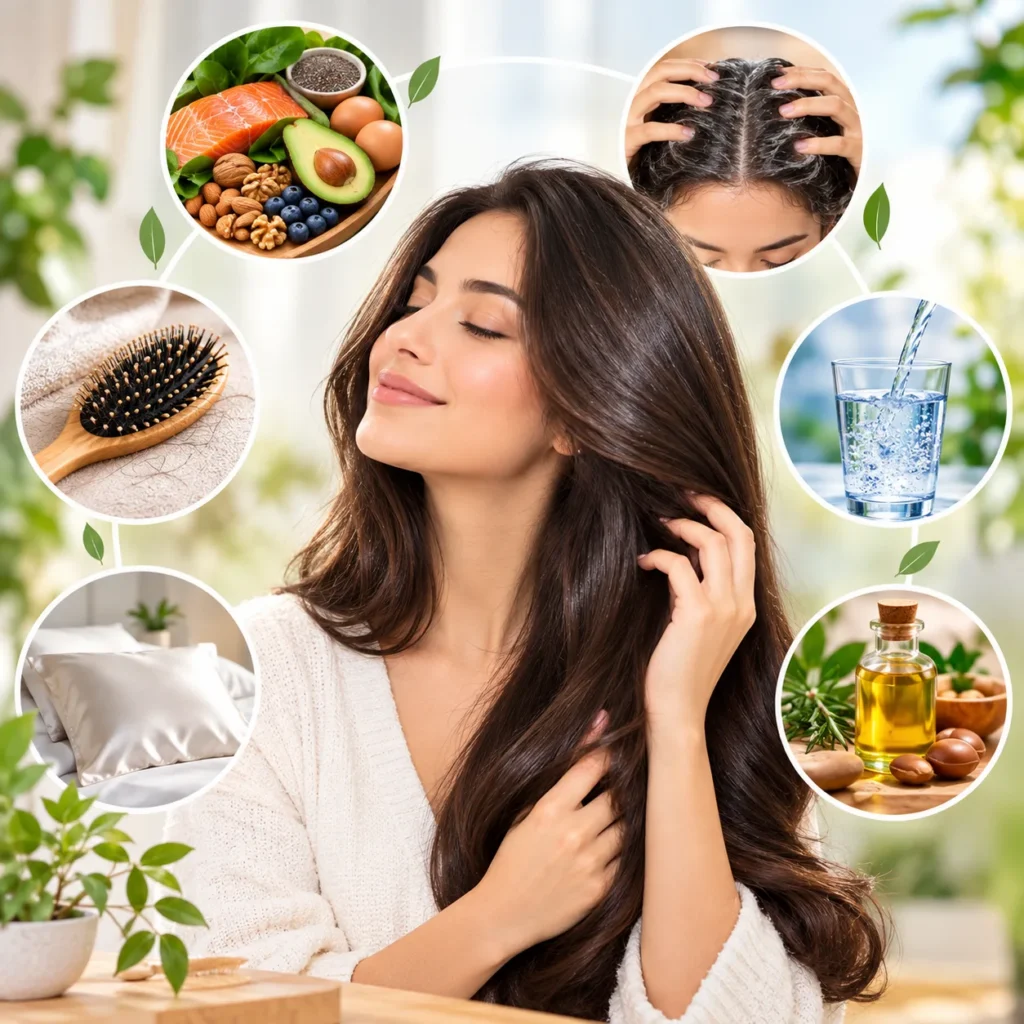
Having healthier and stronger hair is not limited to choosing an expensive shampoo or using a strengthening product. Hair strength and health depend on a combination of factors, including scalp condition, washing habits, daily care, nutrition, exposure to heat and chemicals, and in some cases, overall health.
For this reason, if your hair has become brittle, dry, thin, or less dense, it is better to look at the factors affecting it as a whole rather than focusing on a single product. The American Academy of Dermatology also emphasizes that understanding your hair type and choosing an appropriate care routine can help reduce damage and maintain a healthier appearance. Follow Salomio for more.
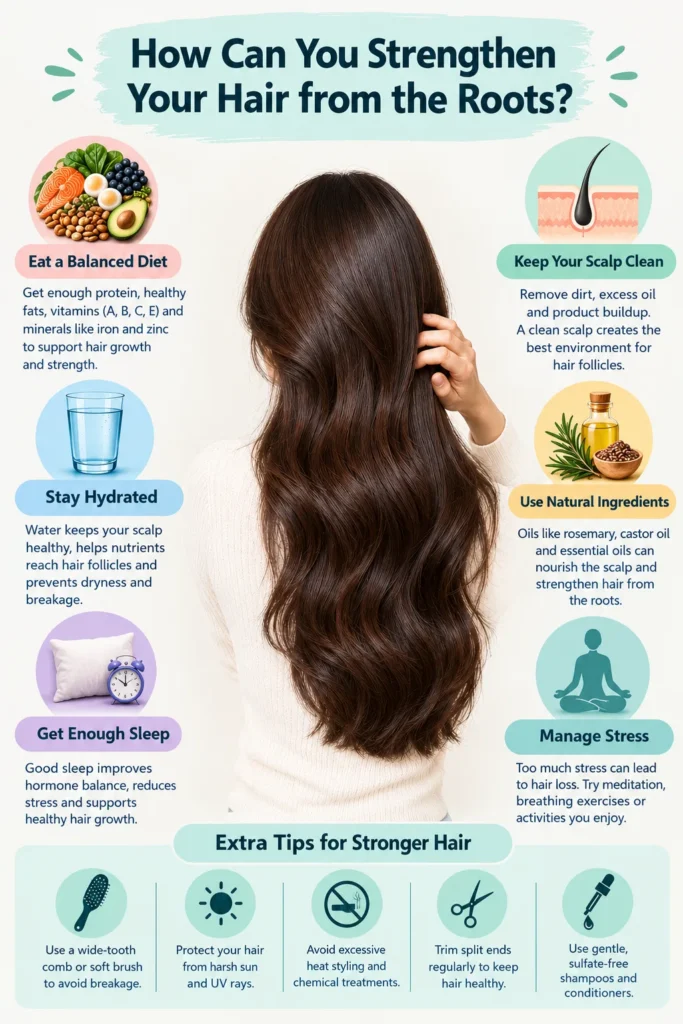
How Can You Improve Hair Health from the Foundation?
Strengthening your hair starts with understanding the difference between “healthy hair,” “damaged hair,” and “hair loss.” Many people consider any reduction in hair volume, breakage, or an increase in the number of hairs on their pillow to be hair loss, while normal hair shedding is different from abnormal hair loss. On the other hand, the hair shaft can become damaged by heat, coloring, bleaching, pulling, or improper care without the main problem originating from the hair follicle. Therefore, an effective hair-strengthening routine should consider both scalp and follicle health while protecting the hair shaft from damage.
Does Hair and Scalp Type Matter When Choosing a Hair-Care Routine?
Yes. One of the foundations of proper hair care is understanding the characteristics of your hair and scalp. Hair can be straight, wavy, curly, thick, or fine, while the scalp may be oily, dry, or prone to certain skin conditions. Therefore, a product or care routine that works well for one person may not necessarily be suitable for another.
The American Academy of Dermatology recommends choosing hair-care products according to hair type. For example, caring for dry, curly hair is not the same as caring for straight hair with an oily scalp. The frequency of washing should also be determined by the amount of oil and buildup on the scalp rather than by one fixed number that applies to everyone.
Knowing your hair type also helps you distinguish between the “need for moisture,” the “need for cleansing,” and the “need to reduce damage.” As a result, instead of constantly changing products, you can create a simple and consistent routine that matches the actual condition of your hair and scalp.
Can Proper Hair Washing Help Improve Hair Health and Strength?
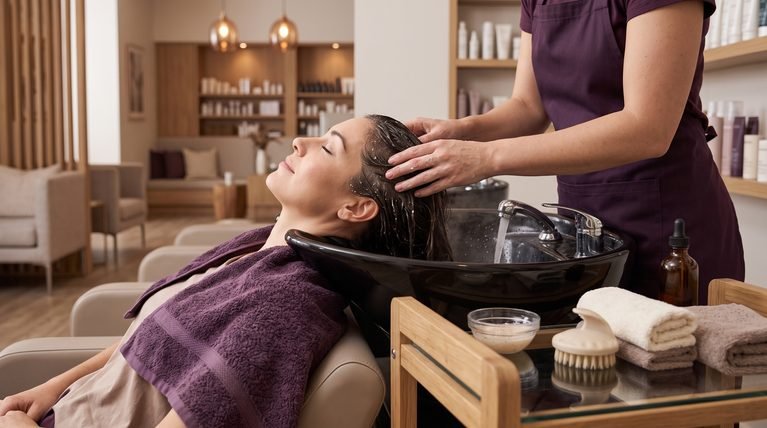
The way you wash your hair can affect the amount of damage caused to the hair shaft. One important recommendation from dermatologists is to focus shampoo primarily on the scalp rather than vigorously rubbing the entire length of the hair. During rinsing, the shampoo lather naturally passes over the hair shaft and is generally sufficient for routine cleansing.
After washing, using conditioner can help detangle the hair and make it easier to manage. For dry or curly hair, applying conditioner to a larger portion of the hair length may be appropriate, while for fine and straight hair, focusing more on the lengths and ends may be more practical.
Rough towel-drying or brushing wet hair aggressively can also increase the risk of mechanical damage. It is better to gently remove excess moisture and use a method appropriate for your hair type when detangling.
Is Caring for the Hair Shaft Different from Maintaining Healthy Hair Follicles?
Yes, and this distinction is important for understanding what hair strengthening actually means. The hair shaft that has emerged from the scalp can become damaged or break due to heat, chemicals, friction, and pulling. Hair growth, on the other hand, takes place from follicles within the scalp.
Therefore, products that improve the appearance of the hair shaft do not necessarily treat the underlying cause of hair loss from the roots. For example, conditioner may make hair softer, smoother, and easier to detangle, which can reduce breakage, but it should not be expected to treat every type of hair loss.
This distinction helps prevent unrealistic claims about hair products. Even regarding shampoos marketed for hair loss, the AAD explains that such products may improve the appearance of hair by maintaining moisture or reducing breakage, but they cannot, on their own, regrow hair or prevent the progression of every type of hair loss.
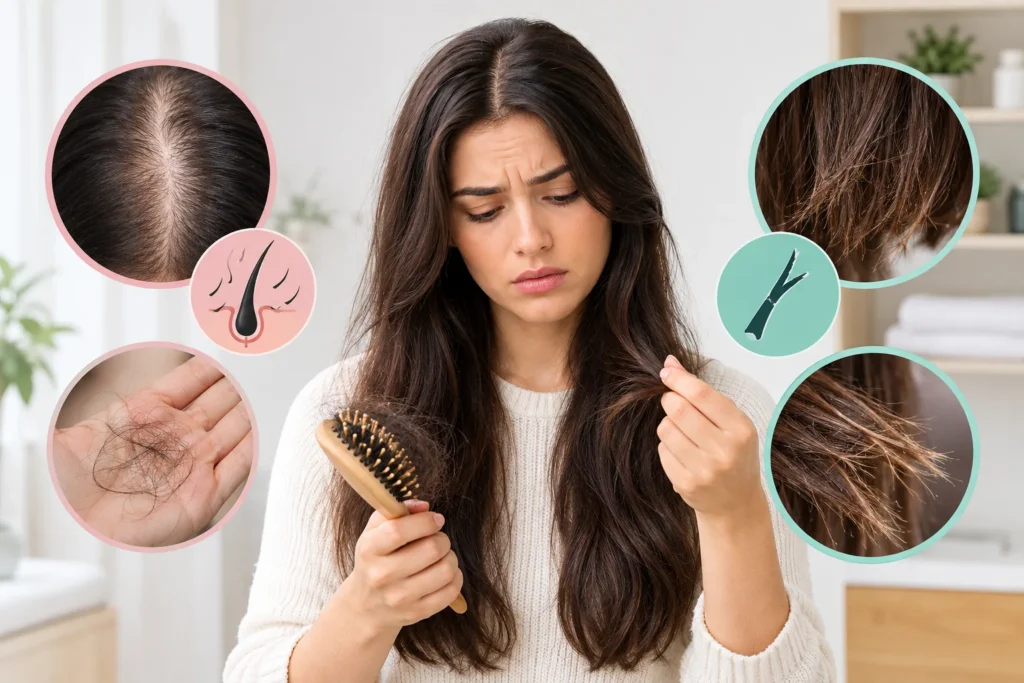
What Are the Common Causes of Hair Loss and How Can They Be Distinguished from Breakage?
Hair loss does not have a single cause. Various factors, ranging from genetics and aging to certain illnesses, hormonal changes, physical stress, poor nutrition, and damage caused by hair care practices, can contribute to reduced hair density. Therefore, seeing a few hairs while brushing does not necessarily mean that you have a medical condition or abnormal hair loss. The AAD notes that losing around 50 to 100 hairs per day can be part of the normal hair cycle.
In contrast, a receding hairline, bald patches, noticeable thinning, or a persistent increase in shedding may require further evaluation. The important point is that effective treatment of hair loss depends on identifying its cause.
Can Stress, Illness, or Major Changes in the Body Cause Hair Loss?
Yes. Significant physical or psychological stress can be associated with increased hair shedding. The AAD points to situations such as illness, surgery, childbirth, and periods of severe stress that may be followed by increased hair shedding several months later. In some cases, once the triggering factor is resolved, the hair-growth cycle can gradually return toward its usual state.
This highlights the importance of timing. If someone experienced an illness, surgery, childbirth, significant weight loss, or a period of intense stress several months earlier, the timing between that event and increased shedding can provide useful information for a specialist.
However, not every type of hair loss should be attributed to stress. Genetic factors, thyroid problems, certain skin and hair conditions, and nutritional deficiencies may also be involved. Therefore, if hair loss is severe, persistent, or accompanied by bald patches, identifying the cause is more important than buying multiple products.
Can Hairstyles and the Way You Tie Your Hair Cause Damage or Hair Loss?
Yes. Constant pulling on the hair and scalp can cause damage and, in some cases, lead to hair loss. Hairstyles that pull the hair tightly for long periods, such as certain braids, very tight ponytails, or extensions that create significant tension, should be used with caution.
The AAD warns about “traction alopecia,” or hair loss caused by pulling, and recommends reducing hairstyles that place pressure on the scalp. If a hairstyle causes pain, that may be a sign that the tension is too strong.
In practical terms, changing hairstyles regularly, reducing tension, avoiding pulling while brushing, and paying attention to scalp pain or sensitivity can all be part of a protective hair-care routine. Traction-related damage should not be considered merely a cosmetic issue; if it continues, some types of follicular damage may become permanent.
When Is Hair Loss More Than a Simple Hair-Care Problem?
If hair shedding has noticeably increased, appears as bald patches, is accompanied by progressive thinning, or occurs alongside unusual changes in the scalp, the cause should be evaluated by a doctor. Hair loss can have many different causes, and the appropriate approach depends on the underlying cause.
For example, hereditary hair loss, autoimmune conditions, thyroid problems, certain nutritional deficiencies, and traction-related damage can present in different ways. A dermatologist may use your medical history and scalp examination and, if necessary, recommend blood tests or other evaluations.
In these situations, relying on shampoo, supplements, or oils without identifying the cause may delay recognition of the underlying problem. Seeing a specialist does not necessarily mean starting medication; the first goal is to identify the cause and choose an appropriate approach.

How Does Nutrition Affect Hair Health and Strength?
Hair needs sufficient nutrients and energy for normal growth, which is why the quality of your diet can be an important part of hair health. However, this does not mean that taking a particular vitamin or supplement will make everyone’s hair grow more. The relationship between nutrition and hair becomes especially important when someone does not consume enough energy or certain nutrients. The AAD notes that insufficient intake of nutrients such as iron or protein can be associated with hair loss, while severe calorie restriction can also lead to noticeable shedding.
A sensible approach is therefore to first focus on the overall quality of the diet and then evaluate the possibility of a deficiency when appropriate, rather than taking numerous supplements without a specific reason. Excessive intake of some nutrients can also have the opposite effect.
Is Protein Important for Hair Health?
Protein is an important nutrient in the diet, and insufficient protein intake may be associated with hair loss in some people. This is particularly relevant with highly restrictive diets, rapid weight loss, or unbalanced eating patterns. The AAD also includes inadequate protein intake among nutritional factors associated with hair loss.
However, this does not mean that consuming extremely large amounts of protein will make hair “exceptionally strong.” The goal is to meet the body’s needs through a balanced diet. Different protein sources can be chosen according to an individual’s dietary pattern, including eggs, fish, meat, dairy products, legumes, and some plant-based sources.
If someone experiences hair loss alongside significant weight loss, a restrictive diet, or reduced appetite, evaluating the quality and adequacy of their diet becomes more important. In such situations, it is better to assess possible deficiencies rather than self-treating with supplements.
Are Iron, Zinc, and Other Vitamins Always Necessary for Hair Strength?
Various nutrients play a role in overall health, and deficiencies in some of them may be associated with hair loss. However, the body’s need for a nutrient does not mean that everyone needs a supplement containing that nutrient. The AAD recommends determining whether a true deficiency exists before taking supplements intended for hair growth.
Taking supplements without a clear reason is not necessarily harmless. According to the AAD, excessive intake of certain nutrients, including selenium, vitamin A, and vitamin E, has been associated with hair loss.
Therefore, the better approach is to first review your diet and, if symptoms, medical history, or other circumstances suggest a possible deficiency, consider appropriate medical evaluation. If a deficiency is confirmed, dietary changes or targeted supplementation may be more useful.
Are Hair-Growth Supplements Really Necessary?
No. Hair supplements should not be considered necessary for everyone. Evidence regarding supplements promoted for thicker hair or increased hair growth varies, and in some cases their effects may be limited or unclear. The American Academy of Dermatology also warns against using beauty supplements indiscriminately and emphasizes evaluating their potential benefits against their risks.
Another problem is the assumption that “more is better.” Some nutrients can cause problems when taken in excessive amounts. Supplements should therefore not be considered a substitute for a balanced diet.
For someone with a confirmed nutritional deficiency, correcting that deficiency may be important. For someone without a deficiency, taking supplements randomly does not necessarily increase hair growth. This distinction is important when evaluating claims about hair-strengthening products.

What Is the Difference Between Shampoo Types and How Should You Choose the Right Shampoo?
Shampoo is primarily designed to cleanse the scalp and hair, so it should be selected according to the person’s actual needs. Shampoo types should not be judged only by labels such as “strengthening,” “anti-hair-loss,” or “repairing.” Instead, consider the hair type, scalp condition, and the purpose of the product. The American Academy of Dermatology recommends considering hair type and scalp condition when choosing hair-care products and using shampoo primarily on the scalp.
You should also not expect shampoo to treat every type of hair loss. If hair loss is caused by a medical condition, genetic factors, or another underlying issue, identifying the cause is more important than repeatedly changing shampoos.
Is Shampoo for Oily Hair Different from Shampoo for Dry Hair?
In many cases, yes, because the basic needs are different. An oily scalp generally requires appropriate cleansing, while dry or curly hair may be more prone to dryness and breakage because of unsuitable washing or harsh care practices.
The American Academy of Dermatology recommends determining how often to wash your hair based on the amount of oil and buildup on the scalp. People with oily scalps may need to wash their hair more frequently, while dry, thick, or curly hair may be better suited to less frequent washing.
Therefore, there is no universal rule such as “everyone should wash their hair every day” or “frequent washing always causes hair loss.” Shampoo choice and washing frequency should reflect the condition of the scalp and hair.
Do Anti-Hair-Loss Shampoos Really Stop Hair Loss?
Shampoos marketed as anti-hair-loss products should be evaluated carefully. Some may help improve the appearance of hair, maintain moisture, or reduce breakage, which can make hair appear fuller. This is different from treating the underlying cause of hair loss at the follicle.
The American Academy of Dermatology explains that hair-loss shampoos may help maintain moisture or reduce breakage, but they cannot, on their own, regrow hair or prevent the progression of all types of hair loss.
When evaluating an anti-hair-loss shampoo, it is therefore important to distinguish between claims such as “reduces breakage,” “improves hair appearance,” and “treats hair loss.” These are different claims. If someone is experiencing persistent thinning or shedding, identifying the underlying cause is more important than relying on shampoo alone.
Should Shampoo Be Chosen According to Scalp Type?
The scalp is one of the most important factors when choosing shampoo. A product designed for an oily scalp may not be appropriate for someone with significant dryness, and vice versa. A heavily moisturizing product may also not be ideal for some people with an oily scalp.
It is also important to remember that the scalp and hair shaft may have different needs. Someone may have an oily scalp while their hair ends are dry. In that case, it can make sense to focus shampoo on the scalp and use conditioner appropriately on the hair shaft instead of applying a heavy product to the entire hair. The American Academy of Dermatology also recommends using shampoo primarily on the scalp and conditioner according to hair type.
Therefore, choosing shampoo is best done by considering scalp condition, hair type, oiliness, dryness, whether the hair is curly or straight, and whether problems such as dandruff or scalp flaking are present.
How Can You Build a Practical Routine for Stronger, Healthier Hair?
An effective hair routine does not have to be complicated. Its main goals should be reducing damage, maintaining a healthy scalp environment, meeting the body’s nutritional needs, and identifying unusual problems early. Dermatologists emphasize gentle care, choosing products suited to your hair type, reducing heat and chemical damage, and maintaining a balanced diet.
At the same time, hair strengthening should not be confused with promises of rapid growth or treatment of every type of hair loss. If the underlying problem is a medical condition or hereditary hair loss, a daily care routine alone may not be enough. In such situations, identifying the exact cause is important.
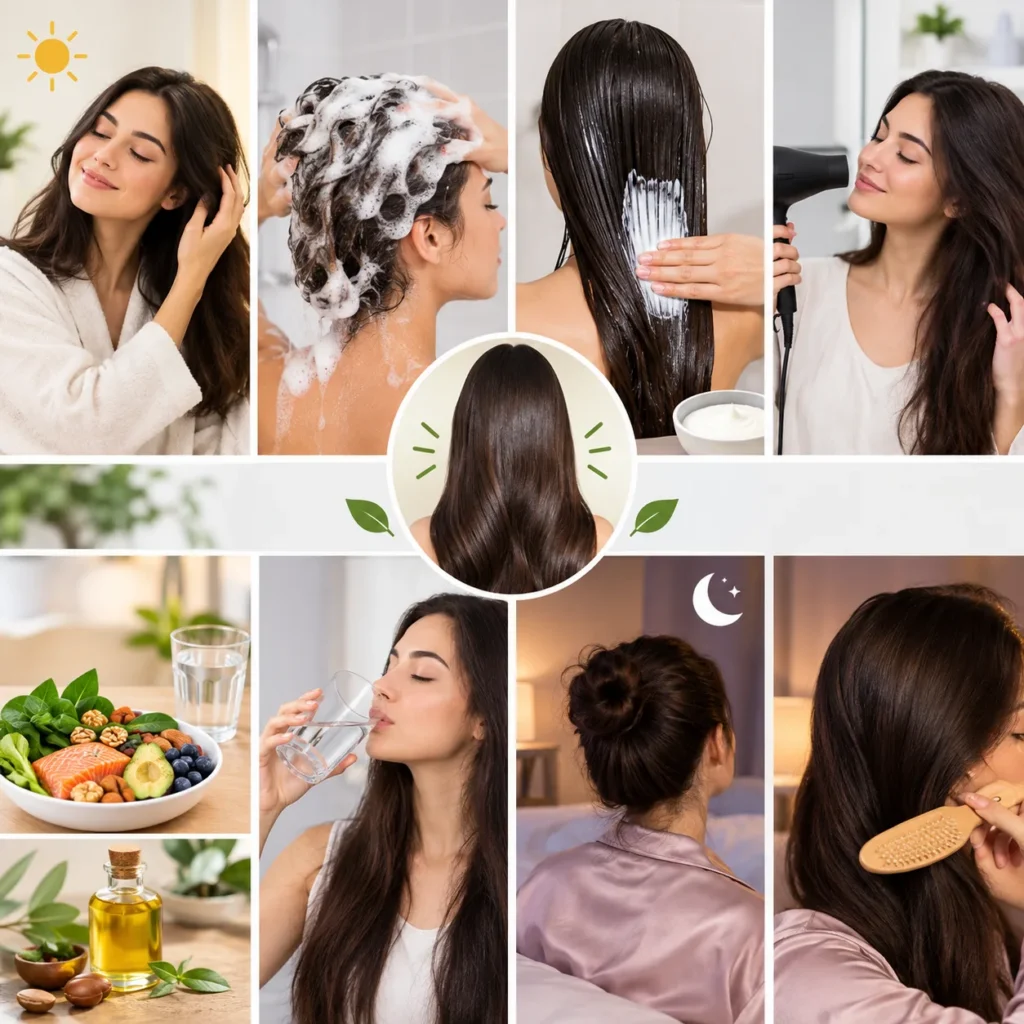
How Can You Create a Simple Daily Hair-Care Routine?
In the morning or before starting the day:
Avoid tying your hair too tightly and avoid hairstyles that put pressure on the scalp, especially for long periods.
When washing:
Focus shampoo on the scalp and avoid aggressively rubbing the hair length. Adjust your washing frequency according to the amount of oil and buildup on your scalp.
After shampooing:
Use a conditioner suitable for your hair type. If your hair is prone to tangling or breakage, detangle it gently.
When drying:
Do not rub your hair aggressively with a towel. The AAD recommends gently removing excess moisture to reduce damage.
When using heat:
Reduce the use of blow dryers, flat irons, and other heated styling tools as much as possible, and use lower or medium temperatures.
During the week:
Pay attention to your diet, hair shedding, and scalp condition. Do not ignore persistent or unusual changes simply by changing shampoo or buying a new supplement.
How Can You Protect Hair from Heat, Hair Dye, and Chemicals?
High heat and certain chemical processes can make the hair structure more vulnerable to damage. Frequent coloring, bleaching, chemical curling or straightening, and extensive use of heated styling tools may contribute to hair breakage and damage. The AAD also recommends reducing heat exposure and using gentler hair-care practices to minimize damage.
If your hair is regularly colored or bleached, allowing appropriate time between chemical treatments and using suitable hair-care products may help reduce stress on the hair shaft. It is also better to avoid combining several damaging processes within a short period.
Hair care does not necessarily mean completely avoiding beauty treatments. The goal is to manage the amount of damage. If your hair becomes noticeably brittle, rough, or prone to tangling after repeated coloring or heat exposure, reducing damaging processes and focusing on gentle care may be more sensible than adding multiple products.
How Can You Tell That Your Hair-Care Routine Is Not Suitable for You?
If your hair becomes consistently drier, more brittle, or more prone to tangling after changing your routine, the product or method of use may not suit your hair’s needs. Similarly, if your scalp develops persistent irritation, itching, or flaking, the underlying cause should be evaluated.
A suitable routine should be practical, appropriate for your hair and scalp type, and reasonable in terms of mechanical and heat-related damage. The goal is not to use the largest possible number of products, but to create conditions that minimize preventable damage.
According to Dr. Deeptej Singh, a dermatologist and member of the AAD, “an optimal hair-care routine is not just about making the hair look better”; it should also help prevent damage and maintain hair strength.
Do You Need to Try a New Product Every Day to Strengthen Your Hair?
No. Constantly changing products can make it difficult to determine what actually works for your hair. It is better to first identify the main problem: Is it dryness and breakage? Is the scalp excessively oily? Has the hair been damaged by heat? Or is there actual progressive thinning and hair loss?
With hair loss, this question becomes even more important. The AAD emphasizes that because hair loss can have many different causes, identifying the underlying cause can help determine the appropriate treatment approach.
Therefore, a good routine does not necessarily need to contain many products. Choosing a few consistent basics—appropriate washing, conditioner, reducing damage, maintaining a balanced diet, and paying attention to unusual symptoms—is often more reasonable than purchasing numerous products with similar claims.
Conclusion:
To have healthier and stronger hair, it is helpful to think of hair as part of a larger system rather than simply a surface on which beauty products are applied. Hair strength and health depend on proper care of the scalp and hair shaft, choosing shampoo appropriate for your hair type, reducing heat and chemical damage, maintaining a balanced diet, and paying attention to unusual signs of hair loss.
It is also important to distinguish hair-shaft breakage from true hair loss. If thinning or shedding continues, identifying the cause is more important than repeatedly changing shampoos or taking supplements without professional guidance. A dermatologist can evaluate the pattern of hair loss and the individual’s circumstances to help identify the possible cause.
Dr. Lauren N. Taglia, a dermatologist and member of the AAD, has emphasized that beauty supplements should be evaluated based on their benefits and risks, because some supplements can cause side effects or may even be associated with hair loss.
Comments