
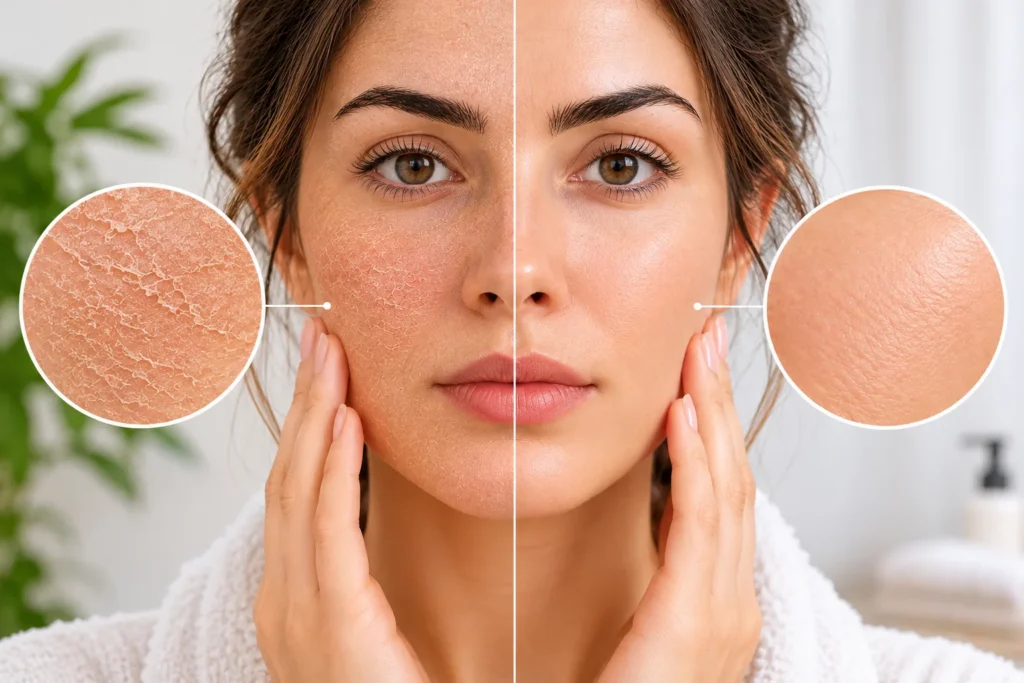
Dehydrated skin can affect different skin types, including oily, combination, and normal skin. It often appears dull, feels tight, and may show more noticeable fine lines, even when the skin produces excess oil. Recognizing dehydrated skin symptoms is important because the right skincare approach can help improve comfort, support the skin barrier, and reduce moisture loss.
However, dehydration is not the same as having a naturally dry skin type. In this guide, Salomio explores the common signs, possible causes, differences between dry and dehydrated skin, and practical ways to manage the condition.
What Are the Most Common Dehydrated Skin Symptoms?
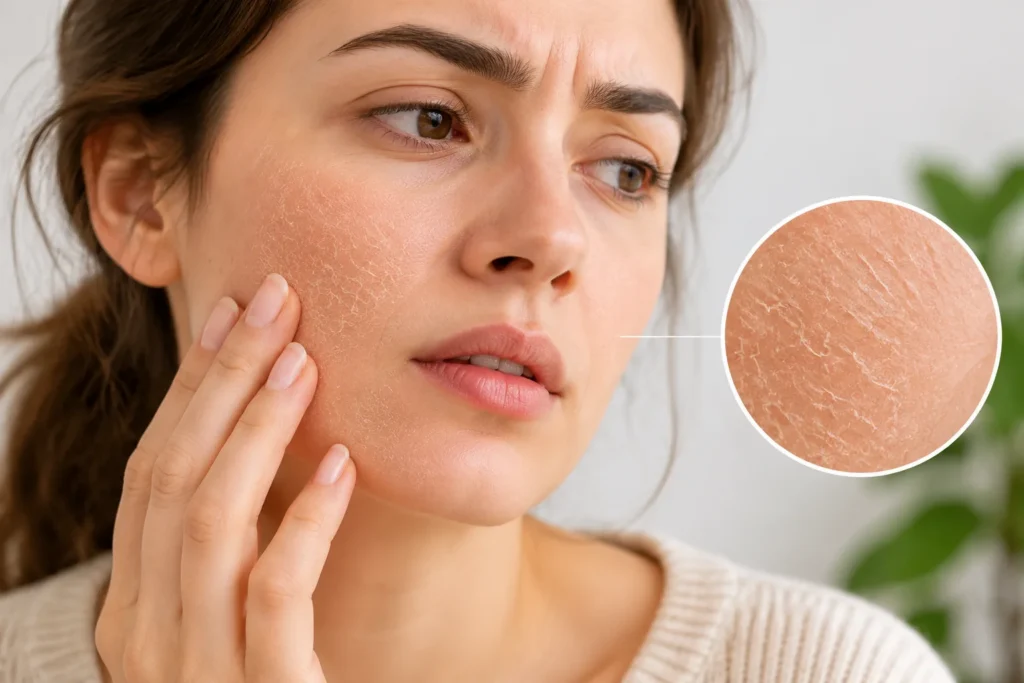
Dehydrated skin generally refers to skin with insufficient water in its outer layer. It may look less radiant, feel uncomfortable, or become more sensitive to skincare products. These changes can occur temporarily because of environmental conditions, cleansing habits, or an impaired skin barrier. Although symptoms vary, recognizing several signs together can help you decide whether your routine needs adjustment.
Keep in mind that these signs are not exclusive to dehydration; persistent dryness, irritation, and scaling can also be associated with dermatological conditions that require professional assessment.
What Does Dehydrated Skin Look and Feel Like?
Common dehydrated skin symptoms include tightness, dullness, rough texture, and fine lines that appear more noticeable than usual. Some people experience mild flaking or increased sensitivity, particularly after washing their face. Makeup may also settle into fine lines or look uneven because the skin surface is not adequately hydrated.
Another possible sign is discomfort after using products that were previously well tolerated. However, stinging and redness may indicate irritation or a damaged skin barrier rather than dehydration alone. The American Academy of Dermatology (AAD) identifies dryness, more noticeable fine lines, and itching among the signs of dehydrated, excessively dry skin. These symptoms should be considered together with skin history and environmental factors rather than used as a definitive self-diagnosis.
What Causes Skin Dehydration?
Skin hydration is influenced by environmental conditions, skincare habits, and the condition of the skin barrier. The outermost skin layer helps retain water and protect against external irritants. When this barrier is disrupted or exposed to conditions that increase moisture loss, skin may become uncomfortable and appear less hydrated.
Some causes are temporary and can be managed through routine changes, while others may be related to underlying skin conditions or medication. Understanding these factors helps identify habits that may be contributing to the problem and guides a more appropriate skincare approach.
How Do Environmental Conditions and Skincare Products Affect Hydration?
Cold weather, low humidity, indoor heating, air conditioning, and prolonged sun exposure can contribute to skin dryness and moisture loss. Frequent washing with harsh cleansers, long hot showers, and excessive exfoliation may also remove protective skin lipids. Certain active skincare ingredients, including retinoids and exfoliating acids, can cause dryness or irritation when introduced too quickly or used too frequently.
The AAD explains that everyday factors such as harsh cleaning products and long, hot showers can strip the skin of protective oils. Hairdressers and other professionals who frequently wash their hands or work with chemicals may also experience excessive dryness. For beauty professionals, this is a useful reminder that repeated exposure to water and salon products can affect the skin barrier, making appropriate hand protection and moisturizing particularly important.
What Is the Difference Between Dry Skin and Dehydrated Skin?
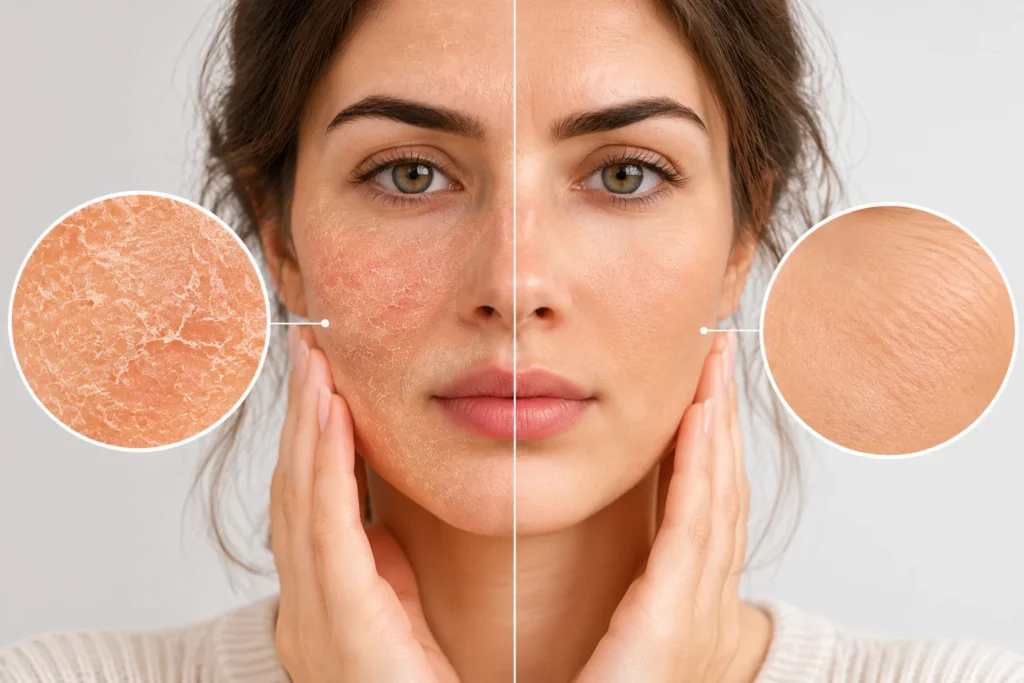
Dry skin and dehydrated skin are often discussed together, but they describe different concerns. Dry skin is generally associated with insufficient natural oils, while dehydration refers to a lack of water in the skin’s outer layer. One describes a skin type or persistent tendency; the other describes a hydration condition that can affect different skin types. This distinction matters because a product designed only to add oil may not address every hydration concern. Understanding the difference can help people select suitable ingredients and avoid unnecessarily complicated skincare routines.
Can Oily Skin Be Dehydrated, and How Is It Different from Dry Skin?
Yes. Oily skin can still be dehydrated because oil production and water content are not the same thing. A person may notice excess shine around the forehead and nose while experiencing tightness, dullness, or discomfort elsewhere on the face. This combination can be confusing, especially when someone assumes that oily skin does not need moisturizer.
The following table highlights the main differences:
| Feature | Dry Skin | Dehydrated Skin |
|---|---|---|
| Main concern | Insufficient natural oils | Insufficient water in the outer skin layer |
| Classification | Skin type or persistent tendency | Hydration condition |
| Common signs | Roughness, flaking, tightness | Tightness, dullness, more visible fine lines |
| Oil production | Often lower | Can be low, normal, or high |
| Suitable care | Moisturizers with emollients and barrier-supporting ingredients | Hydrating ingredients combined with moisture-sealing products |
Both conditions can occur at the same time. For example, someone with naturally dry skin may also experience temporary dehydration during cold weather. If symptoms persist, a dermatologist can help determine whether another condition, such as eczema or contact dermatitis, is involved.
How Can You Manage and Hydrate Dehydrated Skin?
Managing dehydrated skin usually involves reducing unnecessary irritation, improving hydration, and supporting the skin barrier. A complicated routine is not necessarily more effective. In many cases, a gentle cleanser, a suitable moisturizer, and consistent sun protection provide a practical starting point. Product selection should depend on skin type, sensitivity, and existing concerns. Ingredients such as glycerin and hyaluronic acid attract water, while ceramides and occlusive ingredients help support the barrier and reduce moisture loss. Introduce new products gradually and observe how your skin responds.
Which Ingredients Help Improve Skin Hydration?
Several ingredient groups can support skin hydration in different ways:
- Hyaluronic acid: A humectant that attracts and binds water, helping improve the skin’s hydrated appearance.
- Glycerin: Helps attract moisture and is commonly included in moisturizers and hydrating serums.
- Ceramides: Lipids that support the skin barrier and help maintain moisture.
- Petrolatum: An occlusive ingredient that reduces water loss from the skin surface.
- Squalane: An emollient that helps soften skin and improve its feel.
Dermatologist Alejandra Estemalik, MD, explains the importance of choosing products by their formulation: “A good moisturizer will contain ingredients from all three of these classes to hydrate and protect dry skin.” The three classes she discusses are humectants, occlusives, and emollients. This approach is useful because hydration is not only about attracting water; maintaining the skin barrier and limiting moisture loss are also important.
How Can You Build a Simple Skincare Routine for Dehydrated Skin?
A consistent routine can help reduce dryness and improve skin comfort. Follow these practical steps:
- Cleanse gently: Use a mild, fragrance-free cleanser and avoid washing with very hot water.
- Apply a hydrating serum: Consider a product containing glycerin or hyaluronic acid if your skin tolerates it.
- Use a moisturizer: Choose a formula suited to your skin type. Ceramides and emollients can help support the skin barrier.
- Apply sunscreen in the morning: Use broad-spectrum SPF 30 or higher to protect exposed skin from UV damage.
- Keep the routine simple: Temporarily reduce strong exfoliants or other products that cause stinging, redness, or excessive dryness.
Cleveland Clinic dermatologist Jennifer Lucas, MD, recommends applying moisturizer while the skin is still damp after showering. She explains: “When your skin is damp after a shower, applying moisturizer helps seal it in.” This is a practical habit that can help reduce moisture loss after washing.
How Can You Prevent Skin Dehydration and When Should You See a Dermatologist?
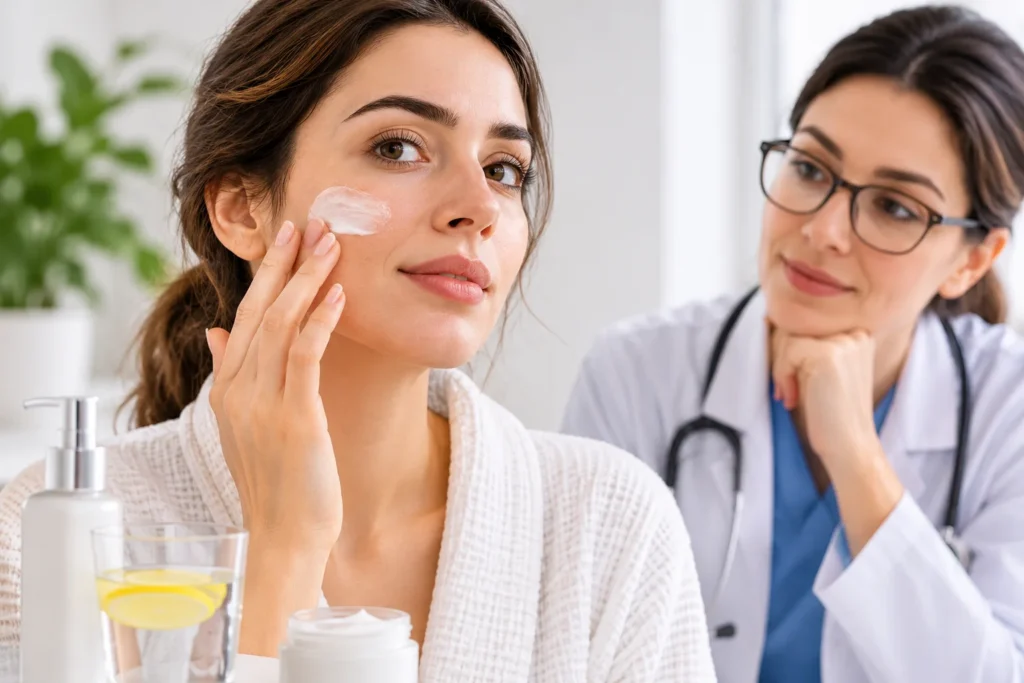
Preventing dehydration involves maintaining consistent skincare habits and limiting factors that disrupt the skin barrier. Daily moisturizing, gentle cleansing, sun protection, and avoiding excessive exfoliation can help maintain skin comfort. Environmental adjustments, such as using a humidifier when indoor air is very dry, may also be helpful. However, not every case of persistent dryness is caused by dehydration. Symptoms that continue despite appropriate care, become painful, or involve significant inflammation may indicate an underlying skin condition and should be assessed by a qualified professional.
What Daily Habits Help Maintain Skin Hydration?
Use lukewarm rather than hot water when washing, avoid harsh cleansers, and apply moisturizer after cleansing. Protect your skin from prolonged sun exposure and adjust your routine when weather conditions change. Drinking enough fluids supports overall health, but drinking additional water alone is not a guaranteed treatment for skin dehydration.
Avoid frequent exfoliation when your skin feels tight or irritated. If you use retinoids or exfoliating acids, review how often you apply them and consider professional advice if irritation develops. Seek medical guidance if you experience persistent itching, painful cracks, swelling, severe redness, or symptoms that do not improve with gentle skincare. A dermatologist can identify possible causes and recommend an appropriate treatment plan.
Conclusion
Recognizing dehydrated skin symptoms is the first step toward choosing a more effective skincare routine. Tightness, dullness, rough texture, and visible fine lines may indicate reduced skin hydration, but they can also overlap with other skin concerns. A gentle cleanser, appropriate moisturizer, hydrating ingredients, and daily sun protection can help support skin comfort and the protective barrier. Persistent or severe symptoms deserve professional assessment rather than repeated experimentation with skincare products.
For more practical skincare guidance and professional beauty insights, explore Salomio and make informed decisions about your skin-care routine.



Comments