
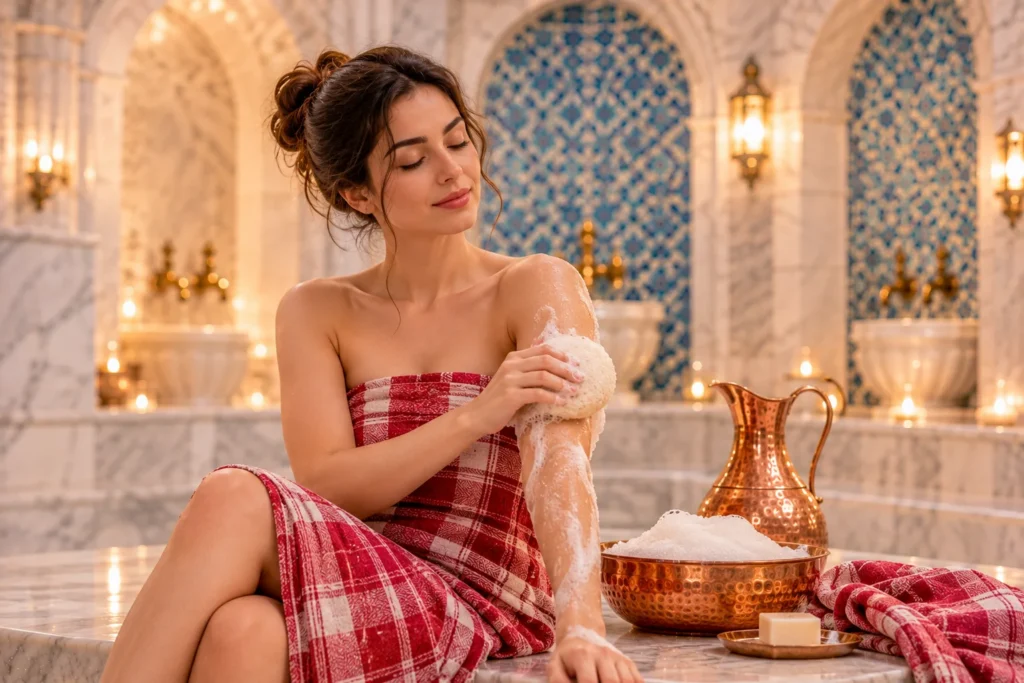
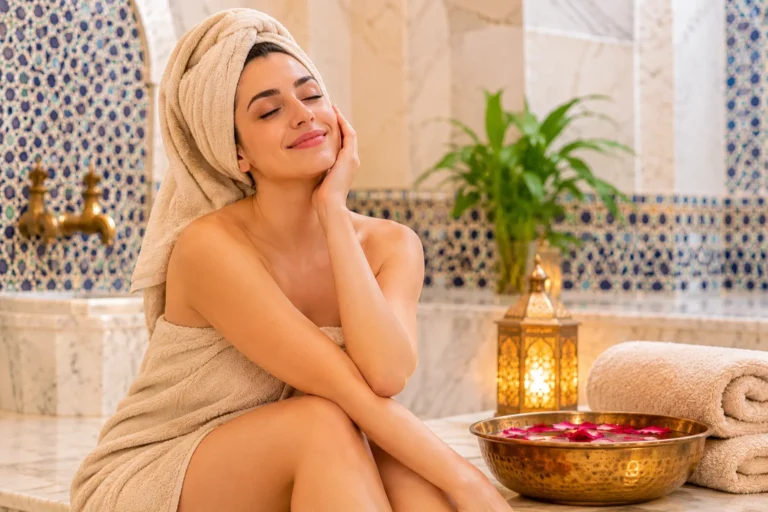
A Turkish bath, also known as a Turkish hammam, is a traditional bathing ritual that combines warmth, steam, body cleansing, exfoliation, and relaxation. Unlike an ordinary shower or sauna session, it often includes a sequence of treatments performed in a heated marble environment.
The experience may involve resting on a warm stone platform, receiving a traditional body scrub with a kese mitt, and enjoying a cleansing foam wash. Today, Turkish baths are available in historic bathhouses and modern spas, offering visitors a way to experience an important part of Turkish bathing culture while enjoying a structured body-care ritual.
What Is a Turkish Bath and Where Did It Originate?
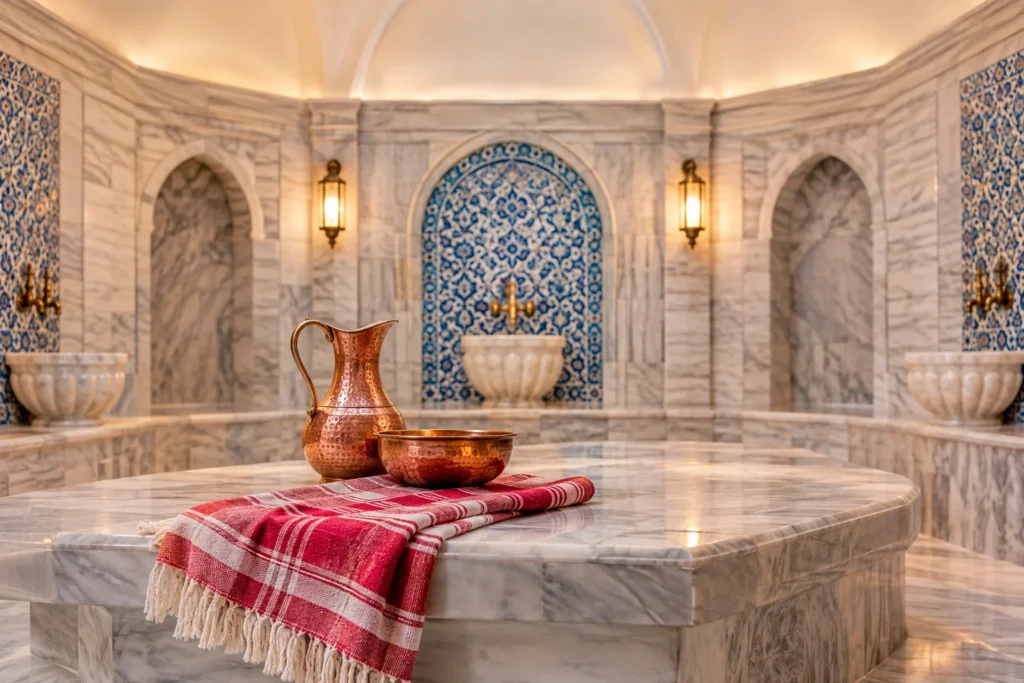
A Turkish bath, or hammam, is a traditional public bathing space designed around heat, water, cleansing, and social interaction. Its architectural and cultural development reflects influences from Roman and Byzantine bathing traditions, which were later adapted and expanded during the Ottoman period.
Traditional hammams were not simply places to wash; they also served as community spaces where people gathered, relaxed, and maintained social connections. Modern versions preserve many elements of the original ritual, although the facilities and services can vary between historic bathhouses and contemporary spa centers.
How Did the Traditional Turkish Hammam Become Popular?
The Turkish hammam developed from earlier public bathing traditions, particularly Roman and Byzantine bath culture. During the Ottoman period, hammams became important features of towns and cities, serving both hygiene-related and social purposes. Their architecture commonly included domed ceilings, marble surfaces, water basins, heated rooms, and spaces for changing and relaxation.
Architect and Turkish bath culture expert Ahmet İğdirligil describes this social role in a CNN interview:
“It is a social place and a unique place in history for women to be social outside of their houses without needing permission.”
This observation highlights why the hammam should be understood as more than a beauty or wellness treatment. Historically, it provided a shared environment for social gatherings, conversations, and cultural traditions, including pre-wedding bathing ceremonies. Today, historic hammams and modern spas continue to offer variations of this experience.
How Does a Traditional Turkish Bath Work?
A traditional Turkish bath follows a sequence that gradually introduces the visitor to warmth, cleansing, and relaxation. Although the exact order and available services depend on the bathhouse, the central experience usually includes time in a warm environment, body exfoliation with a kese mitt, and a soap-based foam wash.
Heated marble surfaces and water basins are important features of the traditional setting. Understanding these stages helps first-time visitors know what to expect and allows spa professionals to explain the service more clearly.
What Happens During a Turkish Bath Session?
A typical Turkish bath begins in a changing area, where visitors prepare for the experience and usually wrap themselves in a traditional cotton cloth called a peştemal. They then enter the warm bathing area, where the body gradually adjusts to the heat and humidity.
In many traditional hammams, the central feature is the göbek taşı, a large heated marble platform. Visitors rest on this surface, allowing the warmth and humid atmosphere to create a comfortable environment before the cleansing ritual begins.
The main stages generally include:
- Warming up: Visitors spend time in the warm room and relax on the heated marble surface.
- Rinsing: Warm water is poured over the body using a traditional bowl called a tas.
- Kese exfoliation: An attendant uses a textured mitt to remove accumulated dead skin cells from the skin’s surface.
- Foam washing: The body is covered with soft soap foam and gently washed, sometimes with a massage.
- Final rinsing and rest: The soap is rinsed away, and visitors move to a cooler area to relax.
The Global Wellness Institute identifies kese exfoliation, soap massage, and hair washing among the typical treatments associated with a hammam. However, not every facility offers every stage, so visitors should check the service package before booking.
What Are the Main Benefits of a Turkish Bath?
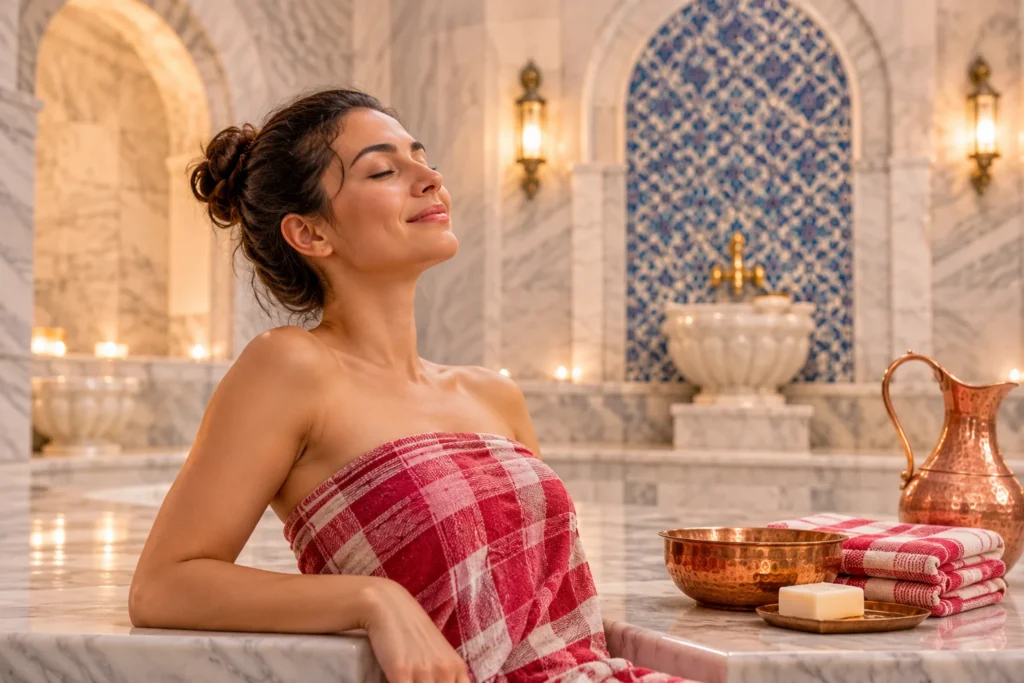
The appeal of a Turkish bath comes from its combination of traditional cleansing techniques and a relaxing environment. Its main body-care feature is mechanical exfoliation, which helps remove dead cells from the outer surface of the skin. The warm, humid atmosphere and structured bathing process can also make the experience feel relaxing. However, it is important to distinguish these practical benefits from unsupported medical claims. A Turkish bath should be viewed as a personal-care and wellness experience, not as a treatment for medical conditions or a method of removing toxins from the body.
How Can a Turkish Bath Support Skin Cleansing and Relaxation?
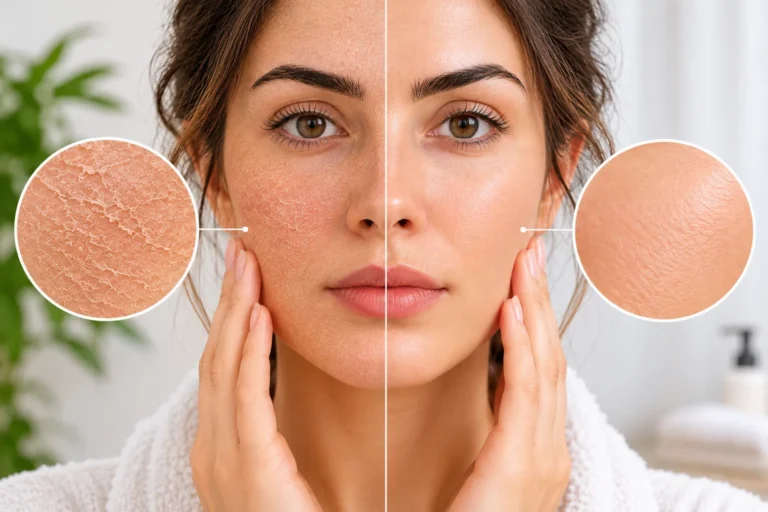
The kese scrub is one of the defining elements of a traditional Turkish bath. It uses friction from a textured glove to loosen and remove dead skin cells from the skin’s outer layer. This can leave the surface feeling smoother, although excessive pressure or frequent scrubbing may cause irritation, particularly in people with sensitive skin.
The foam wash that follows helps cleanse the body and completes the traditional bathing ritual. Warmth, water, and a slower treatment pace may also contribute to a sense of relaxation. As Elif Kartal, guest relations and operations manager at Zeyrek Çinili Hamam, explains in a CNN interview, hammams offering similar services can still differ in how they operate:
“There are differences in the functioning of these baths between each other, sometimes according to preference and sometimes according to their structural condition.”
This is important because treatment intensity, duration, and available services are not identical everywhere. Visitors should communicate their preferences and ask the attendant to adjust the pressure if the scrub feels uncomfortable.
How Is a Turkish Bath Different from a Sauna or Steam Room?
Turkish baths, saunas, and steam rooms all use heat, but they offer different environments and experiences. A sauna generally relies on dry heat, while a steam room uses high humidity without the traditional sequence of body scrubbing and foam washing. A Turkish hammam combines a warm and humid setting with specific cleansing practices, heated surfaces, and often hands-on treatments. Understanding these differences can help visitors choose a bathing experience that matches their preferences and expectations.
What Are the Main Differences Between These Bathing Experiences?
The most important difference is the combination of bathing rituals rather than heat alone. A Turkish bath usually involves warm marble surfaces, water rinsing, a kese scrub, and a soap foam wash. By comparison, sauna sessions focus mainly on spending time in a heated room, while steam rooms provide exposure to warm, humid air.
| Feature | Turkish Bath | Sauna | Steam Room |
|---|---|---|---|
| Heat environment | Warm and humid | Mainly dry heat | High humidity |
| Main setting | Heated marble room | Heated cabin | Enclosed steam room |
| Body exfoliation | Often includes a kese scrub | Not a standard feature | Not a standard feature |
| Foam washing | Common in traditional rituals | Not usually included | Not usually included |
| Main experience | Cleansing and relaxation | Heat exposure and relaxation | Humid heat and relaxation |
A hammam may include a steam-like atmosphere, but it should not be treated as simply another name for a steam room. The cleansing ritual and cultural setting are central to its identity. Modern spa facilities may combine these experiences, so it is useful to check which elements are included before choosing a service.
How Should You Prepare for and Enjoy a Turkish Bath?
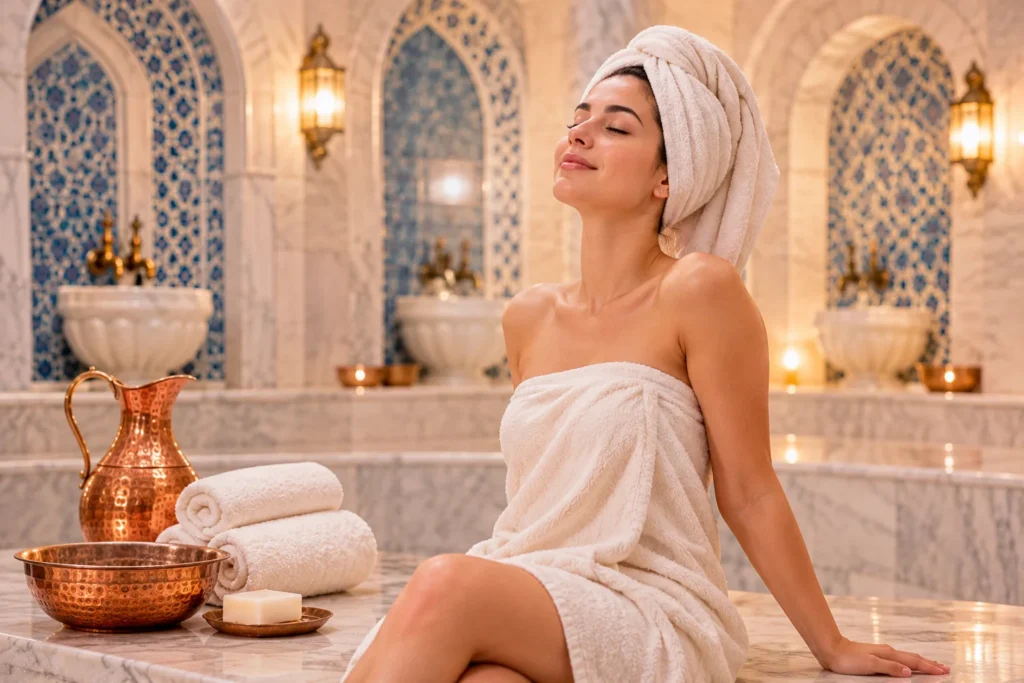
Preparing for a Turkish bath is relatively simple, but a few practical steps can make the experience more comfortable. Visitors should understand the service package, follow the facility’s clothing and hygiene rules, and communicate any skin sensitivities or health concerns to the staff. Because the treatment involves warmth and physical exfoliation, individual comfort should take priority over completing every stage. First-time visitors should also remember that traditional practices can differ between bathhouses, so the attendant’s instructions are an important part of the experience.
How to Prepare for Your First Turkish Bath?
If you are planning your first hammam visit, follow these steps to make the experience more comfortable:
- Choose a reputable facility:
Look for a clean, well-maintained hammam with trained attendants and clear hygiene practices.
- Check the treatment package:
Confirm whether the service includes a kese scrub, foam wash, hair washing, or an additional massage.
- Follow clothing instructions:
Many facilities provide a peştemal, towels, and slippers. Ask whether disposable underwear or swimwear is permitted.
- Shower before entering:
A pre-treatment shower is a common part of traditional hammam etiquette.
- Avoid irritating the skin beforehand:
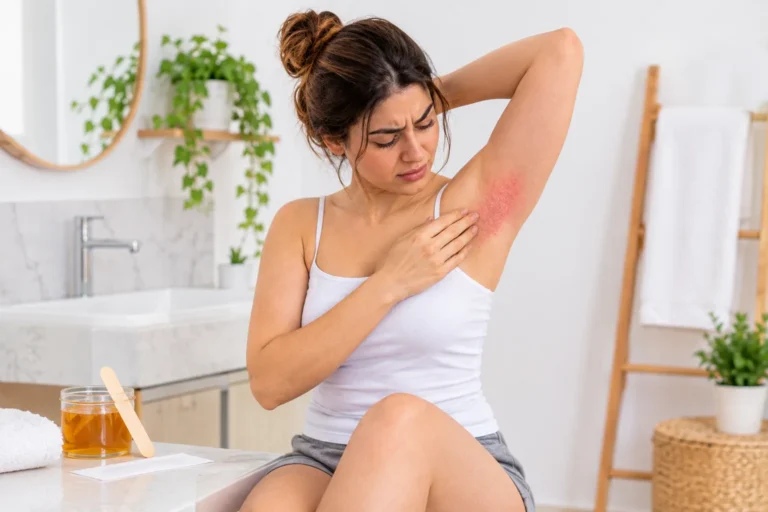
Do not schedule aggressive exfoliation or waxing immediately before a kese treatment. Inform the attendant about sensitive areas or recent shaving.
- Drink water and take breaks:
Arrive hydrated, avoid alcohol beforehand, and leave the heated area if you feel dizzy or uncomfortable.
- Allow time to rest:
After the treatment, cool down gradually and take time to relax before leaving.
Who Should Take Precautions Before Using a Turkish Bath?
Although many people can enjoy a Turkish bath, heat exposure and vigorous exfoliation are not suitable for every situation. People with cardiovascular conditions, blood pressure concerns, pregnancy-related restrictions, heat intolerance, or certain skin conditions should ask a healthcare professional whether this type of experience is appropriate for them.
People with sunburn, open wounds, active skin irritation, or recently treated skin should avoid vigorous scrubbing until the skin has recovered. Anyone who experiences dizziness, nausea, unusual weakness, or discomfort should stop the session and move to a cooler area. A responsible hammam or spa should respect these concerns and adapt or postpone treatments when necessary.
Conclusion
A Turkish bath is more than a heated room. It is a traditional bathing experience that brings together warmth, water cleansing, kese exfoliation, foam washing, and relaxation. While the exact process varies between facilities, these elements form the foundation of the classic hammam ritual. Understanding the stages, benefits, and precautions can help visitors make informed choices and enjoy the experience comfortably.
For those exploring professional spa and body-care services, Salomio offers a starting point for discovering beauty and wellness options. Choose a reputable facility, ask about the treatments included, and make your first Turkish bath an informed and comfortable experience.
Comments