
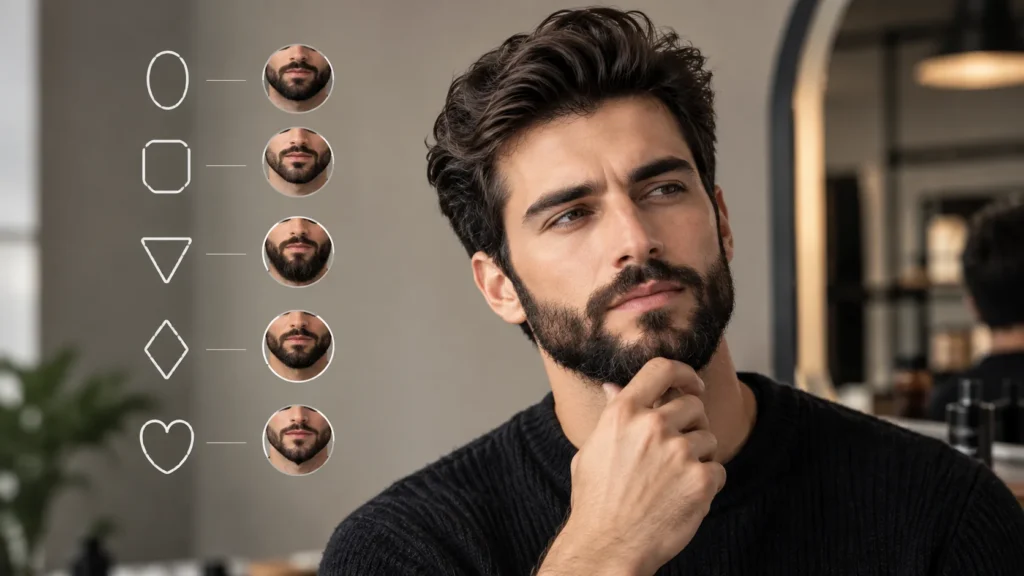
Choosing the right beard style for face shape is less about following trends and more about creating balanced facial proportions. A beard can visually add length to the chin, width to the jaw, or softness to strong angles. For clients and grooming professionals, understanding this relationship makes beard selection more systematic.
Salomio helps connect beauty and grooming professionals with practical information, but the most important starting point is always the individual’s natural face shape, beard density, lifestyle, and maintenance preferences.
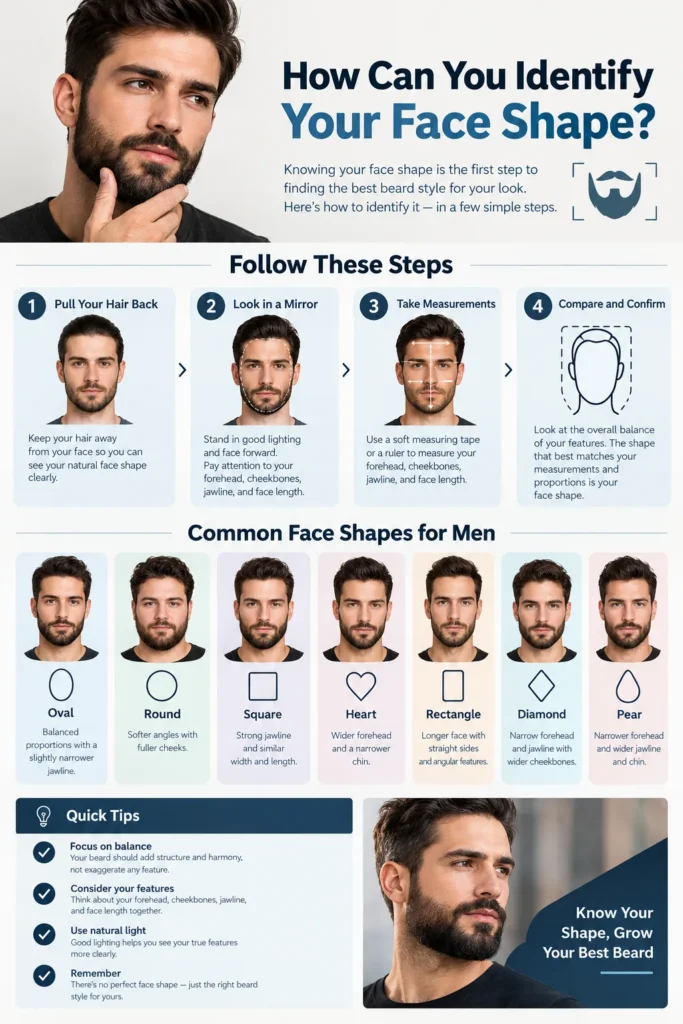
How Can You Identify Your Face Shape?
Before choosing a beard, you need to understand the basic proportions of your face. Most beard-style guides work with six common categories: oval, round, square, oblong or long, heart, and diamond. To identify yours, look at your face from the front and compare its overall length with the width of the forehead, cheekbones, and jaw.
A mirror and good lighting are usually enough for an initial assessment. Face shape should be treated as a styling guide rather than a rigid rule because facial hair growth, jaw definition, and individual proportions can change the final result.
What Measurements Help You Determine Your Face Shape?
Focus on four areas: face length, forehead width, cheekbone width, and jaw width. If the face is longer than it is wide with relatively balanced proportions, it may appear oval. A round face generally has similar width and length with softer contours, while a square face tends to have a stronger, more angular jaw.
An oblong face is noticeably longer, whereas heart-shaped faces tend to be wider around the forehead and narrower toward the chin. Diamond faces are often widest around the cheekbones. These comparisons provide a practical framework for choosing beard shape and volume.
Which Beard Style Works Best for Each Face Shape?
The central principle is balance. Instead of asking which beard is universally attractive, ask what your beard should visually add or reduce. Round faces often benefit from more definition and length at the chin, while long faces generally benefit from controlled chin length and greater fullness through the sides. Square faces can either emphasize their strong jaw with clean structure or soften it with rounded edges. Oval faces are usually the most flexible because their proportions are already relatively balanced.
What Beard Style Suits a Round Face?
For a round face, the goal is usually to create more vertical definition without adding unnecessary width. Keeping the sides relatively controlled while allowing slightly more length around the chin can make the lower face appear longer.
Extended goatees, Van Dyke-inspired shapes, ducktail beards, and carefully shaped short full beards can work well. Very full, rounded cheek growth may emphasize width, so the beard should be shaped rather than simply allowed to grow outward. The objective is not to hide the natural shape but to create a more elongated visual outline.
What Beard Style Suits a Square Face?
A square face already has a prominent jawline, so beard styling can either reinforce that feature or soften it. Short stubble and short full beards can preserve the strong structure without overwhelming the face. A beard with slightly rounded corners can create a softer appearance, while extremely sharp, boxy edges may make the face look even more angular.
The ideal choice depends on whether the wearer wants to emphasize definition or introduce a softer silhouette. Beard length should also remain proportional rather than becoming excessively heavy around an already broad jaw.
Which Beard Styles Work Best for Oval, Long, Heart, and Diamond Faces?
Oval faces offer the most flexibility, with styles ranging from stubble to full beards generally working when kept proportional. For long or oblong faces, additional length under the chin can exaggerate vertical proportions, so fuller sides and a more controlled chin are often preferable.
Heart-shaped faces typically benefit from additional visual weight around the jaw and chin because the lower face is narrower. Diamond faces, which tend to be wider around the cheekbones, can also benefit from controlled fullness toward the jaw and chin.
How Should Beard Length and Volume Match Your Face Shape?
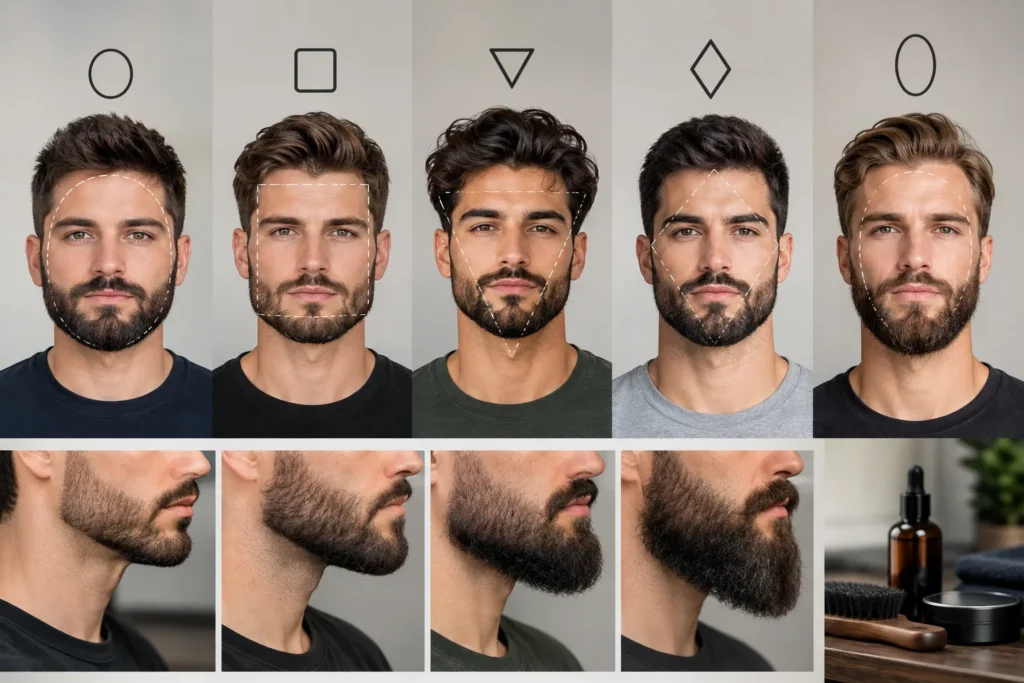
Beard style is not determined only by its name. Where the hair has volume can be more important than whether the beard is called a full beard, boxed beard, or goatee. Hair concentrated at the chin creates a different visual effect from hair concentrated on the cheeks.
Similarly, a clean cheek line can make the jaw appear more defined, while fuller cheeks can increase perceived facial width. This means the same basic beard style can be customized for different face shapes by adjusting length, density, cheek volume, and the transition between the beard and jawline.
Does Beard Length Change How Your Face Looks?
Yes. Beard length can influence the apparent proportions of the lower face. More length beneath the chin tends to create a stronger vertical effect, which can be useful when the face appears broad or round. Conversely, excessive chin length can make an already long face appear even longer.
For oblong faces, maintaining more presence through the sides and controlling the bottom can help create visual width. The key is proportional adjustment rather than choosing the longest possible beard. A barber can gradually modify the beard length until the shape complements the individual’s natural structure.
How Does Beard Density Affect the Best Style?
Density can change the practical result of any beard recommendation. Someone with dense growth may be able to create a full, structured beard, while someone with patchier growth may achieve a cleaner result with stubble, a short beard, or a strategically shaped style. Face shape should therefore never be considered independently from beard growth. A technically suitable style may not work well if it requires fullness in an area where growth is naturally limited. Good beard design uses the hair that is actually available and adjusts length and lines accordingly.
Which Beard Styles Should You Avoid for Your Face Shape?
Avoiding unsuitable styles can be just as useful as choosing the right one. The goal is to prevent a beard from exaggerating proportions that are already dominant. For example, excessive cheek volume can make a round face appear wider, while a very long pointed beard can increase the apparent length of an oblong face.
However, “avoid” should not mean “never wear.” Personal style, beard density, hairstyle, and grooming skill all influence the final appearance. A professional barber can often modify a traditionally unsuitable style so that its proportions work better for the individual.
Which Beard Mistakes Can Make Facial Proportions Look Unbalanced?
Common mistakes include adding too much length to an already long face, allowing excessive cheek bulk on a round face, or creating extremely square edges on a naturally angular face. Another mistake is choosing a style because it looks good on a model without considering differences in growth pattern and facial structure. Poorly positioned cheek or neckline boundaries can also reduce definition. The better approach is to treat the beard as a customizable shape: control the areas that add unwanted width or length and preserve volume where it improves balance.
How Can You Choose the Right Beard Style for Your Face Shape?
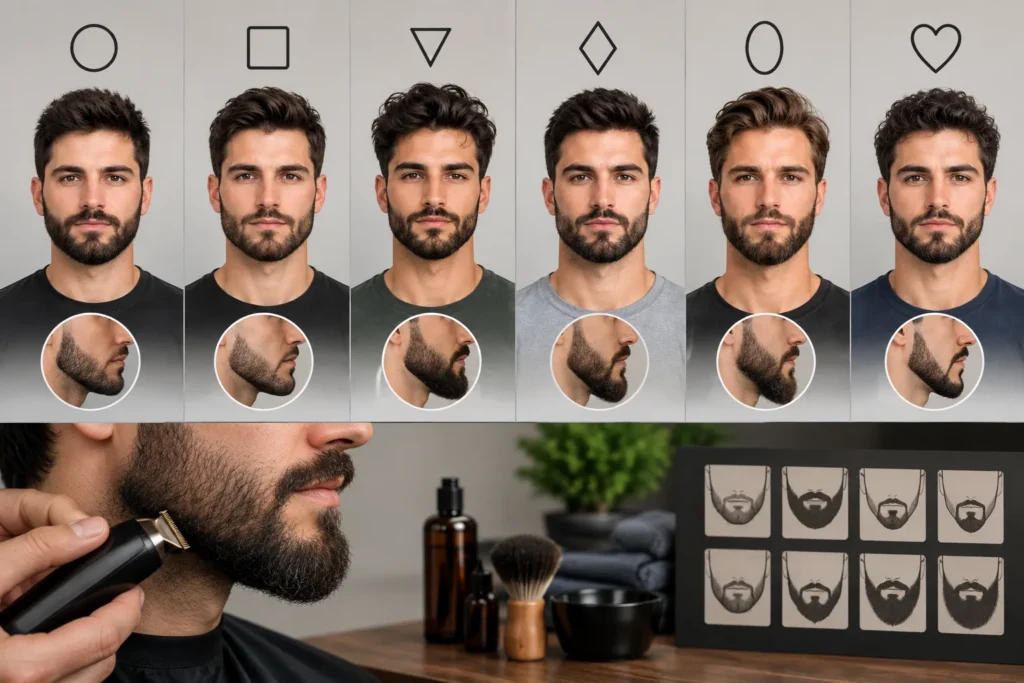
Choosing a beard becomes easier when you use a repeatable process instead of relying on trends. First identify your face shape, then consider what visual adjustment would create balance. Next, evaluate your natural beard density, preferred length, maintenance time, and personal style.
A barber should also consider the cheek line, neckline, jaw definition, and relationship between the beard and haircut. This approach makes the final style more realistic and easier to maintain between appointments. The most successful beard is not necessarily the most dramatic one; it is the one that works with the person’s proportions and growth pattern.
How Can You Choose Your Beard Style in Five Steps?
- Step 1 — Identify your face shape.
Compare your face length, forehead, cheekbones, and jaw.
- Step 2 — Decide what needs balance.
Ask whether you need more visual length, width, definition, or softness.
- Step 3 — Check your beard growth.
Consider density, patchiness, and where your beard grows most strongly.
- Step 4 — Select and customize the style.
Choose a beard type, then adjust its chin length, cheek volume, and edges.
- Step 5 — Get professional shaping when needed.
A skilled barber can adapt the beard to your actual facial proportions instead of applying a generic template.
Beard Styles by Face Shape: Quick Selection Guide
| Face Shape | Main Styling Goal | Suitable Beard Direction |
|---|---|---|
| Oval | Maintain balance | Stubble, short or full beard |
| Round | Add vertical definition | Controlled sides, fuller chin |
| Square | Maintain or soften angles | Stubble or rounded short beard |
| Oblong/Long | Add visual width | Fuller sides, shorter chin |
| Heart | Balance narrow lower face | Fuller jaw and chin |
| Diamond | Balance wide cheekbones | Controlled cheeks, fuller lower face |
What Do Professional Beard Guides Recommend?
Current professional barbering guides consistently emphasize facial proportion rather than beard trends. One 2026 barber guide summarizes the principle as adding length where the face is short and controlling length where the face is already long. Another current guide recommends considering forehead, cheekbone, jaw width, and face length before matching a beard style. These principles support a practical approach: the beard should complement the face rather than simply reproduce a popular style.
Conclusion
The best beard style for face shape is the one that creates balanced proportions while working with your natural beard growth and lifestyle. Round faces may benefit from controlled sides and chin length, long faces from greater side fullness, and square faces from either structured or softened edges. Salomio provides a useful content path for discovering grooming services and making more informed style decisions.

Comments