
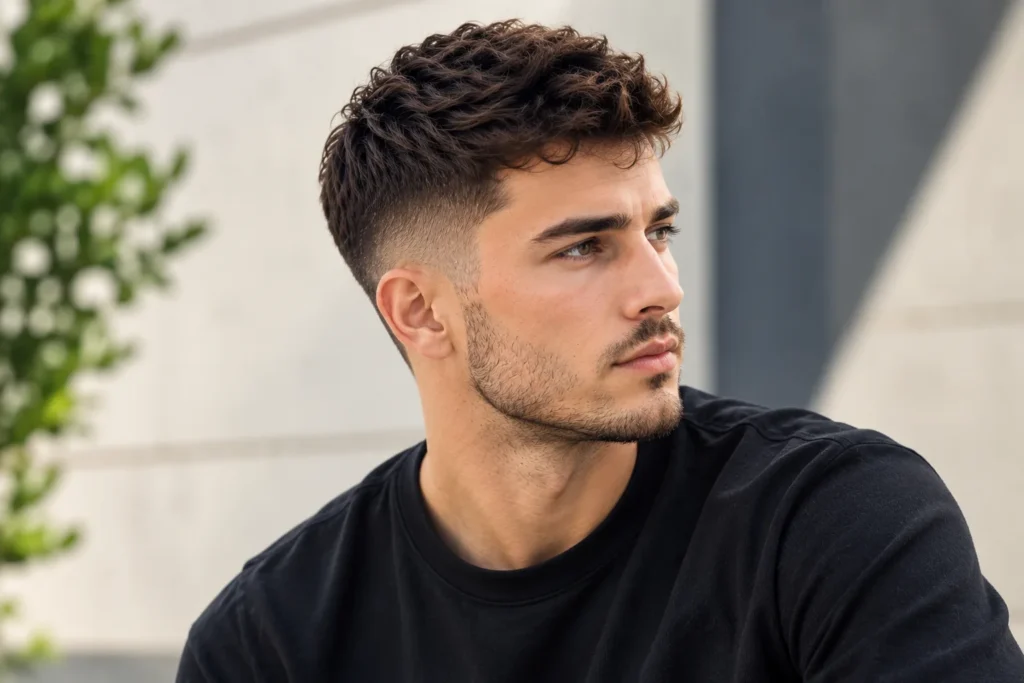
Choosing a men’s haircut is not limited to simply following a trending photo on social media. When it comes to men’s hairstyles 2026, the difference between a fade, taper, crop, buzz cut, and scissor-based styles can completely change the final result. That is why, if you are looking to choose or provide professional hair services, understanding the differences between haircuts is more important than simply memorizing the names of different styles.
In this guide for Salomio’s audience and beauty professionals, we examine the most commonly used men’s hairstyles and the visible directions in 2026 trends in terms of technique, shape, maintenance, and suitability for different hair types.
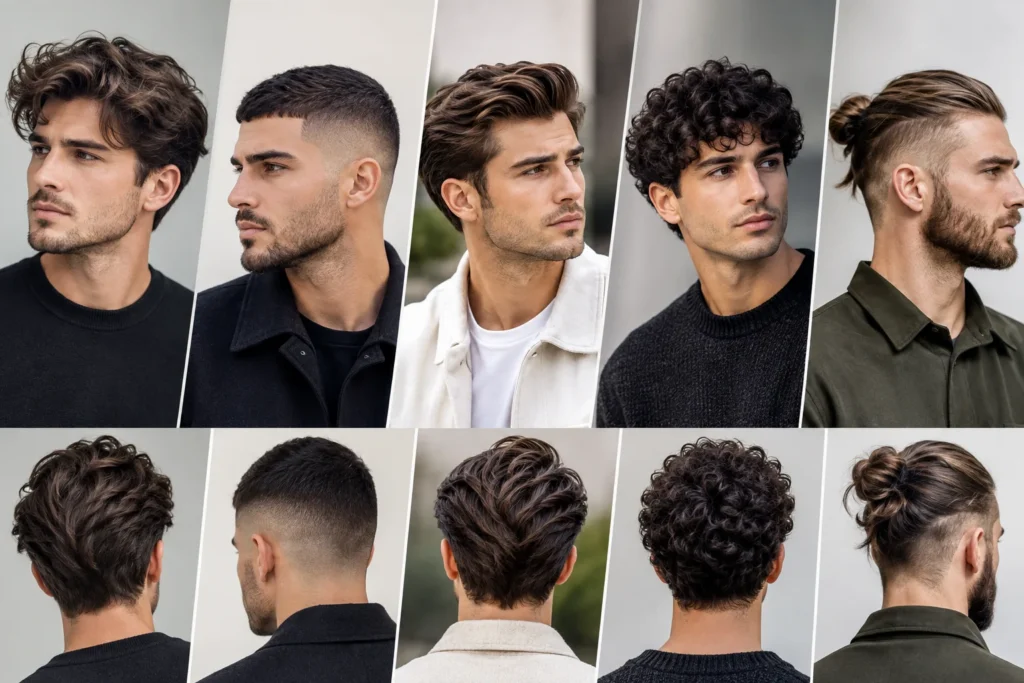
How Are Men’s Hairstyles in 2026 Different from One Another?
The differences between men’s hairstyles are not limited to how much hair is cut. The starting point of the haircut, how the sides are faded, the amount of hair left on top, the type of texture, and the styling method all play a role in the final result. For example, both a fade and a taper move from shorter to longer hair, but the area where the transition is performed is different. On the other hand, a Buzz Cut emphasizes relatively uniform hair length, while a Crew Cut leaves more length on top, allowing for more styling and shape. Therefore, understanding the structure of a haircut before choosing a hairstyle name helps clients communicate more precisely with their barber and makes the final result more predictable.
What Is the Difference Between a Fade and a Taper?
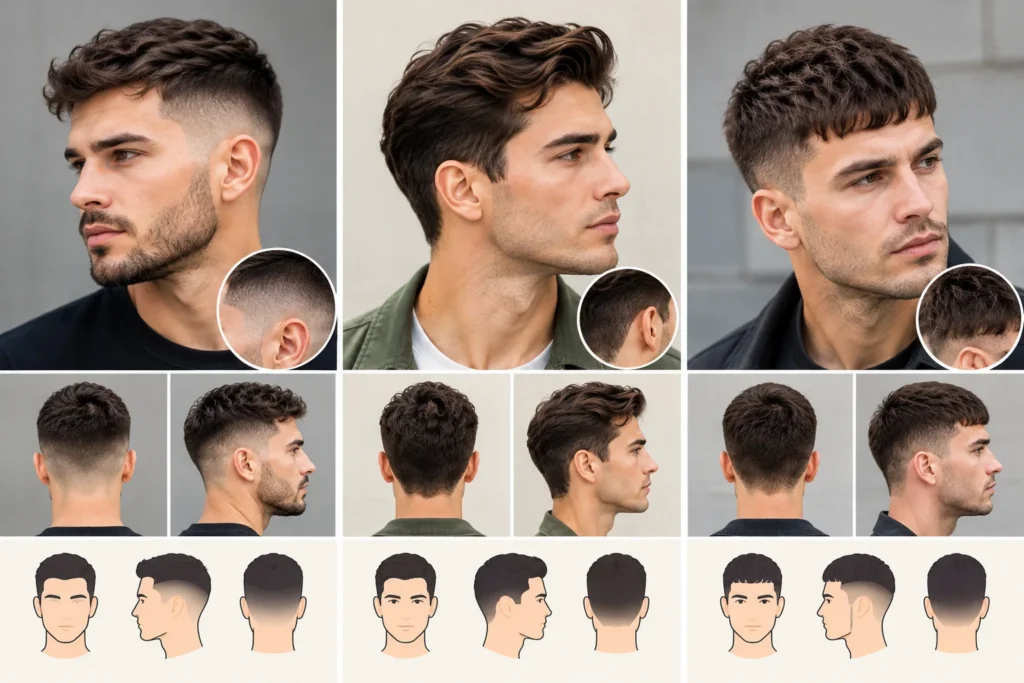
Both fades and tapers focus on gradually reducing hair length, but the key difference is the area where this change in length takes place. With a fade, the transition can cover a larger portion of the sides and back of the head and, depending on the type, may continue down close to the skin. With a taper, the focus is usually more concentrated around the hairline near the ears and neck, while more of the hair’s weight is retained on the sides.
In a 2026 guide published by British GQ, a taper fade is described as a haircut that becomes very short around the neckline and beard line while retaining more weight between these areas and the top.
TJ Hunt, a barber at Time Shoreditch, explains the technique:
“The shape is what matters.”
This means that when choosing a taper, the overall shape of the haircut is more important than focusing solely on the clipper guard number.
Therefore, if you want a softer appearance and less change on the sides, a taper can be a suitable choice; if you want a broader fade and a more defined look, a fade offers a different result.
What Is the Difference Between a Buzz Cut and a Crew Cut?
Both Buzz Cut and Crew Cut are men’s short hairstyles, but their structures are not the same. With a Buzz Cut, the hair is usually kept very short and relatively uniform across different areas of the head. As a result, the shape of the head and the hairline become more visible in the final appearance. A Crew Cut generally leaves more length on top, which allows the hair to retain some shape or be styled upward and backward.
In Esquire Japan’s 2026 men’s hairstyle trends guide, the Crew Cut is also introduced as a classic short hairstyle that has more shape on top compared with a Buzz Cut. The same source also includes a short-guard Buzz Cut among the hairstyles receiving attention in 2026.
In practice, choosing between the two depends on the desired level of shortness, head shape, hair density, and the amount of time a person is willing to spend styling their hair. If the goal is a very simple haircut, a Buzz Cut has a more minimalist structure; if you want the hair on top to retain some styling potential, a Crew Cut offers greater flexibility.
What Is the Difference Between a French Crop and a Textured Crop?
Both French Crop and Textured Crop can feature short sides and a textured top, but their focus is not exactly the same. With a French Crop, a defined shape at the front and controlled length on top are usually important. Textured Crop styles place greater emphasis on creating texture, separation, and natural movement throughout the hair.
This difference means that two hairstyles can look different even when they have similar lengths. A French Crop can appear cleaner and more structured, while a Textured Crop usually has a freer and more relaxed appearance. British GQ’s 2026 guide to men’s short hairstyles also points to the growing variety of Crop styles, including French and Textured versions, alongside greater variation in Fades and Tapers.
When choosing between the two, it is better not to focus only on the hairstyle name. Hair type, density, growth direction, and the amount of time you have for daily styling all affect the final result.
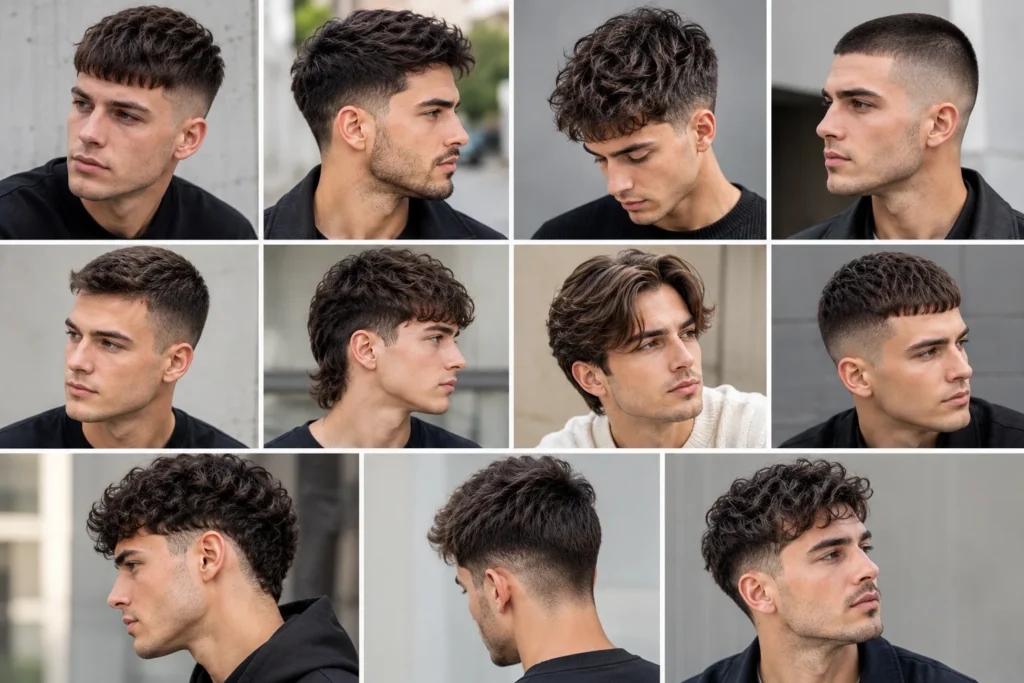
Which Men’s Haircut Styles Have Received the Most Attention in 2026?
The 2026 trends show that the men’s hairstyle market is not limited to a single style. Professional sources this year feature both short and precise styles such as Tailored Buzz and French Crop, as well as softer, more grown-out styles with a more natural appearance. British GQ’s 2026 trend guide examines a range of styles from French Crop to Tailored Buzz. Esquire Japan also describes the overall direction of the year as moving toward more natural-looking and less “constructed” hairstyles. Therefore, it is better to view the trend as a collection of options rather than a single style that works for everyone.
Why Is the French Crop Appearing in 2026 Trends?
The French Crop has received attention because of its relatively defined structure and its ability to be combined with different haircutting techniques. The basic structure of this style usually includes controlled length on top, a defined front or Fringe, and shorter sides. Depending on how it is executed, the sides can be cut with scissors, clippers, or a combination of both.
One of the key advantages of this style is the ability to adjust the intensity of its appearance. A French Crop can be executed in a very clean and polished way or given a more natural and modern appearance through additional texturing. In 2026 sources, the French Crop is mentioned alongside other short hairstyles as part of the growing variety of Crop styles.
When choosing this style, the hairline and hair type should also be considered. If the hair naturally falls forward, designing the Fringe can be easier. For thick hair, texturing can help prevent excessive volume.
How Is a Tailored Buzz Different from a Classic Buzz Cut?
A classic Buzz Cut is generally designed to keep the hair at a specific and simple length, while the concept of a Tailored Buzz focuses more on customizing the haircut’s shape. With a Tailored Buzz, the barber can adjust the length of different sections, the hairline, the shape of the sides, and the relationship between the haircut and the shape of the head with greater precision.
This is important because a simple Buzz Cut can look completely different with a small change in length or hairline shape. In British GQ’s 2026 trend guide, the Tailored Buzz is introduced alongside the French Crop and other hairstyles as one of the notable directions of the year.
For someone who wants a very short appearance but does not want the result to look like a completely uniform haircut, a customized version can provide greater control. However, in these styles, head shape, hair density, and the hairline become more important because when the hair is very short, structural differences are less likely to be concealed by the hair.
Have Softer and More Natural Styles Become More Important in 2026?
Some professional 2026 content points toward styles with a more natural appearance, greater length, and a less engineered look. Esquire Japan describes this shift with wording close to “less constructed” and includes styles such as the Grown-out Shag among the year’s trends. (Esquire)
This trend does not mean that Fade or short hairstyles are disappearing completely. In fact, 2026 sources continue to cover Fade, Taper, and Short Cuts. The main difference lies in how they are executed: a person may still have short sides, while the top is designed with greater length, more natural texture, and softer transitions.
This approach can work well for people who do not want their appearance to depend too heavily on daily styling. However, longer or layered hairstyles generally require more control as they grow and should be selected according to hair type.
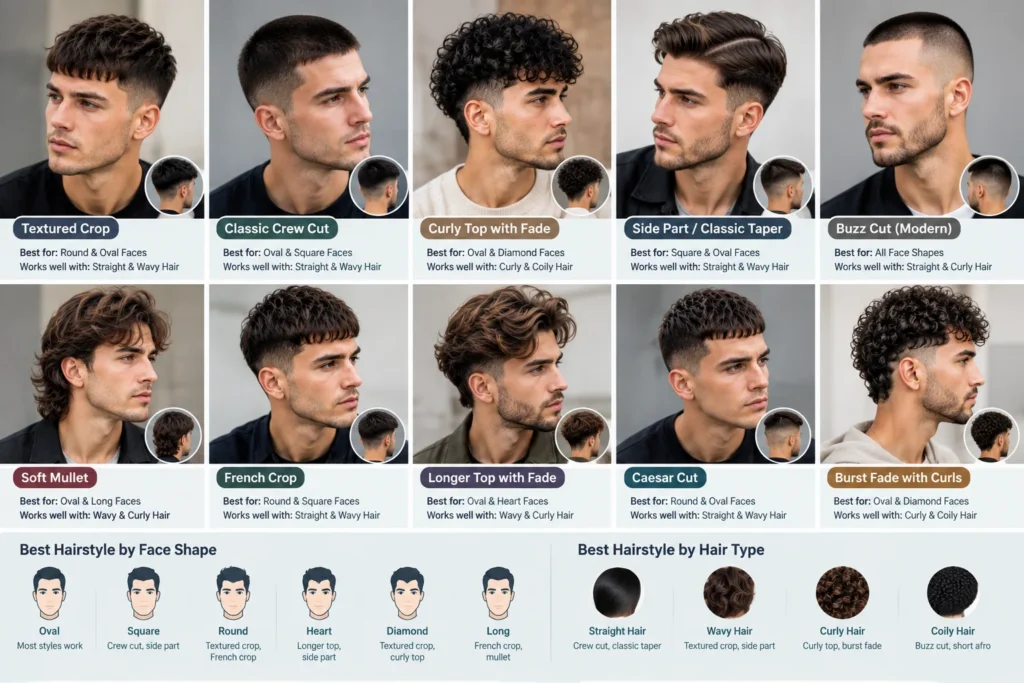
Which Men’s Haircut Is More Suitable for Your Face Shape and Hair Type?
No hairstyle can be considered suitable for everyone based solely on its name. Face shape, head shape, hair density, strand thickness, level of curl or wave, and even hair growth direction can change the result of a haircut. Even with a specific style such as a Taper Fade, the height at which the haircut begins can make the face appear different. British GQ also emphasizes in its 2026 guide that head and face shape, as well as hair density and texture, should be considered when designing a haircut. Therefore, choosing a hairstyle should not begin with “Which style is trending?” but rather with “Which structure can be achieved with my hair and face shape?”
Which Styles Can Work Well for a Round Face?
For round faces, creating visual balance between width and height is generally important. For this reason, some styles that retain a certain amount of height on top can be worth considering. However, it should not be assumed that one particular type of fade or hairstyle will always suit a round face. The fade height, the amount of volume retained on top, and the way the hair is styled can all change the result.
British GQ notes in its discussion of different Fades that the intensity and height of the fade affect the visual perception of face shape, and that a High Fade can create a different result on some round faces compared with a lower fade.
For this face shape, instead of simply asking for a “High Fade” or “Low Fade,” it is better to discuss the amount of volume on top, the fade height, and the final shape with your barber. A reference photo can also help communicate the desired height and shape more precisely.
For Curly or Wavy Hair, Is a Fade Better Than a Taper?
For curly and wavy hair, both Fade and Taper techniques can be used, but the result depends on the curl pattern, density, and length on top. A Fade can create greater contrast between the short sides and curly hair on top. A Taper, on the other hand, generally retains more weight around the sides of the head and can create a softer transition.
TJ Hunt noted in an interview with British GQ that a Taper Fade can be performed on a wide range of hair types, but the styling method should be adapted to the hair’s texture; for very curly hair, directing and styling it backward may have greater limitations. (British GQ)
Therefore, for curly hair, the main question is not simply “Fade or Taper?” You should determine whether the hair will remain natural, fall onto the forehead, be shaped upward, or be styled with a product. This decision should be discussed with the barber before the haircut begins.
What Type of Haircut Can Work Well for Thin or Fine Hair?
For thin or low-density hair, the main goal is generally to create a more cohesive appearance without removing too much of the existing volume. An extremely aggressive cut on the sides may create greater contrast with the top and, for some people, make thinning more noticeable. On the other hand, keeping too much length in low-density hair does not always make it look fuller.
In such situations, controlled texturing, choosing an appropriate length, and avoiding excessive differences between sections can be important. Styles such as a short Crop, a Crew Cut with an appropriate length, or a gentle Taper can be considered depending on the head shape and hair density.
The most important point is not to copy a hairstyle directly from someone else’s photo. Hair density, hairline, and growth direction vary from person to person, and the barber should adjust the style according to these characteristics.
How to Choose Between Fade, Taper, and Crop Hairstyles?
The choice should be based on several criteria: the desired level of shortness, the intensity of change on the sides, the length on top, styling requirements, the appropriate interval between visits, and compatibility with personal style. For example, Low Fade and High Fade are not simply two different names; the height at which the haircut begins can involve more of the sides and change the final appearance. Crop and Taper can also be combined. Therefore, instead of choosing a name based on social media, it is better to break the hairstyle into a few simple characteristics and then discuss them with your barber.
When Is a Low Fade a More Practical Choice?
A Low Fade starts lower and generally keeps the change in length within the lower portion of the sides of the head. As a result, more of the natural hair structure remains above the sides. In its 2026 haircut guide, British GQ describes the Low Fade as a softer and less noticeable option compared with the High Fade. (British GQ)
This characteristic can work well for people who want a neat appearance without making the sides of the head look excessively exposed or short. A Low Fade can also be combined with styles such as Crop, Crew Cut, and some medium-length hairstyles.
When requesting the haircut, simply saying “Low Fade” is not enough. It is better to specify the starting height of the Fade, how short the lowest section should be, the length on top, and the desired amount of texture. If you do not want the haircut to reach skin level, mention this from the beginning as well.
What Is the Difference Between a Mid Fade and a High Fade?
The main difference between a Mid Fade and a High Fade is where the fading area is positioned. A Mid Fade starts around the middle section of the sides, while a High Fade involves more of the sides and moves the transition to longer hair higher up. As a result, a High Fade generally creates a more defined appearance and greater contrast.
British GQ notes when explaining Fades that increasing the height of the fade can make the result more intense and closer to very short hairstyles. In its 2026 guide, the publication also describes the High Fade as an option with a higher transition and a more prominent appearance.
When choosing between the two, the length on top is very important. If the top is short, a High Fade can create greater contrast; if more length and texture are retained on top, a different balance can be achieved. Therefore, fade height should be part of the overall hairstyle design rather than a separate decision.
When Is a Taper a More Practical Choice?
A Taper can work well for people who want the areas around the ears and neck to look neat and clean without having a large portion of the sides cut extremely short. This makes the Taper suitable for a variety of styles, from classic haircuts to more modern looks.
In a 2026 British GQ article, TJ Hunt explains that a Taper Fade can be performed on different hair types and that the final shape should be designed according to the hair type and how it is worn. Charlie Illi from Brooks & Brooks also emphasizes that the clipper guard number alone does not determine the result and that texture, density, and head shape are important.
Therefore, if your goal is a neat but not overly aggressive style, a Taper is worth considering. However, if you want a completely clean look with visible skin on the sides, you should specify from the beginning how close you want the Taper to come to a Skin Fade.
How to Choose a Suitable Men’s Hairstyle for 2026?
The right hairstyle is not necessarily the one that appears most frequently on social media. A suitable hairstyle should match your face and head shape, hair type and density, lifestyle, work environment, time required for styling, and the frequency of barber visits. The 2026 trends cover a wide range of options, from Buzz and short Crop styles to softer and more grown-out hairstyles. Therefore, the best approach is to use trends as a source of inspiration and then design a practical version that suits individual characteristics.
What Should You Discuss with Your Barber Before Getting a Haircut?
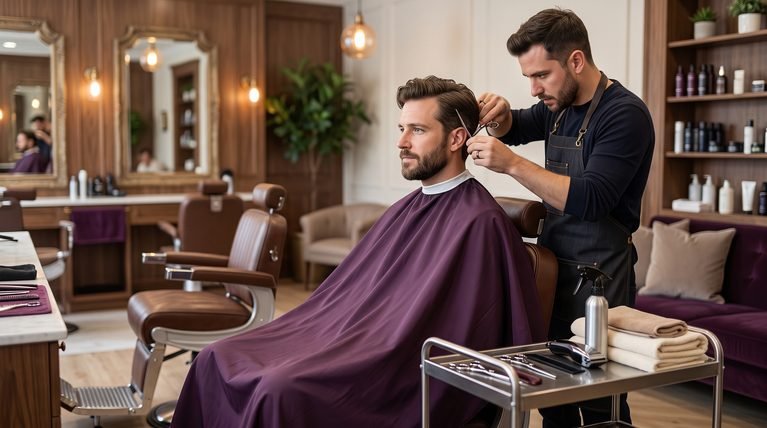
Before starting the haircut, it is best to clarify five things: the length on top, how short the sides should be, the height of the Fade or Taper, the styling method, and how much time you have for styling your hair. If you have a reference hairstyle, show the photo, but do not expect the result to look exactly the same because hair texture, density, head shape, and hairline may be different.
For example, instead of saying, “I want a Fade like this photo,” you can say: “I want a Low Fade, but not too short at the bottom, with approximately this much length on top and natural texture at the front.” This type of explanation gives the barber more useful information.
British GQ also emphasizes in its 2026 recommendations the importance of explaining the shape and how you intend to wear your hair, suggesting that you decide before sitting in the barber’s chair whether the hair will be styled forward, backward, or in another direction.
Which Hairstyle Is More Suitable for a Low-Maintenance Lifestyle?
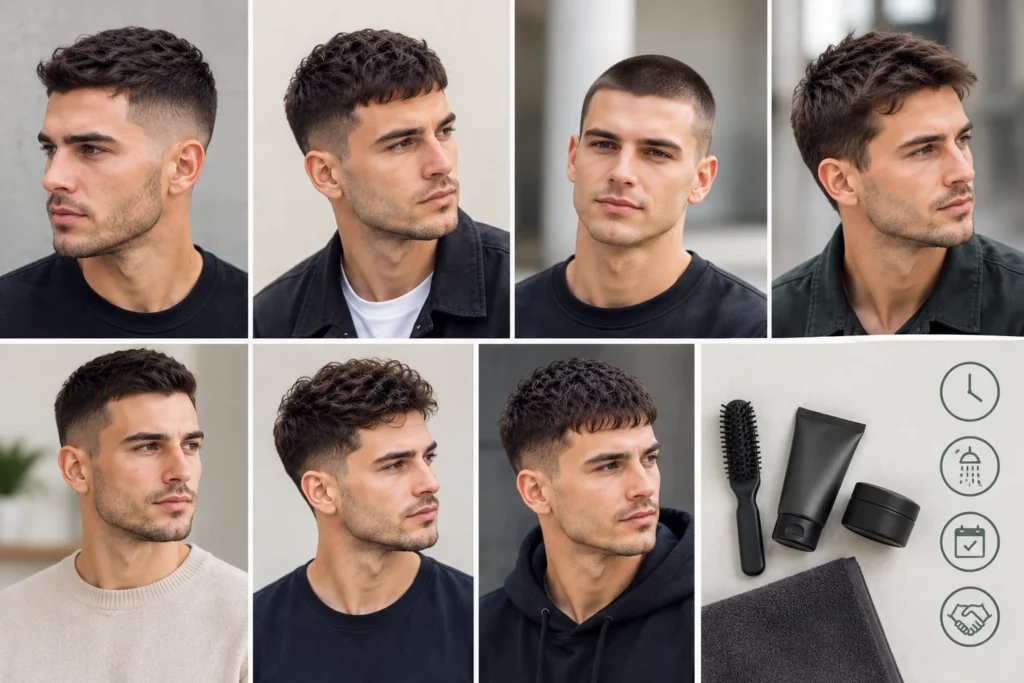
A low-maintenance hairstyle does not mean there is one specific style that works for everyone. If a person has little time for daily styling, short and structured styles such as Buzz Cut or Crew Cut can be simpler options. However, if someone is willing to spend more time styling their hair, a textured Crop, medium-length styles, or grown-out hairstyles can also be considered.
With Fade and Taper styles, it is also important to distinguish between “daily styling” and “maintaining the haircut’s appearance.” A Taper Fade may be simple to style every day, but it may require more regular visits to maintain clean lines and sides. In 2026, British GQ suggested visiting approximately every three to four weeks to maintain a neat Taper Fade; this is a general recommendation, and hair growth rate and personal preference can change the interval. (British GQ)
Therefore, before choosing a hairstyle, ask yourself: “How much time do I have for maintenance?” The answer to this question can sometimes be more important than the trend itself.
How to Choose the Right 2026 Hairstyle in Several Steps?
Follow this simple process to choose a hairstyle:
- Step One: Determine your hair type.
Whether your hair is straight, wavy, curly, thick, or thin affects your hairstyle choice.
- Step Two: Assess your face and head shape.
Consider the width of your forehead, cheeks, jawline, and overall face length. Head shape is especially important with very short hairstyles.
- Step Three: Choose the desired length.
Decide whether you want a very short style such as a Buzz Cut or need more length on top.
- Step Four: Determine the side technique.
Choose between Taper, Low Fade, Mid Fade, and High Fade based on the desired result.
- Step Five: Define the desired texture.
If you want a natural appearance, a Textured Cut can be a suitable option; if you want a more polished shape, consider the structure of a Crop or Crew Cut.
- Step Six: Show a reference photo.
One or two clear photos from different angles can make communication with your barber much easier.
- Step Seven: Consider the maintenance schedule.
If frequent barber visits are difficult for you, choose a style in which hair growth does not quickly create an untidy appearance.
Ultimately, instead of asking “Which men’s hairstyle is the best for 2026?”, the more precise question is: “Which version of the 2026 trends works with my hair, face shape, and lifestyle?”
How Can You Coordinate Your Hairstyle with Your Beard and Personal Style?
Coordinating the hair and beard can change the overall result of your style. For example, a very short Fade combined with a full beard creates a defined contrast, while a Taper with a short beard or stubble can create a softer transition between the hair and face.
You should also consider your clothing style and the environment in which you will wear the look. Someone who mostly has a formal style may feel more comfortable with a neat Crop or controlled Taper, while for a casual or street style, more texture and a freer shape may be worth considering.
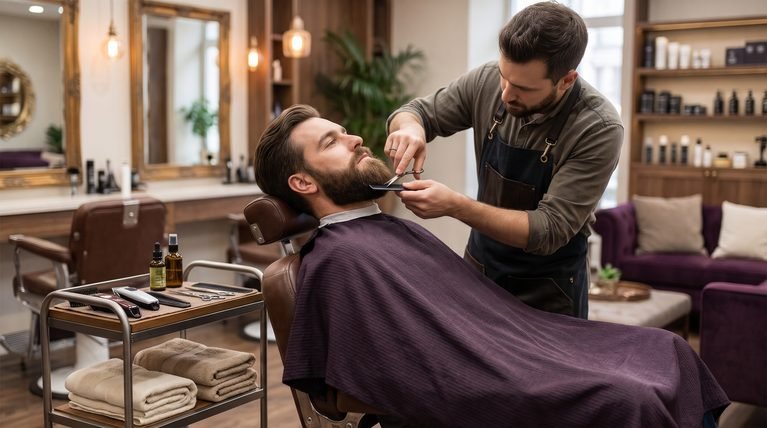
The important point is that the hair and beard should not be designed separately. The beard line height, beard volume, hair length around the ears, and neckline should work together. If you have a reference photo, it is better to show the barber the hair and beard together so the proportions can be assessed more accurately.
Men’s Haircut Comparison Table
| Style | Main Feature | Level of Shortness | Maintenance | Suitable For |
|---|---|---|---|---|
| Taper | Gradual shortening around the neckline and ears | Medium | Medium | Neat and balanced appearance |
| Low Fade | Fade that starts low | Medium to high | Medium | Softer style |
| Mid Fade | Fade that starts at the middle | High | Medium | Balanced and defined appearance |
| High Fade | Fade that starts higher | High | Relatively high | High-contrast appearance |
| Buzz Cut | Very short and simple haircut | Very high | Low | Minimalist style |
| Crew Cut | Short with more length on top | High | Low to medium | Classic appearance |
| French Crop | Short top with a defined front shape | Medium | Low to medium | Neat and modern appearance |
| Textured Crop | Focus on texture and hair movement | Medium | Medium | More natural appearance |
Conclusion
When examining men’s hairstyles 2026, the differences between styles go beyond a name or trending photo. The difference between Fade and Taper, Buzz and Crew, or French Crop and Textured Crop is defined by technique, length, where the volume changes, and the level of maintenance required. The 2026 trends also include a diverse range of styles, from short haircuts to more natural-looking looks, and this variety shows why hairstyle selection should be personalized. (British GQ)
For Salomio’s audience, understanding these differences can help with more informed haircut service choices and more precise communication with a barber.
If you are unsure about choosing a hairstyle or providing men’s haircut services, evaluate face shape, hair type, maintenance requirements, and haircut technique together before making the final decision so that the result matches your actual needs.

Comments