
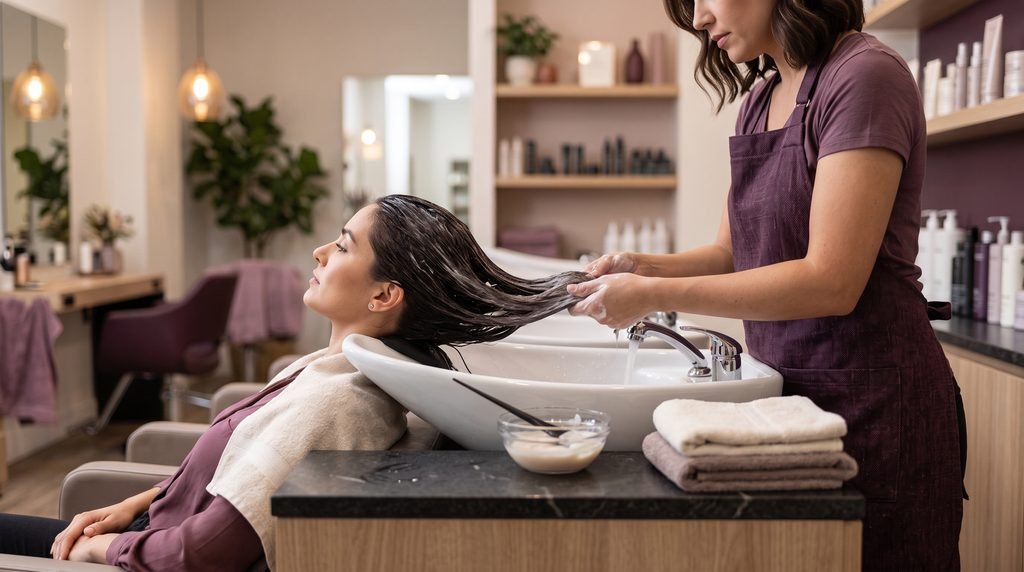
A Damaged Hair Repair Treatment is a salon service designed to improve the appearance, softness, and manageability of hair affected by heat styling, chemical processing, dryness, or everyday wear. Depending on the service, it may involve conditioning masks, strengthening products, bond-building formulas, or other professional hair-care techniques.
Hair damage can make strands feel rough, look dull, tangle easily, or break more readily. While cosmetic treatments can help improve how hair looks and feels, they cannot permanently restore every damaged strand to its original condition. Understanding the available options helps you choose a service that matches your hair’s needs.
Listen
What Is Damaged Hair Repair Treatment?
How the Service Works
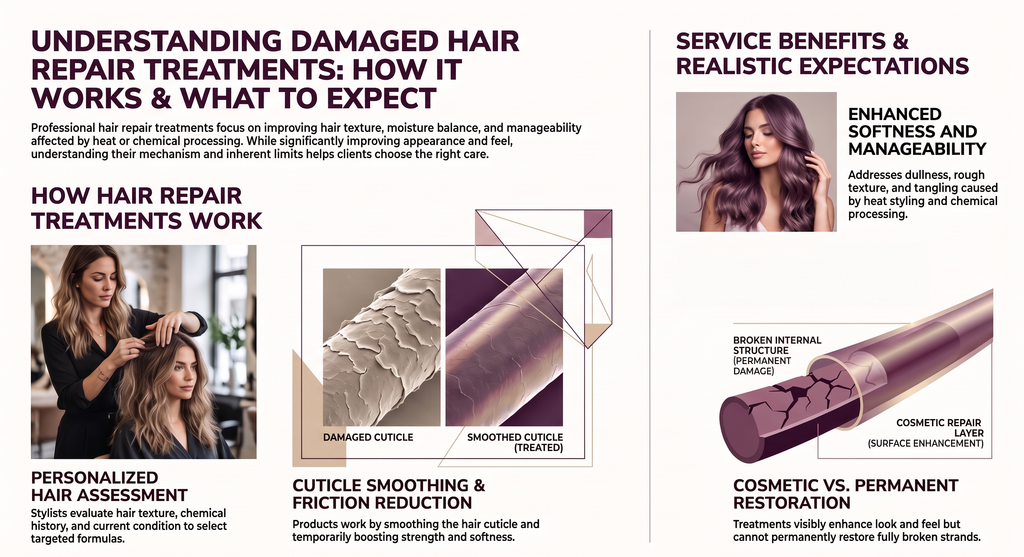
A salon repair service usually focuses on improving the hair’s surface condition, moisture balance, and manageability. Depending on the formula, products may help smooth the hair cuticle, reduce friction between strands, or temporarily improve the feel of weakened hair.
The professional should consider your hair texture, chemical history, and current condition before choosing a treatment. Fine hair, curly hair, bleached hair, and chemically straightened hair may require different product combinations and application methods.
What the Treatment Can and Cannot Do in Damaged Hair Repair Treatment
Conditioning and strengthening products may reduce tangling, improve softness, and help hair look smoother. Some specialized formulas are designed to support weakened hair structures, although the degree of improvement varies with the product and extent of damage.
Severely split or broken ends cannot be permanently restored through conditioning alone. A trim may be necessary to remove split sections, while a suitable hair-care routine can help reduce further damage.
Which Salon Repair Treatments Can Help Damaged Hair?
Conditioning and Moisture-Focused Services
Deep conditioning treatments use moisturizing ingredients to improve softness, flexibility, and manageability. They may be useful when hair feels dry, rough, or difficult to detangle.
A salon may apply a mask or conditioner for a specified period before rinsing and styling the hair. The appropriate product depends on the hair’s texture and needs; heavier formulas may weigh down some fine hair types.
Bond-Building and Protein-Based Options
Bond-building products are formulated to support aspects of the hair’s internal structure affected by chemical processing or heat. Protein-based treatments may also help improve the feel and strength of certain damaged strands, depending on the formula.
These options are not interchangeable, and using more strengthening products does not always mean better results. Ask the stylist which ingredients are suitable for your hair and whether the treatment is compatible with previous coloring, bleaching, or straightening services.
Comparing Damaged Hair Repair Treatment Options
Choosing a Treatment for Dryness and Frizz
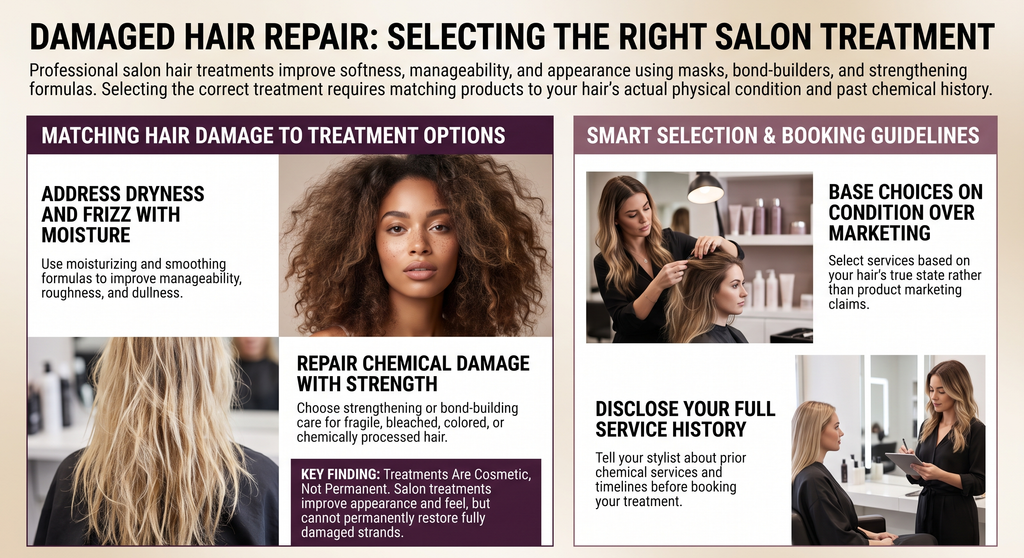
If your main concern is dryness, tangling, or frizz, a moisturizing treatment may be a sensible starting point. A smoothing formula may help improve manageability, while a strengthening treatment may be considered when chemical processing has left hair feeling fragile.
The choice should reflect the actual condition of your hair rather than the product’s marketing claims.
Choosing Care for Chemically Treated Hair
Colored, bleached, permed, or chemically straightened hair may need a carefully selected combination of conditioning and strengthening care. Before booking, explain which services you have had and approximately when they were performed.
| Treatment type | Main focus | Considerations |
|---|---|---|
| Deep conditioning | Softness and moisture | Choose a formula suited to hair texture |
| Bond-building treatment | Supporting weakened hair structures | Product performance varies by formula |
| Protein-based treatment | Improving the feel of weakened strands | Excessive or unsuitable use may leave hair feeling stiff |
| Smoothing treatment | Reducing the appearance of frizz | Check ingredients and whether heat is involved |
| Hair trim | Removing split or damaged ends | Does not repair the remaining hair but removes affected sections |
What Happens During a Damaged Hair Repair Treatment Appointment?
Consultation and Hair Assessment
The appointment usually begins with a discussion about your hair goals, previous chemical services, heat-styling habits, and current concerns. The stylist may assess dryness, breakage, tangling, and the condition of the ends before recommending a suitable service.
This consultation is especially important if your hair has been bleached several times or recently undergone chemical straightening. It also gives you an opportunity to ask about ingredients, treatment duration, expected cosmetic improvements, and possible limitations.
Application, Rinsing, and Styling
The stylist applies the selected product according to its instructions. Depending on the service, the process may include cleansing, applying a mask or specialized formula, allowing the product to work for a set period, rinsing, and finishing with gentle styling.
Not every treatment follows the same sequence. Some services may involve heat, while others do not. Ask the salon to explain any heat or chemical steps beforehand, particularly if your hair is already fragile.
Maintaining Results After Damaged Hair Repair Treatment
At-Home Habits That Reduce Further Damage
“Hair never needs 100 brush strokes a day. That’s a myth.”
The American Academy of Dermatology
Professional care works best when paired with gentle daily habits. Its guidance also recommends minimizing practices that can cause breakage.
To help maintain your hair’s appearance after a salon appointment, consider the following:
- Use a suitable conditioner after shampooing and choose products formulated for your hair type.
- Limit high-heat styling and use an appropriate heat protectant when styling with hot tools.
- Detangle gently with a suitable comb, taking extra care when hair is wet.
- Avoid repeatedly bleaching, relaxing, or chemically processing already fragile lengths without professional advice.
When to Seek Professional Advice for Damaged Hair Repair Treatment
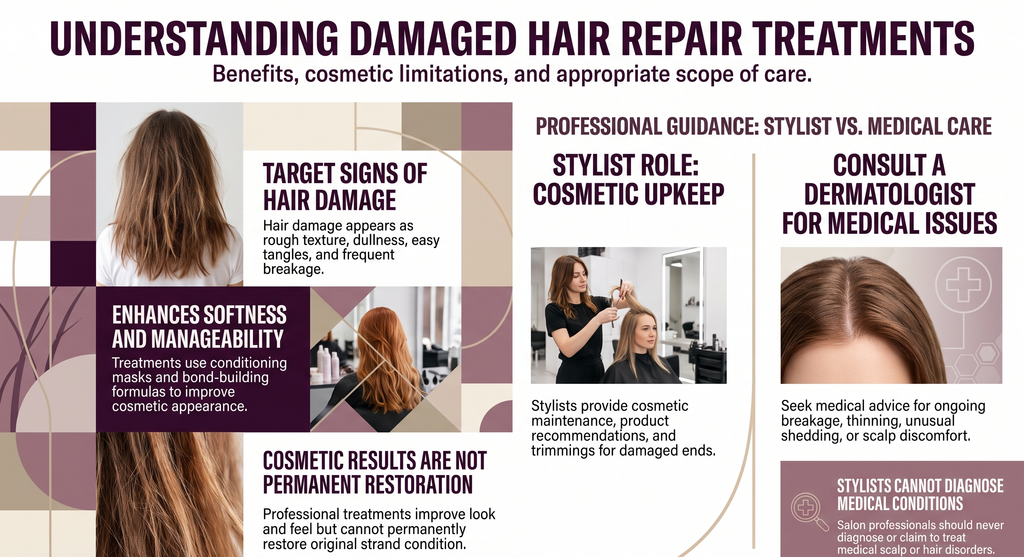
If breakage continues despite changes to your routine, or you notice unusual shedding, thinning, scalp discomfort, or sudden changes in hair texture, consider consulting a dermatologist or other qualified healthcare professional. These concerns may have causes that a cosmetic salon treatment cannot address.
A stylist can help with cosmetic maintenance, product selection, and trimming damaged ends, but should not diagnose or promise to treat medical scalp or hair conditions.
Conclusion
A Damaged Hair Repair Treatment may help improve softness, smoothness, and manageability when the products and techniques are appropriate for your hair. However, it cannot reverse every form of damage, and severely split ends may still require trimming.
“has a dry look and feel, is unmanageable and won’t hold a curl or style.”
Cleveland Clinic dermatologist Dr. Wilma Bergfeld
Damaged hair as hair that This description highlights why changes in texture and manageability can be useful signs when assessing hair condition.
Before booking, explain your hair’s history and ask which products will be used, what the process involves, and how to maintain the results. A realistic treatment plan, gentle styling habits, and suitable home care can help you maintain healthier-looking hair over time.
Comments