
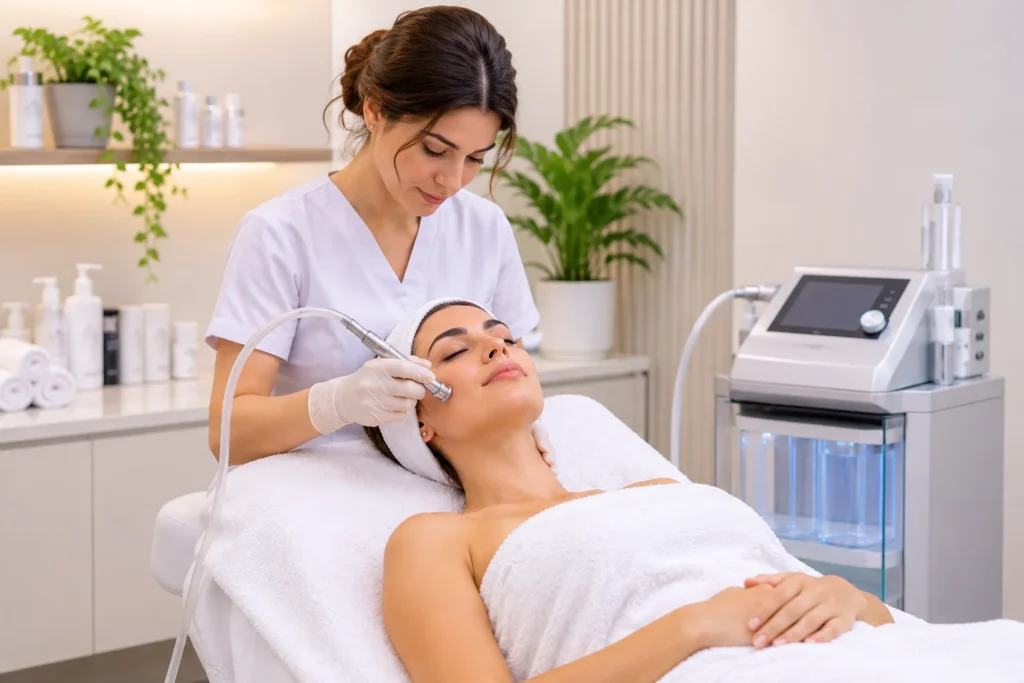
A microdermabrasion facial is a non-invasive skin treatment that gently exfoliates the outermost layer of the skin using a specialized device. It is commonly chosen by people who want to improve dullness, uneven texture, and the appearance of certain superficial skin concerns without significant downtime. Unlike deeper resurfacing procedures, microdermabrasion focuses on the skin’s surface and usually requires little recovery.
However, results depend on skin condition, device settings, and treatment technique. Understanding its benefits, process, limitations, and aftercare can help clients decide whether this facial is appropriate for their skincare goals.
What Is a Microdermabrasion Facial and How Does It Work?
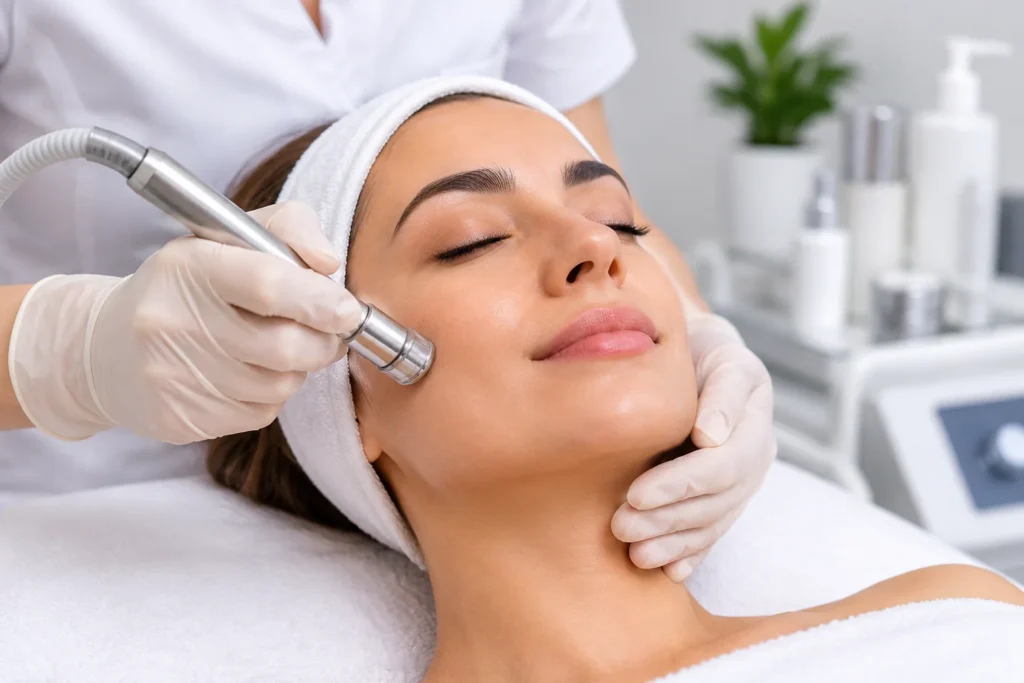
Microdermabrasion is a form of mechanical exfoliation. A trained provider uses a handheld device to remove some of the dead cells from the outermost skin layer, also known as the stratum corneum. Depending on the device, exfoliation is performed with fine crystals or a textured diamond tip, often combined with gentle suction. The treatment is designed to improve the appearance and feel of the skin’s surface rather than target deeper tissue. It is different from dermabrasion, which is a more intensive medical procedure involving deeper skin removal.
What Are the Main Types of Microdermabrasion?
The two commonly used approaches are crystal microdermabrasion and diamond-tip microdermabrasion. Crystal systems direct fine particles, such as aluminum oxide crystals, onto the skin to loosen surface cells. The device then collects the particles and exfoliated debris through suction. Diamond-tip systems use a textured wand to exfoliate the skin without releasing loose crystals. Both methods aim to remove superficial dead skin cells, but the equipment and sensation can differ.
The provider should choose the technique and intensity according to the client’s skin condition, treatment area, and tolerance. A stronger setting does not automatically produce better results; excessive abrasion can increase irritation. For salon professionals, appropriate training, device maintenance, clean or disposable tips, and eye protection are important parts of safe treatment delivery.
What Are the Benefits of a Microdermabrasion Facial?
A microdermabrasion facial may improve the appearance of several superficial skin concerns. By removing accumulated dead cells from the surface, it can leave the skin feeling smoother and looking brighter. It may also help soften the appearance of mild uneven texture, some superficial discoloration, and early signs of photoaging. The results are generally gradual and may require a series of sessions. Microdermabrasion does not permanently change the skin, treat every type of acne scar, or replace medical care for persistent skin conditions.
Can Microdermabrasion Improve Skin Texture, Dullness, and Dark Spots?
Exfoliating the outermost skin layer can help reduce the buildup that contributes to a dull or rough appearance. After treatment, some people notice that their skin feels softer and looks more refreshed. Dermatologists may also use microdermabrasion to improve the appearance of uneven tone, age spots, and certain dark marks left after acne. However, the response varies, and deeper pigmentation may not improve with this surface-level procedure.
The American Academy of Dermatology explains that after a series of treatments, patients often report smoother skin and a more radiant complexion. This is a useful expectation to communicate: microdermabrasion can improve surface appearance, but it is not a guaranteed solution for melasma, deep pigmentation, or indented acne scars. A professional skin assessment helps determine whether another treatment would be more appropriate.
What Happens During a Microdermabrasion Facial?
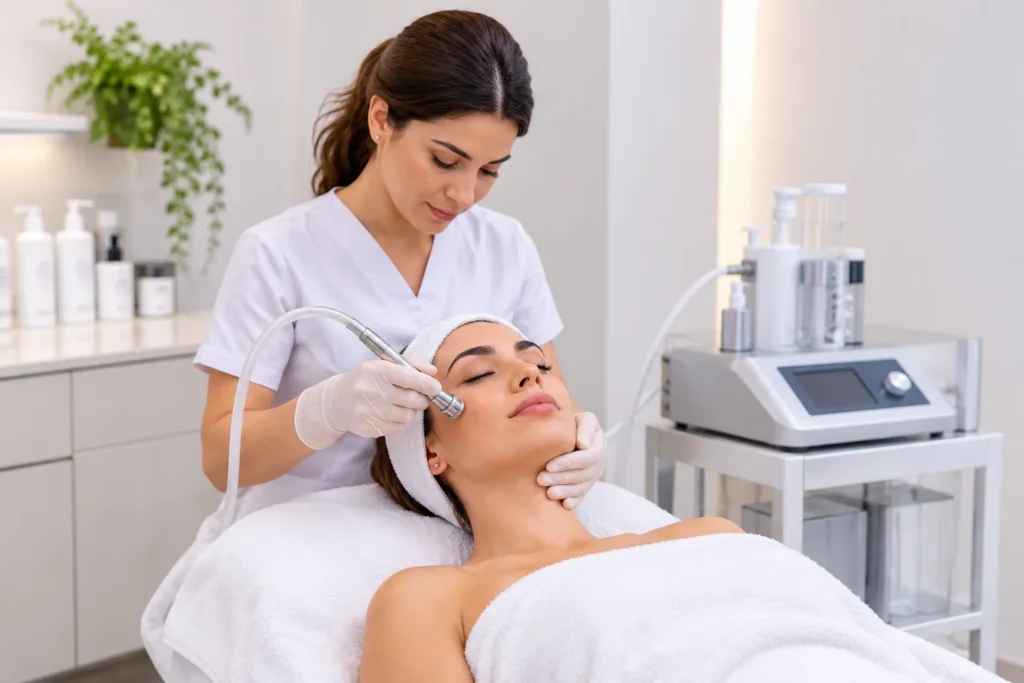
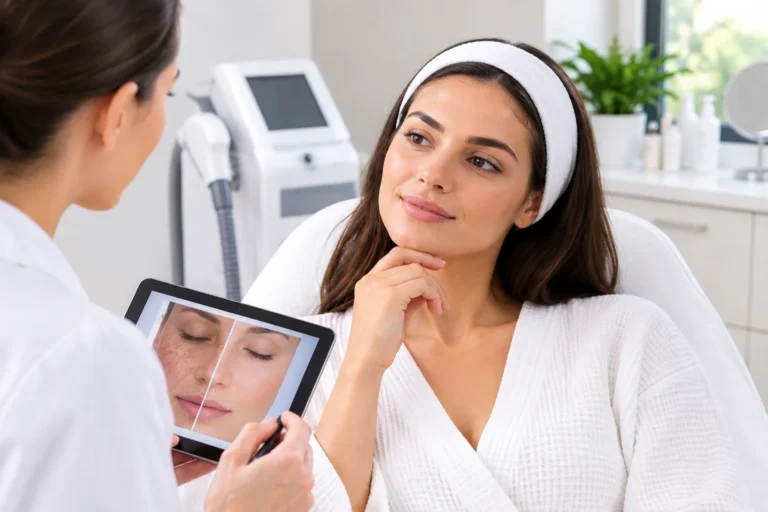
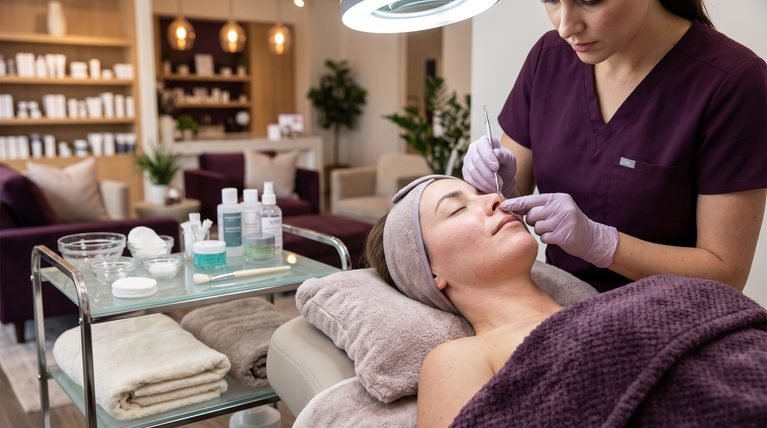
A typical appointment begins with a skin assessment and cleansing. The provider checks for active irritation, open lesions, recent procedures, and other factors that may make exfoliation unsuitable. The device is then passed over the treatment area using controlled movements and settings. The process is usually straightforward and does not normally require anesthesia. The exact duration and number of passes depend on the device, the area being treated, and the client’s skin response.
What Are the Main Steps During the Treatment?
A professional microdermabrasion facial commonly follows these steps:
- Skin assessment:
The provider reviews skin type, concerns, medical history, medications, and recent skincare treatments.
- Cleansing:
Makeup, sunscreen, oil, and surface impurities are removed with a gentle cleanser.
- Device exfoliation:
The provider moves the crystal or diamond-tip handpiece across selected areas using controlled pressure and suction.
- Removal of residue:
Remaining particles and exfoliated debris are gently cleared from the skin.
- Moisturizing and protection:
A suitable moisturizer is applied, followed by sun protection when appropriate.
A facial session commonly takes around 30 to 40 minutes, although timing varies by device and treatment area. The procedure should not cause significant pain. Clients may notice a mild scratching or suction sensation. If there is sharp pain, strong burning, or unusual discomfort, the provider should stop and reassess the skin.
How Should You Care for Your Skin After Microdermabrasion?
After treatment, the skin may look pink or feel mildly sensitive, dry, or tight. These effects are usually temporary, but the newly exfoliated surface can be more vulnerable to irritation and sunlight. Aftercare should therefore focus on gentle cleansing, hydration, and sun protection. Clients should follow the specific instructions provided by their skincare professional, because the appropriate recovery routine can vary with treatment intensity and individual sensitivity.
How Can You Build a Simple Aftercare Routine?
For the first few days, keep skincare simple and avoid unnecessary exfoliation. A gentle cleanser and a fragrance-free moisturizer can help maintain comfort. Apply broad-spectrum sunscreen with SPF 30 or higher during the day, and limit direct sun exposure. Do not scrub, pick, or aggressively massage the treated skin. If the provider recommends temporarily pausing retinoids, exfoliating acids, or acne treatments, follow that advice before restarting them.
How-to: Microdermabrasion Aftercare
- Cleanse gently: Use lukewarm water and a mild cleanser without abrasive particles.
- Moisturize regularly: Choose a simple moisturizer that does not sting or irritate the skin.
- Apply sunscreen: Use broad-spectrum SPF 30 or higher and reapply as directed.
- Pause strong actives when advised: Avoid retinoids, glycolic acid, salicylic acid, and other exfoliants for the period recommended by your provider.
- Avoid additional irritation: Postpone waxing, scrubs, and other resurfacing treatments until the skin has recovered.
If redness worsens, pain becomes significant, or swelling, blistering, or signs of infection develop, seek medical advice rather than trying additional skincare products.
Who Is a Good Candidate for Microdermabrasion and How Often Should It Be Done?
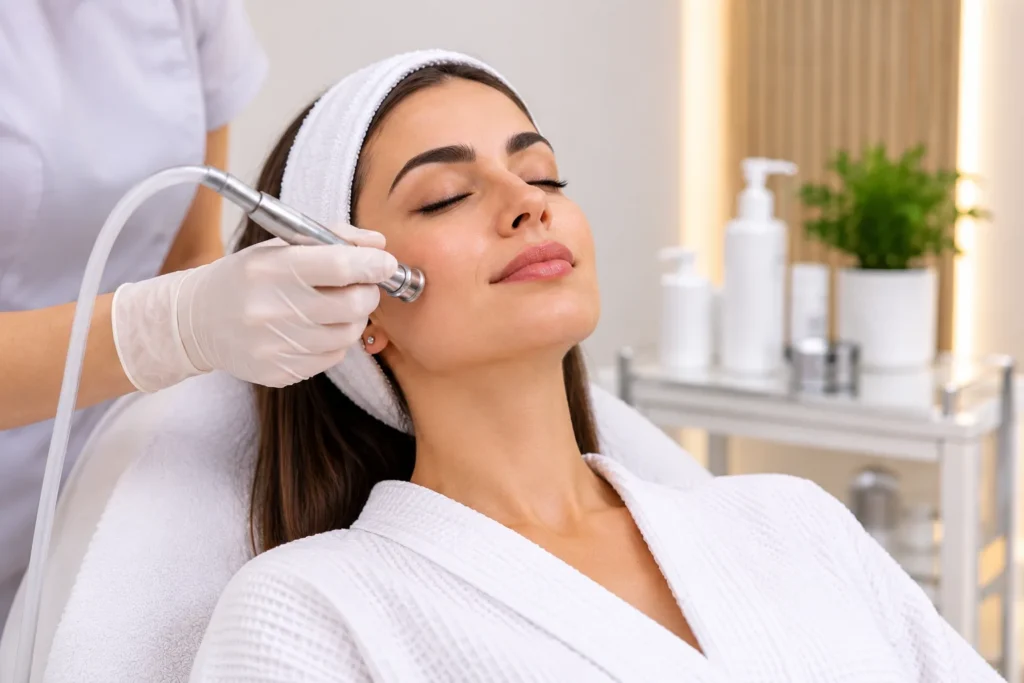
Microdermabrasion may suit people seeking modest improvement in dullness, rough texture, and selected superficial discoloration. It is not appropriate for every skin condition. Active inflammatory acne, rosacea flare-ups, open wounds, skin infections, and fragile or irritated skin may increase the risk of complications. People with a history of abnormal scarring or recent isotretinoin use should consult a dermatologist before treatment. A qualified professional should assess the skin and explain realistic outcomes before recommending a treatment plan.
How Many Sessions Are Needed, and What Are the Alternatives?
Some people notice a temporary improvement after one session, but a series may be recommended for more consistent cosmetic results. The number and spacing of appointments depend on the skin concern, device, treatment intensity, and recovery response. The American Academy of Dermatology notes that treatment plans can vary from weekly to monthly, and that several sessions may be needed. There is no universal schedule that suits everyone.
| Treatment | How it works | Typical focus |
|---|---|---|
| Microdermabrasion | Mechanical exfoliation of the outermost skin layer | Dullness and mild uneven texture |
| Dermabrasion | Deeper mechanical skin resurfacing | Selected scars and deeper surface irregularities |
| Chemical peel | Uses chemical solutions to exfoliate skin at varying depths | Uneven tone, texture, and selected signs of aging |
These treatments are not interchangeable. Dermabrasion is more intensive and requires a different level of clinical care, while chemical peels vary considerably according to their ingredients and depth. A dermatologist can help determine which option is suitable for a particular concern.
Conclusion
A microdermabrasion facial offers a non-invasive way to exfoliate the skin’s surface and improve the appearance of dullness, mild uneven texture, and selected superficial concerns. Its results are generally modest and may require multiple sessions. Careful skin assessment, appropriate device settings, hygienic treatment practices, and consistent aftercare are essential for a positive experience.
For salon owners and skincare professionals, explaining both the benefits and limitations helps clients make informed decisions. Explore professional skincare services and beauty-care options through Salomio, and help clients choose treatments that match their skin needs and expectations.
Comments